

Last Updated: August 26, 2026
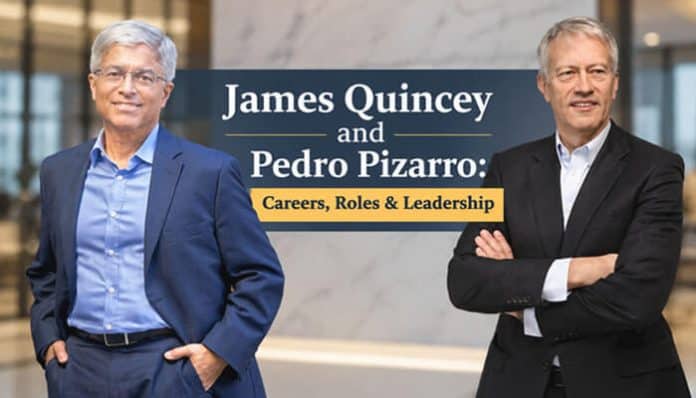
James Quincey and Pedro Pizarro are prominent corporate leaders whose careers span two very different industries: global beverages and electric utilities.
Quincey spent nearly three decades rising through The Coca-Cola Company before becoming CEO in 2017 and chairman in 2019. On March 31, 2026, he stepped down as CEO and transitioned to Executive Chairman, while Henrique Braun became Coca-Cola’s new chief executive.
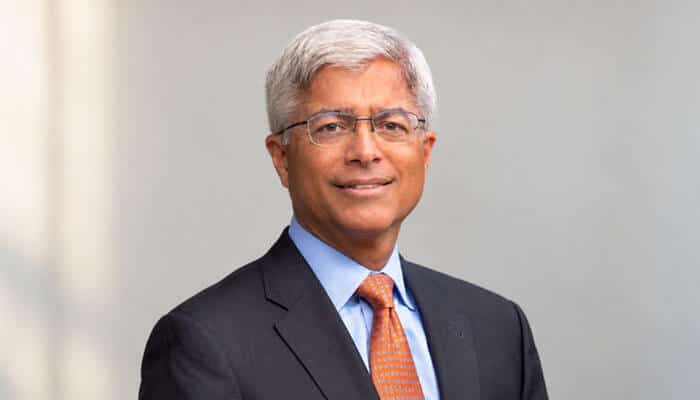
Pedro J. Pizarro has followed a similarly long internal career path at Edison International. He joined the organization in 1999 and became President and CEO of Edison International in 2016. His leadership today centers on electric-grid investment, wildfire mitigation, reliability, affordability and California’s transition toward greater electrification.
Although Quincey and Pizarro do not run the same company, their careers have several notable similarities. Both have technical or scientific academic backgrounds, both worked in management consulting, both spent many years inside the companies they eventually led, and both were associated with the Business Roundtable’s influential Statement on the Purpose of a Corporation.
Their careers therefore provide an interesting comparison of how strategic leadership works across two completely different business environments.
Quick Answer
James Quincey and Pedro Pizarro are senior business leaders associated with Coca-Cola and Edison International.
- James Quincey is Executive Chairman of The Coca-Cola Company and served as CEO from 2017 to March 31, 2026.
- Pedro J. Pizarro has been President and CEO of Edison International since 2016.
- Quincey has a background in electronic engineering and consulting, while Pizarro studied chemistry and earned a Ph.D. from Caltech before joining McKinsey.
- Quincey’s leadership focused on brands, acquisitions and portfolio transformation.
- Pizarro’s leadership centers on grid investment, safety, wildfire risk, affordability and electrification.
- On August 4, 2026, investigators concluded that electrical arcing on an out-of-service Southern California Edison transmission tower caused the Eaton Fire. Legal liability remains unresolved.
Key Takeaways
- Quincey joined Coca-Cola in 1996; Pizarro joined Edison International in 1999
- Quincey became Coca-Cola CEO in 2017 and Executive Chairman in 2026
- Pizarro has served as Edison International CEO since 2016
- Quincey’s tenure included major investments in Costa, fairlife and BODYARMOR
- Pizarro has overseen major grid-modernization and wildfire-mitigation efforts
- Both executives have strategy backgrounds and participated in the Business Roundtable’s stakeholder-focused corporate-purpose initiative
- Their 2025 reported compensation was about $31.2 million for Quincey and $16.5 million for Pizarro
- The Eaton Fire remains a major legal, financial and community-recovery issue for Edison International
James Quincey and Pedro Pizarro at a Glance
| Category | James Quincey | Pedro J. Pizarro |
|---|---|---|
| Current role | Executive Chairman | President and CEO |
| Company | The Coca-Cola Company | Edison International |
| Industry | Beverages and consumer products | Electricity and utilities |
| Joined company | 1996 | 1999 |
| Became CEO | 2017 | 2016 |
| CEO status in 2026 | Stepped down on March 31, 2026 | Remains CEO |
| Education | Electronic Engineering, University of Liverpool | Chemistry, Harvard University; Ph.D., Caltech |
| Consulting background | The Kalchas Group | McKinsey & Company |
| Major outside board | Pfizer | 3M |
| Main leadership focus | Consumers, brands, portfolio and digital transformation | Safety, grid modernization, wildfire risk and electrification |
| Geographic scope | Global | Mainly California and U.S. energy markets |
| 2025 reported compensation | About $31.2 million | About $16.5 million |
Who Is James Quincey?
James Quincey is a British-born business executive who built most of his professional career within The Coca-Cola Company.
He joined Coca-Cola in 1996 and worked in increasingly senior positions across Latin America, Mexico and Europe before moving into company-wide leadership.
Quincey became Coca-Cola’s Chief Executive Officer in May 2017 and was elected chairman of the board in 2019.
After nine years as CEO, he stepped down on March 31, 2026. He remains with the company as Executive Chairman of the Board, while Henrique Braun holds responsibility for Coca-Cola’s strategic direction and day-to-day operations as CEO.
James Quincey’s Education and Early Career
Quincey earned a bachelor’s degree in electronic engineering from the University of Liverpool.
His educational background is noteworthy because his career eventually moved far away from conventional engineering.
Before joining Coca-Cola, Quincey worked in strategy consulting and became a partner at The Kalchas Group, which Coca-Cola describes as a consulting business with roots in Bain & Company and McKinsey.
That early consulting experience exposed him to strategic analysis and business decision-making before he moved into operating roles.
His career shows that a technical education can provide a foundation for executive management even when an individual ultimately works across marketing, strategy, finance and global operations.
James Quincey’s Coca-Cola Career Timeline
| Period | Role |
|---|---|
| Before 1996 | Strategy consultant at The Kalchas Group |
| 1996 | Joined Coca-Cola as Director of Learning Strategy for Latin America |
| 2003 | President, South Latin Division |
| 2005 | President, Mexico Division |
| 2008 | President, Northwest Europe and Nordics |
| 2013 | President, Europe Group |
| 2015 | President and Chief Operating Officer |
| 2017 | Became Chief Executive Officer |
| 2019 | Became Chairman of the Board |
| March 31, 2026 | Became Executive Chairman |
Quincey’s Experience in Latin America
Latin America played an important role in Quincey’s early development at Coca-Cola.
After joining the company’s Latin America Group, he worked through several operational positions before becoming President of the South Latin Division in 2003.
He became President of the Mexico Division in 2005.
These positions exposed him to areas including:
- local consumer behavior
- product portfolios
- pricing
- bottling relationships
- distribution
- marketing
- acquisitions
- international operations
The experience was valuable because Coca-Cola does not operate as a single centralized beverage manufacturer. Its global system combines the parent company with bottling partners, retailers, distributors and local management teams.
Understanding those relationships became increasingly important as Quincey moved into global leadership.
Quincey’s Leadership in Europe
Quincey later became President of Coca-Cola’s Northwest Europe and Nordics business and then President of its broader Europe Group.
Coca-Cola credits his European leadership with expanding the portfolio and improving market share. He also played an important role in the development of what became Coca-Cola Europacific Partners, one of the largest Coca-Cola bottlers in the world.
Operating in Europe also exposed him to mature beverage markets where Coca-Cola had to balance traditional brands with changing consumer preferences.
James Quincey’s Years as Coca-Cola CEO
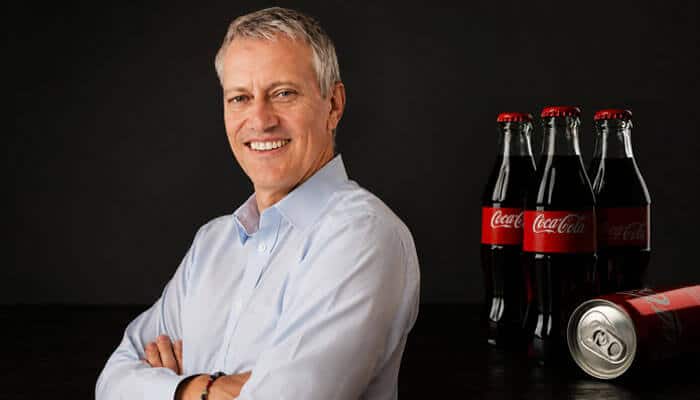
Quincey became Coca-Cola’s CEO in 2017.
A defining idea during his tenure was transforming Coca-Cola from a company commonly associated primarily with sparkling soft drinks into what management called a total beverage company.
That strategy involved participating in a wider range of beverage occasions and categories, including:
- sparkling beverages
- water
- sports drinks
- juice
- coffee
- tea
- dairy
- hydration products
- plant-based beverages
When announcing the 2026 CEO transition to Henrique Braun, Coca-Cola said the company had added more than 10 additional billion-dollar brands during Quincey’s tenure as CEO.
Major Strategic Decisions During Quincey’s CEO Tenure
Portfolio transformation under Quincey involved significant capital investment.
Rather than merely creating new drinks internally, Coca-Cola used acquisitions to establish or strengthen positions in several beverage categories.
Costa Coffee
One of the most significant transactions was Coca-Cola’s acquisition of Costa Coffee.
The acquisition was completed in January 2019 for approximately $4.9 billion, giving Coca-Cola a major international coffee platform with retail stores, vending operations and opportunities in ready-to-drink coffee.
fairlife
In January 2020, Coca-Cola acquired the remaining 57.5% ownership interest in fairlife, giving it full control of the value-added dairy company.
Coca-Cola disclosed approximately $979 million in cash, net of cash acquired, for the remaining interest, along with other financial arrangements and potential milestone payments.
BODYARMOR
Another major transaction occurred in November 2021.
Coca-Cola acquired the remaining 85% of BODYARMOR for $5.6 billion in cash after initially purchasing a 15% interest in 2018.
These acquisitions illustrate how the total-beverage strategy moved beyond corporate messaging and into actual capital allocation.
| Acquisition | Category | Transaction |
|---|---|---|
| Costa | Coffee | Approximately $4.9 billion |
| fairlife | Value-added dairy | Remaining 57.5% acquired |
| BODYARMOR | Sports and hydration | $5.6 billion for the remaining 85% |
The transactions also carried investment risk.
For example, Coca-Cola later recorded an impairment related to the BODYARMOR trademark after revising projected operating results, demonstrating that even major strategic acquisitions do not guarantee expected returns.
Digital Transformation Under Quincey
Technology and data became increasingly important during Quincey’s leadership.
Coca-Cola’s strategy evolved toward greater use of:
- digital advertising
- consumer data
- analytics
- artificial intelligence
- connected commerce
- technology-enabled marketing
- faster experimentation
The company continued this direction during the 2026 leadership transition by creating a Chief Digital Officer role intended to unify digital, data and operational capabilities across the enterprise.
That initiative illustrates how digital transformation became an enterprise-level issue rather than simply a marketing function.
A More Networked Coca-Cola Organization
Another important part of Quincey’s tenure was organizational simplification.
Large multinational companies can become slowed by layers of approvals, regional structures and internal bureaucracy.
Coca-Cola increasingly emphasized a more networked organization designed to combine global capabilities with local market knowledge.
The logic is straightforward.
A beverage that succeeds in one country may not automatically work in another because markets differ in:
- consumer preferences
- income
- retail formats
- regulation
- competition
- packaging habits
- cultural expectations
A networked approach attempts to maintain Coca-Cola’s global scale while allowing local teams to respond more quickly.
James Quincey’s Leadership Style
Quincey’s leadership approach can be understood through several recurring themes.
Consumer Focus
Coca-Cola repeatedly emphasized staying close to consumers.
This meant using consumer behavior to influence decisions regarding:
- products
- packaging
- pricing
- innovation
- brands
- marketing
- distribution
Growth Mindset
Coca-Cola also promoted organizational behaviors centered on curiosity, empowerment and agility.
The goal was to encourage employees to test ideas, learn from results and respond more quickly to changing markets.
Portfolio Discipline
A large brand portfolio can become inefficient if resources are spread across too many small businesses.
Quincey’s leadership therefore included greater emphasis on identifying brands and categories capable of delivering meaningful scale.
Global and Local Balance
Quincey’s international background helped shape an approach that combined global strategy with local execution.
Succession Planning
Leadership succession became another significant part of his final period as CEO.
Coca-Cola announced in December 2025 that Henrique Braun would succeed Quincey.
Braun officially became CEO on March 31, 2026, while Quincey remained Executive Chairman.
Business Performance During Quincey’s Final Full Year as CEO
Coca-Cola reported $47.9 billion in net revenue for 2025, Quincey’s final full calendar year as CEO.
Compared with 2024:
- reported net revenue increased 2%
- organic revenue increased 5%
- reported operating income increased 38%
- comparable currency-neutral operating income increased 13%
- comparable EPS increased 4% to $3.00
Organic revenue and several other metrics cited by Coca-Cola are non-GAAP measures and should therefore be interpreted alongside the company’s GAAP results and reconciliations.
These results cannot reasonably be credited to one executive alone. Coca-Cola’s performance reflects employees, management, bottlers, distributors, retailers and broader economic conditions.
However, they provide measurable context for the business at the end of Quincey’s CEO tenure.
What Is James Quincey’s Role in 2026?
As of August 2026, James Quincey is Executive Chairman of The Coca-Cola Company.
Henrique Braun is Coca-Cola’s Chief Executive Officer.
Coca-Cola’s leadership transition makes the distinction important: Braun is responsible for managing the business as CEO, while Quincey continues in a board-leadership and governance role as Executive Chairman.
Older biographies or articles may still incorrectly describe Quincey as Coca-Cola’s current CEO.
Who Is Pedro Pizarro?
Pedro J. Pizarro is President and Chief Executive Officer of Edison International, the parent company of Southern California Edison.
He joined Edison International in 1999 and spent years moving through strategy, procurement, power operations and subsidiary leadership roles.
Pizarro served as President of Southern California Edison from 2014 until May 2016.
He became President of Edison International in May 2016 and Chief Executive Officer in October 2016.
Pedro Pizarro’s Education
Pizarro has an unusually strong scientific academic background for a major public-company CEO.
He earned:
- a bachelor’s degree in chemistry from Harvard University
- a Ph.D. in chemistry from the California Institute of Technology
He also held National Science Foundation and U.S. Department of Defense graduate fellowships.
His scientific training is particularly relevant in an industry where major decisions can involve engineering, climate modeling, energy technology, infrastructure and complex risk analysis.
Pedro Pizarro’s Career Before Edison
Before joining Edison International, Pizarro worked at McKinsey & Company in Los Angeles.
As a senior engagement manager, he advised clients in industries including:
- energy
- technology
- engineering services
- banking
His work included corporate strategy, mergers and acquisitions, operations and organizational issues.
That combination of advanced scientific training and strategic consulting created a strong analytical foundation for his later career.
Pedro Pizarro’s Edison Career Timeline
| Period | Role |
|---|---|
| Before 1999 | McKinsey & Company |
| 1999 | Joined Edison International |
| 2000 | Vice President, Technology Business Development |
| 2001 | Vice President, Strategy and Business Development at SCE |
| 2004 | Vice President, Power Procurement |
| 2005 | Senior Vice President, Power Procurement |
| 2008 | Executive Vice President, Power Operations |
| 2011–2014 | President, Edison Mission Energy |
| 2014–2016 | President, Southern California Edison |
| May 2016 | President, Edison International |
| October 2016–present | President and CEO, Edison International |
Pedro Pizarro’s Leadership at Edison International
Pizarro operates in an environment that differs fundamentally from Coca-Cola.
A beverage company competes for consumers who can change brands immediately.
An electric utility manages infrastructure that can remain in service for decades and operates under extensive regulation.
Pizarro therefore has to balance:
- public safety
- reliability
- electricity affordability
- climate risks
- infrastructure investment
- regulatory requirements
- shareholder returns
- customer needs
- cybersecurity
- clean-energy goals
Clean Energy and Electrification
Edison International describes its long-term vision around building a resilient clean-energy future.
Pizarro has been an advocate for expanding electrification as California works toward its climate objectives.
Major areas include:
- electric vehicles
- charging infrastructure
- building electrification
- renewable-energy integration
- energy storage
- transmission
- distribution infrastructure
Edison’s sustainability strategy continues to emphasize clean energy and increasing economy-wide electrification.
Grid Modernization
Modern electricity networks face demands that earlier grids were never designed to manage.
The system increasingly has to accommodate:
- electric vehicles
- rooftop solar
- battery storage
- distributed generation
- data centers
- higher electricity demand
- extreme weather
- two-way electricity flows
Grid modernization is therefore a central part of Edison’s long-term strategy.
Unlike launching a beverage, however, electricity infrastructure can require extensive planning, permitting, regulatory review and large amounts of capital before benefits appear.
Wildfire Mitigation
Wildfire prevention has become one of the most important responsibilities facing California utilities.
Southern California Edison has invested heavily in technologies and infrastructure designed to reduce ignition risk.
By the end of 2025, Edison said SCE had installed more than 7,000 miles of covered conductor in high-fire-risk areas, representing more than 90% of the utility’s planned grid-hardening work using covered conductor.
Pizarro has also described the utility’s mitigation strategy as becoming increasingly:
- location-specific
- data-driven
- consequence-informed
- adaptive
Edison says it is using better data, wildfire modeling and climate analysis to identify areas where safety investment may have the greatest benefit.
Pedro Pizarro and the Eaton Fire Challenge
The Eaton Fire is one of the most serious legal, financial and leadership challenges facing Edison International and Southern California Edison.
The fire began on January 7, 2025, causing major loss of life and property in Los Angeles County.
Official Eaton Fire Cause Determination
On August 4, 2026, the Los Angeles County Fire Department released investigative findings developed with CAL FIRE.
Investigators concluded that the fire was caused by electrical arcing on an out-of-service Southern California Edison transmission tower.
This updated the situation described in Edison’s June 30, 2026 filing, when SCE said its investigation was still ongoing but believed its equipment was likely associated with the ignition.
The cause finding does not automatically determine legal or financial liability. Civil lawsuits and other proceedings remain separate.
As of June 30, 2026, SCE had recorded about $1.6 billion in Eaton Fire settlement-related losses, while additional material losses remained possible.
Wildfire Recovery Compensation Program
SCE also created a compensation program for eligible Eaton Fire claimants.
By August 19, 2026:
- more than 4,350 claims had been submitted
- more than 2,450 offers had been extended
- offers exceeded $830 million
- more than 3,000 claimants had received payments
- payments totaled nearly $450 million
The Eaton Fire makes Pizarro’s leadership especially important as Edison balances community recovery, legal risk, wildfire prevention, infrastructure investment, affordability and shareholder interests.
Artificial Intelligence and Data at Edison
Technology is becoming increasingly important for electric utilities as well.
Data analysis and artificial intelligence can potentially help utilities improve areas such as:
- asset monitoring
- wildfire forecasting
- predictive maintenance
- grid planning
- customer service
- operational efficiency
- safety analysis
Edison’s current wildfire strategy already emphasizes increasingly sophisticated data, climate-informed assumptions and circuit-level prioritization when evaluating mitigation investments.
Pedro Pizarro’s Leadership Style
Pizarro’s leadership reflects several recurring themes.
Analytical Decision-Making
His scientific and consulting background supports a data-driven approach to complex business and infrastructure decisions.
Safety and Risk Management
Safety is central to utility leadership. Edison’s governance materials highlight Pizarro’s experience in operations, cybersecurity, resiliency and strategic planning.
Long-Term Planning
Utility investments can last for decades, so Pizarro must consider future issues such as:
- climate change
- electric vehicles
- data-center demand
- renewable energy
- storage
- extreme weather.
Stakeholder Management
His role also requires balancing customers, regulators, communities, employees, investors and energy partners.
Edison International’s Business Results Under Pizarro
Edison International reported Q2 2026 net income of $534 million, or $1.39 per share. Core earnings were $592 million, or $1.54 per share.
| 2026 Edison Metric | Figure |
|---|---|
| Q2 GAAP EPS | $1.39 |
| Q2 core EPS | $1.54 |
| 2026 core EPS guidance | $5.90–$6.20 |
| Target core EPS growth, 2025–2030 | 5%–7% CAGR |
Core earnings are non-GAAP measures and should be considered alongside GAAP results. These figures provide useful context for Edison’s performance but should not be attributed solely to Pizarro.
What Connects James Quincey and Pedro Pizarro?
A notable connection between James Quincey and Pedro Pizarro is their involvement with the Business Roundtable.
In 2019, both were among executives associated with its revised Statement on the Purpose of a Corporation, which emphasized responsibilities to customers, employees, suppliers, communities and shareholders.
| Stakeholder | James Quincey | Pedro Pizarro |
|---|---|---|
| Customers | Global beverage consumers | Electricity customers |
| Employees | Coca-Cola workforce | Edison and SCE workforce |
| Investors | Coca-Cola shareholders | Edison shareholders |
| Communities | Global markets | Communities served by SCE |
| Regulators | Product, trade and environmental regulators | Utility and energy regulators |
| Business partners | Bottlers, retailers and suppliers | Contractors and energy partners |
This does not mean they are business partners. It simply provides a documented connection through a broader corporate-governance initiative.
What James Quincey and Pedro Pizarro Have in Common
Despite working in different industries, their careers share several similarities.
Technical Education
Quincey studied electronic engineering, while Pizarro studied chemistry and later earned a Ph.D.
Consulting Background
Quincey worked at The Kalchas Group, while Pizarro worked at McKinsey & Company.
Long Company Tenure
Quincey joined Coca-Cola in 1996 and became CEO in 2017. Pizarro joined Edison International in 1999 and became CEO in 2016.
Both spent roughly two decades developing inside their organizations before reaching the top role.
Broad Operating Experience
Quincey gained experience across international markets, while Pizarro moved through strategy, procurement, operations and utility leadership.
Both entered the CEO role with experience beyond a single function.
Major Differences Between Their Leadership Roles
The biggest differences come from the industries themselves.
Quincey Led a Consumer-Choice Business
Coca-Cola competes constantly for consumer attention.
Customers can choose another beverage within seconds.
That puts emphasis on:
- brands
- marketing
- pricing
- packaging
- innovation
- distribution
- cultural relevance
Speed and experimentation can create competitive advantages.
Pizarro Leads an Infrastructure Business
Electric utilities operate very differently.
Electricity networks require:
- long-lived physical assets
- regulators
- extensive capital investment
- safety standards
- reliability planning
- disaster preparation
Major decisions can take years to implement.
Failures can also have consequences far more serious than losing market share.
James Quincey vs. Pedro Pizarro: Leadership Comparison
| Leadership Area | James Quincey | Pedro Pizarro |
|---|---|---|
| Main industry | Beverages | Electricity |
| Major challenge | Changing consumer preferences | Infrastructure, wildfire and safety risk |
| Strategic horizon | Brands and consumer trends | Multi-decade infrastructure |
| Innovation focus | Products, brands, marketing and digital | Grid technology, resilience and electrification |
| Main operational risk | Demand and competition | Safety, wildfire and reliability |
| Primary customer relationship | Consumer choice | Essential utility service |
| Technical background | Electronic engineering | Chemistry |
| Consulting background | Kalchas Group | McKinsey |
| Leadership style | Consumer-focused and agile | Analytical and risk-focused |
| 2026 role | Executive Chairman | President and CEO |
Business Results Under James Quincey and Pedro Pizarro
Financial figures provide context, but direct comparisons must be made carefully because Coca-Cola and Edison International operate under completely different business models.
| Measure | Coca-Cola / Quincey’s Final Full CEO Year | Edison / Pizarro in 2026 |
|---|---|---|
| Key period | FY 2025 | Q2 2026 |
| Major reported figure | $47.9B net revenue | $534M quarterly net income |
| Non-GAAP metric | 5% organic revenue growth | $1.54 core EPS |
| Long-term focus | Beverage portfolio and growth | Grid investment and resilience |
The useful comparison is not which company produces the larger headline number.
It is how the two executives manage transformation.
Quincey: consumers, brands, acquisitions, digital transformation and portfolio development.
Pizarro: infrastructure, safety, wildfire mitigation, regulation and electrification.
James Quincey and Pedro Pizarro Compensation
Executive compensation offers another way to compare James Quincey and Pedro Pizarro.
Coca-Cola’s 2026 proxy reported Quincey’s 2025 total compensation at $31.21 million, including a $1.675 million salary plus equity awards, incentives and other compensation.
After becoming Executive Chairman on March 31, 2026, his annual base salary was set at $1.2 million.
Edison International reported Pizarro’s 2025 total compensation at $16.54 million, including a $1.417 million salary plus equity, incentives, pension-related values and other benefits.
| Executive | 2025 Reported Total Compensation | 2025 Salary |
|---|---|---|
| James Quincey | $31.21 million | $1.675 million |
| Pedro Pizarro | $16.54 million | $1.417 million |
These figures are not simply annual salaries. SEC compensation totals can include stock awards, incentives, pension-related values and other benefits.
Board and Governance Roles Beyond Coca-Cola and Edison
Both executives also serve on major corporate boards.
James Quincey and Pfizer
Quincey has served on Pfizer’s board since 2020, contributing experience in global operations, finance, technology and corporate leadership.
Pedro Pizarro and 3M
Pizarro joined the 3M board in 2023 and chairs its Science, Technology & Sustainability Committee.
His board experience includes expertise in technology, safety, regulation, cybersecurity, risk and sustainability.
| Executive | Outside Public Board | Key Relevance |
|---|---|---|
| James Quincey | Pfizer | Global operations, finance, technology and leadership |
| Pedro Pizarro | 3M | Technology, safety, risk, regulation and sustainability |
Leadership Challenges Facing James Quincey
During Quincey’s CEO tenure, Coca-Cola faced challenges including:
- changing consumer preferences
- lower-sugar demand
- digital disruption
- supply-chain pressures
- COVID-19
- inflation
- geopolitical uncertainty
- environmental and packaging concerns
The pandemic was a major test because Coca-Cola had significant exposure to restaurants, entertainment venues and other away-from-home channels.
Leadership Challenges Facing Pedro Pizarro
Pizarro faces a different set of challenges, including:
- wildfire prevention and Eaton Fire litigation
- infrastructure investment
- electricity affordability
- regulatory oversight
- climate adaptation
- cybersecurity
- clean-energy integration
- grid reliability
His central challenge is balancing safety and infrastructure investment with affordability, regulation and long-term financial stability.
Accountability Matters When Evaluating Both Leaders
Leadership profiles can become overly promotional if they discuss only corporate achievements.
A balanced analysis should distinguish between:
- company claims
- measurable financial results
- strategic decisions
- risks
- unresolved legal matters
- outcomes that cannot reasonably be attributed to one person.
Quincey’s acquisitions expanded Coca-Cola’s portfolio but also created investment risk.
Pizarro’s wildfire-mitigation programs represent major infrastructure efforts, while the Eaton Fire has created significant legal, financial and community challenges. The August 2026 official determination that arcing on an out-of-service SCE tower caused the fire is therefore an important part of any current assessment of Edison’s leadership environment.
Neither executive’s record should be reduced to a simple list of accomplishments.
What Business Leaders Can Learn From Their Careers
The careers of James Quincey and Pedro Pizarro offer several practical leadership lessons.
Build Deep Experience
Both spent years learning their companies before becoming CEOs.
Long-term experience can create a deeper understanding of:
- culture
- operations
- customers
- risks
- people
- institutional relationships
Technical Degrees Can Lead to Executive Careers
Engineering and science education do not limit someone to technical roles.
Both executives eventually moved into strategy and management.
Learn More Than One Part of the Business
Quincey developed across different countries.
Pizarro developed across different functions.
Breadth of experience helped prepare both for enterprise-wide leadership.
Adapt Leadership to the Industry
There is no universal CEO formula.
A beverage company may reward fast experimentation.
A utility requires careful risk management, safety planning and long-term capital allocation.
Understand Stakeholders
Both executives operate in environments where decisions affect far more than investors alone.
Measure Transformation
Claims about innovation should ultimately connect to observable changes such as:
- financial performance
- acquisitions
- market position
- infrastructure built
- safety improvements
- operational efficiency
Plan for Succession
Quincey’s transition also demonstrates that leadership includes preparing an organization for the next CEO.
Who Has Been a CEO Longer?
Pedro Pizarro became CEO of Edison International in October 2016.
James Quincey became Coca-Cola CEO in May 2017.
Pizarro therefore began his CEO tenure earlier.
Quincey served as Coca-Cola CEO until March 31, 2026, while Pizarro remains Edison International CEO as of August 2026.
Are James Quincey and Pedro Pizarro Business Partners?
There is no evidence in their current corporate roles that the two executives jointly operate a business.
Their primary organizations remain completely separate:
- James Quincey — The Coca-Cola Company
- Pedro Pizarro — Edison International
Their Business Roundtable connection should therefore not be confused with a commercial partnership.
What’s Next for James Quincey and Pedro Pizarro?
The next stages of their careers look very different.
James Quincey’s 2026 Outlook
Quincey has moved from day-to-day chief executive management toward board leadership.
As Executive Chairman, his responsibilities emphasize governance while Coca-Cola retains access to his long institutional experience and relationships throughout the global Coca-Cola system.
Henrique Braun now leads Coca-Cola as CEO.
Coca-Cola’s second-quarter 2026 results under Braun included 7% reported net-revenue growth and 6% organic revenue growth, showing that the company is already operating in its post-Quincey CEO era.
Those results should therefore not be presented as Quincey’s CEO performance.
Pedro Pizarro’s 2026 Outlook
Pizarro remains directly responsible for Edison International as President and CEO.
His priorities include:
- wildfire mitigation
- Eaton Fire recovery and litigation
- grid modernization
- affordability
- clean energy
- electrification
- infrastructure investment
Edison reaffirmed 2026 core EPS guidance of $5.90 to $6.20 and its target for 5% to 7% annual core EPS growth from 2025 through 2030.
However, wildfire-related legal and financial uncertainty remains an important factor in evaluating the company’s outlook.
Why James Quincey and Pedro Pizarro Matter in 2026
The two executives represent different stages of corporate leadership.
Quincey has completed his CEO tenure and moved into governance.
Pizarro remains responsible for operating Edison during a period of major infrastructure investment, wildfire recovery and legal uncertainty.
Their industries are very different, but both careers illustrate broader issues affecting modern companies:
- greater use of data
- digital transformation
- pressure for accountability
- changing stakeholder expectations
- sustainability
- risk management
- long-term succession planning
Frequently Asked Questions
1.Who are James Quincey and Pedro Pizarro?
James Quincey is Executive Chairman of The Coca-Cola Company, while Pedro J. Pizarro is President and CEO of Edison International.
2. Is James Quincey still CEO of Coca-Cola?
No. James Quincey stepped down as CEO on March 31, 2026 and became Executive Chairman. Henrique Braun is now Coca-Cola CEO.
3. What does Pedro Pizarro do?
Pedro Pizarro is President and CEO of Edison International, the parent company of Southern California Edison.
4. What did James Quincey study?
Quincey earned a bachelor’s degree in electronic engineering from the University of Liverpool.
5. What did Pedro Pizarro study?
Pizarro earned a bachelor’s degree in chemistry from Harvard University and a Ph.D. in chemistry from Caltech.
6. Did James Quincey and Pedro Pizarro work as consultants?
Yes. Quincey worked at The Kalchas Group before joining Coca-Cola, while Pizarro worked at McKinsey & Company before joining Edison.
7. How much did James Quincey earn in 2025?
Coca-Cola’s 2026 proxy reported total 2025 compensation of approximately $31.21 million for Quincey. This figure includes considerably more than base salary.
8. How much did Pedro Pizarro earn in 2025?
Edison International reported approximately $16.54 million in 2025 total compensation for Pizarro..