


Last updated: October 2026
Columbus Business First is a regional business news publication covering companies, executives, commercial real estate, technology, economic development, and other developments shaping Columbus, Ohio, and the surrounding Central Ohio region. It is published by American City Business Journals (ACBJ), a company that operates business news publications across the United States.
For entrepreneurs, business owners, investors, job seekers, sales professionals, and corporate leaders, Columbus Business First provides a way to follow the local business community, research companies, explore industry rankings, and discover professional networking opportunities.
Beyond daily news, the publication offers resources such as its Book of Lists, business intelligence products, public-record data, newsletters, awards programs, and professional events. Some content is available without a paid subscription, while premium reporting and research tools may require payment.
This guide explains what Columbus Business First is, who owns it, what it covers, how its research products work, how much its offerings cost, and how readers can use its resources for business and career decisions.
Quick Answer: What Is Columbus Business First?
Columbus Business First is a business-focused news publication serving Columbus and the wider Central Ohio region. It reports on local companies, commercial real estate, major employers, technology, economic development, executive appointments, and industry trends.
- Publisher: American City Business Journals (ACBJ)
- Primary coverage area: Columbus and the surrounding Central Ohio region
- Main audience: Business owners, executives, investors, sales teams, professionals, and job seekers
- Key resources: Local business news, company rankings, Book of Lists, public records, newsletters, and networking events
- Access: A mixture of publicly accessible content and paid subscription products
- Official website: Columbus Business First
Readers can use the publication to follow local business developments, identify potential customers, research competitors, discover employers, and learn about companies operating in the region.
What Is Columbus Business First?

Columbus Business First is a regional business publication focused on developments affecting the Central Ohio economy. Its reporting covers local businesses, major employers, industry developments, commercial property, leadership changes, investment announcements, and economic trends.
Unlike a general news website that covers a broad range of unrelated subjects, Columbus Business First concentrates on the regional business community.
Its website includes several types of content:
- Business news: Company expansions, acquisitions, investments, leadership changes, and economic developments.
- Industry rankings: Lists of businesses organized by industry, employment, revenue, growth, or other published criteria.
- Business intelligence: Company information, public records, and downloadable research data available through eligible products.
- Events and awards: Professional gatherings and recognition programs highlighting businesses and leaders.
- Newsletters and digital content: Updates that help readers follow regional developments.
- Commercial real estate coverage: Reporting on property transactions, development projects, office buildings, and industrial facilities.
These resources serve different purposes. A business owner might read a news story to understand a competitor’s expansion, consult an industry ranking to identify potential customers, and attend an event to develop professional relationships.
The publication is a source of business information, not a government agency, official business registry, or substitute for professional financial and legal advice.
Who Owns Columbus Business First?
Columbus Business First is published by American City Business Journals (ACBJ). The company operates a network of regional business publications covering local companies, industries, and economic activity.
This publishing structure allows Columbus Business First to focus on its regional audience while operating within a larger business journalism network.
Its regional focus is important because national business news may not provide detailed coverage of smaller companies, local development projects, regional employers, or industry-specific changes in Central Ohio.
Readers can use its reporting to identify developments that deserve further investigation. For important financial, legal, or commercial decisions, however, they should verify relevant claims against official records, company disclosures, and other primary sources.
What Does Columbus Business First Cover?
Columbus Business First covers a range of subjects connected to the Central Ohio business environment. The specific stories and rankings change as companies, industries, and market conditions evolve.
1. Local Business News
The publication reports on developments affecting companies and professionals throughout the Columbus region.
Common subjects include:
- Company expansions, relocations, and new facilities
- Mergers, acquisitions, and corporate transactions
- Executive appointments and leadership changes
- Business openings and closures
- Investment announcements and partnerships
- Corporate strategy and local economic developments
- Layoffs, hiring trends, and workforce changes
For business owners, these stories can provide insight into which companies are expanding, which industries are changing, and where new opportunities may emerge.
Sales teams can also monitor announcements to identify potential prospects. For example, a company opening a new facility may need marketing, technology, recruitment, construction, or professional services.
A news announcement should still be treated as a starting point. Verify whether a planned expansion has been completed and whether the company is actively seeking suppliers or partners before making business decisions.
2. Commercial Real Estate and Development
Commercial real estate is an important part of regional business coverage because property decisions influence employers, investors, developers, retailers, and local communities.
Columbus Business First reports on commercial property, construction projects, office buildings, industrial facilities, and other development activity.
Readers may find reporting on:
- Major development proposals and construction projects
- Commercial property transactions
- Office and industrial real estate
- Retail development and changing business districts
- Developers, investors, and brokerage firms
- Projects that could influence employment and economic growth
Businesses considering a new location can use this coverage to identify areas for further research. Investors and property professionals may also follow transactions and development announcements to understand changes in the local market.
However, proposed projects, zoning approvals, announced transactions, and completed property sales are different stages of a development. Verify the relevant permits, approvals, transaction details, and financial information before making commitments.
3. Technology, Startups, and Innovation
Technology companies and startups contribute to the changing business landscape in Central Ohio. Columbus Business First covers technology-related businesses, innovation, investments, and developments across industries.
Its industry lists can also help readers explore specific markets. For example, an October 8, 2026, list ranks IT consulting firms according to the number of IT consultants in their Central Ohio operations.
Entrepreneurs can use this information to research competitors and potential partners. Established companies can follow technology adoption, funding announcements, and business expansion to understand developments that may affect their markets.
When evaluating a startup, readers should distinguish between reported funding announcements, proposed transactions, completed investments, and independently verified financial results.
4. Healthcare, Education, and Major Employers
Healthcare providers, universities, colleges, and other large institutions influence the regional economy through employment, investment, research, and workforce development.
Columbus Business First covers these organizations through news articles, company profiles, and industry rankings.
Readers may find information about:
- Major employers and hiring developments
- Healthcare business activity
- University and college employment
- Institutional investments and expansion projects
- Workforce trends and research initiatives
- Changes affecting regional education and healthcare organizations
For example, an October 2026 industry list examines colleges and universities in Central and Southeast Ohio using fall 2024 employment figures.
The distinction between the publication date and the measurement period matters. A list published in 2026 using 2024 data does not necessarily represent current employment levels.
5. Leadership and Executive Changes
Leadership appointments and executive transitions can signal changes in an organization’s priorities, strategy, and operations.
Columbus Business First reports on business leaders, professional achievements, executive appointments, and other developments involving regional organizations.
Recruiters, sales professionals, and business owners can use this coverage to learn who leads a company and identify developments that may affect professional relationships.
For accurate research, distinguish between an announced appointment, a planned transition, and a completed leadership change. Confirm current executive positions through company websites or official announcements before using the information in outreach or business records.
6. Company Rankings and Industry Lists
Company rankings are useful resources for business research. They organize companies into categories and may rank them according to employment, revenue, growth, transaction volume, or another defined measure.
Columbus Business First’s lists directory covers sectors such as banking and finance, healthcare, manufacturing, real estate, education, technology, and general business.
These lists can help readers:
- Identify potential customers and suppliers
- Research competitors within an industry
- Find major regional employers
- Compare organizations using a published measure
- Explore specific business sectors
- Build an initial market research or prospecting list
A ranking should not be treated as a universal measure of business quality. Check the publication date, geographic scope, eligibility rules, data period, and methodology before drawing conclusions.
A company ranked highly by revenue may not be the largest employer, fastest-growing business, or best option for a particular customer.
Key Features of Columbus Business First
Beyond daily reporting, Columbus Business First offers business research products, recognition programs, and networking opportunities.
Book of Lists
The Columbus Business First Book of Lists organizes companies into industry-specific rankings and directories. The publisher describes it as featuring more than 1,000 area companies across their respective fields.
The publication’s 2025–26 edition was reported to contain 75 lists and more than 850 records in the printed book, with additional records available online. These figures refer to that particular edition rather than a permanent total for every version.
The resource can help readers identify companies within a target industry, research potential customers and business partners, compare organizations using published criteria, and support sales prospecting.
For example, a marketing agency could use a list of regional companies to create an initial prospect database. It could then verify each company’s services, location, current leadership, and potential need for marketing support before contacting decision-makers.
The Book of Lists is most useful when readers understand what each ranking measures and how recently its information was collected.
Book of Lists Unlimited
Book of Lists Unlimited is designed for readers who need broader or recurring access to business list data.
The product offers access to lists as they are published, along with downloadable, sortable company information and contact data. Its ongoing-access model makes it different from a printed book or one-time download.
It may be useful for:
- Sales teams that regularly identify new prospects
- Business development professionals
- Marketing agencies conducting company research
- Researchers comparing organizations across industries
- Companies that need targeted business contact information
Before purchasing, check which lists are included, how the information is updated, what data can be downloaded, and whether the product fits your intended use.
40 Under 40
The 40 Under 40 program recognizes emerging professionals in the Central Ohio business community.
Columbus Business First’s 2026 class was its 34th, and the publication reported that more than 1,300 people had been honored since the program began in 1993.
Nominees have been evaluated on factors including career accomplishments, community involvement, and recommendations.
For professionals, recognition can increase visibility and create networking opportunities. Employers may also use the program to highlight employees’ achievements.
The award is a recognition program rather than a comprehensive ranking of every young professional in the region. Eligibility requirements, nomination periods, and selection criteria can change, so consult the current program information before applying or submitting a nomination.
Best Places to Work
The Best Places to Work program recognizes employers through the publication’s applicable evaluation process.
The publication’s industry lists include 2026 rankings for different company-size categories. These rankings use defined evaluation criteria rather than simply listing organizations that describe themselves as good employers.
The program can help job seekers discover employers worth investigating and give organizations an opportunity to highlight their workplace culture.
However, recognition is only one consideration when evaluating an employer. Compensation, management, benefits, work-life balance, career development, location, and the specific role also matter.
Candidates should use the rankings as a starting point and review job descriptions, employee experiences, and the employer’s current hiring information before making a decision.
Fast 50 and Other Recognition Programs
Columbus Business First’s Fast 50 program recognizes fast-growing private companies in Central Ohio.
Its 2026 calendar lists the Fast 50 Awards Celebration for November 19, 2026. Other recognition programs highlight development projects, healthcare innovation, executive leadership, and business achievements.
These programs can help readers discover regional businesses and professionals receiving attention. They may also provide networking opportunities for founders, executives, investors, and service providers.
Before comparing award recipients, review the eligibility requirements and the specific criteria used by each program. A growth ranking measures a different aspect of performance than an award recognizing community involvement or workplace culture.
Events and Networking Opportunities
Columbus Business First organizes business events that connect professionals across the region.
Examples listed on its 2026 calendar include:
| Event | Scheduled date | Main focus |
|---|---|---|
| October Breakfast with Business First | October 23, 2026 | Business networking |
| Building Columbus Awards Reception | October 28, 2026 | Commercial development and construction |
| Fast 50 Awards Celebration | November 19, 2026 | Fast-growing regional companies |
| Innovators in Healthcare and Life Sciences Awards Reception | December 8, 2026 | Healthcare and life sciences innovation |
The calendar also lists the Executives of the Year Awards, with nominations scheduled to close January 8, 2027.
These dates reflect the 2026 calendar information checked for this article. Event schedules, nomination deadlines, registration details, and eligibility requirements can change. Confirm the latest details on the official Columbus Business First website before registering or making plans.
Attending relevant events can help business owners meet prospective clients, learn about local companies, and build professional relationships. Participation costs, sponsorship packages, and eligibility vary by event.
Public Records and Business Intelligence
Columbus Business First provides public-record data and legal filings to eligible subscribers.
The publisher describes its records as being collected from local courthouses, government offices, and federal, state, and municipal online data portals. It states that its online collection includes records collected and published within the most recent 120-day period.
Depending on the available records and subscription, readers may find information related to:
- Real estate transactions
- New business activity
- Building permits
- Bankruptcies and judgments
- Other public filings relevant to local companies
These resources can support due diligence, market research, and investigations of business developments.
The 120-day description is the publisher’s stated coverage period. It does not guarantee that every relevant filing is included, that all jurisdictions are covered equally, or that every record is updated in real time.
A record’s appearance in a database also does not necessarily establish the full circumstances or current status of a matter. Verify important information with the relevant court or government office before relying on it for legal, financial, or commercial decisions.
How to Access Columbus Business First
Readers can access Columbus Business First through its website, newsletters, subscription products, and mobile app.
Step 1: Visit the Official Website
Open Columbus Business First to explore current headlines, feature stories, rankings, and event announcements.
Some articles may be accessible without a subscription, while premium content may require paid access.
Step 2: Search for Relevant News, Companies, and Lists
Use the website’s search features and topic categories to find information about a company, executive, industry, or business development.
For company research, begin with a specific business name or industry. For ranking research, explore the lists directory and review the methodology and date attached to each result.
Depending on the page, useful navigation options may include news categories, company lists, executive profiles, awards, and events.
Step 3: Select Relevant Topics
Explore categories such as technology, commercial real estate, banking, retail, healthcare, education, and career news to find coverage relevant to your interests.
Following a few relevant categories can make it easier to keep up with developments without reading every story.
Step 4: Sign Up for Newsletters
Newsletters and breaking-news alerts can help you follow regional developments without checking the website throughout the day.
Review the available newsletter options and select those that match your interests. A business owner may prioritize local company news, while a real estate professional may prefer development and property coverage.
Step 5: Review Subscription Options
If you need premium articles, downloadable research, public records, or other subscriber benefits, compare the current membership plans before purchasing.
Check the initial price, subscription term, renewal amount, billing frequency, and cancellation conditions.
Step 6: Sign In or Use the Mobile App
Subscribers can sign in through the publisher’s website or use the official Columbus Business First app.
App subscriptions and website subscriptions may have different entitlements. The app listing warns that in-app subscriptions may cover app features without including subscription-only content on the website, and not all subscription types are supported in the app.
Confirm which features are included before buying through an app store.
Columbus Business First Subscription Plans and Pricing
Columbus Business First offers a mixture of accessible content and paid products. Subscription plans differ in their included benefits, and promotional prices may not reflect the regular renewal charge.
The subscription page retrieved for this guide displayed the following offers:
| Plan or offer | Displayed price | Important billing detail |
|---|---|---|
| Trial offer | $4 for 4 weeks | Listed as automatically renewing at $190 for the following year |
| Premium | $220 for 52 weeks | A separate monthly offer is listed at $220 per month |
| Premium Plus | $220 for 52 weeks | Includes the weekly print edition; a separate monthly offer is listed at $220 per month |
| Premium Elite | $380 for 52 weeks | Multi-city access; a separate monthly offer is listed at $380 per month |
These are displayed offers, not guaranteed permanent prices. The trial, annual-term offer, and monthly offer are different billing arrangements and should not be treated as interchangeable.
Before purchasing, confirm the exact offer selected, the amount charged initially, the subscription term, the renewal amount, and the billing frequency shown at checkout.
What Do Paid Subscriptions Include?
The publisher describes subscription benefits that may include:
- Access to local business news and premium articles
- Digital access across supported devices
- Daily email insights and breaking-news alerts
- Eligible public-record downloads
- Weekly business lists available for download
- Additional member benefits, depending on the plan
The exact benefits depend on the subscription tier and current offer. Check the plan details before buying if you specifically need print delivery, public records, downloadable data, or access to publications in multiple cities.
What Should You Check Before Subscribing?
Because memberships automatically renew, review the terms before entering payment information.
- Introductory price: How much will you pay initially?
- Subscription term: Does the offer cover four weeks, 52 weeks, or a monthly billing period?
- Renewal amount: What amount will be charged when the introductory or initial term ends?
- Billing frequency: Will the subscription renew monthly or annually?
- Included features: Does the plan include print delivery, premium articles, public records, and downloadable lists?
- Cancellation policy: How can you cancel, and when must you do so to avoid the next charge?
- Refund terms: What conditions apply to refunds or unused subscription periods?
For example, the displayed $4 introductory offer renews at $190 for the following year. Readers should review this term carefully rather than assuming the introductory price continues.
The most reliable source for the amount you will pay is the specific offer and billing summary shown during checkout.
Book of Lists Pricing: Print, Digital Download, or Unlimited?
The Book of Lists is separate from the standard news subscription. It is intended for readers who want structured company rankings and business information.
The Columbus Book of Lists product page displayed the following prices when checked on October 13, 2026:
| Product | Displayed price | Format | Best suited for |
|---|---|---|---|
| Printed Book of Lists | $100 per copy | Physical book, published annually | Readers who prefer a printed reference |
| Digital Book of Lists download | $299 per download | One-time downloadable, sortable data | Readers who need a specific edition’s data |
| Book of Lists Unlimited | $599 per year | Ongoing online access and downloads | Teams that regularly research companies and prospects |
These prices may change. Confirm the current price, delivery terms, included data, and applicable subscription conditions before purchasing.
Which Book of Lists Option Is Best?
Choose the printed book if you want an annual reference for browsing industry rankings and do not need frequent downloads.
Choose the digital download if you need a particular edition’s data in a sortable format and prefer a one-time purchase over an ongoing subscription.
Choose Book of Lists Unlimited if you regularly use newly published rankings and targeted company or contact data for sales, business development, or research.
The right choice depends on how frequently you use the information, whether you need downloadable data, and whether ongoing access justifies the higher cost.
Book of Lists vs. Book of Lists Unlimited
Both products support business research, but they serve different needs.
| Comparison | Book of Lists | Book of Lists Unlimited |
|---|---|---|
| Main purpose | Access organized company rankings | Ongoing access to lists and business data |
| Typical user | Reader researching particular industries | Sales or research professional needing recurring data |
| Format | Print edition or one-time digital download | Online lists and downloadable targeted data |
| Access model | One-time purchase, depending on format | Annual subscription |
| Best use | Occasional research or reference | Regular prospecting and company research |
| Main consideration | Edition, included lists, and format | Data access, updates, and download requirements |
If you need to consult a selection of industry rankings, the standard Book of Lists may be sufficient. If your work requires repeated access to newly published lists and company contact data, Book of Lists Unlimited may be more appropriate.
Compare the total cost with the time saved and the usefulness of the information for your actual work.
How to Use Columbus Business First for Business Research
Business news becomes more valuable when it is combined with structured research. The following workflow can help you use Columbus Business First’s resources effectively.
Step 1: Define Your Research Goal
Decide what you need to learn. Are you identifying competitors, looking for customers, evaluating employers, researching a development project, or studying a regional industry?
A specific question makes it easier to select relevant articles and datasets.
Step 2: Find Relevant Company Lists
Explore the lists directory to identify businesses within your target industry.
For example, a technology consultancy might start with IT consulting rankings. A property investor might explore commercial real estate developers or related lists.
Review the date and ranking criteria before treating the results as a complete or current market picture.
Step 3: Read Recent Company Coverage
Search for articles about the companies you identify. Look for expansions, investments, acquisitions, leadership changes, hiring announcements, and other developments relevant to your research.
Recent coverage can provide context that an industry list alone may not offer.
Step 4: Verify the Information
Compare article and list data with company websites, government records, public filings, or direct company communications.
This is particularly important when checking contact details, company status, transaction information, financial figures, and executive roles.
Step 5: Record Dates and Methodology
Keep a record of the publication date, data period, ranking criteria, and date you last verified the information.
This helps prevent older figures from being mistaken for current facts.
Example: Finding Potential Customers
Suppose a marketing agency wants to identify potential customers in Central Ohio.
- It selects an industry list that matches its target market.
- It identifies companies that fit its preferred business size and sector.
- It reads recent coverage to learn which businesses are expanding.
- It checks official websites to confirm each company’s services and location.
- It identifies relevant decision-makers using reliable business sources.
- It prioritizes suitable prospects and contacts them through legitimate business channels.
This process uses published business intelligence as a starting point rather than assuming that every company on a list is a qualified customer.
Who Should Subscribe to Columbus Business First?
The value of a subscription depends on how frequently you need regional business information and which features you use.
- Business owners and executives: May benefit from local reporting, industry developments, and company research.
- Sales and marketing teams: May find value in company lists, public-record data, and recurring prospect research.
- Commercial real estate professionals: Can follow development activity and use relevant rankings to support market research.
- Investors: May use regional coverage to identify developments requiring further investigation, alongside formal financial analysis.
- Job seekers: Can research employers and follow expansion announcements, then confirm vacancies through official career pages.
- Researchers and consultants: May use rankings and business data to understand local industries and identify organizations for further study.
- Occasional readers: May find publicly accessible articles and newsletters sufficient without a paid subscription.
- Professionals seeking national coverage: May prefer a multi-city product or a combination of local and national publications.
A subscription is most worthwhile when its premium reporting or research features are useful enough to justify the cost. Readers who only need occasional headlines may not need a paid plan.
Columbus Business First vs. Other Business News Sources
Columbus Business First differs from national business news websites primarily in its regional focus.
| Comparison | Columbus Business First | General business news websites |
|---|---|---|
| Geographic focus | Columbus and Central Ohio | Often national or international |
| Company coverage | Regional businesses and institutions | Broader markets and larger companies |
| Industry rankings | Local company lists and rankings | Varies by publication |
| Regional development | Local commercial property and projects | Often broader economic developments |
| Networking | Local events and recognition programs | Depends on the publisher |
| Business research | Regional lists and public-record resources | Varies by service |
| Best suited for | Readers needing local business context | Readers seeking wider market coverage |
Neither option is universally better. A Columbus business owner might use Columbus Business First to monitor local competitors while relying on national publications for interest rates, international markets, and industry-wide developments.
Combining local and national reporting can provide a more complete view of the business environment.
How Reliable Is Columbus Business First?
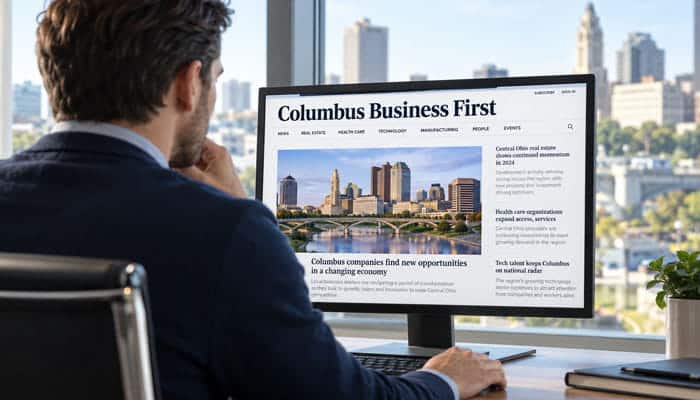
Columbus Business First is an established regional business news publication with local reporting, industry lists, and business research resources. Its website provides dated rankings, current news coverage, and information about its research products.
However, readers should evaluate individual claims according to the type of information being reported.
- Check publication dates: An older story may describe a plan that has since changed.
- Distinguish announcements from completed events: Proposed projects and planned investments may not proceed.
- Verify financial claims: Consult official filings and company statements where available.
- Review ranking criteria: Check the methodology, reporting period, and geographic scope of a list.
- Look for primary sources: Government documents, court filings, and official company announcements can help confirm important details.
- Recognize sponsored content: Advertising and sponsored articles should not be confused with independent editorial reporting.
- Confirm contact information: Executive roles, company addresses, and other business details can become outdated.
Some rankings rely on information supplied by participating companies and may not be independently verified in every respect. Readers should review each list’s methodology and disclosures before relying on its results.
This does not make a list useless. It means readers should understand what the data measures, what limitations apply, and whether independent verification is needed for the decision at hand.
Contact Columbus Business First
Readers looking for subscription assistance, editorial contacts, advertising information, or event support should use the publication’s official contact resources.
- Subscription and login support: Use the publisher’s customer support options for billing, access, and account issues.
- Editorial questions and corrections: Consult the newsroom contacts listed on the official website.
- Advertising inquiries: Use the publisher’s advertising resources.
- Events and nominations: Check the relevant program page for current contacts, deadlines, and eligibility requirements.
- App-related assistance: The mobile app listing provides the customer support number 866-853-3661. Confirm that this is the appropriate contact method for your particular issue.
For subscription changes or cancellation, consult the subscription terms and support instructions associated with your account. Keep any cancellation confirmation and review the next billing date to avoid misunderstandings.
For general information, visit the official Columbus Business First website.
Columbus Business First FAQs
1. What is Columbus Business First?
Columbus Business First is a regional publication covering business news, companies, real estate, and economic developments in Columbus and Central Ohio.
2. Who publishes Columbus Business First?
It is published by American City Business Journals (ACBJ), a publisher of regional business news across the United States.
3. Is Columbus Business First free to read?
Some content is available free, while premium articles and certain research tools require a paid subscription.
4. What is the Columbus Business First Book of Lists?
The Book of Lists features industry-specific company rankings and business information useful for market research, competitor analysis, and sales prospecting.
5. What is Columbus Business First 40 Under 40?
It is an awards program recognizing emerging professionals for their achievements and contributions to the Central Ohio community.
6. Does Columbus Business First organize networking events?
Yes. It hosts business gatherings, awards programs, and industry events. Check its official events calendar for registration details.
7. How can small businesses use Columbus Business First?
Small businesses can follow competitors, research potential customers, track local developments, and identify networking opportunities.
8. How can I find company rankings in Columbus Business First?
Use the website’s search tool or company lists directory. Check each list’s publication date, industry coverage, and ranking criteria before using its data.
Final Thoughts
Columbus Business First is a useful resource for people who want to understand the business environment in Columbus, Ohio, and the wider Central Ohio region. Its combination of local reporting, company rankings, public records, leadership recognition, and professional events makes it relevant to entrepreneurs, executives, investors, job seekers, sales teams, and researchers.
Its greatest value comes from using the right resource for the right purpose. Read regional news to understand developments, consult company lists to organize research, and verify important details before making business decisions.
If you need occasional updates, publicly accessible content and newsletters may be enough. If you regularly research companies, develop sales leads, or need premium regional business information, a subscription or Book of Lists product may be worth evaluating.
Before paying, compare the available plans, check the renewal terms, and select the product that matches your actual research needs.
Ultimately, Columbus Business First can serve as one part of a broader business research strategy, alongside official records, company disclosures, direct networking, and other reliable sources of information.