

The Evolution of Eyelash Artistry
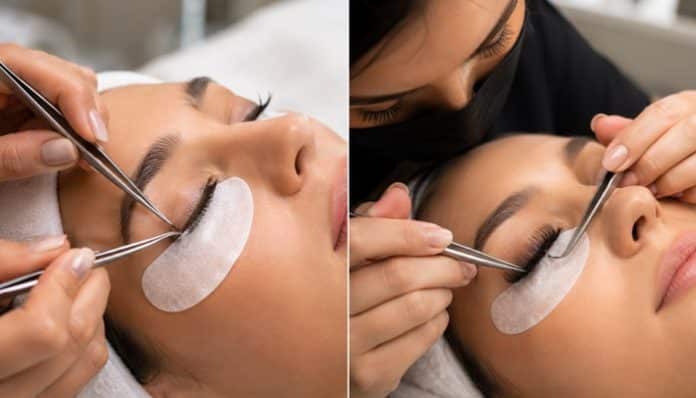
Semi-permanent eyelash extensions have grown from a niche beauty service into a global industry. As demand increases, lash artists need stronger skills in different techniques. Classic vs Russian volume lash training helps beginners understand the difference between traditional one-to-one application and advanced multi-lash styling.
When students first enter this field, they are often met with a choice regarding their initial education. Understanding the nuances between these styles is not just about aesthetics but also about the technical science of hair health and adhesive chemistry. To become a truly versatile artist, one must understand that these are not merely different styles but entirely different disciplines requiring unique physical dexterity and theoretical knowledge.
Understanding the Classic Lash Foundation
Classic lash application is the bedrock of the industry. This technique involves the application of a single synthetic extension to a single natural eyelash. It is the most natural looking style and is designed to add length and some thickness without creating an overly dramatic effect. For most beginners, this is where the journey starts.
- The primary focus of classic training is isolation. This is the act of separating one single natural lash from its neighbors so that the extension does not cause clumping or damage.
- Students learn about the various weights of lashes, typically ranging from 0.10mm to 0.15mm in diameter.
- The adhesive dip technique in classic application is straightforward, requiring a small bead of glue at the base of the extension.
- Proper placement involves ensuring the extension is attached precisely 0.5mm to 1mm away from the eyelid skin.
Many aspiring artists choose Training Beauty & Beyond for their initial Classic vs. Russian Volume: Breaking Down the Different Types of Lash Training because the curriculum emphasizes the importance of a strong foundational start. Without mastering the 1 to 1 application ratio, a technician will struggle to maintain the health of a client’s natural lashes, leading to premature shedding or permanent follicle damage.
The Technical Requirements of Classic Sets
The technical requirements for a classic set revolve around precision and symmetry. Because every extension is visible, any error in direction or placement becomes immediately obvious. Training programs for this level focus heavily on the ergonomics of the technician, teaching how to hold tweezers without causing repetitive strain injuries. It also covers basic eye shapes and how to map out a design that complements the natural anatomy of the client.
The Complexity of Russian Volume Techniques
Russian Volume is a significantly more advanced technique that originated in Russia around 2010. Unlike the classic method, volume involves creating a fan of multiple ultra fine extensions and applying them to a single natural lash. These fans are handcrafted by the technician during the appointment, requiring a level of manual dexterity that takes months or even years to perfect.
- Volume lashes are much thinner than classic lashes, usually measuring between 0.03mm and 0.07mm in diameter.
- The technician must calculate the weight of the fan to ensure it does not exceed the load bearing capacity of the natural hair.
- The fan must have a perfectly symmetrical spread to create a soft, fluffy appearance.
- The base of the fan must be pinched or wrapped around the natural lash to ensure a strong bond and seamless look.
Handmaking Fans vs. Premade Options
A major point of discussion in volume training is the difference between handmade fans and premade fans. While premade fans can save time, true Russian Volume training focuses on the art of handmaking.
This allows the artist to customize the fan for every single natural lash, adjusting the number of extensions based on the strength of the individual hair. This level of customization is what separates a master technician from a basic practitioner.
Assessing Skill Levels and Learning Curves
The learning curve for these two styles is vastly different. Classic lashing can often be learned in a few days of intensive training, though it takes weeks of practice to reach a professional speed. Volume lashing, however, is rarely taught to complete beginners. Most reputable educators require at least six months of experience in classic application before a student can enroll in a volume course.
- Classic training focuses on the basics of hygiene, eye anatomy, and the physical act of isolation.
- Volume training requires a refined sense of touch and the ability to manipulate microscopic fibers with high precision.
- Muscle memory plays a larger role in volume, as the fingers must learn to create the same fan shape thousands of times.
- Patience is the most critical attribute for a volume student, as the initial failure rate for creating fans is quite high.
Equipment and Product Variations
The tools used for these two techniques are not interchangeable. A technician transitioning from classic to volume will need to invest in an entirely new kit. Using the wrong tweezers for volume, for example, will make it nearly impossible to pick up multiple fine lashes at once without them slipping or crossing.
Specialized Tweezers
For classic sets, most artists use a straight or slightly curved isolation tweezer and a stronger curved pickup tweezer. For Russian Volume, the pickup tweezer must have a larger sweet spot and a much tighter grip. These are often L shaped or J shaped and are tested by hand to ensure they can hold 0.03mm lashes without losing tension.
Adhesive Behavior
The adhesive used for Russian Volume often has a faster drying time. Because the fan is held together by a tiny amount of glue at the base, it must set almost instantly upon contact with the natural lash to prevent the fan from closing or collapsing. Students at Training Beauty & Beyond learn how to monitor humidity and temperature in their workspace, as these environmental factors drastically affect how volume adhesive performs.
Business Implications and Revenue Potential
From a business perspective, offering both styles is essential for growth. Classic sets are often the entry point for new clients, but volume sets are where the highest profit margins exist. Because volume takes longer to apply and requires a higher level of skill, technicians can charge significantly more for these services.
- A classic full set might take ninety minutes and command a moderate price.
- A Russian Volume set can take up to three hours and often costs double or triple the price of a classic set.
- Hybrid sets, which mix both techniques, offer a middle ground for clients and a way for technicians to transition their skills.
Incorporating these advanced services through Training Beauty & Beyond allows a lash artist to market themselves as a specialist rather than a generalist. In a saturated market, being known for high quality volume work is a powerful way to stand out and attract a premium clientele who are willing to pay for expertise.
Health and Safety Considerations for Advanced Styles
The most significant risk in eyelash extensions is the potential for traction alopecia, which is hair loss caused by excessive weight or tension on the follicle. In classic lashing, the risk is lower as long as the extensions are not too long or too heavy. In Russian Volume, the risk increases because the technician is applying multiple extensions to one hair.
A comprehensive training program must include a deep dive into the weight chart. For example, three 0.07mm lashes do not weigh the same as one 0.21mm lash. In fact, they are much lighter due to the way the volume is calculated. Understanding these mathematical principles is vital to ensuring that the client’s natural lashes remain healthy over years of continuous wear.
Choosing the Right Path for Your Career
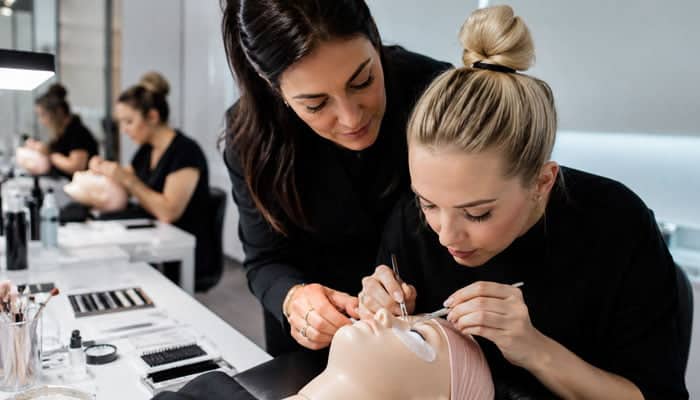
Deciding which training to pursue depends on your current career stage and your ultimate goals. If you are a newcomer, skipping the classic foundation is a mistake that often leads to poor habits and frustrated clients. However, if you have been performing classic sets for some time and feel your growth has plateaued, volume training is the logical next step.
When you look for a provider like Training Beauty & Beyond, you should look for courses that offer ongoing support. Mastery does not happen in a single weekend. It happens through months of feedback, troubleshooting, and refinement. A good program will provide you with the resources to continue learning long after the initial workshop has ended.
Mastering the Transition Between Styles
The transition from classic to volume is often described as learning to write with your non dominant hand. It requires a complete recalibration of your movements. Many artists find that their speed drops significantly when they first start offering volume, which can be discouraging for established professionals.
- Start by practicing fan creation on a sponge or a training head for at least one hour every day.
- Offer discounted sets to loyal clients while you are still in the perfecting phase.
- Focus on the quality of the fans rather than the speed of the application.
- Gradually introduce hybrid sets to get used to the mixing of textures and weights.
By diversifying your skill set, you not only increase your income but also your artistic satisfaction. The ability to create a custom look that ranges from a soft, wispy classic set to a dense, dark Russian Volume set ensures that you can cater to any client who walks through your door. This versatility is the hallmark of a true professional in the modern beauty landscape.