
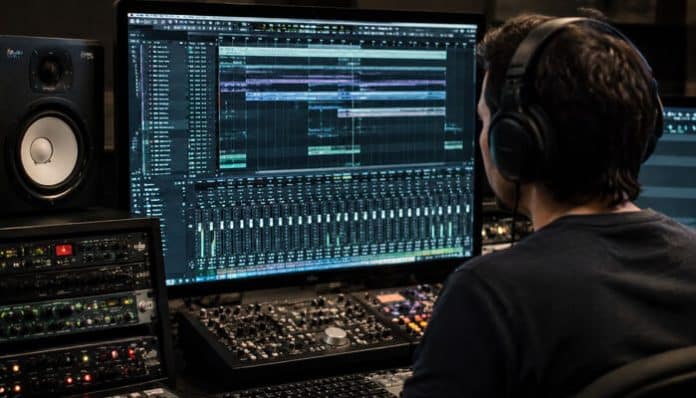

There’s a version of audio layering shaped by strong Mixing Habits that’s technically correct but creatively inert. Every element is present, nothing is clipping, the levels are balanced — and the whole thing sits flat, without depth or movement. This is more common than it should be, and it usually comes down to how the layers were built rather than how they were mixed. Layering and mixing aren’t sequential stages; they’re the same process approached from two directions, and treating them separately is where most problems originate.
The fundamentals of audio layering are straightforward enough to describe but genuinely difficult to execute consistently: every element in a mix should be earning its place spectrally, temporally, and emotionally. If a layer isn’t contributing something distinct — a frequency range, a textural quality, a rhythmic function — it’s likely creating problems for everything around it without adding anything in return.
Frequency Thinking Has to Come Before Level Thinking
The instinct in most mixing situations is to reach for the fader first. Something isn’t sitting right, so you push it up or pull it down until it sounds closer to where it should be. This works up to a point, and then it stops working entirely — because the problem usually isn’t level, it’s frequency overlap.
Two sounds occupying the same spectral range will always compete with each other, regardless of how carefully their levels are balanced. The solution is to carve space for each element before worrying about where it sits in the overall level hierarchy. High-pass filtering elements that don’t need low-frequency content, using narrow EQ cuts to reduce overlap in the mid-range, and being deliberate about where each layer lives in the frequency spectrum — these decisions, made early, make everything that follows easier.
This applies as much to layered sound design as it does to music mixing. A three-layer impact sound built from a sub hit, a midrange body, and a high-frequency transient needs the same spectral thinking as a mix with bass, rhythm section, and lead elements. The categories are different; the problem is identical.
Building Depth Through Dynamic Contrast

Flat mixes — the technically competent but emotionally inert variety — almost always have the same structural problem: every element is operating at roughly the same dynamic level throughout. There’s no sense of foreground and background, no movement between density and space, no moment where one layer recedes to let another breathe.
Dynamic contrast is what creates the perception of depth in a mix. This doesn’t require dramatic volume automation — subtle changes in level, filtering, and reverb send amounts over time can shift an element’s perceived distance significantly without the change being consciously audible. The goal is a mix that feels like it has dimension, where some elements feel close and others feel recessed, and where that spatial relationship shifts as the piece moves.
Reverb and delay are the primary tools for this, but they require more precision than they usually get. A single reverb send with everything routed into it at varying levels produces a mix where everything sounds like it exists in the same space — which is rarely what a scene or sequence actually needs. Using multiple reverb types, each matched to the acoustic character of a specific layer, builds a more convincing and more interesting spatial environment.
Why Collaborative Projects Demand Shared Standards
Audio layering and mixing become significantly more complex when multiple people are working on the same project. Without shared standards — consistent gain staging, agreed file formats, common naming conventions, unified loudness targets — the integration phase of a collaborative mix becomes a troubleshooting session rather than a creative one.
This is one of the practical arguments for teams investing in sound effects for professional teams through a centralized, well-organized library rather than having individual members source assets independently. When everyone on a post-production team is pulling from the same collection of broadcast-spec, consistently normalized material, the integration problems that come from mismatched source quality largely disappear before they start.
The Edit Underneath the Mix
One thing that mixing can’t fix — and that layering decisions can’t compensate for — is poor editorial timing. Sounds that don’t land precisely where they should, layers that start a few frames early or late, event sounds that don’t sync with their visual triggers: these are editing problems, and they remain editing problems no matter how well the mix is balanced.
The most reliable way to catch timing issues before they become mix problems is to work at high zoom levels during the editorial phase, checking transient alignment visually as well as aurally. In dense, layered sound design especially, small timing offsets between layers can cause comb filtering and phase issues that manifest as tonal coloration rather than obvious timing problems — making them difficult to identify without close inspection of the waveform relationships between elements.