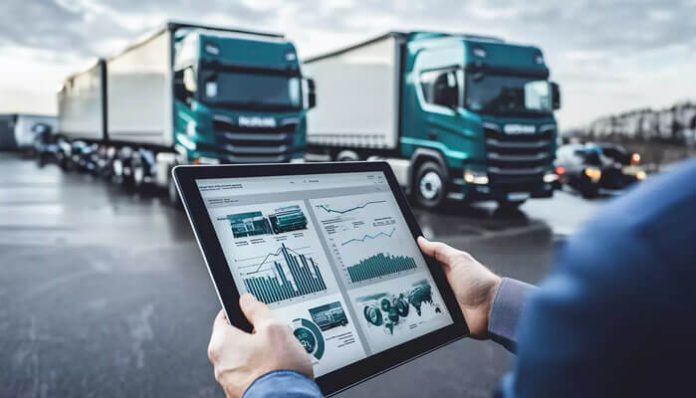

There is a moment every delivery startup hits. The orders are coming in, the delivery fleet is expanding, and suddenly the operations that once felt manageable start to feel like a daily fire drill. Drivers are calling in with questions. Stop assignments are being texted across three different apps. Someone misses a delivery window, and you only find out when a customer complains. The instinctive response is to hire another dispatcher. But that is rarely the real solution, and for most growing delivery businesses, it is an expensive one that only delays the deeper problem.
The real issue is not headcount. It is a process. And the startups that scale efficiently are the ones that fix the process first.
Why Hiring More Dispatchers Is Not the Answer
Every new dispatcher you bring on adds a salary, a learning curve, and a new communication layer between you and your drivers. That might make sense at enterprise scale, but for a startup growing from five to fifteen drivers, it creates bottlenecks rather than removing them.
The math is also unfavorable. A dispatcher handling ten routes manually is probably spending two to three hours each morning just building and assigning those routes. Add drivers calling in mid-route for directions or stop updates, and you have someone whose entire day is consumed by coordination rather than problem solving.
More critically, when your operation depends entirely on one person’s knowledge of routes, customers, and driver availability, you have created a single point of failure. That person takes a day off or leaves, and your operations suffer immediately.
The answer is not to replicate that dependency with another hire. It is to remove the dependency altogether.
What Dispatch Efficiency Actually Looks Like
Efficient dispatch is not about faster humans. It is about removing the manual steps that slow humans down in the first place.
Think about what a dispatcher actually does each day: they build routes, assign them to drivers, communicate stop instructions, track driver progress, handle schedule changes, and confirm deliveries. Every one of those tasks can be systematized. When they are, a single operations manager can comfortably oversee fifteen or twenty drivers, not because they work harder, but because the system handles the coordination layer automatically.
This is where the decision to automate driver dispatch and tracking becomes a genuine operational lever rather than just a software purchase. When routes are built automatically, pushed to driver phones with a single click, and updated in real time as conditions change, the dispatcher’s role shifts from coordinator to decision-maker, which is a much higher-value use of their time.
The Four Operational Shifts That Let You Scale Without Headcount
1. Centralize Route Planning and Assignment
The most time-consuming part of daily dispatch is building routes from scratch. If your team is still doing this manually, pulling up maps, dragging stops around, or filling in spreadsheets, you are spending two hours every morning on something that should take ten minutes.
Route optimization software solves this by importing your stop list, accounting for driver availability and vehicle capacity, and generating efficient multi-stop routes automatically. The assignment step becomes a one-tap action. Drivers receive their routes directly on their phones without a single phone call.
For a fleet of ten drivers, this alone can recover fifteen to twenty hours of dispatcher time per week, hours that used to go toward coordination and can now go toward growing the business.
2. Push Updates Directly to Drivers
One of the biggest sources of daily friction in fleet operations is the back-and-forth between dispatchers and drivers. A stop gets cancelled. A customer wants a different time window. A new order needs to be squeezed into an existing route. Each of these changes, handled manually, means a phone call, a text thread, and a confused driver trying to reorder their day on the fly.
When route changes are pushed directly to the driver’s app and the app updates the sequence automatically, that entire communication chain disappears. The driver sees the updated route. The dispatcher sees confirmation that it was received. No calls necessary.
This is particularly valuable as you scale. With five drivers, thirty daily phone calls is manageable. With twenty drivers, it is unsustainable.
3. Replace Check-In Calls With Live Tracking
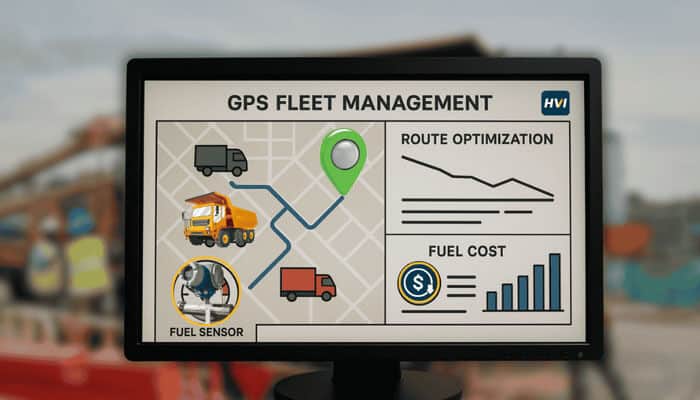
“Where are you?” is arguably the most expensive question in fleet operations. Every check-in call interrupts a driver, adds to a dispatcher’s workload, and produces information that is outdated within minutes.
Live GPS tracking replaces the check-in call entirely. Vehicle tracking for dealerships allows a dispatcher to see every driver’s current position, which stop they are on, and whether they are running behind, without picking up the phone. When a delay does appear, they can proactively adjust the remaining route or notify the customer before it becomes a complaint.
This visibility also pays dividends at the end of the day. Accurate GPS data provides route history for dispute resolution, mileage records for payroll, and driver performance data that informs future scheduling decisions.
4. Build Driver Accountability Into the System
One of the underappreciated costs of poor dispatch systems is driver inconsistency. When routes are communicated informally through texts, calls, or handwritten manifests, drivers have little accountability for following them. They make judgment calls, take different routes, skip steps, or reorder stops based on personal preference rather than operational logic.
When routes are delivered through a driver app with turn-by-turn navigation and stop-by-stop completion tracking, that inconsistency drops significantly. Drivers follow routes more reliably because the app makes it easier to follow the route than to deviate from it. Proof of delivery, including photos, signatures, and timestamps, is captured automatically at each stop.
The result is not just better accountability. It is faster onboarding. A new driver with access to a well-built route in a clear app can operate independently within their first day, without needing a dispatcher to guide them through every stop.
What This Looks Like in Practice
Consider a courier startup running eight drivers across two city zones. Previously, a single dispatcher spent two hours every morning building routes in a spreadsheet, then another hour texting assignments and answering driver questions throughout the day. Any schedule change required multiple calls to coordinate.
After shifting to an automated dispatch system, morning route planning dropped to under fifteen minutes. Drivers received routes directly on their phones. Live tracking replaced daily check-in calls. Proof of delivery was captured automatically at every stop.
The same dispatcher now manages twelve drivers across three zones without additional hiring. The difference is not more hours worked. It is fewer hours spent on coordination that the system now handles.
When You Should Actually Hire Another Dispatcher
Automation does not replace all human judgment. There are scenarios where an additional dispatcher genuinely adds value: high-volume same-day operations with constant order changes, complex multi-depot networks, or accounts that require dedicated human relationship management.
But for the majority of delivery startups growing from five to twenty drivers, the constraint is not people. It is process. Fix the process first through better route automation, real-time tracking, and driver app integration, and you will likely find that your existing team can handle significantly more volume than you expected.
The Practical Starting Point
If your current dispatch process depends on calls, texts, and spreadsheets, start by auditing where dispatcher time actually goes each day. You will likely find that sixty to seventy percent of it is pure coordination, tasks a well-configured system can handle without human intervention.
From there, the path to scaling without additional headcount becomes straightforward: automate route building and assignment, push updates to drivers directly, track live progress without check-in calls, and capture delivery data automatically. Each of those steps removes a coordination dependency and gives your operations team capacity to grow without growing the payroll.
The goal is not to eliminate your dispatcher. It is to make them ten times more effective and to build an operation that scales with your fleet, not against it.