

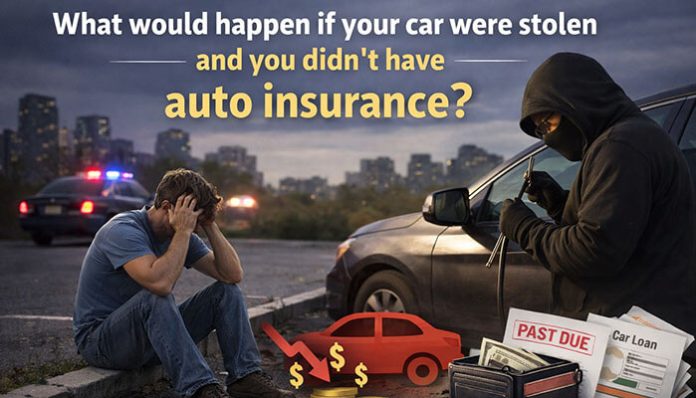

Car theft is one of the most stressful situations a vehicle owner can experience. Discovering that your car has disappeared can quickly turn into financial panic, especially if you do not have auto insurance coverage that protects against theft. Many drivers wonder what would happen if your car were stolen and you didn’t have auto insurance?, as the financial and practical consequences can be significant.
Without insurance protection, the financial consequences of a stolen vehicle can be severe. Vehicle owners may need to replace the car using their own savings, continue paying outstanding loan balances, and find alternative transportation while dealing with the loss.
Vehicle theft remains a global problem affecting millions of drivers every year. While comprehensive auto insurance can protect car owners from financial losses caused by theft, many drivers only carry basic liability coverage or drive without adequate protection. In these situations, the financial burden of a stolen vehicle can fall entirely on the owner.
This guide explains what happens if your car is stolen without insurance, the financial and legal consequences, recovery possibilities, and how drivers can reduce the risk of vehicle theft.
Car Theft Statistics and Trends
Vehicle theft continues to be a major issue worldwide. According to the National Insurance Crime Bureau, more than 1.02 million vehicles were reported stolen in the United States in 2023, representing billions of dollars in financial losses.
Many thefts occur in residential neighborhoods, apartment parking areas, and public streets where vehicles are left unattended for long periods. Cars without modern anti-theft systems such as immobilizers or alarms are often easier targets.
Modern car theft techniques are also evolving. Criminal groups increasingly use electronic tools to exploit keyless entry systems, duplicate wireless keys, and bypass digital security systems. Organized theft rings may transport stolen vehicles across regions or dismantle them for parts.
Because of these trends, vehicle owners must understand the financial risks of theft and the importance of insurance coverage.
Understanding Auto Insurance and Theft Coverage
Auto insurance is designed to protect drivers from financial losses related to accidents, liability claims, and unexpected events such as theft or natural disasters.
However, not every type of insurance policy includes theft protection. The level of coverage depends on the type of policy a driver chooses.
Most theft protection is included in comprehensive auto insurance, which covers damage or loss caused by events other than collisions, including theft, vandalism, fire, and natural disasters.
Drivers who only carry liability insurance do not receive compensation if their own vehicle is stolen.
Types of Auto Insurance and Theft Coverage
Understanding the difference between insurance types is important when evaluating theft protection.
Liability insurance is the most basic type of coverage and is legally required in many countries. It pays for injuries or property damage caused to other people in an accident. However, it does not cover damage to your own vehicle and does not provide protection if your car is stolen.
Comprehensive insurance provides broader coverage. It protects vehicles against theft, vandalism, natural disasters, fire, falling objects, and certain non-collision damage.
| Feature | Liability Insurance | Comprehensive Insurance |
|---|---|---|
| Covers damage to other vehicles | Yes | No |
| Covers damage to your own vehicle (non-collision) | No | Yes |
| Covers vehicle theft | No | Yes |
| Covers vandalism | No | Yes |
| Covers natural disasters | No | Yes |
| Required by law | Yes (in most countries) | Optional |
| Cost | Lower | Higher |
| Financial protection level | Limited | High |
If your car is stolen and you only have liability coverage, the insurance company will not reimburse you for the loss of the vehicle.
What Happens If Your Car Is Stolen Without Insurance?
If your car is stolen and you do not have insurance coverage that protects against theft, several financial challenges may arise.
You Lose the Entire Value of the Vehicle
The most immediate consequence is the loss of your car’s full value. You lose the full value of your car without insurance.
Without insurance coverage, there is no company responsible for reimbursing you. If the car is never recovered, you must replace the vehicle using your own funds.
For many drivers, this loss can represent a major financial setback.
You May Still Have to Pay Your Car Loan
If your stolen vehicle was financed, the situation becomes more complicated.
Even though the car is gone, the loan agreement remains legally binding. This means you must continue making loan payments until the remaining balance is fully repaid.
In some cases, car owners find themselves paying monthly loan installments for a vehicle they no longer possess.
Transportation Costs Can Increase
When a vehicle is stolen, daily transportation becomes a challenge.
Without access to a car, drivers may need to rely on:
- public transportation
- ride-sharing services
- rental vehicles
- carpooling with friends or coworkers
These costs can accumulate quickly, especially for people who depend on their vehicles for commuting or work.
Personal Belongings Inside the Car May Be Lost
Many drivers keep personal items inside their vehicles, such as phones, laptops, documents, or work equipment.
If the car is stolen, these belongings may disappear as well. Most auto insurance policies do not cover personal items inside the vehicle unless additional policies like renters or homeowners insurance apply.
Without insurance, replacing these items becomes another financial burden.
What Happens If the Stolen Car Is Used in a Crime?

A common concern for car owners is whether they could be held responsible if their stolen vehicle is used for illegal activity.
If a thief uses your vehicle in crimes such as robbery, hit-and-run accidents, or illegal transportation, authorities may initially contact the registered owner.
However, once you file a police report confirming the theft, legal responsibility generally shifts away from the owner. Reporting the theft quickly is essential to protect yourself from potential liability.
How Long Police Search for a Stolen Vehicle
Law enforcement agencies typically begin searching for a stolen vehicle immediately after the theft is reported.
Many vehicles are often recovered within the first 24 to 48 hours, especially when police receive accurate information about the vehicle.
Authorities may use tools such as traffic cameras, license plate recognition systems, and national vehicle databases to track stolen vehicles. However, recovery becomes more difficult if the vehicle is transported across regions or dismantled for parts.
What Happens If the Car Is Recovered Later?
In some cases, stolen vehicles are recovered weeks or months after the theft.
If the car is found, the owner may regain possession of it. However, the vehicle may have suffered damage, missing parts, or mechanical problems caused during the theft.
Without insurance coverage, the owner must pay for repairs, towing, and storage costs.
Most Commonly Stolen Vehicles
Certain vehicles are more frequently targeted by thieves. Older models without modern security features are often easier to steal.
Popular targets often include:
- older sedans and compact cars
- vehicles without immobilizers
- cars with traditional ignition systems
- vehicles parked in unsecured areas
Modern vehicles with advanced anti-theft technology tend to have lower theft rates.
How Keyless Entry Technology Has Changed Car Theft
Many modern vehicles use keyless entry systems that allow drivers to unlock and start the car without inserting a key.
While convenient, this technology has also introduced new security risks.
Some thieves use electronic relay devices to capture signals from wireless car keys and unlock vehicles remotely. This method, known as a relay attack, allows criminals to access vehicles even when the key is inside a home.
Using protective key signal blockers or parking vehicles in secure locations can reduce this risk.
Is Comprehensive Insurance Worth It?
Comprehensive auto insurance is often relatively affordable compared to the potential financial loss caused by vehicle theft.
Insurance premiums usually represent a small percentage of a car’s total value each year. However, the policy can provide compensation worth thousands of dollars if a vehicle is stolen or destroyed.
For drivers who rely heavily on their vehicles, comprehensive coverage can provide valuable financial protection and peace of mind.
How to Reduce the Risk of Car Theft
Although no prevention method is completely guaranteed, several strategies can reduce the likelihood of vehicle theft.
Effective prevention measures include:
- parking in well-lit areas
- installing steering wheel locks
- using car alarm systems
- installing GPS tracking devices
- avoiding leaving keys inside the vehicle
- locking doors and windows at all times
Modern anti-theft technology significantly improves vehicle security.
What to Do Immediately If Your Car Is Stolen
If your car is stolen and you do not have insurance coverage, acting quickly is essential.
You should immediately:
- Report the theft to the police
- Provide the vehicle identification number (VIN) and license plate information
- Notify your vehicle registration authority
- Contact your lender if the car was financed
- Check nearby cameras or witnesses for evidence
Prompt reporting increases the chances of recovering the vehicle.
Conclusion
Having a car stolen is already a stressful experience, but the situation becomes much more serious when you do not have auto insurance. Many drivers ask what would happen if your car were stolen and you didn’t have auto insurance, since the financial and practical consequences can be significant.
Without insurance protection, car owners must handle the full financial burden themselves, including replacing the vehicle, paying loan balances, and managing transportation costs.
Understanding how insurance works and taking steps to protect your vehicle can help reduce financial risk. For many drivers, comprehensive insurance offers valuable protection against unexpected events like vehicle theft.
Frequently Asked Questions(FAQs)
1. What should I do if my car is stolen and I do not have auto insurance?
Report the theft to the police immediately and provide details such as the license plate number and VIN. You should also notify your vehicle registration authority and lender if the car was financed.
2. Who pays for a stolen car if there is no insurance coverage?
If your car is stolen and you do not have theft coverage, you are responsible for the entire financial loss, including replacing the vehicle and paying any remaining loan balance.
3. Can you claim anything if your car is stolen without insurance?
No. Without comprehensive insurance coverage, there is usually no financial compensation for a stolen vehicle.
4. Does liability car insurance cover vehicle theft?
No. Liability insurance only covers damage or injuries caused to others. It does not cover theft or damage to your own vehicle.
5. How can drivers reduce the risk of car theft?
Drivers can reduce theft risk by installing alarm systems, using steering wheel locks, parking in secure areas, and avoiding leaving keys inside the vehicle.
