



What is social media engagement? It is one of the clearest signals that your content is connecting with real people. Social media engagement shows whether your audience is only seeing your posts or actually interacting with them through likes, comments, shares, clicks, saves, replies, watch time, and other actions that reflect attention and interest. Because different platforms define and display these actions differently, a smart strategy measures more than vanity metrics alone when evaluating what is social media engagement and why it matters.
In simple terms, social media engagement is the collection of meaningful actions people take after they encounter your content. That can include commenting on a LinkedIn post, sharing a Facebook update, saving an Instagram Reel, clicking a call to action, or watching a YouTube video long enough to signal genuine interest. On platforms like Instagram and Facebook, Meta surfaces metrics such as interactions and accounts engaged. On LinkedIn, engagement rate is tied to interactions per impression. On YouTube, engagement includes views, likes, subscriptions, watch time, average view duration, and video-level engagement reporting.
For marketers, creators, and businesses, engagement matters because it helps answer three practical questions: Are people paying attention? Does the content match audience intent? Is the content strong enough to build relationships, not just impressions? Google does not reward shallow content strategies for long-term visibility. Instead, people-first, useful content tends to perform better over time. That means strong engagement is most valuable when it comes from genuinely helpful content, not bait tactics.
This guide is for marketers, creators, business owners, local brands, and anyone trying to understand whether their social media content is actually working. It is especially useful if you want to move beyond vanity metrics and start using engagement data to improve content decisions, audience growth, and campaign performance.
What Is Social Media Engagement?
Social media engagement is the sum of meaningful interactions people have with your content across social platforms. That includes reactions, comments, shares, saves, clicks, replies, follows, watch time, and other actions that show interest or participation. The exact signals differ by platform, but the core idea stays the same: engagement measures how actively people respond to what you publish.
Why Social Media Engagement Matters
High reach without engagement can mean your content is visible but not persuasive. Engagement gives a stronger clue about resonance because it reflects behavior rather than passive exposure. It helps show whether people are interested enough to respond, share, click, or stay with the content.
Engagement also improves your ability to learn from your audience. Comments reveal objections, questions, and opinions. Saves hint at long-term value. Shares suggest usefulness or emotional impact. Clicks show action intent. In short, engagement gives you feedback that helps you improve both content and strategy.
From an SEO perspective, social engagement should not be treated as a direct shortcut to Google rankings. However, it can support search performance indirectly by increasing visibility, brand awareness, repeat visits, and the chances of useful content being discovered more widely.
What Counts as Social Media Engagement?
The exact list depends on the platform and format, but common engagement actions include:
- Likes, reactions, and favorites
- Comments and replies
- Shares, reposts, and retweets
- Saves and bookmarks
- Link clicks and profile visits
- Follows and subscriptions
- Watch time, average view duration, and retention
- Story replies, poll votes, sticker taps, and direct messages
Core Social Media Engagement Metrics You Should Track
1. Total Engagements
This is the raw number of interactions your content receives. It is useful for spotting high-performing posts quickly, but by itself it can be misleading because larger accounts naturally collect more interactions.
2. Engagement Rate
Engagement rate helps normalize performance by comparing interactions with impressions, reach, followers, or views, depending on your reporting method.
A practical formula many brands use is:
Engagement Rate by Impressions = (Total Engagements ÷ Impressions) × 100
This is useful when you want to compare posts with different reach levels.
3. Reach and Impressions
Reach tells you how many unique accounts or people saw the content, while impressions show how many times it was displayed. These metrics are essential because engagement only makes sense in context.
4. Click-Through Rate and Clicks
Clicks matter when your goal is traffic, lead generation, or conversions. A post with fewer comments but strong click performance may be more valuable than a highly liked post that drives no action.
5. Saves and Shares
Saves often indicate lasting utility, while shares often signal usefulness, agreement, identity, or emotional response. These are especially valuable because they suggest your content is important enough for people to keep or pass along.
6. Watch Time and Retention
For video-heavy platforms, attention depth matters. Watch time and retention help show whether people are actually staying with the content or dropping off quickly.
7. Accounts Engaged or Engaged Users
This metric shows how many unique users interacted with your content. It helps you understand breadth of participation, not just total action volume.
Quick Comparison Table: Key Metrics and What They Mean
| Metric | What It Means | Best Used For |
|---|---|---|
| Engagement Rate | Percentage of viewers who interacted | Comparing post quality |
| Reach | Unique people or accounts reached | Awareness |
| Impressions | Total times content was displayed | Visibility |
| Clicks / CTR | Action on a link or CTA | Traffic and leads |
| Saves | Content kept for later | Educational content |
| Shares | Content passed to others | Utility and virality |
| Watch Time | Total viewing time | Video quality |
| Average View Duration | Average time watched per viewer | Retention strength |
| Accounts Engaged | Unique users who interacted | Breadth of response |
A Simple Engagement Formula Guide
Use the formula that best matches your objective:
- By Impressions
(Total Engagements ÷ Impressions) × 100
- By Reach
(Total Engagements ÷ Reach) × 100
- By Followers
(Total Engagements ÷ Total Followers) × 100
- By Views for Video
(Total Engagements ÷ Video Views) × 100
If you want clean post-to-post comparison on a platform that reports impressions clearly, engagement by impressions is usually the easiest option. If your goal is community health, tracking unique engaged accounts and comment quality alongside rate is often more insightful than rate alone.
How Does Social Media Engagement Differ Across Social Media Platforms?
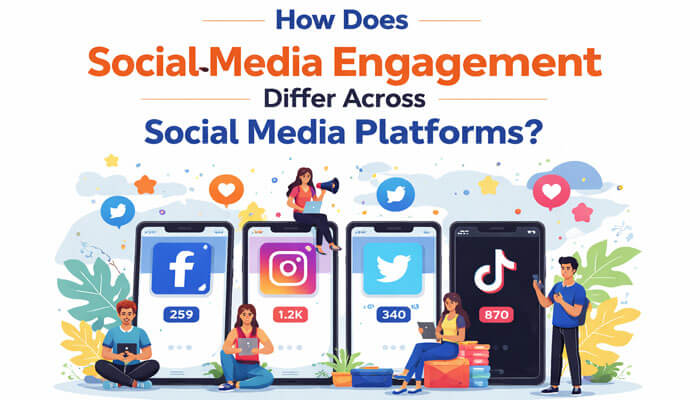
Social media engagement differs because each platform is built around different user behaviors and different analytics systems. LinkedIn often treats engagement as interaction density against impressions. YouTube cares heavily about watch time, average view duration, audience retention, and Shorts engagement. Instagram and Facebook surface interactions, accounts engaged, saves, shares, and broader content insights through Meta tools. That means a good result on one platform may not look like a good result on another.
You should not compare platforms directly without context. A YouTube video with modest comments but strong watch time may be healthier than a clip with high click-through rate and weak average view duration. A LinkedIn post may perform well because it gets strong interaction relative to impressions. An Instagram post may succeed because of saves and shares rather than clicks. Context matters more than raw numbers alone.
Key Differences Across Platforms
- LinkedIn: often emphasizes clicks, comments, reposts, and engagement relative to impressions
- YouTube: focuses heavily on watch time, average view duration, retention, and overall viewing behavior
- Instagram: values saves, shares, comments, reach, and accounts engaged
- Facebook: often tracks reactions, comments, shares, clicks, and page interactions
- TikTok: depends strongly on short-form viewing behavior, hook strength, shares, comments, and replay value
Platform-Specific View of Social Media Engagement
• Instagram Engagement
Instagram engagement commonly includes likes, comments, shares, saves, reach, and accounts engaged. It is especially useful for content that teaches, inspires, or gives people something worth saving for later.
What to watch on Instagram:
- Saves
- Shares
- Comments
- Reach
- Accounts engaged
• Richer Look at Instagram Insights
Instagram Insights is useful not only for single-post interactions but also for wider account and content trends over time. Looking at post performance, story interactions, and overall account movement together gives a more complete view of audience behavior.
• Facebook Engagement
Facebook engagement typically includes reactions, comments, shares, clicks, and broader page interaction patterns.
What to watch on Facebook:
- Shares
- Comments
- Link clicks
- Post interactions
• LinkedIn Engagement
LinkedIn engagement is especially useful for evaluating professional content performance. It often works well for thought leadership, opinion posts, industry updates, and practical advice.
What to watch on LinkedIn:
- Clicks
- Comments
- Reposts
- Engagement rate by impressions
• YouTube Engagement
YouTube engagement is more attention-based than many feed platforms. It is less about surface interaction alone and more about whether viewers stay with the content.
What to watch on YouTube:
- Watch time
- Average view duration
- Retention drops
- Comments
- Likes
- Subscriptions
• Stronger Look at Video-Specific Engagement
Video engagement should be judged differently from static content because attention quality matters more than surface reaction alone. A video can be highly successful even if it does not generate the most comments, as long as viewers keep watching and stay engaged through important moments. For short-form video, early hook strength is especially important.
• TikTok Engagement
TikTok engagement is strongly shaped by short-form viewing behavior. Performance often depends on how quickly the content earns attention and whether it keeps viewers watching.
What to watch on TikTok:
- Shares
- Comments
- Viewing behavior
- Replay value
- Completion patterns
Engagement by Content Type
Not every format earns engagement in the same way. Understanding content type performance helps you create smarter posts instead of repeating the same format everywhere.
Short Videos
Short videos often perform well when they win attention quickly and keep viewers watching. Strong hooks, clear captions, fast pacing, and immediate relevance improve retention and replay behavior.
Carousels
Carousels often work well for education, step-by-step advice, comparisons, and mini-guides. They tend to earn saves and shares because readers can revisit them later.
Static Images
Static images can still work when the visual is strong, the message is clear, and the post creates emotional or practical relevance. They often need stronger copy if your goal is comments or clicks.
Polls
Polls are useful for low-friction participation. They can increase interaction because they ask for a simple choice rather than a full written response.
Stories
Stories are strong for lighter, more frequent engagement. Replies, sticker taps, shares, and link taps can reveal interest at a more intimate level than feed posts.
Live Streams
Live streams can create deep engagement because they allow real-time participation through comments, reactions, questions, and immediate feedback.
Tools to Measure Social Media Engagement Effectively
To measure engagement properly, use native platform analytics first before relying on third-party dashboards.
- Instagram Insights: useful for post-level and account-level performance
- Meta Business Suite: helps track activity across Facebook and Instagram
- LinkedIn Page Analytics: shows impressions, engagement rate, clicks, reactions, comments, and shares
- LinkedIn Post Analytics: useful for individual posts across multiple formats
- YouTube Analytics: especially important for watch time, average view duration, and retention
A practical workflow is simple: use native analytics to identify winners, then compare performance by format, topic, and hook instead of only looking at total likes.
Best Metric by Goal: A Quick Shortcut
| Goal | Best Metrics to Watch |
|---|---|
| Awareness | Reach, impressions, shares |
| Community building | Comments, replies, accounts engaged |
| Education / usefulness | Saves, shares, watch time |
| Traffic | Clicks, click-through rate |
| Leads / conversions | Clicks, conversion path quality |
| Video growth | Watch time, average view duration, retention |
| Brand trust | Comments, shares, repeat engagement |
Social Media Engagement Examples
Example 1: Educational Carousel on Instagram
A skincare brand posts a carousel titled “5 mistakes ruining your morning routine.” The post earns fewer likes than a lifestyle photo, but it generates more saves, shares, and comments asking follow-up questions. That is stronger engagement because the audience treats the content as useful and worth revisiting.
Example 2: LinkedIn Opinion Post
A founder publishes a short post about a hiring mistake their company made and how they fixed it. The post drives a high number of comments and clicks relative to impressions. That usually signals stronger performance than a post with broad views but weak interaction density.
Example 3: YouTube Tutorial
A creator uploads a 12-minute tutorial. The video gets moderate views, but watch time and average view duration are strong, and audience retention remains steady through the core teaching section. Those signals show meaningful viewer involvement.
Example 4: Facebook Local Business Post
A restaurant shares a weekend special with a clear photo, price, and reservation link. The post receives comments, shares among local groups, and link clicks. For that business goal, those action-oriented interactions matter more than likes alone.
A Practical Real-World Insight
In real content workflows, educational posts often drive saves, opinion-led posts often drive comments, and short videos often win reach faster than deeper discussion. That does not mean one format is always better than another. It means the best-performing content usually depends on the goal, the platform, and the audience’s current intent.
Best Tips to Improve Social Media Engagement
1. Publish Content That Solves a Real Problem
Helpful content tends to earn stronger engagement than empty trend-chasing because it gives people a reason to save, share, comment, or click.
2. Match the Format to the Platform
Do not post every idea in the same way everywhere. LinkedIn discussion posts, Instagram carousels, YouTube tutorials, and TikTok short-form hooks serve different user behaviors and content expectations.
3. Optimize Your Opening Seconds or First Lines
Attention is won early. On video platforms, weak openings often cause retention drops. On text-first platforms, weak openings reduce clicks and comments.
4. Ask Better Questions
Generic prompts like “Thoughts?” often underperform. Ask specific, relevant questions that are easy to answer from experience.
5. Make Content Easy to Save or Share
Checklists, frameworks, how-to posts, benchmarks, templates, myth-versus-fact posts, and short educational breakdowns often create stronger save and share behavior.
6. Respond to Comments and Messages
Engagement is not only what your audience does. It is also how you continue the conversation. Active replies can improve discussion depth and trust.
7. Track Engagement by Goal, Not Ego
If your objective is awareness, watch reach and shares. If it is trust, watch comments and saves. If it is lead generation, watch clicks and conversion paths. If it is video growth, watch retention and watch time.
8. Reuse Winners, Not Just Ideas
When a topic, angle, hook, or format works, turn it into a series, update, reel, short, thread, or carousel. Good engagement data should guide your editorial calendar.
How to Improve Engagement for Businesses vs Creators

| Segment | Main Engagement Focus | Metrics to Prioritize | Best Content Direction |
|---|---|---|---|
| Brands and Businesses | Awareness, trust, and conversion | Shares, saves, clicks, reach, and content interactions | Educational posts for awareness, proof-driven content for trust, and action-oriented posts for conversions |
| Personal Brands and Creators | Conversation, loyalty, and repeat attention | Comments, shares, watch time, audience retention, and returning interest | Personal storytelling, lessons learned, opinions, and practical tutorials |
| Local Businesses | Local intent and direct action | Comments, local shares, profile actions, messages, bookings, and link clicks | Timely local offers, updates, event posts, and customer-focused content |
How Often to Review Engagement Metrics
A practical review cadence makes engagement data more useful.
- Daily: check campaigns, paid promotions, launches, or time-sensitive posts
- Weekly: review content trends, top-performing topics, recurring formats, and audience response patterns
- Monthly: review strategy, channel goals, campaign themes, and platform-level performance patterns
How to Turn Engagement Data Into Action
Measuring engagement is useful, but using engagement to make decisions is what improves performance.
- High saves: create more educational, reference-style, or checklist content
- High shares: double down on useful, opinion-led, or identity-driven posts
- High clicks but low comments: your call to action may be strong, but the post may not create enough conversation
- Strong reach but low engagement: the message may be too weak, too broad, or mismatched to the audience
- Strong retention but low clicks: the content is valuable, but your conversion path may need work
- High comments but low shares: the post may spark discussion without feeling useful enough to save or forward
- Good impressions but weak engagement rate: the post is being seen, but not creating enough meaningful response
Common Mistakes That Hurt Engagement
Chasing Vanity Metrics Only
Likes alone can hide weak intent. A post with fewer likes but stronger saves, comments, clicks, or watch time may be far more valuable depending on your goal.
Using the Same KPI for Every Platform
A YouTube video should not be judged exactly like a LinkedIn post, and an Instagram carousel should not be judged exactly like a Facebook link post. Each platform supports different content behaviors.
Publishing Without a Clear Content Purpose
Content built without a specific audience need often produces weak engagement because people do not know why they should respond.
Ignoring Retention in Video
Video creators often focus on views while overlooking audience retention and average view duration. That can lead to weak interpretation of actual content performance.
A Practical Framework to Measure Social Media Engagement
Use this simple monthly workflow:
- Step 1: Choose one business goal per channel
- Step 2: Select 3 to 5 metrics that match that goal
- Step 3: Compare results by post type, topic, and hook
- Step 4: Identify what got saves, comments, clicks, or retention
- Step 5: Double down on the strongest patterns next month
For example:
- Instagram: saves, shares, reach, accounts engaged
- Facebook: shares, comments, clicks, page interactions
- LinkedIn: engagement rate, clicks, comments, reposts
- YouTube: watch time, average view duration, retention, subscribers
- TikTok: comments, shares, interaction trends, completion behavior
Does Social Media Engagement Help SEO?
Not in the simplistic sense that more likes automatically improve Google rankings. Social media engagement should not be treated as a direct ranking shortcut. However, it can support SEO indirectly by increasing visibility, brand familiarity, repeat visits, and opportunities for useful content to get discovered more widely.
Final Thoughts
If you have ever asked, what is social media engagement, the best answer is this: it is the measurable proof that your audience is doing more than scrolling past your content. Real engagement shows attention, usefulness, trust, interest, and intent. The exact metric names differ by platform, but the principle stays the same across Instagram, Facebook, LinkedIn, YouTube, and TikTok: strong content earns meaningful interaction.
To improve engagement, stop optimizing only for visibility and start optimizing for value. Publish content people want to save, discuss, click, and come back to. That is the strongest long-term strategy for both social performance and overall digital growth.
What Is Social Media Engagement? FAQs
1. What is social media engagement in simple words?
Social media engagement is the interaction people have with your content, such as likes, comments, shares, saves, clicks, replies, and watch time. It shows how actively your audience responds instead of only how many people saw the post.
2. Why is social media engagement important?
It helps show whether your content is resonating with real users. Engagement data can also reveal which topics, formats, and calls to action are most effective for your audience.
3. What is a good engagement rate?
There is no universal number that fits every platform, audience size, and content type. The better approach is to compare your current posts against your own historical averages and platform-specific definitions.
4. Which metric matters more: likes or comments?
That depends on the goal, but comments usually signal deeper interaction than likes. On video platforms, watch time and retention may be even more important.
5. Does social media engagement directly improve Google rankings?
Social media engagement is not a direct ranking shortcut. It may still help indirectly by improving visibility, discovery, and audience growth around useful content.
