

Introduction: The Importance of Online Security
In today’s interconnected world, online security is a major concern. From social media sites and email accounts to online banking and shopping, almost all of us are connected to the online world. As the number of cyberattacks continues to rise, the need to protect our online presence has never been more important. The vulnerability of our personal information is further aggravated by hackers, malware, and phishing attacks, which take advantage of poor security measures. One of the simplest and most effective ways to strengthen online security is by using a random password generator.
Passwords are one of the most widely used ways to protect online accounts, but unfortunately, many of us continue to use poor passwords. This makes us vulnerable to hacking. As online security breaches occur on a daily basis, finding ways to improve online security has become a major concern for both online users and businesses. One such tool that has received widespread attention is the use of random password generators.
A random password generator is a computer-based application that generates complex passwords, making it difficult for hackers to guess or crack them. The importance of a random password generator cannot be underestimated, as it does not rely on passwords chosen by users, which are often predictable, and instead offers a high degree of randomness and complexity. In this article, we will explore the importance of a random password generator in depth and how it can greatly improve your online security.
Why Are Passwords So Important
A password is the first line of defense against hackers trying to gain access to online accounts, and it is, in many cases, the most important part of online security. Without secure passwords, confidential information like financial information, private messages, and social media profiles can be compromised by cyber thieves, resulting in identity theft, fraud, or even more serious consequences. In fact, weak passwords are one of the most common vulnerabilities exploited in the online world.
Despite the importance of passwords, many people still fall into the same traps when creating them. Some of the most common pitfalls of poor password creation include:
• Using common phrases or words: Passwords such as “password123” or “qwerty” can be easily guessed and are probably already on a hacker’s list of top guesses.
• Using the same password: Many people use the same password for multiple accounts, which means that if a hacker gains access to one account, all accounts with the same password are vulnerable.
• Using personal information: Birthdays, names of pets, and other easily accessible details often find their way into passwords, making them easier to crack using social engineering or brute-force methods.
These issues highlight a critical gap in password security. The solution lies in adopting stronger, more complex passwords — ones that don’t rely on personal information or simple sequences. Here’s where random password generators come into play.
The Basics of a Random Password Generator
A random password generator is a utility that helps generate passwords by randomly choosing characters from a large set of options. This set usually consists of:
- Uppercase letters (A-Z)
- Lowercase letters (a-z)
- Numbers (0-9)
- Special characters (such as @, #, $, %, &, *)
The most important characteristic of a random password generator is that it can generate unpredictable passwords. Unlike passwords generated by humans, which often have a predictable pattern, random passwords are generated in such a way that they don’t depend on personal details, word patterns, or sequences.
For instance, take a look at a password such as Fv8hD@9w#s!T. This password is randomly generated, and there is no pattern or meaning to it, making it impossible for anyone to guess or hack. The strength of a random password is its length and complexity. The longer the password, the more combinations it can generate, and the stronger the password will be.
Password generators often give you the option of how long your password should be, from 8 characters to 32 or more. The longer the password, the more possible combinations there are. For example, a password that is only 8 characters long, with uppercase and lowercase letters, numbers, and symbols, has over 200 quadrillion possible combinations.
One of the benefits of using a random password generator is that it eliminates human error. Instead of having an easily memorable password (which is often a security risk), people can create very complex passwords that are very difficult to guess.
How Does a Random Password Generator Enhance Security?
1. Complexity and Length:
The most important element that determines the strength of a password is its complexity and length. A password generator can generate passwords that are not only long (12 to 32 characters) but also complex, containing a combination of different characters. The more complex the password, the harder it is to crack.
A short password, even if it is random, can still be cracked easily. But with the assistance of a random password generator, users can generate passwords that are longer than usual and contain a vast number of different characters. For example, a password such as W$e9H8tpG^2!p6@WQ is much harder to crack than a one-word password.
2. Protection from Dictionary and Brute-Force Attacks:
A brute-force attack is a process whereby the attacker tries all possible combinations of characters until the correct combination is obtained. Although this process can crack simple passwords, the complexity and length of a randomly generated password make it much harder to crack by brute force.
In addition, random password generators can also protect against dictionary attacks, which are attacks that use common words or phrases. Since random passwords do not include common words from the dictionary or predictable patterns, they are less susceptible to dictionary attacks. A password such as #2^Y!wT is much safer than a password such as dave123.
3. Avoiding Predictability:
One of the biggest problems with manually created passwords is predictability. Humans have a tendency to create passwords based on memorable information such as names, birthdays, or favorite pastimes. The problem is that hackers are well aware of this, and they can easily guess these passwords using software that creates lists of words or combinations based on known information.
Random passwords, on the other hand, are not related to any personal information, making them more secure. A password generator will ensure that there is no predictability in the password generation process, making it much harder for anyone to guess the password.
4. Mitigating the Risk of Password Reuse:
Another mistake that users make is reusing the same password for different accounts. This is a risk to all accounts if the password is hacked. Random password generators can mitigate this problem by providing a different password for each account.
For instance, instead of using the same password for your email, bank, and social media accounts, you can use a random password generator to provide a different password for each account. This way, if one account is hacked, the others will be secure.
5. Protection Against Social Engineering:
Social engineering is a technique used by hackers to trick people into revealing sensitive information. This is usually done by tricking users into providing passwords or clicking on malicious links. A password that is randomly generated and does not relate to any personal information is harder to guess, even if hackers have access to personal information.
Random passwords do not have any chance of being attacked by social engineering because they do not have any information that can be obtained from social media sites or public records.
6. Use of Special Characters:
It is a fact that the use of special characters in password creation is now a common practice in many password policies, and this is because special characters increase the complexity of the password, making it difficult for hackers to crack.
A random password generator usually uses special characters in the passwords that it generates. The special characters increase the possibilities of the password, making it difficult for hackers to crack.
Real-World Applications of Random Password Generators
1. Password Management:
Although random password generators are used to generate secure passwords, managing them can be a problem for users. This is where password managers can help. A password manager is a tool that securely stores all your passwords, encrypts them, and provides easy access to them when required. Most password managers come with random password generators, ensuring that all new passwords are unique and secure.
For instance, password managers such as LastPass, 1Password, and Dashlane come with random password generators that automatically generate passwords when you create new accounts. These tools not only help you generate passwords but also store them and fill them in automatically when you log into websites.
2. Corporate Security:
Organizations are also at risk of cyber attacks because they contain confidential information like employee data, customer information, and financial data. A random password generator is an important tool that can be used to create complex passwords for employees. Rather than having employees create their own passwords, which could be simple or reused, organizations can use a password generator to make sure that each password is unique and complex.
Using a random password generator can also help to counter the risks associated with poor password policies and the risk of a data breach.
How to Choose a Good Random Password Generator
When choosing a random password generator, there are a number of considerations that go into making the generator both strong and easy to use. Not all password generators are created equal, and choosing the right one can make a big difference in how well your passwords are protected. Here are a few things to look for in a good random password generator:
1. Length and Complexity
The first thing to consider is whether or not the password generator is capable of generating passwords of sufficient length and complexity. A good password should be at least 12 characters long, although longer is always better. The password generator should be able to generate passwords that include uppercase letters, lowercase letters, numbers, and special characters. These elements work together to create a password that is both complex and difficult to guess.
For instance, a password generator that is capable of generating passwords such as “fG!3T8b*P1” is a good starting point because it has a good combination of characters and length, making it strong enough to withstand attacks.
2. Customizability
There are some password generators that provide additional features of customizability, which enable users to choose which characters they want to include in their passwords. You may want a password that does not contain confusing characters (such as l, I, and 1) or a password that contains only certain special characters. The feature of customizability may make the password easier to remember or more appropriate for certain platforms that require certain characters.
3. Local Security
Security is the most important aspect when it comes to password generation. The best random password generators do not store or transmit your password information. They should be run locally on your device and not on a third-party server. This ensures that your passwords are not vulnerable to cyber threats during the password generation process. Many of the best password generators are open-source, which means that their code can be audited for security and integrity.
4. Integration with Password Managers
Most password generators are integrated with popular password managers. This is a critical aspect of ensuring that your generated passwords are stored safely and can be readily accessed when needed. A password manager is also a great tool for password generation and storage, and it eliminates the need for you to remember each password.
Some of the most popular password managers with password generators include:
- LastPass: A popular password manager that generates strong passwords and stores them safely.
- 1Password: Provides an integrated password generator with the capacity to store and autofill passwords on different websites and applications.
- Dashlane: Another password manager that generates strong passwords, as well as dark web monitoring and storage.
5. Multi-Platform Compatibility
Make sure that the password generator you select is compatible with the devices and platforms you use. A great password generator should be compatible with your computer, smartphone, and tablet, and should be able to sync between devices so that your passwords are always accessible.
6. Usability and User Interface
The top-rated random password generators are easy to use. An interface that allows you to generate a password easily and copy it to the clipboard and save it to your password manager is the best. The password generator should not require too many steps to use or make the process of password generation complicated.
Common Misconceptions About Random Password
While random password generators are very useful tools for protecting online accounts, there are a few misconceptions about them that could make people think twice about using them. Here are a few of these misconceptions:
1. They’re Too Complicated to Use
One of the most prevalent misconceptions about random password generators is that they are complicated and difficult to use. However, the truth is that most random password generators are very simple and easy to use. For example, many online password generators have very simple interfaces that involve simply clicking a button to generate a password. Also, many password managers that have password generators are very simple to use, requiring little more than the click of a few buttons.
2. They Do Not Guarantee Security
Some individuals may think that using a random password generator does not guarantee security. But the truth is, although no security system is completely foolproof, a random password generated with the right complexity and randomness is much more secure than a password generated by an individual based on their own personal details or common patterns. The password will be much harder to crack or guess, even with advanced methods such as brute force or dictionary attacks.
It is also important to use random passwords in conjunction with other security protocols such as two-factor authentication (2FA), which provides an additional layer of security for your accounts.
3. They Make Password Management More Difficult
Another myth is that random passwords make password management more difficult. However, password managers actually make it easier to manage complex passwords. When a strong password is generated, the password manager will automatically save it, so you won’t have to remember all the passwords. The password manager will then automatically fill in your login information whenever you visit a website.
Additionally, password managers can generate new passwords for you each time you sign up for a new service, ensuring that every password is unique and secure.
4. They Are Only Useful for Tech-Savvy People
Some people believe that random password generators are only useful for people who are tech-savvy or have advanced knowledge of cybersecurity. This is not true. Anyone can use a random password generator. They have simple interfaces and are easy to understand. Even if you don’t know the ins and outs of encryption or cybersecurity, a random password generator can help you create much stronger and more secure passwords than you would have been able to come up with on your own.
How Random Password Generators Help Businesses Protect Their Data
In addition to individual users, businesses have a major stake in ensuring robust online security. With increasing amounts of sensitive data being stored online, protecting business accounts from cyber threats has become a business-critical task. A breach of business security can result in lost client trust, reputational damage, and even legal consequences.
For businesses, the risks associated with weak or reused passwords are particularly high. Sensitive information such as client records, intellectual property, and financial data must be guarded at all costs. Here’s how random password generators play a role in strengthening business security:
1. Employee Access Control
In a business setup, different employees require access to different systems and platforms. The management of employee credentials can be a daunting task, especially when it comes to ensuring that each employee has strong and unique passwords. A password generator can assist in generating unique and complex passwords for all user accounts, thus eliminating the possibility of password duplication and hacking.
Furthermore, for organizations with many employees, password managers that are linked to password generators can assist in this process. Employees can have their passwords generated and stored without having to remember them. Organizations can also set policies that ensure the creation of strong passwords for all new accounts.
2. Reducing the Risk of Insider Threats
Insider threats are a major risk for organizations. These threats can result from disgruntled employees or accidental events that cause security breaches. Using random password generators, organizations can make sure that passwords are not easily guessable and are unique, even for employees who have access to sensitive systems.
Password managers enable organizations to enforce security policies by generating complex, randomly created passwords that are hard to crack. Regular password rotation and two-factor authentication (2FA) for access to critical systems can also help mitigate insider threat risks.
3. Protecting Client Data
For companies that deal with client data, whether it is healthcare, finance, or retail, it is not only essential to protect the data but also a requirement by law. For instance, the General Data Protection Regulation (GDPR) and the California Consumer Privacy Act (CCPA) require companies to follow strict guidelines when it comes to data protection. A major part of this is ensuring that all employee and client accounts are secured using unique and strong passwords.
Password generators assist companies in adhering to these laws by providing each system or service with highly secure passwords. This assists in reducing the risk of unauthorized access, which would otherwise lead to the compromise of client data.
The Role of Two-Factor Authentication (2FA) with Random Passwords
While random passwords are already a good start in securing online accounts, they are even more effective when paired with two-factor authentication (2FA). 2FA provides an extra layer of security by requiring the user to provide a second form of identification, usually in the form of a time-sensitive code sent to the user’s mobile device or email, aside from the password.
Even if the hacker is able to guess or crack the password, they would still need to have access to the second form of identification in order to gain access to the account.
How Random Passwords and 2FA Work Together:
The combination of random passwords and 2FA can be explained using the following example:
• Step 1: A hacker tries to gain access to an account using brute force or social engineering.
• Step 2: Even if they are able to guess or crack the password, they still need the second factor – usually a time-sensitive code sent to the user’s phone or using an authentication app such as Google Authenticator.
• Step 3: Without the second factor, the hacker is unable to gain access to the account, thus preventing unauthorized access.
If the 2FA system is set up together with the use of strong and randomly generated passwords, the security of the account will be greatly enhanced, and the possibility of an attacker getting access will be minimized.
Most online services such as Google, Facebook, and online banking services have introduced 2FA as an additional measure to secure the accounts of their users. By using 2FA and randomly generated passwords, users can be assured of a strong protection mechanism against even the most sophisticated cyber attacks.
The Limitations of Random Password Generators
While random password generators are a great step forward in terms of online security, they are not a ‘one fits all’ solution. Like all other solutions, there are some limitations and challenges that need to be kept in mind when using a random password generator as the sole means of security. Let’s take a look at some of these limitations:
1. Dependence on Password Managers
Random password generators are often dependent on password managers for storing and managing the passwords that the random password generator creates. Although password managers are secure, they are not foolproof. If a hacker is able to break into a password manager, they will gain access to all the passwords that are stored in the manager. Although the chances of this are very low (password managers are highly encrypted), it is still something that needs to be kept in mind.
2. Risk of Phishing
Phishing is a major threat even to users who have random passwords. In phishing, a cyber attacker will pretend to be a trusted site (such as a bank or social media site) to trick the user into giving them login information, including the random password.
The major way to protect oneself from phishing is through user awareness. Although the random password is safe from most attacks, it does not protect one from social engineering attacks or phishing. It is important to be careful about where you are entering your password and to make sure that the site you are trying to log into is genuine and safe.
3. Inconvenience of Multiple Passwords
Another disadvantage of having to generate random passwords for all accounts is that it can be hard to remember them all, even with the help of password managers. Although password managers make it easier, there may be instances where the user forgets to change the password or cannot access the password manager.
In addition, organizations whose employees are required to enter random passwords for different internal applications may be affected by the fact that password management may become complicated. Changing passwords frequently and ensuring that a different password is created for each account may be an additional burden, which, although important for security, can be time-consuming and inconvenient.
4. Security Depends on User Behavior
In any case, a strong password is only as secure as the user’s behavior. For example, if the user is sharing the password through an insecure channel (such as email or text message) or using the same password on multiple sites despite the recommendation to create a different password for each account, the random password will no longer offer complete security.
5. Cost and Complexity for Some Users
For those who are not very computer literate, the use of a password manager and a random password generator may appear to be an added complexity. The process of creating passwords, storing them securely, and managing them across multiple devices may be intimidating for some users. This may lead to some resistance to adopting this approach, although it is very important for online security.
Securing Online Business Transactions with Random Passwords
For businesses, the security of online transactions is of utmost importance. Whether it is related to handling customer payments, processing payroll, or managing sensitive financial information, every online transaction is an opportunity for cybercriminals to obtain access to valuable information.
1. E-Commerce Security
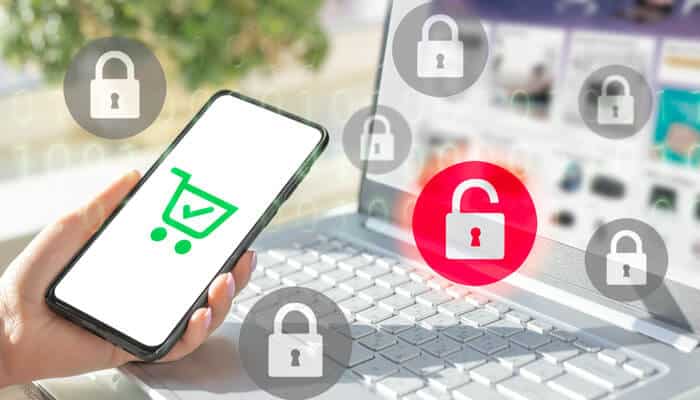
Online shopping sites are major targets for cybercriminals, as they contain sensitive information of customers, including credit card numbers and addresses. Random passwords are necessary for protecting both merchant accounts and customer accounts on online shopping sites.
In addition to using random passwords for employees responsible for the backend of the business, it is also necessary for businesses to ensure that customers use strong, unique passwords when they set up accounts. This provides an additional layer of security for customer information, making it less likely that a data breach will occur that could result in credit card fraud or identity theft.
2. Payment Processing Systems
Online payment systems, including PayPal, Stripe, and Square, process millions of financial transactions every day. These systems are the most attractive targets for hackers. By using random passwords to gain internal access to these systems, businesses can safeguard their payment processing systems from unauthorized users.
In addition, businesses that incorporate payment processing into their websites must ensure that customers employ strong, randomly generated passwords for all accounts related to transactions. Mixing random passwords with other security measures will ensure that financial information is not compromised.
3. Protecting Customer Privacy
Businesses may possess customers’ private information, including personal identification information (PII), financial information, and communication records. Employing weak passwords to access this information poses a risk of potential breaches. By adopting strong, random passwords to access customers’ information, businesses can minimize the risk of unauthorized access.
Specifically, businesses that handle healthcare information (such as healthcare providers and insurance companies) or financial information (such as banks and credit bureaus) must emphasize the use of strong passwords to meet regulatory requirements, including HIPAA and PCI-DSS.
4. Internal Access Control
For internal access control, businesses can employ the use of random password generators to ensure that employees who have access to sensitive information or internal systems are protected. For instance, random passwords can be applied to:
- Human Resource systems (to safeguard employee information)
- Financial management software (to safeguard transactions and accounts)
- Internal communication platforms (to prevent unauthorized access to company discussions)
This is to ensure that even if an employee’s login details are compromised, the impact is minimal due to the random nature of the password.
Conclusion: Why Random Passwords Are Essential in Today’s Cybersecurity Landscape
In today’s digital age, with the rising sophistication of cyber threats, the need for effective security systems is more urgent than ever. Passwords are the first line of defense against hackers who attempt to gain unauthorized access to online accounts and sensitive information. However, weak, reused, or easily guessable passwords are a significant security risk that hackers can easily take advantage of.
Random password generators can solve this problem by generating complex and unpredictable passwords that are much more secure than those generated by humans. Random password generators are an essential tool in protecting personal and business accounts from various cyber attacks, such as brute-force attacks, dictionary attacks, and social engineering attacks.
When used in conjunction with other security tools, such as two-factor authentication (2FA) and password managers, random password generators can provide a powerful shield against cyber hackers. By following best practices in password security and using tools such as random password generators, individuals can greatly improve their.
When used in conjunction with other security tools, such as two-factor authentication (2FA) and password managers, random password generators can be an effective way to protect against cyber attackers. By following best practices for password protection and using tools such as random password generators, individuals can improve their overall online security and protect their online lives.
As technology advances and new methods of authentication, such as biometrics and blockchain security, become more widespread, random password generators will remain an essential part of the security arsenal. The use of random password generators to generate strong and unique passwords that are difficult to hack will continue to be an important part of protecting personal and business information in the future.