


Last Updated: June 2026
Online advertising for contractors is no longer optional for businesses that want steady local leads, stronger visibility, and long-term growth. In 2026, homeowners and business owners rarely choose a contractor after seeing only one ad or hearing one referral. They search on Google, compare reviews, check project photos, visit websites, watch videos, browse social media, ask neighbors, and request estimates from companies that look reliable.
This creates a major opportunity for contractors who know how to advertise online the right way. Whether you offer roofing, plumbing, HVAC, electrical work, remodeling, landscaping, flooring, painting, fencing, pest control, concrete, solar, or general contracting services, your customers are already online. The real question is whether they find your business or your competitor first.
A strong digital ad strategy helps your business appear in front of local customers when they are searching, comparing, planning, or ready to book. A strong advertising strategy can generate phone calls, quote requests, inspections, consultations, booked appointments, and signed jobs. However, the goal is not just to get clicks. The real goal is to attract qualified leads that turn into profitable projects.
In 2026, contractors need a complete lead growth system. That means using Google Ads, Google Local Services Ads, Meta Ads, YouTube, Houzz, Nextdoor, Microsoft Ads, retargeting, local SEO, strong landing pages, reviews, offline conversion tracking, and fast follow-up. This guide explains how online advertising for contractors works, which platforms matter most, how to reduce wasted ad spend, and how to turn online visibility into real business growth.
Quick Answer: What Is Online Advertising for Contractors?
Online advertising for contractors is the process of promoting a contracting business through digital platforms such as Google, Facebook, Instagram, YouTube, Houzz, Nextdoor, Microsoft Ads, Yelp, and retargeting networks. It helps contractors reach local homeowners and businesses who need repairs, installations, renovations, maintenance, inspections, or estimates.
In simple words, online advertising for contractors helps your company show up when people search for terms like “roof repair near me,” “emergency plumber,” “HVAC contractor,” “kitchen remodeling contractor,” “electrician open now,” or “landscaping company near me.”
A good contractor advertising campaign should answer three questions clearly:
- Who is the ideal customer?
- What service do they need?
- What action should they take next?
The strongest contractor ads are local, specific, trust-focused, and easy to respond to. They should guide customers toward a phone call, estimate request, inspection, consultation, or quote form.
Key Takeaways
- Online advertising for contractors helps local service businesses generate leads through search engines, social media, local directories, video platforms, and retargeting campaigns.
- Google Local Services Ads and Google Search Ads are usually the best starting points for high-intent leads.
- Meta Ads, YouTube, Houzz, and Nextdoor work well for visual and planned projects such as remodeling, landscaping, painting, flooring, decks, and outdoor living.
- Contractors should track calls, forms, booked appointments, approved estimates, signed contracts, and completed jobs instead of only tracking clicks.
- Reviews, real project photos, licenses, insurance, warranties, and fast response times strongly affect lead quality.
- AI search, privacy-friendly tracking, first-party data, and offline conversion measurement are more important in 2026.
- The best online advertising strategy is not the one that creates the most leads. It is the one that creates the most profitable jobs.
Why Online Advertising Matters for Contractors in 2026
Contractor marketing has changed because customer behavior has changed. A homeowner with a burst pipe may search Google and call the first trusted company that answers. A family planning a bathroom remodel may spend weeks comparing photos, reading reviews, watching videos, and requesting multiple estimates. A business owner looking for commercial maintenance may compare websites, service areas, insurance details, and past work before making contact.
This means contractors need to be visible at different stages of the customer journey. Someone may first see your landscaping project on Facebook, later search your company name on Google, check your reviews, visit your website, and finally request an estimate. Another person may search “emergency electrician near me” and call within minutes.
Online advertising matters because:
- Paid ads often appear above organic results.
- Local search results are highly competitive.
- Customers compare several contractors before choosing.
- Reviews and project photos influence trust.
- AI-powered search is changing how people discover businesses.
- Customers expect quick answers and fast follow-up.
- Contractors need predictable leads, not only referrals.
For contractors, online advertising is about timing, trust, and conversion. The contractor who appears at the right moment, looks credible, explains services clearly, and responds quickly often wins the job.
Lessons Learned From Contractor Advertising Campaigns
One pattern I have repeatedly observed in contractor marketing is that the businesses generating the highest return on advertising are not always the ones spending the most money. In many cases, the difference comes down to follow-up speed, review quality, landing page clarity, and lead qualification.
For example, two contractors may receive the same number of leads from Google Ads, but the company that answers calls faster, follows up consistently, and provides a smoother estimate process often wins more jobs. Advertising generates opportunities, but operational execution determines profitability.
Another common lesson is that contractors frequently focus on lead volume while overlooking lead quality. A smaller number of highly qualified leads often produces better results than a large number of unqualified inquiries.
What Contractors Need to Know Before Running Online Ads
People searching for online advertising for contractors usually want practical guidance. They may be contractors, agency owners, local service business owners, or marketing managers who want to understand which platforms actually generate leads.
Their questions usually include:
- Which ads work best for contractors?
- Is Google Ads better than Facebook Ads?
- Are Local Services Ads worth it?
- How much should contractors spend on advertising?
- How can contractors get better leads?
- Why are ads getting clicks but no calls?
- How can contractors track booked jobs?
- Which platforms work for roofing, plumbing, HVAC, remodeling, or landscaping?
Because of this, a complete article should not only define the topic. It should explain platforms, budgets, campaign structure, landing pages, reviews, tracking, follow-up, seasonal planning, and common mistakes.
Best Online Advertising Channels for Contractors
Not every advertising platform works the same way. Some platforms capture people who need help immediately. Others build awareness and trust before the customer is ready to book. Some work best for emergency services, while others are better for visual home improvement projects.
| Advertising Channel | Best For | Lead Intent | Contractor Examples |
|---|---|---|---|
| Google Local Services Ads | Calls and local leads | Very high | Plumbers, electricians, HVAC, roofers |
| Google Search Ads | Search-based leads | Very high | Emergency repair, remodeling, roofing |
| Google Performance Max | Multi-channel reach | Medium to high | Larger contractors, multi-service companies |
| Meta Ads | Visual demand generation | Medium | Remodelers, landscapers, painters |
| YouTube Ads | Trust and education | Medium | Roofing, remodeling, HVAC, home improvement |
| Houzz Advertising | Renovation and design leads | Medium to high | Remodelers, builders, designers |
| Nextdoor Ads | Neighborhood trust | Medium | Local home services |
| Microsoft Ads | Additional search traffic | Medium to high | HVAC, roofing, plumbing, remodeling |
| Yelp Ads | Local comparison traffic | Medium | Plumbers, electricians, HVAC |
| Retargeting Ads | Follow-up visibility | Warm audience | All contractors |
| LinkedIn Ads | Commercial contracting | Medium | B2B contractors, builders, facility services |
For most contractors, the best starting point is Google Local Services Ads and Google Search Ads because they target people already searching for help. After that, Meta Ads, YouTube, Houzz, Nextdoor, Microsoft Ads, and retargeting can support brand visibility and lead nurturing.
Google Local Services Ads for Contractors
Google Local Services Ads are one of the most important online advertising options for contractors. These ads can appear near the top of Google Search and allow customers to call, message, or request service from local providers.
Local Services Ads are especially useful for contractors because many service searches are urgent. Someone searching for “emergency plumber near me,” “roof leak repair near me,” or “AC repair today” may be ready to contact a business immediately.
Why Local Services Ads Work Well
Local Services Ads can help contractors:
- Appear above traditional search results
- Generate calls and messages
- Show reviews and business details
- Build trust through Google screening
- Control service areas
- Manage lead flow
- Focus on high-intent local searches
These ads are useful for contractors who can answer calls quickly and serve clearly defined locations.
Best Contractor Types for Local Services Ads
Local Services Ads may work well for:
- Plumbers
- Electricians
- HVAC contractors
- Roofers
- Garage door companies
- Pest control companies
- Carpet cleaners
- Water damage restoration companies
- Eligible general contractor categories
Eligibility can vary by location and service category, so contractors should check current requirements before building a full lead strategy around this channel.
Google Local Services Ads Verification Checklist
Before relying on Local Services Ads, contractors should understand that approval is not automatic. Google may require screening and verification depending on the business category and location.
A contractor may need to prepare:
- Business registration details
- Proof of license
- Proof of insurance
- Background check information
- Business owner information
- Service category details
- Service area information
- Google Business Profile connection
- Customer review history
- Accurate business hours
This matters because delays in verification can slow down campaign launch. Businesses should start verification early and make sure their information matches across Google Business Profile, website pages, license records, insurance documents, and local listings.
Local Services Ads Optimization Tips
To improve performance, contractors should:
- Choose only services they actually provide.
- Set accurate service areas.
- Keep business hours updated.
- Respond to leads quickly.
- Add strong business details.
- Ask satisfied customers for honest reviews.
- Track which leads become booked jobs.
- Review lead quality often.
- Avoid accepting job types that are not profitable.
The biggest mistake is treating Local Services Ads as a “set it and forget it” platform. Contractors should review calls, messages, cost per lead, and cost per booked job regularly.
Google Search Ads for Contractors
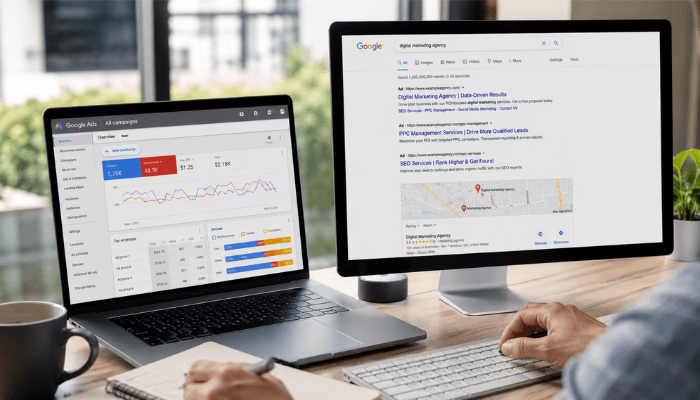
Google Search Ads are pay-per-click ads that appear when people search for specific keywords. For contractors, this is powerful because the customer is already showing intent.
Examples of high-intent contractor keywords include:
- roofing contractor near me
- emergency plumber near me
- HVAC repair near me
- kitchen remodeling contractor
- bathroom remodel estimate
- electrician open now
- fence installation near me
- concrete driveway contractor
- basement finishing contractor
- water damage restoration near me
- Search Ads work best when campaigns are organized by service and location.
Good Google Search Ads Campaign Structure
| Campaign | Ad Group | Example Keywords | Landing Page |
|---|---|---|---|
| Roofing | Roof Repair | roof repair near me, roof leak repair | Roof repair page |
| Roofing | Roof Replacement | roof replacement contractor, new roof cost | Roof replacement page |
| HVAC | AC Repair | AC repair near me, emergency AC service | AC repair page |
| Remodeling | Kitchen Remodel | kitchen remodel contractor, kitchen renovation | Kitchen remodeling page |
| Plumbing | Emergency Plumbing | emergency plumber, burst pipe repair | Emergency plumbing page |
This structure keeps the keyword, ad, and landing page connected. Relevance matters because customers want to see the exact service they searched for.
Search Ad Copy Tips
Strong contractor ad copy should be specific and trust-focused. Avoid vague claims like “best service in town” unless you can prove them.
Good ad copy can mention:
- Licensed and insured
- Free estimates
- Same-day service
- Emergency availability
- Local team
- Financing available
- Warranty included
- Years of experience
- Family-owned business
- Fast response time
- Highly rated local service
Example ad description:
“Need roof leak repair? Call a licensed local roofing contractor for fast inspections, honest estimates, and reliable repairs.”
Negative Keywords for Contractors
Negative keywords help prevent wasted clicks. Contractors may not want traffic from people looking for jobs, training, DIY tutorials, free materials, or wholesale supplies.
Useful negative keywords may include:
- jobs
- salary
- career
- training
- course
- DIY
- how to
- free
- cheap
- template
- license exam
- used tools
- wholesale
- supplies only
Contractors should review search terms weekly and add negative keywords based on real campaign data.
Microsoft Ads for Contractors
Many contractors focus only on Google, but Microsoft Ads can also be useful for local service campaigns. Microsoft Advertising can help contractors reach users across Bing and the Microsoft Advertising Network.
Microsoft Ads may be worth testing when:
- Google Ads cost per click is too high.
- The contractor serves an older homeowner audience.
- The business wants extra search visibility.
- Competitors are less active on Bing.
- The contractor already has working Google campaigns.
- Website tracking is already set up.
Contractors should not move their full budget away from Google immediately. A better strategy is to test Microsoft Ads with a smaller budget, import proven keyword ideas carefully, and compare cost per qualified lead.
Best contractor campaigns to test on Microsoft Ads include:
- HVAC replacement
- Roofing replacement
- Window replacement
- Plumbing repair
- Electrical repair
- Remodeling services
- Landscaping services
Microsoft Ads can be a useful secondary search channel, especially when Google is highly competitive.
Performance Max and AI-Powered Ads for Contractors
Performance Max campaigns use automation and AI to reach users across multiple placements. For contractors, this can help expand visibility beyond standard search campaigns. However, contractors should use automation carefully because not every lead is equal.
Performance Max can work well when:
- Search Ads are already performing.
- Conversion tracking is accurate.
- The website has strong service pages.
- The business has real images and videos.
- The contractor serves multiple locations.
- The budget allows testing.
- Lead quality is reviewed regularly.
Performance Max can struggle when:
- The website is weak.
- Conversion tracking is missing.
- The budget is too small.
- The service area is too narrow.
- The campaign optimizes for low-quality form fills.
- The business cannot follow up quickly.
AI-powered advertising can help contractors scale, but it still needs strong inputs. Contractors should provide clean conversion data, clear service pages, strong creative assets, accurate location targeting, and real lead quality feedback.
AI Search and Online Advertising for Contractors in 2026
AI-powered search is changing how homeowners compare local service businesses. In the past, a customer might search “best roofing contractor near me” and click through several websites. In 2026, many search experiences summarize answers, show local options, highlight reviews, and guide users toward trusted providers faster.
This makes online advertising for contractors more competitive because contractors must look trustworthy across multiple signals, not just one ad. Google Business Profile, reviews, website content, service pages, project photos, FAQs, ad copy, and local authority all work together to help customers decide whether a business deserves a call.
Contractors should prepare for AI search by:
- Writing clear service pages for each major service
- Adding helpful FAQs on pricing, timelines, warranties, and estimates
- Keeping Google Business Profile details accurate
- Publishing real project photos and case studies
- Using honest reviews and testimonials
- Adding local service area content
- Answering common homeowner questions clearly
- Avoiding vague claims like “best contractor near you”
For example, instead of only saying “We offer roofing services,” a contractor should explain roof repair, roof replacement, storm damage inspection, roof leak repair, roofing material options, service areas, and estimate steps. This gives both users and search systems more context.
AI search does not remove the need for ads. Instead, it makes trust signals more important. Contractors should make sure their paid ads, local listings, and website content all tell the same clear story.
Meta Ads for Contractors
Meta Ads include Facebook and Instagram advertising. These platforms are different from Google because people are not always searching for a contractor at that exact moment. Instead, they are browsing, discovering ideas, comparing designs, and thinking about future projects.
Meta Ads are especially strong for visual contractor services.
Best Contractor Services for Meta Ads
Meta Ads can work well for:
- Kitchen remodeling
- Bathroom remodeling
- Landscaping
- Deck building
- Painting
- Flooring
- Pool installation
- Outdoor living spaces
- Fence installation
- Window replacement
- Solar installation
- Home additions
Before-and-after photos, short videos, customer stories, and project showcases can attract homeowners before they actively search on Google.
Meta Lead Ad Strategy
Meta Lead Ads allow users to submit their information without leaving Facebook or Instagram. This can increase lead volume, but lead quality can vary if the form is too easy.
To improve quality, contractors should add qualifying questions such as:
- What service do you need?
- What is your project timeline?
- What city are you located in?
- Are you the homeowner?
- What is your estimated budget?
- Do you need repair, replacement, or new installation?
- When would you like to be contacted?
A slightly longer form may reduce lead volume, but it can improve lead quality.
Meta Ad Creative Ideas
Contractors can test:
- Before-and-after photos
- Short jobsite videos
- Customer testimonial clips
- Seasonal reminders
- Project cost guide ads
- Free estimate ads
- Financing offer ads
- Neighborhood project showcase ads
- “Recently completed in [city]” posts
The best Meta Ads usually feel helpful, local, and visual.
YouTube Advertising for Contractors
YouTube Ads can help contractors build trust before customers call. Many homeowners watch videos before making home improvement decisions. They may search for topics like “how much does roof replacement cost,” “best kitchen remodel ideas,” or “signs your HVAC system needs repair.”
Contractors can use YouTube Ads for:
- Brand awareness
- Service education
- Retargeting website visitors
- Showing completed projects
- Explaining the estimate process
- Building trust with the owner or team
- Promoting seasonal services
Video topics can include:
- “3 signs your roof needs repair”
- “How to know if your AC needs replacement”
- “What to expect during a bathroom remodel”
- “How our free estimate process works”
- “Before and after backyard patio transformation”
Contractors do not always need expensive commercial videos. Real jobsite footage, clear explanations, and a strong call-to-action can work well.
Houzz Advertising for Contractors
Houzz can be useful for contractors in remodeling, construction, design-build, architecture, landscaping, kitchen and bath, cabinetry, flooring, and other home improvement categories. Many homeowners use Houzz for project inspiration and to find professionals.
Houzz advertising may help contractors appear in front of homeowners based on service area, services offered, project type, and budget range. This can be useful for contractors who want larger project-based leads rather than emergency repair calls.
Best Uses of Houzz
Houzz may work well for:
- Remodelers
- Custom home builders
- Kitchen and bath contractors
- Landscape contractors
- Design-build firms
- Interior contractors
- Cabinetry companies
- Flooring contractors
- Outdoor living contractors
How to Improve Houzz Lead Quality
Contractors should:
- Upload high-quality project photos.
- Use clear project categories.
- Add detailed descriptions.
- Show accurate service areas.
- Highlight project budget ranges.
- Ask real customers for honest reviews.
- Respond quickly to inquiries.
- Keep the profile updated.
- Track which leads become real estimates.
Houzz is not ideal for every contractor, but it can be valuable for businesses that sell visual, higher-ticket projects.
Nextdoor Advertising for Contractors
Nextdoor can be useful for contractors because it is built around neighborhoods and local recommendations. Homeowners often ask neighbors for a plumber, roofer, landscaper, painter, handyman, or remodeling contractor. This makes it a helpful platform for local trust-building.
Nextdoor advertising for contractors can work well for:
- Landscaping
- Painting
- Roofing
- Pest control
- Cleaning
- Handyman services
- Fence installation
- Plumbing
- HVAC
- Local remodeling
The best strategy on Nextdoor is not to sound too sales-heavy. Contractors should focus on neighborhood trust, helpful tips, seasonal reminders, and local project proof.
Good Nextdoor ad ideas include:
- “Now booking spring landscaping projects in [City]”
- “Roof inspections available after recent storms”
- “Local painter serving homeowners in [Neighborhood]”
- “Before-and-after deck project completed nearby”
- “Need a trusted plumber this week?”
Contractors should also claim or update their business page, encourage real recommendations, and respond professionally to local questions.
Retargeting Ads for Contractors
Most customers do not contact a contractor the first time they visit a website. They may compare prices, talk with family, check reviews, or delay the project. Retargeting ads help your business stay visible after someone visits your website or engages with your content.
Retargeting can be used on:
- Google Display
- YouTube
- Demand generation campaigns
- Other ad networks
Retargeting Ad Examples
Retargeting messages can include:
- “Still planning your kitchen remodel?”
- “Get a free roofing inspection this week.”
- “See our recent bathroom remodel projects.”
- “Book your HVAC tune-up before peak season.”
- “Ready for your free estimate?”
- “Trusted local contractor serving [city].”
Retargeting usually works best with a smaller budget because the audience is already warm. It should support your search and social campaigns, not replace them.
Best Advertising Strategy by Contractor Type
Different contractor businesses need different advertising strategies. Emergency services need search intent. Visual home improvement services need photos and inspiration. Commercial contractors need authority and longer sales-cycle content.
| Contractor Type | Best Channels | Main Strategy |
|---|---|---|
| Plumbers | Local Services Ads, Search Ads | Capture urgent calls |
| Electricians | Local Services Ads, Search Ads | Emergency and repair keywords |
| HVAC Contractors | Search Ads, LSAs, seasonal Meta Ads | Repair, replacement, maintenance |
| Roofers | LSAs, Search Ads, YouTube, Meta | Repairs, inspections, replacements |
| Remodelers | Google Search, Meta, Houzz, YouTube | Visual proof and project leads |
| Landscapers | Meta, Google Search, Nextdoor | Seasonal campaigns and photos |
| Painters | Google Search, Meta, Retargeting | Before-and-after visuals |
| Flooring Contractors | Google Search, Meta, Houzz | Room transformations |
| General Contractors | Google Search, Houzz, YouTube | Trust, portfolio, estimates |
| Commercial Contractors | Google Search, LinkedIn, SEO | B2B authority and proposals |
The best advertising plan should match your service, sales cycle, job value, and local competition.
Emergency Services vs Planned Project Advertising
Not all contractor leads behave the same way. A homeowner with a burst pipe needs help immediately, while someone planning a kitchen remodel may take weeks or months to compare options.
Because of this, online advertising for contractors should separate emergency services from planned projects.
| Service Type | Customer Intent | Best Ad Channel | Best CTA |
|---|---|---|---|
| Emergency plumbing | Immediate help | Google Search, LSAs | Call now |
| AC repair | Urgent service | Google Search, LSAs | Book same-day service |
| Roof leak repair | Urgent inspection | Google Search, LSAs | Schedule inspection |
| Kitchen remodel | Research and planning | Meta, Houzz, Google Search | Request consultation |
| Landscaping | Visual planning | Meta, Nextdoor, Google Search | Get estimate |
| Painting | Project comparison | Meta, Google Search | Get free quote |
| Commercial contracting | Longer sales cycle | Google Search, LinkedIn, SEO | Request proposal |
Emergency campaigns should focus on speed, availability, phone calls, and service area. Planned project campaigns should focus on photos, reviews, process, financing, portfolio, and consultation booking.
This improves lead quality because each campaign matches the customer’s real decision stage.
Typical Contractor Advertising Benchmarks
While advertising performance varies by market, many contractors use benchmarks to evaluate campaign health.
Common benchmarks include:
- Lead response time under 5 minutes
- Landing page conversion rates between 5% and 20%
- Call answer rates above 80%
- Review ratings above 4.5 stars
- Lead-to-estimate conversion rates above 30%
- Estimate-to-job close rates between 25% and 60%
These numbers should not be treated as universal targets, but they can provide a useful starting point for evaluating campaign performance.
Contractor Advertising Budget Planning
There is no single perfect advertising budget for every contractor. The right budget depends on location, trade, competition, average job value, close rate, and growth goals.
A roofing company in a competitive metro area may need a larger budget than a painting contractor in a small town. A remodeling company with high-ticket projects may be able to spend more per lead than a handyman service.
Sample Monthly Budget Framework
| Business Stage | Monthly Ad Budget | Best Use |
|---|---|---|
| New contractor | $500–$1,500 | Test one service and one location |
| Small local contractor | $1,500–$3,500 | Search Ads, LSAs, retargeting |
| Growing contractor | $3,500–$8,000 | Multi-service campaigns |
| Established contractor | $8,000–$20,000+ | Google, Meta, YouTube, CRO |
| Multi-location contractor | $20,000+ | Full funnel advertising system |
This is only a planning guide. Contractors should measure return based on booked jobs, not only leads.
Simple Budget Formula
Ad Budget = Target Jobs × Cost Per Booked Job
Example:
If a contractor wants 20 booked jobs per month and the average cost per booked job is $150, the estimated monthly ad budget may be:
20 × $150 = $3,000
However, the real number depends on close rate, average job value, lead quality, and follow-up speed.
Measuring Contractor Advertising Success
Many contractors make the mistake of measuring only clicks or impressions. These numbers are useful, but they do not prove profit.
The most important metrics are:
- Cost per lead
- Cost per qualified lead
- Cost per booked appointment
- Cost per sold job
- Lead-to-appointment rate
- Appointment-to-sale rate
- Average job value
- Gross profit per job
- Return on ad spend
- Customer lifetime value
Example Contractor Lead Math
| Metric | Example |
|---|---|
| Monthly ad spend | $3,000 |
| Leads generated | 60 |
| Cost per lead | $50 |
| Qualified leads | 35 |
| Booked appointments | 20 |
| Sold jobs | 10 |
| Average job value | $2,500 |
| Revenue generated | $25,000 |
In this example, the contractor spent $3,000 and generated $25,000 in revenue. However, true return depends on profit margin, materials, labor, and overhead.
Offline Conversion Tracking for Contractor Leads
One of the biggest mistakes in online advertising for contractors is tracking only form submissions or phone calls. A form fill is not the same as a sold job. A phone call is not the same as a signed contract. Contractors need to know which ads create real revenue.
Offline conversion tracking helps connect ad leads to real business outcomes such as:
- Booked estimate
- Completed inspection
- Approved quote
- Signed contract
- Completed job
- Repeat customer
- High-value project
For example, a Google Ads campaign may generate 40 leads, but only 8 may become real appointments. Another campaign may generate only 20 leads, but 12 may become appointments. Without offline tracking, the cheaper campaign may look better even if it produces lower-quality leads.
Contractors can track offline conversions by using:
- CRM software
- Call tracking
- Lead source fields
- Google Ads offline conversion imports
- Enhanced conversions for leads
- Sales team notes
- Revenue tracking by campaign
This helps ad platforms learn which leads are valuable. Instead of optimizing only for cheap form fills, campaigns can be optimized toward leads that become real customers.
Landing Pages for Contractor Ads
A landing page is the page people visit after clicking your ad. A weak landing page can waste even the best advertising budget. A strong landing page helps visitors understand your service, trust your business, and contact you quickly.
What a Contractor Landing Page Should Include
A good contractor landing page should include:
- Clear headline
- Service name
- City or service area
- Phone number
- Contact form
- Trust badges
- License and insurance details
- Reviews or testimonials
- Project photos
- Simple explanation of services
- Emergency or same-day availability if offered
- Free estimate call-to-action
- FAQ section
- Mobile-friendly design
Landing Page Structure
| Section | Purpose |
|---|---|
| Headline | Confirm the service and location |
| Trust Bar | Show reviews, license, insurance |
| Form/Phone CTA | Make contact easy |
| Service Details | Explain what you do |
| Project Photos | Build confidence |
| Reviews | Prove reliability |
| Process | Explain what happens next |
| FAQs | Answer objections |
| Final CTA | Encourage action |
Example headline:
“Licensed Roofing Contractor in Dallas for Repairs, Replacements, and Free Roof Inspections”
This is stronger than “Welcome to Our Roofing Company” because it is specific, local, and service-focused.
Local SEO and Online Advertising Work Better Together
Online advertising can bring fast visibility, but local SEO builds long-term trust. Contractors should use both together.
Your Google Business Profile, website service pages, reviews, photos, local citations, and organic rankings can improve the performance of paid ads. When people click an ad and see strong reviews, consistent business details, and helpful content, they are more likely to contact you.
Local SEO Assets That Support Ads
- Google Business Profile
- Service area pages
- City pages
- Review strategy
- Project photo gallery
- FAQ content
- Blog posts
- Local backlinks
- Consistent name, address, and phone details
- Mobile-friendly website
Reviews are especially important because customers hiring contractors worry about price, quality, delays, safety, and reliability. A strong review profile reduces doubt before the customer calls.
Contractor Review Strategy
A good review strategy should be simple and consistent.
Review Request Process
- Complete the job professionally.
- Confirm the customer is satisfied.
- Send a polite review request.
- Make the review link easy to access.
- Thank the customer after they review.
- Respond professionally to every review.
- Use feedback to improve service.
Review Request Example
“Thank you for choosing us for your project. We’re glad we could help. If you were happy with the service, would you mind sharing a quick Google review? It helps local homeowners find a contractor they can trust.”
How to Respond to Negative Reviews
Do not argue publicly. A calm response can protect your reputation.
Example:
“Thank you for your feedback. We’re sorry your experience did not meet expectations. Please contact our office so we can review the details and work toward a fair solution.”
This shows future customers that your business is professional and responsive.
Review Compliance: What Contractors Should Avoid
Reviews can improve trust, but contractors must handle them honestly. Fake reviews, paid reviews without disclosure, review gating, and misleading testimonials can damage trust and create legal risk.
Contractors should avoid:
- Buying fake reviews
- Asking employees to pretend to be customers
- Posting reviews from people who never used the service
- Hiding negative reviews while showing only positive ones
- Offering rewards only for positive reviews
- Copying testimonials from other websites
- Using fake before-and-after project stories
- Making unverifiable claims like “#1 contractor in the state” without proof
A safer review strategy is simple: ask satisfied customers for honest reviews, respond professionally, and use real customer feedback. If a customer gives a testimonial, contractors should make sure it reflects a real experience.
Privacy-Friendly Tracking for Contractor Ads
Online advertising in 2026 depends more on first-party data, consent-aware tracking, and accurate lead records. Contractors should not rely only on cookies or basic website analytics. Browser privacy changes, consent rules, and platform updates can reduce tracking accuracy if campaigns are not set up correctly.
A privacy-friendly tracking setup should include:
- Clear website privacy policy
- Cookie or consent banner where legally required
- Google Tag Manager setup
- Google Ads conversion tracking
- GA4 event tracking
- Call tracking with proper disclosure where needed
- CRM lead source tracking
- First-party lead data
- Secure form handling
- Regular tracking tests
Consent Mode does not replace a consent banner. It works with a consent system and helps Google tags adjust behavior based on user choices. This matters because contractors need accurate measurement while respecting user privacy.
Contractors should also avoid collecting unnecessary personal information. A lead form should ask for details that help qualify the project, such as name, phone number, service type, city, project timeline, and property ownership status.
Lead Follow-Up: The Hidden Key to Better ROI
Many contractors lose money not because their ads are bad, but because follow-up is slow. If a homeowner contacts three contractors, the first one to respond professionally often has the advantage.
Best Follow-Up Practices
- Answer calls during business hours.
- Call back missed calls quickly.
- Reply to form leads within minutes.
- Use text follow-up when appropriate.
- Confirm service area and project type.
- Ask qualifying questions.
- Schedule estimates clearly.
- Send reminders before appointments.
- Follow up after estimates.
- Track every lead source.
Contractor Lead Qualification Questions
Ask questions such as:
- What service do you need?
- Where is the property located?
- Are you the property owner?
- When do you want the work done?
- Is this repair, replacement, or new installation?
- Have you received other estimates?
- What is your approximate budget?
- What is the best time to visit or call?
These questions help separate serious leads from casual inquiries.
Seasonal Advertising for Contractors
Contractor demand changes by season. A strong advertising strategy should adjust throughout the year.
| Season | Contractor Opportunities |
|---|---|
| Spring | Roofing, landscaping, painting, remodeling |
| Summer | HVAC, decks, pools, exterior work |
| Fall | Roofing, gutters, insulation, heating |
| Winter | Plumbing, heating, emergency repairs, indoor remodeling |
Seasonal Campaign Examples
Spring:
- “Book your roof inspection before storm season.”
- “Plan your backyard upgrade for summer.”
- “Fresh exterior painting estimates now available.”
Summer:
- “AC repair and replacement services.”
- “Build your dream deck this summer.”
- “Pool and patio project consultations.”
Fall:
- “Prepare your home before winter.”
- “Heating system tune-ups.”
- “Gutter cleaning and roof inspections.”
Winter:
- “Emergency plumbing repairs.”
- “Indoor bathroom remodeling.”
- “Heating repair near you.”
Seasonal planning helps contractors avoid running the same ads all year without strategy.
Online Advertising Funnel for Contractors
A contractor advertising funnel helps move people from awareness to booked jobs.
Stage 1: Awareness
At this stage, people may not be ready to call. They are thinking about a problem or future project.
Best channels:
- Meta Ads
- YouTube Ads
- Display Ads
- Blog content
- Project photos
Example message:
“Thinking about remodeling your bathroom this year? See what’s possible with a local design-build team.”
Stage 2: Consideration
At this stage, people are comparing contractors.
Best channels:
- Google Search Ads
- Houzz
- Retargeting
- Review content
- Service pages
Example message:
“Compare your options and request a free bathroom remodel consultation.”
Stage 3: Conversion
At this stage, people are ready to contact.
Best channels:
- Local Services Ads
- Search Ads
- Call ads
- Landing pages
- Retargeting offers
Example message:
“Call today to schedule your free estimate.”
Stage 4: Retention and Referral
After the job is complete, contractors can continue marketing.
Best tactics:
- Email follow-up
- Review requests
- Maintenance reminders
- Referral offers
- Seasonal service campaigns
Common Online Advertising Mistakes Contractors Should Avoid
- Sending all ads to the homepage instead of a service-specific landing page.
- Not tracking phone calls from ads.
- Chasing cheap leads instead of qualified leads.
- Ignoring customer reviews and trust signals.
- Using one campaign for every service.
- Responding too slowly to new leads.
- Forgetting to add negative keywords.
- Using weak or generic project photos.
- Running ads without clear budget control.
- Tracking leads without measuring booked jobs or revenue.
Contractor Advertising Checklist for 2026
Website Checklist
- Mobile-friendly website
- Fast loading speed
- Clear service pages
- Strong contact form
- Click-to-call phone number
- Project photos
- Reviews and testimonials
- License and insurance details
- Service area pages
FAQ section
- Tracking Checklist
- Google Ads conversion tracking
- Phone call tracking
- Form submission tracking
- Google Analytics setup
- CRM or spreadsheet lead tracking
- Source tracking for every lead
- Booked job tracking
- Revenue tracking
- Offline conversion tracking
- Privacy-friendly consent setup
Trust Checklist
- Updated Google Business Profile
- Accurate business name, address, and phone
- Recent reviews
- Professional photos
- Clear business hours
- Service area listed correctly
- Team or owner information
- Warranty information if available
- Proof of licensing where appropriate
Campaign Checklist
- Service-specific campaigns
- Location-specific targeting
- Strong ad copy
- Negative keywords
- Proper landing pages
- Call extensions or call assets
- Budget limits
- Lead quality review
- Weekly optimization schedule
Best Content Ideas to Support Contractor Ads

Paid ads work better when your website has helpful content. Educational content builds trust and can support SEO, retargeting, and AI search visibility.
Blog Topic Ideas
- How much does roof replacement cost in 2026?
- Signs you need an electrician
- Repair vs replacement: which is better?
- How to choose a remodeling contractor
- Questions to ask before hiring a contractor
- Best time of year for exterior painting
- What to expect during a kitchen remodel
- How to prepare for HVAC replacement
- How long does a bathroom remodel take?
- Common plumbing problems homeowners ignore
- How to compare contractor estimates
- What should be included in a contractor warranty?
These topics attract organic traffic and help educate customers before they request a quote.
Best Call-to-Action Examples for Contractors
A call-to-action should tell the visitor what to do next.
Strong CTAs include:
- Call now for a free estimate.
- Schedule your roof inspection.
- Request your remodeling consultation.
- Get a same-day plumbing quote.
- Book your HVAC service today.
- Ask about financing options.
- Send photos for a quick estimate.
- Check availability in your area.
Weak CTAs include:
- Submit
- Click here
- Learn more
- Contact us
Specific CTAs usually perform better because they match the customer’s intent.
Online Advertising for Contractors: Platform Comparison
| Platform | Cost Type | Best Strength | Main Weakness |
|---|---|---|---|
| Google Local Services Ads | Pay per lead | High-intent local leads | Eligibility and verification required |
| Google Search Ads | Pay per click | Urgent demand capture | Competitive keywords can be expensive |
| Meta Ads | Pay per click or lead | Visual inspiration and awareness | Lead quality can vary |
| YouTube Ads | Views or conversions | Trust and education | Needs video content |
| Houzz Ads | Lead/profile visibility | Remodeling and design projects | Not ideal for every trade |
| Nextdoor Ads | Local visibility | Neighborhood trust | Smaller reach in some markets |
| Microsoft Ads | Pay per click | Extra search visibility | Lower volume than Google |
| Yelp Ads | Clicks/leads | Local comparison traffic | Performance varies by market |
| LinkedIn Ads | Clicks/leads | Commercial projects | Higher cost for residential contractors |
The best platform depends on service type, budget, competition, lead value, and sales process.
Example Contractor Growth Scenario
Imagine a roofing contractor running Google Search Ads, Local Services Ads, and retargeting campaigns.
The business receives 50 leads per month. By improving review collection, reducing response times, and adding a dedicated roofing landing page, the contractor increases appointment bookings without increasing advertising spend.
The result is more signed jobs from the same budget. This example highlights an important lesson: advertising success often comes from improving conversion systems rather than simply increasing ad spend.
Conclusion:
Online advertising for contractors in 2026 is not about running random ads and hoping for calls. It is about building a complete lead generation system that connects search intent, local trust, strong landing pages, reviews, tracking, and follow-up.
The strongest contractors combine Google Local Services Ads, Google Search Ads, Meta Ads, YouTube, Houzz, Nextdoor, Microsoft Ads, retargeting, local SEO, and conversion tracking. They focus on qualified leads, booked appointments, signed contracts, and profit instead of only clicks or impressions.
If your business has clear service pages, honest reviews, real project photos, accurate tracking, fast response times, and a strong follow-up process, online advertising can become one of your most reliable growth channels.
In a competitive local market, the contractors who win are not always the cheapest. They are the ones who appear at the right time, look trustworthy, communicate clearly, and make it easy for customers to take the next step.
Online Advertising for Contractors FAQs
1. What is online advertising for contractors?
Online advertising for contractors is the use of platforms like Google Ads, Local Services Ads, Facebook, Instagram, YouTube, Houzz, Nextdoor, Microsoft Ads, and retargeting to promote contractor services and generate local leads.
2. Which online advertising platform is best for contractors?
Google Local Services Ads and Google Search Ads are often the best starting points because they target people actively searching for contractor services. Meta Ads, Houzz, YouTube, and Nextdoor can also work well depending on the service type.
3. How much should contractors spend on online advertising?
Small contractors may start with $500 to $1,500 per month, while growing businesses may spend $3,500 to $8,000 or more. The right budget depends on location, competition, average job value, and growth goals.
4. Are Facebook Ads good for contractors?
Yes. Facebook and Instagram Ads can work well for visual contractor services such as remodeling, landscaping, painting, flooring, decks, and outdoor living projects. They perform best with strong photos, videos, and lead qualification questions.
5. How can contractors get better leads from online ads?
Contractors can improve lead quality by using service-specific landing pages, strong targeting, negative keywords, qualifying questions, call tracking, fast follow-up, honest reviews, and clear service area targeting.
6. Should contractors use Google Local Services Ads?
Contractors should consider Google Local Services Ads if their category is eligible and they can complete the verification process. These ads can be effective for generating calls and messages from local customers.
7. Why are my contractor ads getting clicks but no leads?
Common reasons include weak landing pages, poor mobile design, unclear calls-to-action, bad keyword targeting, no trust signals, slow website speed, weak reviews, or ads reaching people outside your service area.
8. How do reviews affect contractor advertising?
Reviews help build trust before a customer contacts your business. Strong, honest reviews can improve conversion rates because homeowners often compare ratings, photos, and customer feedback before choosing a contractor.
9. Is SEO still important if contractors run paid ads?
Yes. SEO supports paid advertising by improving trust, visibility, website quality, and local authority. A contractor with strong organic visibility and good reviews often gets better results from paid ads.
10. What is the biggest online advertising mistake contractors make?
The biggest mistake is focusing only on leads without tracking booked jobs and revenue. A campaign should be judged by profit and quality, not just clicks, impressions, or form submissions.