


Introduction
A well-crafted cover letter is often your first opportunity to make a lasting impression on a potential employer. While many job seekers focus solely on their resume, a personalized cover letter is a crucial piece of the application process. It provides context, explains why you’re the right fit for the job, and demonstrates your enthusiasm for the role. To get started, use a free cover letter template to guide you in creating a standout letter that reflects your skills and qualifications.
In this article, we’ll explore how a free cover letter template can streamline the process, saving you time and effort while ensuring that your cover letter stands out to employers. By the end, you’ll be equipped with a clear understanding of how to customize templates and examples for your own use.
What to Include in a Cover Letter
A cover letter should complement your resume, providing more context on your qualifications and demonstrating your understanding of the company and its needs.
Here’s what to include:
1. Header and Contact Information
Your contact information should always be at the top of your cover letter, making it easy for employers to reach you. This section includes:
- Your full name
- Your address
- Your phone number
- Your email address
A link to your LinkedIn profile or portfolio (optional)
2. Greetings/Salutation
If possible, address the hiring manager by name. Avoid generic salutations like “To whom it may concern.” Instead, use:
- “Dear Mr./Ms. [Last Name]”
- “Dear Hiring Manager” (if you don’t know the name)
3. Opening Paragraph
The first paragraph should grab the reader’s attention. It should briefly introduce who you are and mention the role you’re applying for. You can also briefly explain how you came across the job opening.
4. Body Paragraphs
This section is where you showcase your skills, experiences, and accomplishments. Link them directly to the job description, emphasizing how your qualifications align with the employer’s needs. Use examples to highlight achievements.
5. Closing Paragraph
In the final paragraph, express your interest in the role and explain why you’re excited about the opportunity. Reaffirm your qualifications, and mention that you’d love to discuss your application in an interview.
6. Signature
Sign off with a polite closing like:
- “Sincerely”
- “Best regards”
- “Kind regards”
How to Use a Free Cover Letter Template
Using a free cover letter template is an efficient way to ensure that your cover letter is professional and well-structured. But a template is just a starting point; you’ll need to customize it to match your experience and the job you’re applying for.
Where to Find Templates
There are plenty of resources online offering free cover letter templates. Here are a few places you can find quality templates:
- Google Docs (search for professional templates)
- Canva (offers customizable templates with design options)
- Microsoft Word (downloadable templates available)
- Seek.com.au (industry-specific templates)
Customizing the Template
Templates provide a framework, but you must make the letter your own. Add personalized content to each section and highlight your unique qualifications. For example:
- Adjust the introduction to reflect your enthusiasm for the company.
- In the body paragraphs, highlight relevant accomplishments.
- Tweak the closing paragraph to reflect your interest in the specific position.
Formatting Tips
Make sure your cover letter is ATS-friendly (Applicant Tracking System). Avoid fancy fonts and images, which may not be compatible with ATS software. Stick with simple formatting, such as:
- Font: Arial or Times New Roman (size 10-12)
- Margins: 1-inch margins on all sides
- Spacing: Single-spaced with a space between each paragraph
Step-by-Step Guide to Writing a Cover Letter
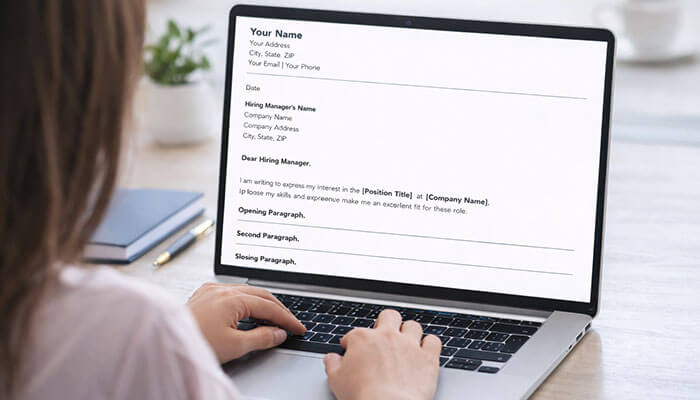
To effectively use your free cover letter template, follow these steps to ensure that your letter makes an impact.
Step 1: Research the Company and Role
Understanding the company culture and the specific requirements of the role will help you tailor your cover letter. Look at the job posting and company website to gather information on:
- The company’s values and mission
- Key responsibilities of the job
- Skills and qualifications required
Step 2: Match Your Skills to the Job Description
Look at the job description closely and match your skills with the requirements. Choose 2–3 key qualifications to highlight and demonstrate with examples. This will show the hiring manager that you understand what they need and how you can deliver.
Step 3: Write a Compelling Opening
Your opening should immediately grab attention. Avoid generic sentences like, “I am applying for this position.” Instead, try something more engaging:
“With my 5 years of experience in [industry], I am excited to apply for the [position] role at [Company].”
Step 4: Highlight Your Accomplishments
In the body paragraphs, share measurable achievements. For example, instead of saying “I am a skilled marketer,” say:
“I increased the company’s revenue by 25% through targeted marketing campaigns.”
Step 5: Show Why You’re the Best Fit
Use the closing paragraph to reaffirm why you are the ideal candidate for the job. Mention how your values align with the company’s culture and how you can contribute to their goals.
Step 6: Sign Off Professionally
Always finish with a polite and professional closing, such as “Sincerely” or “Best regards.”
Free Cover Letter Template Examples
Here are some free cover letter templates for various job seekers:
1. Template for Entry-Level Job Seekers
[Your Name]
[Your Address]
[Your Phone Number]
[Your Email Address]
[Date]
Dear [Hiring Manager’s Name],
I am writing to express my interest in the [Job Title] position at [Company Name]. As a recent graduate in [Your Field of Study], I am excited to apply my skills in [Key Skill] and [Key Skill] to contribute to your team.
[Highlight your qualifications and any relevant achievements here.]
I look forward to the opportunity to further discuss how my skills align with the needs of your team. Thank you for considering my application.
Sincerely,
[Your Name]
2. Template for Career Changers
[Your Name]
[Your Address]
[Your Phone Number]
[Your Email Address]
[Date]
Dear [Hiring Manager’s Name],
After spending [number] years in [Previous Industry], I am excited to transition into the [New Industry] field. I am applying for the [Job Title] position at [Company Name] because of my passion for [New Industry Focus].
[Demonstrate transferable skills from your previous career and how they apply to the new role.]
I would welcome the opportunity to discuss my application in more detail.
Best regards,
[Your Name]
3. Template for Remote/Freelance Jobs
[Your Name]
[Your Address]
[Your Phone Number]
[Your Email Address]
[Date]
Dear [Hiring Manager’s Name],
I am thrilled to apply for the [Job Title] role at [Company Name], as advertised on [Job Board]. With my experience in [Relevant Skills], I am confident in my ability to deliver results while working remotely.
[Explain how your previous remote experience prepares you for the role.]
Thank you for your time and consideration. I look forward to hearing from you.
Sincerely,
[Your Name]
Tips to Make Your Cover Letter Stand Out
Personalize It: Tailor your letter for each job. Generic cover letters are often overlooked.
- Quantify Achievements: Use numbers to back up your accomplishments (e.g., “Increased sales by 30%”).
- Proofread: Spelling and grammar errors can make a bad impression. Use tools like Grammarly to ensure your cover letter is error-free.
FAQs
Q1. What’s the difference between a cover letter and a CV?
A cover letter highlights why you’re a good fit for the job and complements your CV, which outlines your career history, skills, and qualifications.
Q2. Should I submit a cover letter if it’s optional?
Yes, if it’s optional, submitting a cover letter can set you apart from other candidates and show your interest in the role.
Q3. How long should my cover letter be?
Aim for around 300–400 words. Keep it concise while highlighting your qualifications.
Conclusion
A free cover letter template is an excellent way to get started on your job application journey. By customizing it to fit the job description and showcasing your unique skills, you can make a lasting impression on hiring managers. Take action today by downloading templates, applying the tips outlined in this guide, and starting your job search with confidence!
