
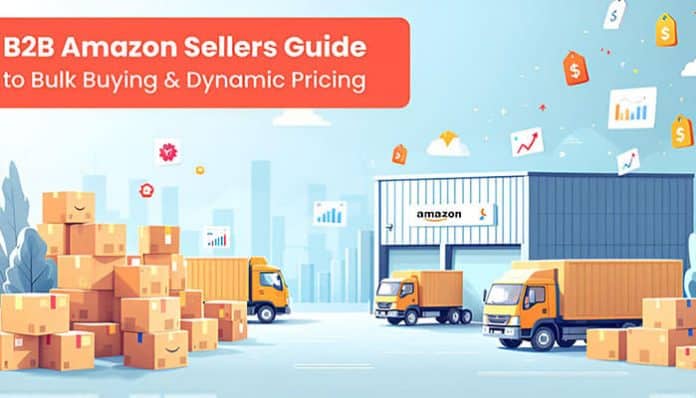

Selling in the B2B and wholesale segment on Amazon is very different from regular retail selling. Business buyers think in terms of quantities, efficiency, and long-term value. They are not just looking for the lowest price but for consistent offers that make sense for bulk orders. This is why dynamic pricing for B2B Amazon sellers has become essential. It helps businesses stay competitive while maintaining healthy profit margins in a constantly changing market.
What Dynamic Pricing Means for B2B Sellers
Dynamic pricing means adjusting prices automatically based on real-time conditions. These conditions can include market demand, competitor prices, inventory levels, or the size of a buyer’s order. Instead of using a fixed price for every transaction, sellers can use flexible pricing that changes to match the situation.
For example, a company buying 500 units of an item should not pay the same price per unit as someone buying 10. With dynamic pricing, the system can automatically lower the price for large orders to make them more attractive while keeping smaller order prices stable.
This approach mirrors how businesses buy and sell in the real world. Wholesale buyers expect logical pricing structures that reward volume, and dynamic pricing ensures that expectation is met on Amazon’s digital marketplace.
Why Dynamic Pricing Is Crucial for B2B Sellers
The traditional method of setting a single price and leaving it unchanged no longer works in today’s fast-paced market. Amazon’s B2B platform is competitive, and buyers are quick to compare options before placing bulk orders.
Here are some practical reasons why dynamic pricing is now essential:
1. B2B Buyers Evaluate Before Purchasing
Business customers usually compare multiple suppliers before making a decision. They check for pricing fairness, discounts on volume, and delivery reliability. Having dynamic pricing helps you stay relevant in these comparisons.
2. The Marketplace Changes Constantly
Amazon prices fluctuate several times a day. Static pricing can cause sellers to miss opportunities or lose profits. Automated pricing ensures that your offers adjust as the market moves.
3. Bulk Discounts Drive Loyalty
Offering structured volume discounts encourages buyers to place larger orders and return for future purchases. It also helps manage inventory more efficiently.
4. Profit Margins Stay Protected
Dynamic pricing ensures that discounts are calculated logically instead of cutting into profits unnecessarily. Sellers can maintain a balance between competitive prices and sustainable earnings.
Developing a Strong Amazon B2B Pricing Strategy
A strong Amazon B2B pricing strategy is built on understanding buyer needs and using technology to respond intelligently. Here are the main components that make it effective:
1. Customer Segmentation
Not every buyer has the same priorities. Some purchase monthly in bulk, while others buy small quantities occasionally. Grouping customers into segments helps create specific pricing rules for each type.
2. Tiered Pricing
Volume-based discounts make sense for B2B selling. By offering price tiers according to order quantity, sellers attract larger orders without having to negotiate individually with every buyer.
3. Competitive Benchmarking
Tracking market prices helps sellers remain aligned with current competition. This avoids both overpricing and underpricing, which can either reduce sales or harm profit margins.
4. Automated Adjustments
Rule-based pricing automation allows sellers to set conditions such as “stay 2 percent below the average market price” or “maintain a fixed profit margin per unit.” These rules ensure constant accuracy without manual changes.
5. Data-Based Decision-Making
Monitoring sales performance, response to discounts, and buyer behavior helps refine future pricing rules. The more data-driven your pricing decisions are, the more effective your strategy becomes.
The Role of Automation for B2B Sellers

Manually adjusting prices for hundreds or thousands of listings is not realistic. Automation plays a vital role in implementing dynamic pricing smoothly. This is where using an Amazon repricer for B2B Amazon sellers makes a major difference.
A repricer automatically monitors your listings and competitors’ prices, then updates your offers according to rules you define. For wholesale sellers, this means every product stays competitively priced without compromising profit goals.
Here is how a professional repricer supports B2B pricing operations:
1. Real-Time Market Response
The tool continuously scans the marketplace and reacts to competitor price changes within minutes, helping your listings stay visible and competitive.
2. Bulk Order Adjustments
Repricers can apply different price rules based on order quantity, ensuring that your offers always reflect bulk-buying logic.
3. Operational Efficiency
Instead of manually editing listings, sellers can update pricing rules in one place. This reduces errors and saves a significant amount of time.
4. Improved Profitability
Automated pricing prevents accidental undercutting and ensures that profit margins remain consistent even during intense competition.
5. Inventory Control
Some repricers also factor in stock levels. When inventory drops, prices can automatically increase to prevent stockouts.
Dynamic pricing automation allows sellers to focus on other important areas such as fulfillment and customer relations while the system keeps pricing optimized around the clock.
How Dynamic Pricing Fits Bulk Buying Trends
The rise of automation has influenced how businesses purchase products. Many B2B buyers now follow predictable reorder cycles and fixed budgets. Dynamic pricing helps sellers stay aligned with these behaviors.
For example:
• During seasonal demand spikes, sellers can increase prices slightly to balance profit and supply.
• When competitors lower prices, automated systems react immediately to maintain competitiveness.
• If certain stock keeping units (SKUs) sell faster than expected, prices can be adjusted to control demand.
These actions happen automatically, ensuring that pricing reflects real buying trends without requiring constant supervision.
The Future of B2B Pricing on Amazon
Amazon continues to strengthen its B2B marketplace globally, attracting more companies every year. This expansion means that pricing transparency and automation will only grow in importance. Sellers who adopt advanced dynamic pricing methods early will have a clear advantage.
The next phase of B2B pricing is expected to rely more on predictive analytics, where systems not only react to market changes but also anticipate them. Sellers who use reliable data and automation tools will be better equipped to offer consistent value to business buyers.
Final Thoughts
Dynamic pricing has become a core element of success for wholesale and B2B sellers on Amazon. It ensures that pricing is logical, competitive, and aligned with buyer expectations. A thoughtful Amazon B2B pricing strategy supported by an automated Amazon repricer for B2B Amazon sellers provides the precision needed to manage bulk orders effectively.
By adapting to bulk buying trends and using data-driven automation, sellers can maintain profitability while meeting the dynamic needs of professional buyers. In today’s competitive marketplace, flexibility and responsiveness are not just advantages — they are essential for long-term growth.