
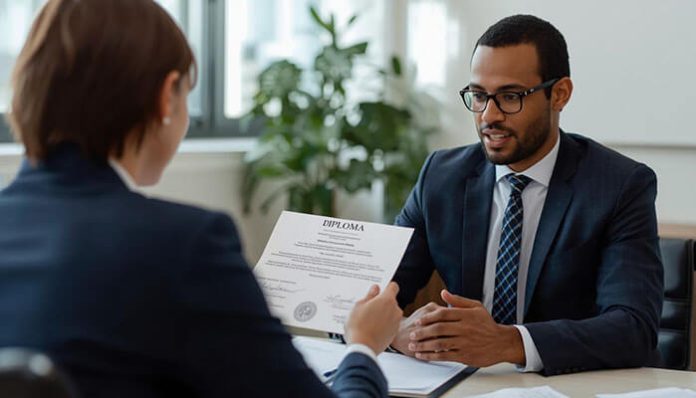

Every employer wants to make sure that their business is running smoothly or without complications. The problem that can arise at times is that legal issues appear here and there, especially when you hire someone with a fake degree. At the end of the day, people always try to find a way to get the edge and surpass other competitors. That’s why diploma verification is essential, as you will have applicants who seem to have amazing credentials, only for those to be fake.
What can you do in a situation like this? The best approach is to try and figure out an effective way of identifying any fakes. Most employers these days use a variety of methods to identify the presence of a fake diploma. Such diplomas do appear from time to time, so as someone who wants to hire people based on their merits, you have to be aware of the problem. And in most cases, this will narrow down the issue, which is extremely helpful.
Why do employers verify diplomas?
Every employer will do it for a different reason. A lot of the time, it has to do with confirming qualifications, because they want to be 100% sure that they hire someone with the right skills and educational background. On top of that, they want to reduce risks. Hiring someone who has a fake diploma is an obvious risk, and it’s crucial to always make sure that you hire the right people.
Otherwise, you could find yourself in hot water from a legal standpoint. Everything that person did within your firm can be questioned, and it leads to many financial losses. It also leads to the next point, which is integrity. Companies want to maintain their integrity and show they only hire qualified professionals. If they hire someone whose credentials are fake, that’s always going to be a major issue. Addressing such a problem is extremely important, and you have to make the most out of the opportunity.
Do all employers verify diplomas?
A lot of people are wondering about that, and the short answer is that most of them do. Some companies, especially smaller ones, will not check credentials because it leads to extra hassle and resources they need to use. Most of the time, they don’t have the resources available to do that. But even in those cases, they might use a verification system or service, especially for the higher-tier positions within the company.
There can also be a company policy that states that all diplomas need to be verified properly. That’s extremely important, because you always want to know the company policies anyway, and this could very well be included in there. Some industries are also highly regulated, such as engineering, education, law, finance and so on. Those will always try to require diploma verification, which is something that you must think about.
You should also note that the job level matters. Companies won’t always look for a fake degree when they hire for an entry-level position. They know that the chances of someone lying for those lower-tier positions is a lot lower. The amount they get paid is less, and usually there’s no real incentive to fake things. However, that’s different when we talk about a higher-tier position within the company. Most companies will do a background check for the CEO, managers, and others with a major role in the business.
How do employers verify diplomas?

It’s important to keep in mind that everyone verifies diplomas differently. But it’s a good idea to find an effective method that works for your specific niche and requirements. That way, you will know how everything is managed, if you have to optimize or change stuff, and the outcome will be great in the end.
• Some companies get in direct contact with the school, so they can see right off the bat if the person studied there or not. They might also want to confirm degrees, majors, graduation dates, and other things.
• Third-party background services matter just as much, mainly because they can help find degree inconsistencies. They get in touch with institutions, find any signs of fake credentials, and overall, it’s a fast way to narrow down whether a diploma is real or not.
• Searching national databases is another method used. It’s commonly used mainly because it’s fast, and it can provide a good insight into what the person graduated from, and if they graduated at all.
• Digital credentials are newer, but these blockchain-based diplomas make it much harder than ever before for anyone to fake their credentials, achievements or degrees.
• An informal check, such as comparing resumes with the LinkedIn profile, asking for transcripts, these things could be handy, and they certainly help enhance things in a much better way than expected.
What happens if a company discovers that the diploma is fake?
Truthfully, these things will happen more often than not. If that’s the case, the company will usually provide a job offer withdrawal, or they will just terminate the employment for that person who lied.
There can also be some legal ramifications that connect with the fact a person used a fake diploma to get hired. They could be charged with fraud, along with a variety of other things, so that’s incredibly important to take into consideration. Of course, there’s also the reputational damage that a person will get from being accused of forging their credentials. Few to no companies will hire them after the fact, because this is a major red flag.
Clearly, no one should try to fake their credentials, because that will always have some sort of ramifications. But if you do, then it’s expected that at some point, your lack of skills could lead to a diploma verification and the truth comes to light. Realistically, it always does, so you have to be very much aware of the situation and the challenges that could appear in a situation like this.
Every industry comes with its own verification practices. For example, in the medical world, verification is mandatory, and the medical staff needs to hold accredited degrees. The same thing is valid for the education world, where credentials are verified quite a lot before someone gets hired. Finance is another strict niche where you need to have the credentials verified before you get hired.
And a similar thing is valid when it comes to the IT world. A lot of creative fields have started to follow the same trend, for a very good reason. The truth is that you are constantly going to face a lot of accusations from people that a degree might not be real, so a verification is necessary.
Conclusion
All employers know how problematic it can be to hire someone who doesn’t have the right credentials and skillset. The most important thing is to ensure that you check and see that the applicants are not using a fake diploma. The more you can focus on streamlining the recruitment process and assuring that everything is OK credential-wise for all applicants, the better. Of course, there will always be people who try to cheat the system. But with a good verification system, no fake diploma will pass your checks!