
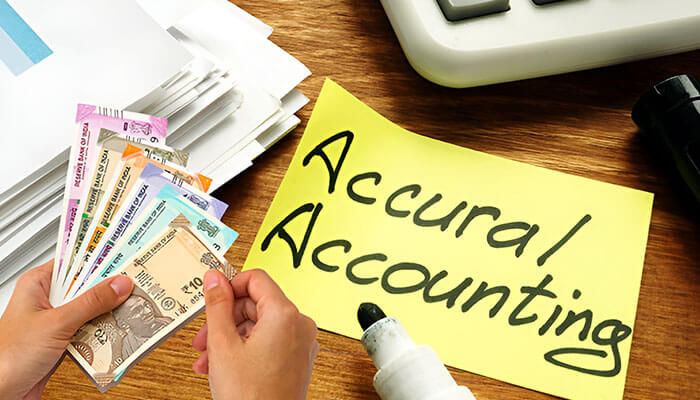

When you’re starting a new business, you’re juggling a hundred decisions—from branding to hiring to product development. One that often gets pushed to the back burner is how you’ll keep your books. But the choice between cash and accrual accounting isn’t just about paperwork; it shapes how you see your business’s health and make decisions for the future. Cash vs accrual accounting helps you understand key differences, pros & cons, so you can choose the right method for your new business & make smarter decisions.
Understanding the differences between the two—and which is right for you—can prevent costly headaches down the road. Let’s break down accrual accounting vs cash accounting in plain language and see how each impacts a new business.
The Basics: Cash vs. Accrual in Simple Terms
Cash accounting is like tracking your finances in real time—money in when it’s in your hand, money out when you actually pay it. If a customer pays you in January, you record it in January, regardless of when you did the work.
Accrual accounting, on the other hand, is about matching revenue and expenses to when they occur, not when cash changes hands. You record income when you earn it (even if you haven’t been paid yet) and expenses when you incur them (even if you haven’t paid yet).
Think of cash accounting as a “checkbook” view and accrual accounting as a “true financial picture” view. Understanding the difference between accrual accounting vs cash accounting can make or break your financial clarity.
Pros of Cash Accounting for New Businesses
Many small and new businesses lean toward cash accounting for a reason—it’s straightforward and keeps bookkeeping simple.
• Easy to understand—You track only actual cash transactions.
• Better for cash flow management—You see exactly what’s available to spend.
• Less expensive to maintain—Fewer complexities mean less time (or money) spent on accountants.
For a solo consultant, freelance creative, or small retailer, cash accounting often fits like a glove in the early stages.
Pros of Accrual Accounting for Growing Startups
While accrual can feel more complex, it offers a richer view of your business’s financial reality.
• Accurate profitability tracking—Matches income and expenses to the same period.
• Better for long-term planning—Helps you see trends and prepare for seasonal fluctuations.
• Required for certain situations—If you plan to seek significant financing or surpass IRS thresholds, accrual becomes a must.
If your new business already has contracts, deferred payments, or recurring expenses, accrual accounting will give you a more reliable financial snapshot.
The IRS and Regulatory Requirements
The IRS generally allows small businesses with less than $25 million in annual gross receipts to choose either method. However, certain businesses—like those holding inventory—may be required to use accrual. It’s worth checking with a tax professional early to avoid an unexpected forced switch later.
How Each Method Affects Your Decision-Making
Imagine you sign a $50,000 contract in December but won’t get paid until February. In cash accounting, your books will show zero income in December—making it seem like you had a bad month—while accrual will reflect that revenue in December, giving you a more accurate performance picture.
The flip side? Cash accounting won’t show a large upcoming expense until you pay it, which might help you manage immediate liquidity.
When Cash Accounting Makes the Most Sense

• Cash accounting is generally better suited for:
• Businesses with straightforward transactions and no significant inventory
• Solo entrepreneurs and service-based freelancers
• Businesses prioritizing ease over detailed financial tracking in the short term
It’s also a great choice if your primary concern is managing day-to-day cash flow without worrying about financial forecasting just yet.
When Accrual Accounting Is the Smarter Move
Accrual accounting often benefits businesses that:
• Sell products with inventory
• Operate on contracts or delayed payment terms
• Need financial statements for investors or lenders
• Plan for rapid growth and expansion
For instance, if you’re a startup planning to court venture capital, investors will expect accrual-based statements—they offer a truer representation of profitability and performance.
Side-by-Side Comparison
Here’s a quick table to visualize the key differences:
| Feature | Cash Accounting | Accrual Accounting |
| Records revenue when… | Payment is received | Work is completed or goods delivered |
| Records expenses when… | Payment is made | Expense is incurred |
| Complexity | Low | Moderate to high |
| Cash flow visibility | Very clear | Can be less obvious without extra tools |
| Accuracy of profitability | Can be misleading over time | Highly accurate |
| Best for… | Small, simple businesses | Growing businesses with complex deals |
Real-World Stat: How Businesses Approach Accounting
A survey by Clutch found that 45% of small businesses don’t employ an accountant and often rely on simple cash-based methods to track finances. While this works in the early days, many later transition to accrual as their needs evolve.
Key Considerations Before You Choose
Before you settle on a method, ask yourself:
• Do I have inventory or delayed payment terms?
• Will I be seeking investors or loans in the near future?
• How important is detailed profitability tracking right now?
• Do I have the time or resources to handle more complex bookkeeping?
Switching Methods Later On
It’s worth noting you can switch from cash to accrual later—though doing so requires IRS approval and some effort to adjust your financials. Many founders start on cash accounting for simplicity, then move to accrual as their operations grow and require more nuanced data.
Final Thought: Matching Your Method to Your Mission
Choosing between accrual accounting vs cash accounting isn’t just about compliance—it’s about aligning your financial tracking with your business goals. A lifestyle business that values simplicity might thrive on cash accounting, while a high-growth startup aiming for investor funding will almost certainly benefit from accrual from day one.
The best choice is the one that not only keeps you compliant but also gives you the clarity you need to make confident, strategic decisions for your business’s future.