

In today’s rapidly changing world, the one-size-fits-all approach to education is becoming increasingly outdated. As technology advances, a unique learning system is emerging to offer a more flexible and personalized way for students to thrive. Traditional educational models are gradually being replaced by more adaptive, student-centered approaches that prioritize individual needs.
By focusing on tailored learning experiences, integrating adaptive learning technologies, and fostering collaboration, the unique learning system is revolutionizing how students engage with content, absorb knowledge, and develop essential life skills. This shift promises to create a more inclusive, effective, and adaptable educational environment for all.
What is a Unique Learning System?
A unique learning system is an innovative educational model designed to cater to diverse learning styles and individual needs. Unlike traditional methods that follow a uniform curriculum, it focuses on creating personalized education paths that adjust to the student’s pace, strengths, and interests. This allows learners to engage with the material in ways that suit their learning preferences—whether they are visual learners, auditory learners, or kinesthetic learners.
Definition:
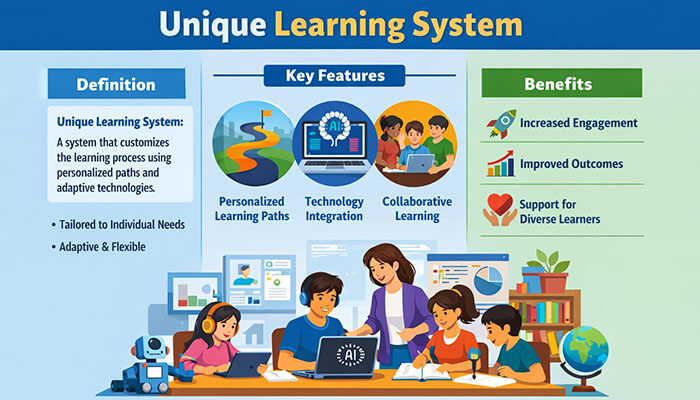
- Unique Learning System: A system that customizes the learning process using personalized learning paths and adaptive technologies to ensure each student can succeed based on their individual learning style.
Key characteristics of a unique learning system include:
- Personalized learning experiences
- Technology integration through educational technology tools
- Real-time assessments and feedback
- Collaboration and peer learning
By prioritizing the needs of each learner, this system ensures that students receive the right level of challenge and support, leading to improved engagement and better educational outcomes. The unique learning system is designed to be scalable and flexible, offering tailored educational experiences from early education to higher education and beyond.
Comparison of Learning Systems
To better understand how a unique learning system compares to traditional classroom learning and online learning platforms, here’s a breakdown of key features:
| Feature/Aspect | Unique Learning System | Traditional Classroom Learning | Online Learning Platforms |
|---|---|---|---|
| Personalized Learning | Highly personalized based on student needs, pace, and learning style. | One-size-fits-all approach with limited customization. | Some platforms offer personalized content, but still largely fixed. |
| Technology Integration | AI-driven platforms, real-time feedback, adaptive technologies. | Limited or no technology integration. | Heavy use of technology (e.g., videos, forums), but lacks real-time feedback. |
| Pacing | Students can work at their own pace, with tailored paths. | Fixed pace dictated by curriculum. | Flexible pacing, but often lacks true adaptation to individual needs. |
| Collaboration | Encourages peer-to-peer learning and global collaboration. | Limited collaboration, mainly within classroom. | Some collaboration tools (forums, group projects), but often isolated. |
| Assessment | Ongoing, real-time feedback and adaptive assessments. | Standard tests and periodic assessments. | Self-paced quizzes and exams, but not as adaptive or personalized. |
| Learning Style Support | Supports various learning styles: visual, auditory, kinesthetic. | Primarily visual and auditory, limited options for kinesthetic. | Mostly visual and auditory, with some platforms offering interactive features. |
Key Features of a Unique Learning System
1. Personalized Learning Paths
A unique learning system offers personalized learning paths for each student. This means that students can progress at their own pace, with the curriculum adjusting based on their unique needs and abilities.
Personalized Learning Paths: A customized approach that adapts the curriculum to match individual student needs, helping them progress at their own pace.
Benefits:
- Self-paced learning: Students can work at their own speed, which enhances comprehension.
- Targeted support: Provides focused resources for areas where a student needs improvement.
For example, a student who excels in math might advance more quickly through the curriculum, while someone who struggles with reading may receive additional resources. This flexibility ensures that all students stay engaged and achieve their potential.
2. Technology-Driven Learning Tools
Incorporating advanced technology is central to the unique learning system. With AI-driven platforms and other learning management systems (LMS), students can receive real-time feedback and progress tracking. These tools allow students to engage with content in innovative ways, ensuring a more interactive and personalized experience.
Technology-Driven Learning Tools: Tools such as AI platforms, adaptive learning technologies, and digital assessments that help personalize and enhance the learning experience.
Examples of Technology:
- AI algorithms for personalized lesson recommendations.
- Learning Management Systems (LMS) to organize and track student progress.
- Virtual classrooms and collaborative whiteboards for interactive learning.
These technologies track student progress and provide immediate feedback, enabling instructors to adjust teaching methods on the fly and better support students.
3. Collaborative Learning Environment
A unique learning system promotes a collaborative learning environment, encouraging students to work together, solve problems, and communicate with peers. This fosters critical thinking, teamwork, and the development of important social skills.
Collaborative Learning: A learning approach that emphasizes peer-to-peer interaction, where students work together to solve problems and achieve common learning goals.
Key Features:
- Group projects that promote teamwork and shared learning.
- Peer-to-peer discussions and collaborative tasks to enhance understanding.
- Global learning opportunities where students can engage with peers worldwide.
This collaboration not only enhances academic learning but also helps students develop key skills for success in the workforce.
Benefits of a Unique Learning System
1. Increased Student Engagement and Retention
One of the major benefits of a unique learning system is increased student engagement. Personalized education, real-time feedback, and interactive tools ensure that students are actively involved in their education, leading to higher retention rates and better overall outcomes.
Key Benefits:
- Motivation Boost: Personalized lessons increase student motivation.
- Interactive Content: Gamification and digital tools make learning fun and engaging.
By catering to individual needs, students feel more connected to the material and are motivated to continue their education, which reduces dropout rates.
2. Improved Learning Outcomes
A unique learning system helps improve learning outcomes by focusing on the individual’s strengths and weaknesses. With adaptive learning technologies and personalized support, students achieve better academic performance and gain a deeper understanding of the material.
Key Benefits:
- Mastery-Based Learning: Students can fully grasp a concept before moving on to the next.
- Increased Understanding: Adaptive learning methods ensure that students learn at their optimal pace.
As a result, students are more likely to retain knowledge, apply it practically, and achieve mastery in their subjects.
3. Support for Diverse Learners
A unique learning system is designed to support a wide range of learners. It caters to gifted students, students with learning disabilities, and those who require additional assistance, ensuring that everyone can succeed.
Key Benefits:
Inclusion of All Learners: Special accommodations, such as text-to-speech software and visual aids, help all students succeed.
- Equitable Learning: All students receive the support they need, no matter their background or ability.
- This inclusivity ensures that education is more equitable, and every student has the opportunity to thrive.
Real-World Example: Summit Public Schools
An example of how a unique learning system is successfully implemented can be seen at Summit Public Schools. This network of charter schools uses a personalized learning model that allows students to advance at their own pace, with technology playing a key role in their learning process. By incorporating adaptive learning tools and personalized support, Summit has seen significant improvements in student engagement and academic performance. This shows how adaptive learning technologies and personalized education can lead to measurable success in the classroom.
The Future of Education: Embracing a Unique Learning System
As education continues to evolve, the role of a unique learning system will only grow. With advancements in AI, machine learning, and immersive technologies, this system will continue to evolve, offering even more tailored learning experiences for students. Future of learning technologies will create even more opportunities for personalized education, leading to deeper engagement and better outcomes.
By embracing these technologies and methodologies, educational institutions will be able to provide students with even more opportunities for success. The unique learning system will ensure that future generations are better prepared for both academic and career challenges.
Conclusion
The unique learning system is reshaping the educational landscape by offering personalized, flexible, and technology-driven approaches to learning. By focusing on the individual needs of each student and providing them with the tools and resources they need to succeed, this system is setting the stage for a more inclusive and effective educational environment. As technology continues to advance, the unique learning system will continue to be at the forefront of educational innovation, ensuring that students receive the best possible learning experiences.
Unique Learning System FAQs
1. What is a unique learning system?
A system that customizes learning based on students’ individual needs, strengths, and interests using personalized paths and adaptive technologies.
2. How does personalized learning improve student outcomes?
It allows students to learn at their own pace, receive instant feedback, and engage with content suited to their learning style, improving performance.
3. What are the benefits of a personalized learning system?
Benefits include increased engagement, self-paced learning, targeted support, and real-time assessments, leading to better academic outcomes.
4. How does adaptive learning technology work?
It uses AI to adjust the curriculum based on student progress and learning gaps, offering a tailored learning experience.
5. What are the best personalized learning platforms for students?
Top platforms include Khan Academy, Duolingo, Smart Sparrow, and DreamBox, offering AI-driven, personalized lessons.