

There is something almost stubbornly optimistic about deciding to start a farm in 2026. The headlines are not exactly encouraging. Input costs are near record highs, commodity prices for row crops have been below breakeven in major growing states, and farm bankruptcies ticked upward through the first half of 2025. Agricultural economists are split on whether the row crop sector has officially entered recession territory, with farm confidence continuing to slip amid concerns over trade policy and ongoing economic pressures. And yet, people are still making the leap. They are buying their first parcels of land, pulling permits for their first greenhouses, enrolling in farmer training programs, and walking into lenders’ offices with business plans and nervous energy.
That decision is not naive. In fact, with the right preparation and realistic expectations, starting a farm in a difficult economic climate is more feasible than it might appear. The key is going in with eyes open, a solid understanding of where the real costs lie, and a clear plan for how to finance the early years of an operation without overextending.
Know What You Are Getting Into Financially
Before a single seed goes in the ground, aspiring farmers need to grapple honestly with the cost structure of agricultural production. This is where a lot of new operators stumble. The romanticized version of farming focuses on the land, the seasons, and the work. The financial version looks a lot more like a spreadsheet, and it includes line items that new farmers often underestimate, including fuel, equipment maintenance, crop insurance, land costs, and the extended period between spending money and receiving revenue from a harvest.
That gap between spending and earning is exactly why access to an agriculture loan is so central to the early survival of a new farm operation. USDA recognizes that access to capital is one of the biggest needs for beginning farmers, whether it is to purchase property or equipment or to meet operating costs, and offers a variety of loan programs designed to help producers start or grow their operations. Understanding the landscape of available credit, and building a relationship with a lender early, is not a sign that a business plan is weak. It is a sign that a farmer understands how agriculture actually works.
The Credit Landscape for Beginning Farmers
The good news for new operators is that dedicated lending programs for beginning farmers exist at the federal level and are specifically designed to meet the credit gaps that make commercial lenders hesitant to work with applicants who lack an established track record.
The USDA Farm Service Agency supports beginning farmers and ranchers through direct and guaranteed loan programs, with farm ownership loans providing access to land and capital, and operating loans helping cover normal operating or family living expenses, open doors to new markets, and assist with diversifying operations. The FSA also offers a microloan program that is particularly well suited to new and non-traditional operations, with reduced paperwork requirements and lower loan amounts that match the scale of a startup farm.
Each year, the FSA reserves a significant portion of its loan funds specifically for beginning farmers and ranchers, with 75 percent of direct farm ownership funds, 50 percent of direct operating loan funds, and 40 percent of guaranteed farm ownership and operating loan funds set aside until April 1 of each fiscal year. For a beginning farmer who has never worked with USDA before, this is a meaningful advantage. The competition for those reserved funds is limited to other new operators, not established farms with years of financial history behind them.
That said, these programs require preparation. FSA does not simply hand out money based on enthusiasm. Applicants are expected to demonstrate at least some farm management experience, present a credible business plan, and show acceptable repayment history with other creditors. New farmers who have not yet built those credentials should start building them now, even before they are ready to apply.
The Real Obstacles in 2026
Being clear-eyed about the current economic climate is part of starting a farm responsibly. Looking ahead through 2026, economists overwhelmingly point to input costs, not interest rates, as the biggest barrier to profitability, with nearly 70 percent citing input prices as the largest challenge, far ahead of trade concerns or capital availability. For a beginning farmer with no existing equipment inventory, no bulk purchasing power, and no stored inputs from previous seasons, those elevated input costs hit particularly hard.
Production expenses in 2025 reached projected record levels of $467 billion nationally, nearly $12 billion higher than 2024, and roughly $85 billion above the previous ten-year average. The categories driving those increases are not obscure line items. They are the basics: seed, fertilizer, fuel, crop protection products, equipment, and land. A beginning farmer will encounter every single one of them in the first season.
Land is its own category of challenge. Land values have proven remarkably resilient to market disruptions, with appreciation expected to continue over the long term even as the pace slows. For a new farmer trying to purchase ground, that resilience is a double-edged reality. Farmland holds its value, which makes it a sound long-term asset. But it also means land prices have not corrected downward in a way that would make entry any easier for those without existing equity. Leasing rather than buying is often the more practical starting point, and a number of beginning farmer programs are specifically structured to support lease arrangements as a path toward eventual ownership.
What New Farmers Have Going for Them
For all the headwinds, 2026 does present genuine openings for beginning farmers who approach the opportunity strategically.
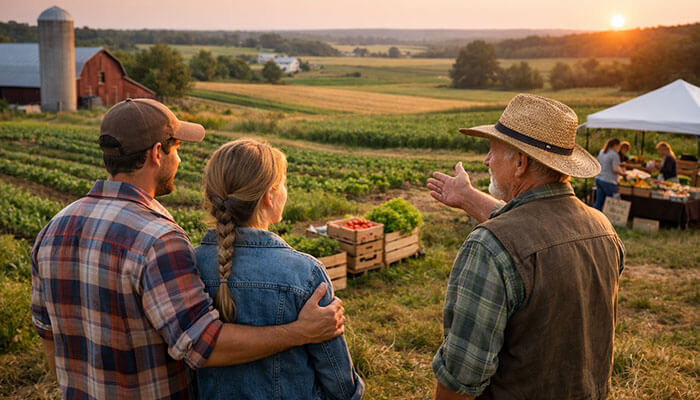
Approximately 21 percent of American farms and ranches have no identified next generation, which creates concrete opportunities for young and beginning farmers and ranchers to enter the industry. Retiring operators who lack family successors are increasingly open to creative transition arrangements, including lease-to-own agreements, seller financing, and mentorship relationships that can substitute for some of the formal experience requirements in federal loan programs. A beginning farmer who identifies one of these opportunities and builds a relationship with an established operator is in a significantly stronger position than one trying to enter the market cold.
Consumer interest in locally grown food, farm-to-table supply chains, and direct marketing has also not faded. Farmers’ markets, community-supported agriculture programs, and regional food systems continue to create revenue opportunities for smaller operations that cannot compete on commodity volume but can compete on quality, story, and relationship. For a beginning farmer without the scale to weather commodity price swings, these direct-market channels are not just a nice add-on. They can be the difference between a viable business model and one that struggles to survive its first few years.
Building the Foundation Before You Need It
Perhaps the most important thing a prospective farmer can do before formally launching an operation is spend time building the infrastructure of relationships and knowledge that will sustain the business when things get hard.
That means sitting down with an FSA farm loan officer before an application is ever filed, understanding what documentation will be required, and identifying any gaps in experience or financial history that need to be addressed in advance. It means working with an agricultural extension agent to build realistic cost-of-production budgets before committing to a crop plan. It means talking to crop insurance agents, understanding what coverage options exist, and recognizing that uninsured production risk in an uncertain economy is a gamble that beginning farmers with limited reserves cannot afford to take.
In the current environment, cash flow and liquidity challenges are jeopardizing access to credit for a growing number of producers, making financial organization and a system for periodically monitoring business and financial metrics not optional but required. For a beginning farmer, that means treating record-keeping and financial management as core business functions from day one, not something to sort out once the operation is up and running.
The Honest Case for Starting Anyway
Starting a farm in a difficult economy is not for everyone. The margin for error is genuinely narrow right now, and the farmers who succeed in this environment tend to be the ones who treat their operation as a business first and a lifestyle second. They are the ones who have done the financial homework, secured their credit relationships early, chosen their enterprise based on what the market actually supports, and built the kind of operational discipline that survives a bad year without collapsing.
But farming has never been easy, in any economy. The farmers who have built lasting operations over decades have all navigated periods of low prices, high input costs, drought, policy uncertainty, and credit stress. The tools available to beginning farmers today, from federal loan programs to extension resources to direct-market opportunities to precision agriculture technology, are in many respects better than what previous generations had access to. The challenge is real. So is the path forward, for those willing to walk it seriously.