When you think about farming, do you imagine old-school traditions or hi-tech tools? For centuries, the main tools for agriculture were instincts, endless manual hard work, and just hoping the weather would be nice. Well, today that entire picture is being completely redrawn, and the new tools are coming straight from space through the use of real-time satellite images in agriculture.
Tech startups are handing farmers a new guide, all powered by current satellite images. All those activities that used to be just guesswork are now becoming a science. And these companies are helping farmers to view real-time satellite images and analyse data, growing more food with less waste, which is better for the planet and for the farmer’s wallet, without any mind games.
Why These Startups Are Such a Big Deal?
These new startup companies are fast, focused, and not afraid to break the old rules. They act as the engine for this new wave of “agri-tech.” Their role isn’t just to invent new gadgets, but to solve the real-world problems farmers face every single day:
• They solve problems with new tech: By using data from sources like current satellite imagery, they give farmers tools to stop wasting resources. They can see exactly which parts of a field need water or fertilizer, down to the square meter.
• They make farming way more efficient: These companies build tools such as automated irrigation systems and data dashboards that help farmers achieve higher yields, lower costs, and less guesswork.
• They connect farmers straight to buyers: Startups are building platforms that cut out the middlemen, letting farmers sell directly on a good market with a fairer price and offering fresher food.
How AgriTech Startups Translate Space Data into Crops
Over the last ten years, new AgriTech startups have exploded onto the scene. Companies like EOS Data Analytics are building incredible platforms that act as translators. They offer the most current satellite images from satellites like Sentinel-2 and Landsat 9 high above Earth and turn that raw, complex data into simple, actionable advice for farmers with powerful AI.
The result is a game-changer: instead of a confusing picture and numbers, a farmer in Spain gets a simple map showing crop health. A manager in Brazil can spot irrigation leaks from their phone. An agronomist in Kenya can detect a nitrogen problem weeks before it becomes visible from the ground.
What Are These Startups Actually Doing?
The work of these agri-tech companies goes way beyond just providing cool pictures, they’re changing the business of agriculture from the ground up:
• Precision Agriculture: Why water a whole field if only one corner is dry? The new digital approach allows for a super-precise application of water, fertilizer, and pesticides. The results are huge: it cuts waste, protects the environment, and can boost crop yields by up to 30%.
• Data-Driven Decisions: Farmers don’t have time to become data scientists. That’s why startups are building platforms that do the heavy lifting. Instead of a farmer having to figure out how to find current satellite images, the platform can help to predict supply and demand, spot disease outbreaks early, and help plan the whole season.
• Direct Farmers Connection: Of course, the hardest work is made by farmers. But for decades, they needed the middlemen who took a huge slice of the profit. Startups are building apps and online marketplaces that connect farms directly to buyers. The result? The person who actually grew the food gets to keep a fair share of the price.
• Knowing Your Food is Good: Startups are building a digital “passport” for your food, letting you trace a bag of apples all the way from the specific branch it was picked from, right to your kitchen counter.
How Satellite Data Gives Farmers Superpowers
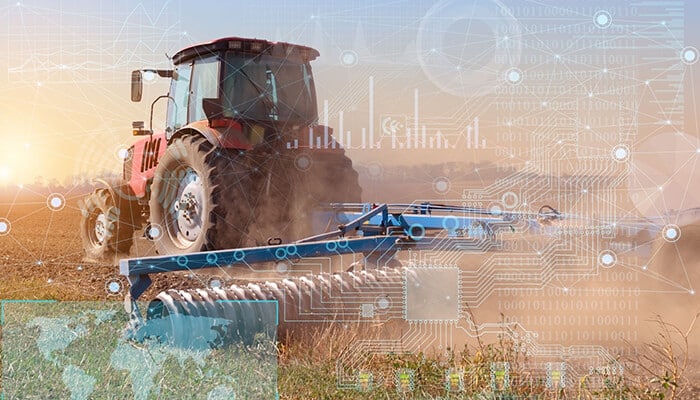
Today, satellite imagery is not just about snapping cool photos from space, it’s about seeing what the naked eye can’t. Satellites pick up on all kinds of light, revealing a constant stream of intel about how crops are doing and what the soil is like. Here’s why it’s such a big deal:
• They See the Big Picture: Satellites scan massive fields in one go, giving farmers a complete overview of their farm, not just one problem spot.
• They’re Always Checking In: They pass over regularly, giving farmers a constant “health report” for their fields. This means they can spot changes over time, not just react when something’s already wrong.
• It’s a “Hands-Off” Approach: A current satellite view means no driving out into the fields. Farmers can check on everything without compacting the soil or damaging their crops with a tractor.
• It Saves Money: For big farms, it’s just plain cheaper than sending people out to walk the fields all day.
The Future of Farming Is Data-Driven
The best part is that startups are demonstrating you don’t need to own a single acre to spark a revolution. Sometimes, you just need a better view from above. By giving farmers the power of a live satellite view and the tools to actually use that data, these companies are helping us all. They’re making it possible to grow more food with less waste, building a stronger and more resilient food system one pixel at a time without any guesswork.
______________
Author:
Vasyl Cherlinka
Vasyl Cherlinka is a Doctor of Biosciences specializing in pedology (soil science), with 30 years of experience in the field. With a degree in agrochemistry, agronomy and soil science, Dr. Cherlinka has been advising on these issues private sector for many years.