


Hospital claims depend on more than medical treatment. Bills, receipts, prescriptions and reports show what was paid and why treatment was required. A common doubt is whether original papers must be submitted or photocopies are sufficient. The answer depends on the claim route, document type and insurer’s requirements.
What Counts as an Original Bill?
An original bill is the first document issued by the hospital, pharmacy, laboratory or another authorised provider. It should carry clear patient, service and payment details.
Original claim records may include:
- The final hospital bill
- Payment receipts
- Pharmacy invoices
- Diagnostic bills and reports
- Consultation papers
- Discharge documents
- Prescriptions supporting purchased medicines
Why Original Documents Usually Matter
Original documents provide confirmation of a medical expense and its payment. They also ensure that the insurer can keep a check on the billings and avoid confusion in claim assessment.
In India, the requirements for documents may vary from one health insurance plan in India to another, particularly when it comes to claims for reimbursements.
Policyholders should therefore check whether the selected plan requires original hospital bills, payment receipts, prescriptions and diagnostic reports. Keeping these papers safely from admission onwards can make claim submission more organised.
When Photocopies May Be Useful
Photocopies are useful for personal records and follow-up communication. They let policyholders refer to a document after the original has been submitted.
Copies may help when:
- Responding to a document query
- Checking an amount previously submitted
- Discussing billing entries with the hospital
- Keeping records for consultation
- Tracking a claim through different stages
A photocopy should not automatically be treated as a replacement for an original. Acceptance depends on the insurer’s instructions and on why the original is unavailable.
How Family Claims Should Be Organised
Family policies can generate records for different insured members. Keeping each person’s papers separately can prevent bills or reports from being mixed.
Under family floater health insurance, covered members use a shared sum insured. The claim file should identify the patient whose treatment produced the expense. The policyholder should retain copies so the family can follow claim activity and understand the records connected with each admission.
Cashless Claims and Original Papers
In a cashless claim, the network hospital coordinates with the insurer or claims administrator. It sends medical and billing information during pre-authorisation and final settlement.
The patient should still collect and retain:
- The discharge summary
- Final bill details
- Receipts for personal expenses
- Prescriptions and reports
- Cashless authorisation communication
The hospital may keep or transmit certain records. Patients should ask which documents they will receive at discharge.
Reimbursement Claims and Document Submission
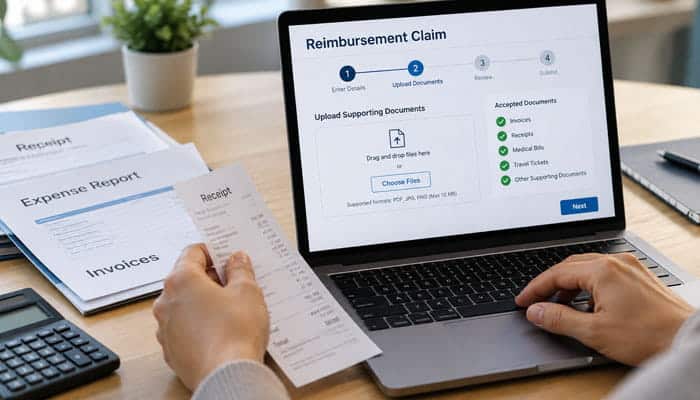
In a reimbursement claim, the policyholder generally pays the hospital first and submits the required documents. Original bills and payment receipts may therefore carry greater importance.
Before submission, check that:
- The patient’s name is consistent
- Dates match the admission records
- Bills are itemised and readable
- Receipts show payment clearly
- Prescriptions support related purchases
- Reports belong to the claimed treatment
- The discharge summary is complete
- The claim form is correctly filled out
Keep scanned copies of the entire set before sending originals.
What if the Original Papers Are Lost?
A lost original should be addressed promptly rather than replaced with an unexplained photocopy. Contact the hospital or provider and ask what authenticated duplicate can be issued.
The insurer should also be informed before submission. It may request a duplicate bill, declaration, proof of payment or supporting papers. Requirements vary, so written guidance is preferable to assumptions. Assessment remains subject to verification and policy conditions.
What if Another Insurer Has the Originals?
A person covered under more than one policy may need records for separate claim processes. The correct approach depends on how the first claim was assessed.
Before filing another claim, ask the insurer about acceptable papers. It may seek certified copies, previous settlement details or other records. Do not submit the same expense without clear disclosure. Transparent documentation helps each insurer assess the amount under its policy.
How To Store Claim Documents Safely
Good record-keeping begins during hospitalisation, not after discharge. Create one file for medical papers and another for billing records.
Label documents by patient and admission date. Scan every page, including the reverse side when it contains information. Keep claim acknowledgements and communication in the same file. Secure storage makes later queries easier to answer.
Conclusion
Original bills have a higher value of significance in reimbursement claims since they create the record of the expense and the payment. Photocopies can be useful to keep as personal records for claim tracking and communication but cannot be used in place of an original copy unless the insurance company agrees. Different records are kept in cashless and reimbursement routes.
Policyholders should read the document checklist, preserve copies before submission, and seek written guidance whenever an original is lost or held elsewhere.