


Last updated: September 2026
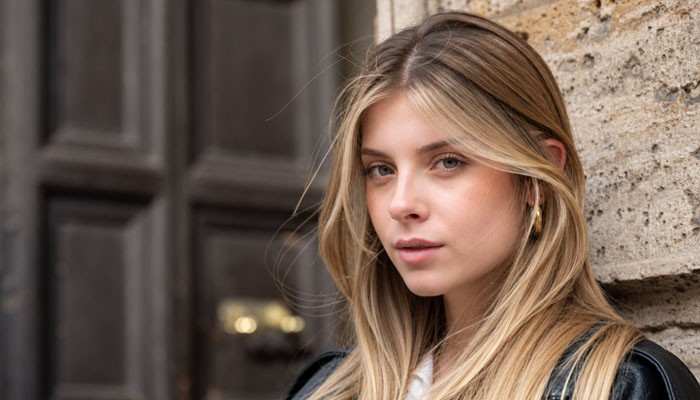
Money piece hair is a hair-color technique that places brighter or contrasting highlights in the front sections of the hair to create a face-framing effect. Unlike traditional highlights, which may be distributed throughout the head, money pieces concentrate the brightest color around the face.
The result can be subtle, natural-looking, bold, or highly contrasted. Blonde money pieces are among the most recognizable versions, but caramel, honey, copper, red, brunette, pastel, and vivid shades can all be used.
The modern money piece is closely related to face-framing highlights and hair contouring. It became especially popular through the 2020s, building on earlier 1990s and early-2000s highlighting trends. Professional colorists now adapt the technique according to hair color, haircut, natural parting, desired contrast, and maintenance preferences.
This guide covers what money piece hair means, where it is placed, how it is created, the difference between money pieces and other highlighting techniques, the best color ideas, face-shape considerations, maintenance, potential damage, cost considerations, salon preparation, and the questions you should ask before getting the look.
Quick Answer: What Is Money Piece Hair?
Money piece hair is a hair-color technique that places brighter or contrasting highlights in the front sections of the hair to create a face-framing effect.
Instead of distributing highlights evenly throughout the entire head, the brightest pieces are concentrated around the sections closest to the face.
The pieces may begin at the roots or slightly below them and can be fine, medium, or chunky.
The amount of contrast determines how dramatic the result looks.
- Subtle money piece: slightly lighter than the base
- Medium money piece: clearly visible but blended
- Bold money piece: strong contrast, often with wider sections
- Creative money piece: uses colors such as pink, red, blue, purple, or copper
Professional guidance generally emphasizes working with the hair’s natural parting and adjusting section size according to the desired effect. Smaller sections create a softer appearance, while larger sections create stronger contrast.
What Does “Money Piece” Mean in Hair?
“Money piece” is a popular salon and beauty-industry term rather than one standardized coloring formula.
It generally refers to concentrated face-framing highlights designed to create a noticeable visual change without coloring the entire head.
The term is closely associated with face-framing highlights and hair contouring. Face-framing or money-piece highlights are lighter pieces concentrated around the hairline and face.
This means two stylists can both describe a service as a money piece while producing slightly different results.
One might create a narrow, natural-looking frame, while another might create a wide platinum section from root to tip.
That is why reference photographs and specific instructions are useful during a consultation.
Where Did Money Piece Hair Come From?
The modern money piece has roots in the high-contrast face-framing highlights associated with the 1990s and early 2000s.
The look later returned, with colorists adapting the high-contrast concept into softer, more tailored versions.
The modern version became particularly visible through social media during the early 2020s.
Rather than remaining limited to one particular aesthetic, the technique evolved.
Today’s money pieces can be:
- Bold or subtle
- Chunky or fine
- Blonde or brunette
- Warm or cool
- Rooted or off-root
- Natural or vivid
- Blended or high contrast
That flexibility has allowed the technique to move beyond one specific trend aesthetic.
Why Is Money Piece Hair So Popular?

1. It Creates an Immediate Change
Because the color is placed directly around the face, even a relatively small amount of highlighting can make the hairstyle look noticeably different.
2. It Works With Many Hair Colors
Money pieces can be adapted for:
- Black hair
- Dark brown hair
- Medium brown hair
- Light brown hair
- Blonde hair
- Auburn hair
- Copper hair
- Red hair
- Gray hair
Face-framing highlights can be adapted to different hair colors and haircuts.
3. It Offers Control Over Contrast
You don’t have to choose between completely natural-looking highlights and extremely bold stripes.
The stylist can adjust:
- Section width
- Color difference
- Root placement
- Blending
- Toner
- Surrounding highlights
4. It Can Use Less Colored Hair Than a Full-Head Service
Only selected front sections need to be processed for a basic money piece.
However, processing a smaller area does not automatically mean the hair is protected from chemical damage. If those sections need substantial lightening, they can still experience chemical stress.
5. It Works With Other Color Techniques
A money piece can be combined with:
- Balayage
- Babylights
- Traditional highlights
- Lowlights
- Root shadows
- Glosses
- Toners
This allows the stylist to create different results rather than one standardized look.
Money Piece Hair vs. Balayage
Money pieces and balayage are often combined, but they serve different purposes.
Money piece hair concentrates brightness around the face.
Balayage distributes dimensional color through selected sections of the hairstyle, often with a softer transition.
| Feature | Money Piece Hair | Balayage |
|---|---|---|
| Main focus | Hair around the face | Multiple areas throughout the hair |
| Brightness | Concentrated | Distributed |
| Contrast | Can be strong or subtle | Usually more blended |
| Placement | Mainly front sections | Mid-lengths, ends, and selected sections |
| Root effect | Can be root-to-tip or off-root | Often designed for softer grow-out |
| Can they be combined? | Yes | Yes |
| Main visual effect | Face-framing brightness | Overall dimension |
Money pieces can pair with balayage to increase brightness around the face.
Money Piece Hair vs. Face-Framing Highlights
Money pieces and face-framing highlights are closely related, but the terms can describe slightly different approaches.
| Feature | Money Piece | Face-Framing Highlights |
|---|---|---|
| Definition | Concentrated front color | Broad category of highlights around the face |
| Contrast | Often noticeable | Can be subtle or strong |
| Section size | Fine to chunky | Usually fine to medium |
| Placement | Front sections | Hairline, temples, bangs, and surrounding areas |
| Root placement | Can start at the root | Can be root-to-tip or blended |
| Main purpose | Create a defined focal point | Add brightness and framing |
| Can they overlap? | Yes | Money pieces are one type of face-framing highlight |
The terms can overlap in everyday salon language, so showing your stylist a reference photograph can help clarify the exact result you want.
Money Piece Hair vs. Traditional Highlights
Traditional highlights can be distributed throughout the head in many individual strands or sections.
A money piece concentrates the visual emphasis at the front.
Someone who wants brighter hair throughout the hairstyle may need a broader highlighting service, while someone primarily interested in making the face-framing area brighter may need only a targeted service.
The distinction is therefore mainly about placement and concentration, not necessarily the chemical product used.
Money Piece Hair vs. Chunky Highlights
Chunky highlights and money pieces can look similar, particularly when the face-framing sections are wide.
The main difference is where the color is placed.
Money pieces are specifically focused around the face.
Chunky highlights can be placed throughout the hairstyle.
Chunky highlights are wider sections designed to create strong contrast and can complement a money piece.
Modern chunky highlights can also be softer and more dimensional than the strongest versions associated with the 1990s and early 2000s.
Money Piece Hair vs. Babylights
Babylights are very fine highlights designed to create a delicate, blended effect.
Money pieces are generally more concentrated and visible around the face.
A stylist can combine the two by using:
- Fine babylights throughout the hair
- A slightly brighter money piece at the front
This creates a gradual transition rather than making the front sections appear disconnected.
Money Piece Hair vs. the Scandinavian Hairline
The Scandinavian hairline, or Scandi hairline, is another technique designed to brighten the hair around the face, but it is considerably more subtle.
A traditional money piece generally involves a more visible section of hair.
The Scandi hairline focuses on the fine hairs and baby hairs around the hairline, creating a softer halo effect.
| Feature | Money Piece | Scandi Hairline |
|---|---|---|
| Main area | Front sections around the face | Fine hairs directly around the hairline |
| Contrast | Often noticeable | Usually subtle |
| Visual effect | Defined face frame | Soft bright halo |
| Best-known look | Blonde or contrasting front sections | Natural-looking bright hairline |
| Can they be combined? | Yes | Yes |
The Scandi hairline also involves particularly fine hair close to the skin, which is why professional application is especially important.
How Is Money Piece Hair Created?
The exact technique depends on the desired result and the client’s existing hair.
Step 1: Assess the Existing Hair
The stylist should consider:
- Natural color
- Previously colored hair
- Previous bleach
- Hair texture
- Hair density
- Hair condition
- Haircut
- Natural parting
Previous chemical treatments are particularly important because previously lightened hair may not tolerate the same processing as untreated hair.
Step 2: Determine the Natural Parting
Using the natural parting as a starting point for money-piece placement can help ensure that the brighter pieces remain visible when the client wears their hair normally.
Step 3: Choose Section Thickness
This is one of the biggest factors affecting the final appearance.
Fine sections create a softer look.
Medium sections create visible but balanced contrast.
Wide sections create a bold statement.
Step 4: Choose Root Placement
A money piece can be:
- Root-to-tip
- Near-root
- Off-root
- Root-shadowed
Root-to-tip placement creates the strongest immediate effect.
Off-root placement generally gives the color a softer transition.
Step 5: Select the Color
The color is chosen based on the starting hair, desired contrast, and overall aesthetic.
Step 6: Lighten or Color the Sections
The stylist may use:
- Foils
- Freehand painting
- Weaving
- Slicing
- A combination of techniques
The specific method depends on the desired result.
Step 7: Tone or Gloss
After lightening, a toner or gloss may be used to refine the final shade.
Step 8: Blend the Surrounding Hair
Additional highlights, balayage, lowlights, or a root shadow can be used to connect the face frame to the rest of the hairstyle.
Where Is a Money Piece Placed?
A traditional money piece is placed in the front sections of the hair that naturally frame the face. The exact placement depends on the haircut, parting, hair density, and desired level of contrast.
A stylist may place the color:
- On both sides of a center part
- Along the front hairline
- Around curtain bangs
- Through face-framing layers
- Slightly farther back for a softer transition
- Close to the roots for a bold effect
- Away from the roots for a lower-maintenance result
The width can also vary considerably. Fine sections create a softer effect, while wider sections create stronger visual contrast.
The most important consideration is how the hair is normally worn. A money piece should be placed where the brighter sections will remain visible with your usual part and hairstyle.
How Wide Should a Money Piece Be?
There is no single standard width for a money piece.
The section can range from very fine highlights to wider, chunky panels.
- Fine: subtle and blended
- Medium: clearly visible but balanced
- Wide: bold and high contrast
- Chunky: intentionally dramatic
Your stylist should consider your hair density, haircut, parting, base color, and desired contrast.
A wider section isn’t automatically better. The larger the section, the more noticeable the contrast will be.
Root-to-Tip vs. Off-Root Money Pieces
Root placement deserves special attention because it affects both appearance and maintenance.
| Type | Appearance | Grow-Out | Maintenance |
|---|---|---|---|
| Root-to-tip | Bold and obvious | More visible | Higher |
| Near-root | Noticeable but softer | Moderate | Moderate |
| Off-root | Blended and softer | Less obvious | Lower |
| Root shadow | Bright lengths with darker transition | Soft | Lower to moderate |
There is no universally “best” option.
Choose based on how visible you want the money piece to remain as your hair grows.
How to Choose the Right Money Piece Color
Blonde Money Pieces
Blonde is the classic option.
You can choose:
- Honey blonde
- Golden blonde
- Beige blonde
- Champagne blonde
- Ash blonde
- Icy blonde
- Platinum
The farther the desired blonde is from the starting color, the more lightening may be necessary.
Caramel Money Pieces
Caramel works particularly well when you want visible warmth without extreme contrast.
It can complement:
- Dark brown hair
- Chocolate brown hair
- Medium brown hair
- Warm brunette hair
Copper Money Pieces
Copper can create a warmer alternative to blonde.
It works especially well with:
- Auburn
- Brown
- Ginger
- Copper
- Warm brunette hair
Red Money Pieces
Red creates stronger visual contrast and can range from deep red to bright copper-red.
Brunette Money Pieces
A money piece doesn’t have to be lighter blonde.
Using a slightly lighter or warmer brunette around the face can create dimension without a dramatic color change.
Pastel Money Pieces
Pastel shades such as:
- Pink
- Lavender
- Peach
- Baby blue
can create a creative look.
Very light pastel colors generally require a sufficiently light underlying base.
Vivid Money Pieces
For a statement look, consider:
- Magenta
- Electric blue
- Violet
- Emerald
- Bright red
These are more fashion-forward and generally require more attention to color fading.
Money Piece Hair for Different Base Colors
Money Piece on Black Hair
Black hair creates a strong contrast with blonde, copper, red, or lighter brunette pieces.
If you want platinum blonde, significant lightening may be necessary.
Money Piece on Brown Hair
Brown is one of the most versatile starting colors.
Popular combinations include:
- Brown + caramel
- Brown + honey
- Brown + beige blonde
- Brown + copper
- Dark brown + platinum
Money Piece on Blonde Hair
Blonde hair can use slightly lighter highlights for subtle dimension or a contrasting shade for a more dramatic look.
Money Piece on Red Hair
Copper, golden blonde, strawberry blonde, or deeper red can all work depending on the desired result.
Money Piece on Gray Hair
Face-framing highlights can be incorporated into gray-blending strategies, although the ideal approach depends on the existing gray pattern and natural base.
Does Money Piece Hair Work on Curly Hair?
Yes.
Money pieces can work on:
- Wavy hair
- Curly hair
- Coily hair
- Straight hair
The important consideration is how the hair naturally moves.
Curly hair can make color appear more dimensional because the lighter sections follow the curl pattern.
Your stylist should ideally see your hair in the texture and style you normally wear.
Does Money Piece Hair Work on Short Hair?
Yes.
Money pieces can work with:
- Pixie cuts
- Bobs
- Lobs
- Shags
- Layered cuts
- Shoulder-length hair
- Long hair
Shorter hair simply requires more precise placement because there is less length available for the color to transition.
Money Piece Hair With Bangs
Money pieces can work with curtain bangs, side-swept bangs, wispy fringe, and layered front sections.
The color can be placed:
- Beside the bangs
- Through selected sections of the fringe
- Around the temples
- Through curtain-bang layers
- Along the front hairline
The placement should match how the bangs naturally fall. A colorist may use narrower sections when working around shorter fringe so the result doesn’t become too heavy.
Does Your Face Shape Matter?
Face shape does not determine whether you can wear a money piece.
However, placement can influence where the eye is drawn.
This is one of the principles behind hair contouring.
Round Faces
A vertically oriented or slightly longer face frame may influence where the eye is drawn, depending on the haircut, parting, and overall placement.
Oval Faces
Many placements can work because the proportions are relatively balanced.
Square Faces
Softer placement around the temples and sides can create a gentler visual transition.
Long Faces
A slightly wider placement may add more horizontal emphasis, depending on the haircut and surrounding color.
Heart-Shaped Faces
The stylist can adjust the placement around the cheekbone and jaw areas according to the haircut.
These are styling considerations, not strict rules.
Your haircut, parting, texture, and personal preference matter just as much.
How to Choose the Right Contrast
Contrast is often more important than the exact color name.
Low Contrast
Example:
Dark brown + medium brown/caramel
Result: subtle and natural.
Medium Contrast
Example:
Medium brown + honey blonde
Result: clearly visible but relatively soft.
High Contrast
Example:
Black + platinum blonde
Result: bold and graphic.
If you are unsure, ask your stylist to show you examples of low-, medium-, and high-contrast versions before choosing.
How to Ask Your Hairstylist for Money Piece Hair
Instead of saying only:
“I WANT MONEY PIECE HAIR.”
be more specific.
For example:
“I WANT BRIGHTER FACE-FRAMING PIECES THAT WORK WITH MY NATURAL COLOR. I WANT THEM TO BE NOTICEABLE BUT BLENDED, AND I DON’T WANT A HARSH STRIPE AS THEY GROW OUT.”
Or:
“I WANT A BOLD MONEY PIECE THAT STARTS CLOSE TO THE ROOT AND CONTRASTS STRONGLY WITH MY BRUNETTE BASE.”
Explain:
- Desired color
- Desired contrast
- Section thickness
- Root placement
- Whether you want blending
- Normal parting
- Normal hairstyle
- Maintenance tolerance
- Previous color history
Reference photographs are particularly helpful because “money piece” can describe several different visual results.
Questions to Ask Your Colorist Before the Appointment
Before booking, ask:
- Will my current hair need to be lightened?
- How light can my hair realistically become in one session?
- Will the pieces start at the root?
- How wide will the sections be?
- Will you use a toner or gloss?
- Will the result be blended or high contrast?
- How will it grow out?
- How often will I need maintenance?
- Is my current hair condition suitable for this service?
- What products should I use afterward?
These questions help turn a vague trend request into a specific color plan.
What Should You Bring to the Salon?
Bring two or three reference photographs.
Try to include:
- A photograph showing your preferred color
- A photograph showing your preferred section thickness
- A photograph showing your preferred level of contrast
Also tell your stylist what you don’t want.
For example:
- No harsh stripe
- No platinum
- No visible orange
- No root-to-tip color
- No high-maintenance root
Negative examples can be just as useful as positive ones.
How Much Maintenance Does Money Piece Hair Need?
Maintenance depends heavily on placement and contrast.
A bold root-to-tip platinum money piece usually needs more attention than an off-root caramel version.
Maintenance can include:
- Root touch-ups
- Toner
- Gloss
- Color refreshes
- Conditioning treatments
- Purple shampoo for certain blonde shades
- Additional lightening
The phrase “low maintenance” should not be interpreted as “maintenance-free.”
A softer money piece can simply grow out, while a high-contrast version may become visibly different as the natural root grows.
How Long Does Money Piece Hair Last?
The lightened hair remains lightened, but the tone can fade and natural hair continues to grow.
The result can therefore change in three ways:
- The roots grow
- The toner fades
- The colored hair becomes more worn over time
How long it looks freshly done depends on the color, hair-washing routine, product use, sun exposure, heat styling, and the contrast of the original service.
A softer off-root money piece can remain visually acceptable for longer than a highly contrasting root-to-tip version.
How Often Should You Refresh a Money Piece?
There is no universal appointment schedule.
A refresh may be needed when:
- Regrowth becomes noticeable
- Blonde becomes too warm
- The color fades
- The front pieces lose brightness
- The surrounding balayage needs refreshing
The exact timing should be determined by the technique and the appearance you want to maintain.
How to Maintain Money Piece Hair at Home
Use Color-Safe Products
Choose products designed for color-treated hair when appropriate.
Limit Excessive Heat
Frequent high-temperature styling can make lightened hair feel drier and more fragile.
Use a heat protectant before hot styling.
Condition Regularly
Lightened hair may benefit from regular conditioning and moisturizing treatments.
Be Careful With Purple Shampoo
Purple shampoo can help maintain some blonde tones, but more is not necessarily better.
Overuse can affect the appearance of the color.
Follow the product’s directions.
Protect Hair From Sun Exposure
Sun exposure can contribute to color fading and may make chemically treated hair feel drier or more weathered over time.
Protective measures such as wearing a wide-brimmed hat can help reduce exposure.
Can Money Piece Hair Damage Your Hair?
The placement of a money piece does not determine whether hair will be damaged; the main concern is the chemical process used to achieve the desired color.
If dark hair must be lifted substantially to become very light blonde, more intensive processing may be necessary.
The farther you want to lift the hair from its starting level, the more demanding the lightening process can become. The developer strength, formula, processing time, starting color, previous chemical treatments, and hair condition all affect the risk of damage.
A stylist should consider:
- Previous bleach
- Permanent color
- Chemical straightening
- Perms
- Breakage
- Dryness
- Elasticity
- Porosity
A Small Money Piece Can Still Be Highly Processed
One common misconception is that because only a small amount of hair is being colored, the service cannot cause significant damage.
That isn’t necessarily true.
If those small sections are lifted from very dark brown to pale blonde, they can still undergo substantial chemical processing.
The amount of hair being processed and the intensity of the chemical process are separate considerations.
Hair Color Allergy and Patch-Test Safety
Hair-color products can cause allergic reactions.
Follow the product’s directions and perform the recommended skin test before using hair dye. Symptoms such as redness, swelling, burning, itching, or a rash can indicate an allergic reaction.
Do not use hair dye on an irritated or damaged scalp.
If a professional salon requires an allergy test before the appointment, follow its instructions.
For home coloring, follow the manufacturer’s testing instructions exactly.
Hair dye should also never be used to color eyebrows or eyelashes at home because of the risk of serious eye injury.
Can You Do Money Piece Hair at Home?
A simple temporary or semi-permanent color can be easier to experiment with at home.
Significant lightening is different.
DIY bleaching can make it difficult to control:
- Section placement
- Processing time
- Symmetry
- Uneven lift
- Orange or yellow undertones
- Overlapping lightener
- Hair damage
Professional application is particularly sensible if you have dark hair, previous color, previous bleach, or a goal that requires substantial lightening.
Should You Do a Strand Test?
A strand test can help determine how your hair responds to a color or lightening product.
It can reveal:
- Approximate processing behavior
- Potential final color
- How previously colored hair reacts
- Whether the hair appears overly fragile during processing
Follow the specific product manufacturer’s instructions when performing any strand or allergy test.
Can Money Piece Hair Be Done Without Bleach?
Sometimes.
If the desired result is only slightly lighter or simply a different tone, a suitable hair-color product may be enough.
But if you want to take dark hair to a significantly lighter blonde, a lightening process will generally be required.
Color cannot simply be assumed to lift previously colored hair to any desired blonde shade.
This is one reason a consultation is particularly important for major transformations.
Can You Get Money Piece Hair on Previously Colored Hair?
Yes, but the process may be more complicated.
Your stylist should know:
- What color was previously used
- When it was applied
- Whether it was permanent or semi-permanent
- Whether bleach was used
- Whether the hair has been chemically straightened or permed
Previously colored hair may lift differently from virgin hair.
If the desired result is significantly lighter, multiple sessions may be more realistic than attempting to reach the final shade immediately.
How Much Does Money Piece Hair Cost?
There is no universal price.
Salon pricing can depend on:
- Location
- Stylist experience
- Hair length
- Hair density
- Starting color
- Previous color
- Amount of lightening
- Toner
- Gloss
- Additional highlights
- Balayage
- Haircut or styling
A simple face-framing service may cost less than a full color transformation, but a complicated correction can require substantially more time and work.
The most accurate approach is to request a consultation quote from the salon.
How Long Does a Money Piece Appointment Take?
Appointment length depends on the starting hair and desired result.
A simple face-framing refresh can be much quicker than a major transformation from dark, previously colored hair to pale blonde.
Factors include:
- Number of sections
- Hair density
- Desired level of lift
- Previous color
- Processing time
- Toner
- Gloss
- Additional highlights
- Styling
Ask the salon for an estimated appointment duration when booking.
20 Money Piece Hair Ideas to Try
1. Classic Blonde Money Piece
Dark or medium brown hair with bright blonde sections around the face.
2. Caramel Money Piece
A warm, softer option for brunette hair.
3. Honey Blonde Money Piece
Bright but warmer than icy blonde.
4. Platinum Money Piece
A high-contrast option for people who want a dramatic result.
5. Black Hair With Blonde Money Pieces
A strong contrast that creates a graphic face frame.
6. Brunette-on-Brunette Money Piece
A subtle tonal option rather than a blonde transformation.
7. Copper Money Piece
Warm and dimensional, especially with auburn or brunette hair.
8. Red Money Piece
A bolder alternative to traditional blonde.
9. Blonde Money Piece on Red Hair
A deliberately contrasting combination.
10. Ash Blonde Money Piece
A cooler option for brunette or blonde bases.
11. Champagne Money Piece
A softer blonde between strongly warm and icy tones.
12. Beige Blonde Money Piece
A versatile option for people who want a relatively neutral blonde.
13. Chocolate and Caramel Money Piece
Uses related brunette tones for dimension rather than dramatic contrast.
14. Money Piece With Curtain Bangs
The brighter sections can follow curtain-bang layers and the surrounding face-framing pieces.
15. Money Piece With a Bob
Shorter hair can use precisely placed front sections to create a concentrated frame.
16. Soft Money Piece
Fine, blended sections that create brightness without an obvious stripe.
17. Money Piece With Balayage
Bright front pieces combined with softer dimensional color through the rest of the hair.
18. Curly Money Piece
Strategically placed highlights can emphasize the movement of curls.
19. Pastel Money Piece
Pink, lavender, peach, or blue can create a creative result when the hair is light enough to support the shade.
20. Vivid Money Piece
Magenta, electric blue, violet, emerald, or bright red can create a high-impact fashion-color look.
Money Piece Hair for a More Natural Look
If you like the concept but don’t want an obvious stripe, ask your stylist for:
- Smaller sections
- Lower contrast
- Off-root placement
- Root shadow
- Babylights around the face
- Blended balayage
- Tonal colors
For example:
Dark brown + soft caramel will generally look much less dramatic than dark brown + platinum.
The difference isn’t only the color. Section thickness and root placement also matter.
How to Make Money Piece Hair Look More Modern
The modern interpretation doesn’t have to reproduce the strongest 1990s or early-2000s versions.
Softer Contrast
Use a shade moderately lighter than the base.
Root Shadow
Leave some depth near the scalp before transitioning into the brighter section.
Balayage Integration
Connect the money piece to softer highlights farther back.
Tonal Color
Instead of extreme contrast, use related shades.
Examples include:
- Espresso + mocha
- Chocolate + caramel
- Auburn + copper
- Dark blonde + beige blonde
Controlled Chunkiness
A bold money piece can still look intentional when the section size and placement are carefully planned.
Money Piece Hair Mistakes to Avoid
- Choosing a reference photo without considering your natural hair color.
- Making the money piece sections too wide for the look you want.
- Ignoring your natural hair part.
- Not telling your stylist about previous bleach or hair color.
- Expecting very dark hair to become very light in one appointment.
- Assuming a low-maintenance money piece needs no upkeep.
- Overlapping bleach on already-lightened hair.
- Forgetting to explain how you normally style or part your hair.
- Choosing a color only because it is trending.
- Trying a complicated bleaching process at home without experience.
Is Money Piece Hair Still Relevant in 2026?
Rather than treating 2026 as one fixed money-piece formula, it is more useful to think of money piece hair as a flexible form of face-framing color.
The technique can be interpreted in several ways, including:
- Soft and dimensional
- Bold and high contrast
- Blonde or brunette
- Warm or cool
- Natural-looking or vivid
- Fine or chunky
- Rooted or off-root
The look can also be combined with balayage, babylights, root shadows, glosses, and other color techniques.
Its flexibility means you can adapt the basic face-framing concept to your starting color, haircut, desired contrast, and maintenance preferences.
Who Should Consider Money Piece Hair?
Money piece hair may be a good option if you want:
- Brighter hair around the face
- A noticeable but targeted color change
- Dimensional highlights
- A way to experiment with color
- A face-framing effect
- A style that can be combined with balayage
- A flexible hair-color service
It can work on many hair types, colors, and lengths.
The key is choosing placement, contrast, and color that suit your hair.
Can Men Get Money Piece Hair?
Yes. Money piece hair is a color-placement technique rather than a gender-specific hairstyle.
It can be adapted to:
- Short hair
- Medium-length hair
- Longer hair
- Curly hair
- Straight hair
- Natural or vivid colors
For shorter hairstyles, placement needs to be especially precise because there is less length for the color to transition.
Money Piece Hair FAQS
1. Is money piece hair the same as balayage?
No. A money piece focuses brightness around the face, while balayage adds dimensional color through larger areas of the hair. The two techniques can also be combined.
2. Can money piece hair work on curly hair?
Yes. Money piece hair can work well on curly and coily textures when the placement follows the natural curl pattern and movement.
3. Can a money piece be subtle?
Yes. Fine sections, softer contrast, off-root placement, and a root shadow can create a more natural-looking money piece.
4. Should a money piece start at the roots?
Not always. It can begin at the roots, slightly below them, or transition through a root shadow depending on the desired look and maintenance level.
5. Is money piece hair low maintenance?
It can be. Softer, blended, or off-root money pieces usually require less upkeep than bold root-to-tip styles.
6. Can I get money piece hair without bleach?
Sometimes. A small tonal change may be possible without bleach, but significant lightening from dark hair to blonde usually requires a lightening process.
7. How can I make money piece hair easier to grow out?
Ask for off-root placement, softer contrast, a root shadow, or blended balayage. These techniques can make regrowth less noticeable.
8. What is the most natural-looking money piece?
A narrow, lower-contrast money piece with soft blending and off-root placement usually creates the most natural-looking result.
Final Thoughts on Money Piece Hair
Money piece hair has evolved from a bold face-framing highlight into a flexible hair-color technique that can be adapted to many different aesthetics.
Its defining feature is straightforward: place brighter or contrasting color around the face to create a concentrated framing effect.
The challenge is deciding exactly how that effect should look.
A subtle caramel frame can add dimension to brunette hair. Honey blonde can brighten a medium brown base. Platinum can create dramatic contrast against dark hair. Copper, red, pastel, and vivid shades can turn the technique into a much more creative statement.
But the color itself is only part of the result.
Section thickness, root placement, natural parting, haircut, hair texture, contrast, and maintenance all matter.
If you want a softer result, consider smaller sections, off-root placement, a root shadow, or balayage integration. If you want the classic high-impact appearance, wider root-to-tip sections can create much stronger contrast.
If you are considering significant lightening, don’t overlook hair condition. The farther you want to lift the hair from its starting level, the more demanding the chemical process can become. Starting color, developer, formula, processing time, previous chemical treatments, and hair condition all affect the potential for damage.
The most useful way to approach the trend is therefore not to ask for “the money piece” as though there is only one version.
Instead, tell your stylist how bright you want it, how bold you want it, where you want it to start, how you normally wear your hair, and how much maintenance you are willing to do.
That turns a trending hairstyle into a personalized color service—and gives you a much better chance of getting the money piece hair you actually wanted.