
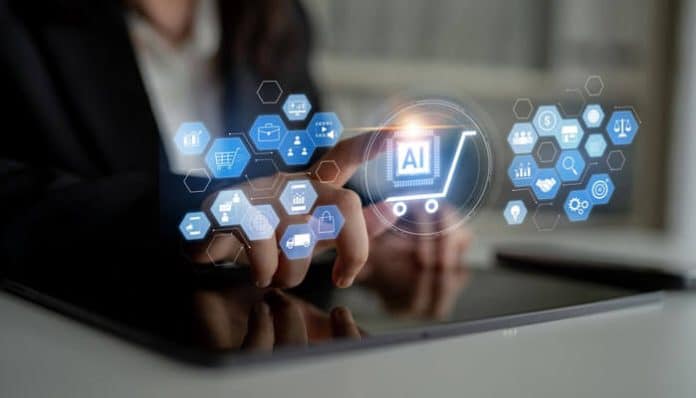

When you log in to Amazon or open Netflix, the interface already seems to know what you want. Products, recommendations, and layouts align almost magically with your interests. This is predictive personalization at work. According to McKinsey, 71% of consumers expect personalized experiences, and 76% get frustrated when they do not receive them. As e-commerce matures, personalization has evolved from reactive design — tailoring content based on past actions — to predictive design, which anticipates what users will do next. The future of UX in E-Commerce lies not in merely reflecting user choices, but in predicting them — crafting experiences that feel intuitive, adaptive, and one step ahead of intent.
What Is Predictive Personalization in UX?
Predictive personalization combines AI, machine learning (ML), and behavioral analytics to forecast a user’s next action and deliver a hyper-personalized experience before they even ask.
Traditional personalization reacts to data — “You bought X, so here’s Y.” Predictive personalization anticipates needs — “You might want this skincare bundle based on the season, your browsing pattern, and similar user behavior.”
It is powered by three pillars:
1. Data Collection: Active monitoring of the browsing history, clicks, frequency of purchase, and use of the device..
2. AI Modeling: Algorithms detect behavioral patterns and predict future intent.
3. Experience Delivery: The interface is dynamic – it will change layout, recommendations, and even tone on the fly.
This transformation transforms UX into an inert process into an animate system which changes with the interaction of each user.
How AI Powers Predictive UX in eCommerce
At the heart of predictive UX lies a robust AI infrastructure that blends machine learning, natural language processing (NLP), and behavioral data modeling.
• Machine Learning Models: Analyze purchase trends, dwell time, and search patterns to predict user intent.
• Natural Language Processing: Understands queries and sentiment in real time — interpreting “show me something cozy” or “eco-friendly gifts” contextually.
• Recommendation Engines: Go beyond static rules, learning continuously from feedback loops and refining future predictions.
This data-to-decision pipeline enables the system to adapt dynamically — showing different homepage banners, product categories, or CTAs for every user. It is UX that thinks before you click.
The Impact on E-Commerce UX Design
The concept of predictive Artificial Intelligence is changing the manner in which designers approach user experience (UX) in e-commerce. In contrast to classical UX design, which is based on a strict flow of work by all members, predictive UX changes in real time depending on the interaction of each specific user with the platform.
A typical consumer of athletic equipment shopping at home would be presented with an aesthetically appealing homepage with new products, and a novice would be welcomed by a plain homepage with best-rated products and testimonials to establish trust. This change is not merely visual, but also gets personal, such as text, colour schemes, as well as product layouts based on user actions and preferences.
To designers, it is now aimed at producing intelligent systems that constantly learn and grow to provide flexible interfaces that respond in a natural manner to all users.
Why Predictive UX Drives Business Growth
Here is the thing: when you nail the user experience, the money follows. Predictive personalization is not just about making people happy — though that’s part of it. It’s about creating experiences that actually move the needle on your business metrics.
The numbers tell the story. Companies that get personalization right see conversion rates jump anywhere from 30 to 40 percent. (McKinsey)
But beyond conversions, something else happens. When you anticipate what users need, they do not have to work as hard. They feel less overwhelmed by choices. So they come back. They stick around. And over time, that compounds into loyalty — the kind where customers do not just buy from you, they actually feel connected to your brand.
Take Stitch Fix. They figured out that if you let an algorithm learn your style preferences and then have a human stylist apply that knowledge, something magical happens. People engage more. They buy more. Their lifetime value goes up. It’s proof that when you truly understand your customers, the business side takes care of itself.
Predictive UX in Action: Real-World Case Studies
Let’s talk about companies actually doing this well.
Amazon did not become a trillion-dollar company by accident. Their recommendation engine drives a third of everything they sell. Think about that for a second. One feature accounts for 35% of revenue. And it is their AI learning what you want and showing it to you before you even realize you are looking for it. So smart that it even shapes what inventory they stock.
Sephora took a different angle. Their Color IQ system is brilliant in its simplicity. It analyzes your skin tone, predicts which products will actually work for you, and blends AR technology with real data science. You are not just browsing a database of products; you’re getting personalized beauty recommendations backed by science.
Then there’s Spotify and Netflix. These are not just streaming platforms — they are prediction engines wrapped in entertainment. They know what you will probably want to listen to or watch next, and honestly? They are usually right. Over time, they basically shape your entire consumption habits. The best part? It does not feel like you are navigating a system. It feels intuitive. It feels like they just get you.
The Design Challenge: Balancing Prediction with Privacy
But here is where it gets complicated. More prediction means more data collection. And that brings real ethical questions to the table.
Trust is everything. When companies start collecting behavioral data to feed their algorithms, users have to believe that the data will not be misused. That is not negotiable anymore. Companies need to be transparent about what they are collecting, why they are collecting it, and give people a genuine choice in the process. These are not nice-to-haves — they are the foundation of modern design ethics.
There is another trap, though: over-personalization. When a system gets too smart at predicting what you want, it can start to feel creepy instead of helpful. Users begin to wonder if they are being helped or manipulated. The line between empathetic prediction and invasive surveillance gets blurry really fast. Good designers have to be careful not to cross it.
That is why regulations like GDPR and CCPA exist. They force companies to think about ethics from day one, not as an afterthought. User control, explainability, transparency — these are not compliance checkboxes. They are the pillars of design done right.
At the end of the day, predictive UX should feel like someone gets you. It should feel empowering, not intrusive. When you nail that balance? That’s when the magic happens.
The Future of Predictive UX: Beyond Anticipation
The next stage of predictive UX will focus on emotionally intelligent systems — interfaces that interpret not only what users do but how they feel.
Imagine an AI-powered platform that adjusts tone, color, or layout based on detected user sentiment. Or a cross-platform experience that continues seamlessly from mobile to voice to wearables.
We will also see the rise of AI design collaborators — tools that assist designers by predicting layout performance and automating usability refinements.
The long-term vision is to create experiences that are context-aware, emotionally responsive, and cross-channel adaptive — blending logic with empathy.
Top 3 Emerging Companies Advancing Predictive Personalization in E-Commerce UX in the USA
1. GeekyAnts — San Francisco, USA
Founded in 2006, GeekyAnts is a global leader in digital product development and AI-driven eCommerce innovation. With over 800 successful projects across retail, fintech, and enterprise domains, the company merges advanced design thinking with AI technologies to create adaptive, data-powered shopping experiences.
GeekyAnts specializes in predictive UX systems that analyze user behavior to deliver personalized recommendations, optimized layouts, and context-aware interactions. Their deep expertise in React Native, Next.js, and AI integration helps eCommerce brands achieve scalability, engagement, and measurable growth.
Clutch Rating: 4.9 / 5 (100+ verified reviews)
Address: GeekyAnts Inc, 315 Montgomery Street, 9th & 10th floors, San Francisco, CA 94104, USA
Phone: +1 845 534 6825
Email: info@geekyants.com
Website: www.geekyants.com/en-us
2. Infinum — San Diego, USA
Infinum is a full-stack product development studio that builds mobile and web solutions for e-commerce, fintech, and enterprise brands. They specialise in UX-led design, API-driven architecture, and scalable platforms.
Clutch Rating: 4.8 / 5 (54 reviews)
Address: 510 Market St, San Diego, CA 92101, United States
Phone: +1 800-574-7538
3. Eleks — Las Vegas, USA
Eleks is a software engineering and consulting firm that supports digital wallets, payment platforms, and embedded finance by providing end-to-end development, UX design and AI-powered analytics.
Clutch Rating: 4.8 / 5 (31 reviews)
Address: 10091 Park Run Dr, Suite 200, Las Vegas, NV 89145
Phone: +1 702-919-6222
Conclusion
Predictive personalization is defining a new era of eCommerce in which each communication is made to be pertinent and painless. When businesses combine data, design, and AI, they can create experiences that perceive intent and react in real time. The future of UX is in systems that think like the user—by anticipating needs, making decisions simple, and enhancing trust. The brands that adopt this trend currently will dictate how individuals will shop, connect, and remain loyal in the future.