

Last Updated: August 12, 2026
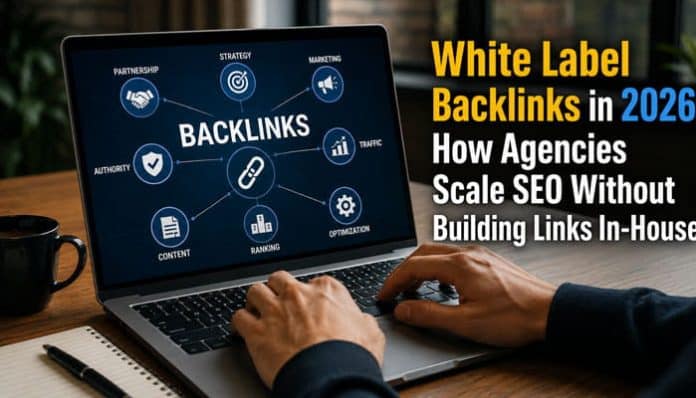
Scaling an SEO agency creates a difficult operational problem clients want stronger organic visibility and authority, but building an internal outreach department requires people, tools, training, publisher relationships, quality control, and management.
That is where White Label Backlinks can become useful.
White label link building allows an SEO agency to outsource some or all of its backlink acquisition process to a specialist provider while keeping the client relationship, strategy, branding, pricing, and reporting under the agency’s control.
The provider might handle prospecting, outreach, content creation, digital PR, publisher communication, placement verification, and reporting behind the scenes.
However, outsourcing fulfillment does not automatically make a backlink strategy safe or effective.
Google’s current spam policies identify buying or selling links for ranking purposes, automated link creation, excessive link exchanges, advertorial links that pass ranking credit, and optimized links in certain large-scale guest post campaigns as examples of link spam.
At the same time, Google’s current ranking-systems documentation confirms that link analysis systems including PageRank remain part of its core ranking systems. The real challenge in 2026 is therefore not simply getting more backlinks.
It is building a repeatable system for earning or acquiring relevant, defensible, useful links without turning backlinks into a commodity that exists only to manipulate rankings.
This guide explains what White Label Backlinks are, how the fulfillment model works, how agencies can evaluate providers, which links deserve approval, how fulfillment economics work, what Google considers risky, how replacement guarantees should be handled, and how agencies can measure whether outsourced link building is actually helping clients.
Quick Answer: What Are White Label Backlinks?
White Label Backlinks are backlinks acquired or managed by a third-party fulfillment provider for an SEO agency, consultant, or reseller.
The agency sells the service under its own brand while the provider handles the operational work behind the scenes.
- Backlink research and competitor analysis
- Publisher prospecting and vetting
- Outreach and journalist engagement
- Digital PR and content creation
- Guest contributions and resource-page outreach
- Link reclamation and placement coordination
- Technical verification and QA
- Reporting, link monitoring, and replacement requests
A white label backlink can be:
- Excellent and defensible
- Worthless or risky
What actually matters:
- Acquisition method
- Publisher quality
- Topical relevance
-
Editorial context
These factors matter far more than the white label model itself.
Key Takeaways
- White Label Backlinks help agencies scale link building without building a full in-house team.
- Agencies can use fully managed, hybrid, self-service, or custom fulfillment models.
- Quality and relevance matter more than backlink volume, DR, or DA alone.
- Paid or manipulative links can violate Google’s spam policies.
- Agencies should keep final quality control, reporting, and provider oversight in-house.
- Track link retention, organic visibility, referral traffic, conversions, and client results—not just backlink counts.
- A strong white label strategy scales execution without outsourcing strategic judgment.
What Does “White Label” Mean in SEO?
A white label service is created or fulfilled by one company but resold or delivered under another company’s brand.
Consider a fictional SEO agency called Northstar Digital.
Northstar sells a monthly SEO package containing:
- Technical SEO
- Keyword research
- Content optimization
- Digital PR
- Backlink acquisition
-
Monthly reporting
Northstar has SEO strategists and account managers but does not have a dedicated outreach department.
Instead of recruiting several outreach specialists, writers, editors, researchers, and project managers, Northstar partners with a specialist fulfillment provider. The provider performs the agreed backlink work. Northstar reviews the output and reports the campaign to its client. The provider remains behind the scenes.
White Label Backlinks vs Backlink Reseller Services
The phrases white label link building, link building reseller, backlink reseller, and White Label Backlinks are often used interchangeably, but they describe slightly different parts of the relationship.
- White label fulfillment describes how the work is delivered. Another company performs some or all of the work while your agency retains the client-facing brand.
- A backlink reseller arrangement describes the commercial model. The agency purchases services from a provider at an agency, partner, wholesale, or negotiated rate and sells a broader SEO service to the end client.
The structure often looks like this:
Provider → Agency → Client
The provider fulfills. The agency manages strategy, positioning, pricing, client communication, and quality control. The client receives the service through the agency.
White label programs may include agency dashboards, unbranded reports, reseller pricing, dedicated account managers, and fulfillment support.
Before joining a reseller program, confirm whether it includes:
- Unbranded reporting
- Custom branding
- Agency pricing
- Client confidentiality
- Non-solicitation provisions
- Publisher approval
- Account management
- Replacement rules
- Link monitoring
- Data ownership
-
Campaign documentation
Do not assume every “agency program” provides the same protections.
Should Clients Know Link Building Is Outsourced?
White labeling does not necessarily mean deceiving the client.
An agency may disclose in its agreement that selected fulfillment activities are performed by specialist partners, subcontractors, or third-party suppliers while keeping specific provider relationships confidential.
The appropriate level of disclosure depends on:
- Contract terms
- Procurement requirements
- Industry standards
- Data-processing obligations
- Client policies
- Security requirements
-
Confidentiality provisions
At minimum, an agency should clearly establish:
- Who owns client data
- Which external partners can access client information
- Whether a provider may contact the client
- Whether the provider can use client results as a case study
- Whether campaign information can be reused
- Who owns outreach databases
- Who owns content created for the campaign
- Whether the provider can later solicit the agency’s client
-
What happens to account data when the partnership ends
For an agency, protecting the client relationship can be just as important as protecting backlink quality.
How White Label Backlinks Work
A mature white label backlink campaign usually follows a process rather than beginning with a list of sites for sale.
| Stage | What Happens |
|---|---|
| Client discovery | Business, objectives, audience, and restrictions are documented |
| Backlink audit | Existing referring domains and anchor patterns are reviewed |
| Competitor analysis | Relevant competitors and link gaps are investigated |
| Target-page planning | Pages suitable for authority building are selected |
| Asset planning | Research, guides, tools, or other linkable assets are identified |
| Prospecting | Potential publishers are discovered |
| Qualification | Sites and pages are manually reviewed |
| Outreach | Publishers, editors, or journalists are contacted |
| Content creation | Supporting content may be produced |
| Placement | Approved opportunity becomes live |
| QA | Link, page, anchor, and attributes are checked |
| Reporting | Results are documented |
| Monitoring | Links are periodically checked for changes or removal |
Different providers may handle only part of this sequence. That is why agencies need to understand the delivery model before comparing prices.
The 4 White Label Backlink Delivery Models
Not every white label backlink provider works the same way. Some operate like outsourced link-building departments, while others provide dashboards or marketplaces where agencies select opportunities themselves.
Four common delivery models are:
| Delivery Model | Agency Handles | Provider Handles | Best For |
|---|---|---|---|
| Fully managed | Client relationship and final approval | Strategy, prospecting, outreach, content, and reporting | Agencies with limited link-building infrastructure |
| Hybrid | Strategy, pages, and approvals | Prospecting, outreach, and fulfillment | Agencies with experienced SEO strategists |
| Self-service | Strategy and publisher selection | Placement fulfillment | Agencies wanting more direct control |
| Custom campaign | Goals and client strategy | Bespoke digital PR or specialist outreach | Enterprise and specialist campaigns |
How to Choose the Right Delivery Model
| If You Have… | Choose… |
|---|---|
| Limited internal SEO expertise | Fully managed |
| Strong strategists but no execution team | Hybrid |
| An in-house QA team but need more scale | Self-service |
| Enterprise clients with unique needs | Custom campaign |
Fully Managed
The provider handles most operational work, including strategy, prospecting, outreach, content creation, placement, and reporting. This model offers maximum convenience but also creates greater dependence on the provider’s judgment and quality standards.
Hybrid
The agency retains control over target pages, publisher criteria, anchor guidelines, campaign objectives, and final approvals. The provider handles the labor-intensive execution. For many established agencies, this offers a strong balance between control and scalability.
Self-Service
The provider gives the agency access to publisher databases, filters, placement inventory, and ordering tools. The agency selects opportunities itself, providing more control while increasing internal QA responsibility.
Metrics such as DR, DA, estimated traffic, and price can help with filtering, but they should never replace manual publisher evaluation.
Custom Campaign
Custom campaigns are designed for clients with more complex requirements. They may involve original research, data studies, expert outreach, digital PR, journalist pitching, international media, or niche-specific publications.
These campaigns are often better suited to enterprise or highly competitive clients than a fixed “five backlinks per month” package.
Best Practice
Outsource execution where it improves efficiency, but keep strategic decisions, publisher standards, and final link approval inside the agency whenever possible.
Why Agencies Use White Label Backlinks
Building an internal outreach department requires much more than one employee sending emails.
An agency may eventually need:
- SEO strategist
- Link prospect researcher
- Outreach specialist
- Digital PR specialist
- Copywriter
- Editor
- Data researcher
- Project manager
- Backlink analyst
- Account manager
- Outreach software
- SEO platforms
- Email infrastructure
- CRM
-
Reporting tools
These can represent significant fixed costs.
White label fulfillment can convert part of that infrastructure into a variable cost. If the agency gains ten new clients, it can increase fulfillment orders instead of immediately adding several employees. If client demand falls, the agency does not necessarily carry the same level of payroll.
This does not mean outsourcing is always cheaper. It means it can offer greater flexibility.
White Label Backlinks vs In-House Link Building
Neither model is automatically superior. The right choice depends on the agency’s budget, client volume, internal expertise, desired level of control, and how quickly it needs to scale.
| Factor | White Label Backlinks | In-House Link Building |
|---|---|---|
| Initial recruitment | Low | High |
| Setup time | Usually faster | Usually slower |
| Payroll commitment | Lower | Higher |
| Strategic control | Depends on service model | High |
| Scalability | Often high | Depends on staffing |
| Publisher relationships | Provider may already have them | Must be developed internally |
| Training | Mostly provider responsibility | Agency responsibility |
| Confidentiality | Requires clear controls | Easier to manage internally |
| Quality visibility | Provider dependent | Direct |
| Specialist access | Potentially broad | Depends on hiring |
| Flexibility | High | Lower |
| Process ownership | Partial | Full |
A hybrid model can be especially effective for growing agencies. The agency keeps control of strategy, target pages, client communication, quality standards, and final QA, while specialists handle prospecting, outreach, content coordination, and other time-consuming execution.
This approach can help agencies scale White Label Backlinks without giving up the strategic oversight that protects client quality and long-term SEO performance.
What Makes a High-Quality White Label Backlink?
A valuable backlink normally combines several characteristics.
1. Topical Relevance
Suppose your client sells accounting software. Relevant sources could include websites covering accounting, finance, SaaS, tax, business operations, entrepreneurship, or bookkeeping.
A backlink from an unrelated entertainment site should not automatically be approved simply because that domain has an impressive authority score.
Evaluate relevance at several levels:
Domain → Site section → Article → Paragraph → Anchor → Destination page
The closer these elements align, the stronger the contextual logic.
2. Genuine Editorial Purpose
Ask: Would the link help the reader even if search engines did not exist?
A journalist citing original research is very different from an irrelevant commercial link inserted into an old article. Editorial purpose is one of the most useful manual tests an agency can apply.
3. Real Publisher
Look beyond authority metrics. Check whether the publication appears to have:
- Genuine editorial focus
- Real authors
- About information
- Contact information
- Useful articles
- Consistent topical coverage
- Search visibility
- Human readership
- Reasonable publication frequency
- Editorial standards
-
Original content
A website can have strong-looking third-party metrics and still be a poor backlink source.
4. Contextual Placement
The link should fit naturally within relevant content.
- Strong context: “THE COMPANY’S 2026 SURVEY FOUND THAT 41% OF RESPONDENTS…” with a link to the original research.
- Weak context: “LOOKING FOR ACCOUNTING SOFTWARE? CLICK HERE.”
Context helps explain why the destination is useful.
5. Useful Destination
Pages that naturally attract citations usually contain something worth referencing. Examples include original research, statistics, industry reports, calculators, tools, templates, datasets, maps, expert analysis, definitive guides, methodologies, and unique comparisons.
The easier a page is to cite, the easier legitimate link acquisition becomes.
How to Audit a White Label Backlink After It Goes Live
Every delivered white label backlink placement should pass technical and editorial QA before it appears in the client report.
Check:
- Is the backlink live?
- Does it point to the correct URL?
- Is HTTPS being used?
- Does the destination redirect somewhere unexpected?
- Is the anchor text correct?
- Does the anchor read naturally?
- Is the surrounding paragraph relevant?
- Does the linking page match the client’s topic?
- Is the page publicly accessible?
- Is the content original and useful?
- Is the publisher still active?
- Are there excessive unrelated commercial links?
- Is the appropriate link relationship attribute being used?
- Has the article changed since approval?
- Has the content been duplicated elsewhere?
-
Is the backlink still live during later monitoring?
Google says ordinary links do not need a special rel attribute. For advertisements and paid placements, it recommends rel="sponsored"; nofollow remains acceptable.
| QA Item | Status |
|---|---|
| Correct target URL | Pass/Fail |
| Correct anchor | Pass/Fail |
| Relevant context | Pass/Fail |
| Publisher approved | Pass/Fail |
| Page accessible | Pass/Fail |
| Redirect checked | Pass/Fail |
| Link attribute checked | Pass/Fail |
| No obvious link-farm pattern | Pass/Fail |
| Duplicate content checked | Pass/Fail |
| Placement recorded | Pass/Fail |
A consistent QA process prevents poor placements from reaching clients simply because the fulfillment provider marked an order “complete.”
DA and DR: Useful Filters, Not Google Ranking Scores
Providers often sell links according to metrics such as Domain Authority, Domain Rating, Trust Flow, Authority Score, or estimated organic traffic.
These metrics can help narrow a prospect list. They should not become your definition of link quality. Google does not publish Domain Authority or Domain Rating as its own ranking metrics.
A better review asks:
- Is the site relevant?
- Does it publish legitimate content?
- Does the site rank for meaningful topics?
- Is the backlink contextually justified?
- Does the site appear to exist for readers?
- Does it repeatedly publish unrelated sponsored content?
- Is outbound linking excessive?
-
Would this article make sense without the backlink?
Think of third-party metrics as screening signals, not final approval criteria.
Safe vs Risky White Label Backlink Strategies
| Generally More Defensible | Higher-Risk Approach |
|---|---|
| Digital PR | Buying ranking links |
| Original research outreach | Private blog networks |
| Journalist contributions | Automated backlink blasts |
| Expert commentary | Large-scale manipulative guest posting |
| Useful resource outreach | Low-quality directories |
| Link reclamation | Excessive reciprocal linking |
| Unlinked brand mentions | Paid ranking links |
| Relevant industry partnerships | Unrelated niche insertions |
| Useful tools and datasets | Guaranteed exact-match anchors |
| Properly disclosed sponsorships | Paid links passing ranking credit |
Google’s spam policy identifies several manipulative link-building patterns, including paying for ranking links, excessive exchanges, automated link creation, and advertorial or native advertising where paid links pass ranking credit.
Paid Links vs White Label Link Building
These are not the same concept.
- White label link building tells you who fulfills the campaign.
- Paid links describe how a particular backlink was obtained.
A white label provider could use digital PR, original research promotion, journalist outreach, resource outreach, expert contributions, link reclamation, broken-link outreach, partnerships, or unlinked mention outreach. Alternatively, a provider could purchase placements.
Those are fundamentally different acquisition strategies.
An agency should therefore ask:
“How was this link obtained?”
not merely:
“Was this link delivered by a white label provider?”
What Is rel="sponsored"?
Google recommends using rel="sponsored" to identify advertisements and paid placements.
Example:
<a href="https://example.com" rel="sponsored">Example</a>
Google says nofollow remains acceptable for paid links, although sponsored is preferred. A normal editorial link does not automatically need either attribute.
The “Dofollow Backlink” Myth
SEO vendors frequently advertise: “100% dofollow backlinks.”
There is no requirement to add rel="dofollow" to create a normal link. A standard crawlable <a> link without nofollow, sponsored, or ugc qualification is simply a regular link. The “dofollow” label is a misnomer invented by the SEO industry—it does not exist as an official HTML attribute.
Agencies should be cautious when “dofollow” is presented as the primary definition of quality.
Best Types of White Label Backlinks in 2026
Different strategies work for different clients.
Digital PR
Digital PR creates stories, research, data, or expert commentary that publications may choose to reference. Examples include surveys, data studies, trend reports, industry rankings, expert forecasts, interactive research, local data, and original statistics. These links can be difficult for competitors to reproduce because they arise from genuine editorial interest.
Original Research
Original data gives publishers a reason to cite your client.
Instead of publishing: “10 Ecommerce Trends for 2026,” consider: “We Analyzed 20,000 Ecommerce Product Pages: What High-Converting Stores Do Differently.”
Google’s people-first content guidance encourages creators to consider whether their content provides original information, research, reporting, or analysis.
Expert Commentary
Qualified experts can contribute comments to journalists, industry publications, blogs, newsletters, research articles, or trade media. Not every contribution produces a backlink. However, expert visibility can strengthen a client’s broader authority and brand presence.
Resource Outreach
Useful assets can be promoted to pages already curating relevant resources. Examples include calculators, templates, guides, checklists, databases, free tools, and research repositories. The outreach should explain why the resource improves the publisher’s page.
Sample outreach angle: “I noticed you curate resources for small business accounting. We recently published a free cash-flow calculator that your readers might find useful—would you consider adding it to your list?”
Unlinked Brand Mentions
Sometimes a publisher already mentions a business but does not link to it. If linking would genuinely help readers identify the source, the agency can ask whether the publisher would consider adding a link. Because the brand mention already exists, the outreach can be more natural than inserting an unrelated commercial reference.
Broken-Link Outreach
A publisher may link to a resource that no longer works. If the client owns a genuinely suitable alternative, the agency can notify the publisher and suggest the replacement. The substitute should satisfy the same user need as the broken resource.
Link Reclamation
Links can also be recovered when a destination URL changed, a site migration broke URLs, a publisher linked to an outdated page, or an old campaign URL redirects incorrectly. Reclaiming already-earned authority can sometimes be more efficient than acquiring entirely new links.
The White Label Backlink Workflow Agencies Should Use
A scalable campaign can be organized into eight phases.
Phase 1: Client Discovery
Document business model, primary market, audience, current visibility, revenue pages, existing authority, competitors, restricted topics, compliance requirements, and brand voice.
Phase 2: Backlink Audit
Review existing referring domains, anchor patterns, broken backlinks, strongest linked pages, historical link acquisition, suspicious patterns, and competitor gaps.
Phase 3: Target-Page Strategy
Decide which pages genuinely warrant authority building.
Phase 4: Build Linkable Assets
Improve the website before outreach. Create research, tools, or definitive guides.
Phase 5: Prospecting
Identify relevant publications using search operators, competitor backlink analysis, and media databases.
Phase 6: Qualification
Apply the agency’s quality framework (including the 100-point scorecard).
Phase 7: Outreach and Fulfillment
Contact editors, journalists, resource owners, and publishers with a legitimate reason to consider the resource.
Phase 8: QA, Reporting, and Monitoring
Verify every placement before it reaches the client and continue monitoring important links afterward.
Which Client Pages Should Receive White Label Backlinks?
Not every page needs the same backlink strategy.
| Page Type | Typical Link Strategy |
|---|---|
| Original research | Digital PR and editorial citations |
| Statistics page | Resource outreach |
| Calculator/tool | Resource and journalist outreach |
| Commercial service page | Selective relevant mentions |
| Category page | Strategic contextual mentions |
| Blog guide | Editorial outreach |
| Homepage | Brand references |
| Local landing page | Relevant local mentions |
Do not automatically point every backlink toward the page with the most valuable keyword.
A better process is:
Business objective → search opportunity → appropriate target → linkable asset → relevant publisher
Sometimes it is easier and more defensible to earn links to an informational asset and use internal links to guide visitors toward relevant commercial pages.
- Weak approach: Choose keyword → choose money page → buy links
- Stronger approach: Understand audience → create valuable asset → find interested publishers → promote asset → earn citations
Potential linkable assets include original surveys, industry research, statistics pages, calculators, templates, interactive tools, databases, maps, benchmarks, free generators, annual reports, expert studies, and comparison datasets.
Useful assets make outreach fundamentally easier because the agency has something worth discussing.
Google’s current guidance emphasizes substantial, complete, original, helpful content rather than material created primarily to manipulate Search.
Anchor Text Strategy
Anchor text is the clickable portion of a backlink. Natural profiles can contain many anchor types.
| Anchor Type | Example |
|---|---|
| Brand | HubSpot |
| URL | hubspot.com |
| Natural phrase | this CRM research |
| Partial topic | customer retention research |
| Article title | 2026 Customer Retention Study |
| Generic | learn more |
| Exact commercial keyword | best CRM software |
The biggest mistake is forcing the same commercial keyword into multiple placements. Google’s spam policies identify optimized anchor text in certain paid or large-scale article campaigns as an example of problematic link behavior.
A natural anchor should primarily be determined by the editorial sentence.
What to Ask a White Label Backlink Provider
Before signing a contract, ask:
Methodology & Quality:
- How do you discover publishers?
- Do you own or control any publishers?
- Do you operate PBNs?
- Are placements paid? How are paid placements handled?
- How do you assess topical relevance?
- Can we review websites before publication? Can we reject publishers?
- Do you guarantee particular anchor text?
-
How do you detect link farms?
Content & Editorial:
- Who writes content? Is content reused?
- Do you use AI-generated outreach or content? (If yes, ask about human review and quality checks.)
-
What editorial review occurs?
Performance & Monitoring:
- How do you evaluate traffic?
- How do you handle declining domains?
- How do you prevent duplicate referring domains?
-
What happens when a backlink disappears? What is the replacement window?
Reporting & Branding:
- Are reports white labeled? Can we customize reporting?
- Will you ever communicate with our clients?
Legal & Commercial:
- Can you sign a confidentiality agreement?
- Who owns campaign data? Who owns outreach relationships?
- What happens when we leave?
- Can you provide anonymized examples?
- Can you explain a rejected publisher?
- What is your normal turnaround?
- How do you handle regulated industries?
Transparency matters. “Proprietary methodology” should not be used as an excuse to hide risky acquisition practices.
AI and Automation in the 2026 White Label Landscape
As of 2026, AI has become deeply integrated into link-building workflows. This creates both opportunities and risks.
Where Providers May Use AI
- Prospecting: AI tools that scrape and filter publisher lists.
- Outreach emails: AI-generated personalization at scale.
- Content creation: Drafting guest posts or digital PR assets.
Risks to Watch
- AI-generated outreach often sounds robotic and lowers response rates.
- AI-written content may be flagged as low-quality or duplicate, harming the publisher’s (and your client’s) reputation.
- Automated prospecting often misses nuanced relevance signals that a human reviewer would catch.
What to Ask Providers About AI
- Which parts of your process use AI?
- Is every piece of content reviewed and edited by a human?
- Do you disclose AI usage to publishers?
- How do you prevent duplicate or plagiarized AI output?
Best practice: AI is acceptable for research and first drafts, but final content, outreach personalization, and publisher vetting must involve human judgment.
Extra Quality Controls for Finance, Health, and Legal Clients
Some clients operate in areas where inaccurate information can seriously affect people’s decisions (YMYL topics).
Examples include health, finance, insurance, investing, legal services, and safety.
For these campaigns, agencies should increase review standards. Consider:
- Subject-matter expertise
- Qualified authors
- Primary-source research
- Fact checking
- Editorial review
- Current information
- Appropriate disclosures
- Relevant specialist publishers
-
Accurate claims
A strong white label backlink provider should be able to explain how its process changes for sensitive industries. Using the same generic guest-post workflow for a lifestyle blog and a financial-services client is rarely adequate.
Are “Lifetime Backlink Guarantees” Realistic?
A publisher controls its own website. It can delete an article, change the URL, merge content, change the anchor, remove the backlink, add nofollow, add sponsored, redesign the website, sell the domain, or shut down entirely.
A provider cannot literally control another independent publisher forever.
Many “lifetime” guarantees mean “the lifetime of your active campaign,” not “forever.” Always read the fine print.
Instead of focusing on the word “lifetime,” ask:
“What will you do if the link disappears?”
That answer matters more than the marketing label. Strong SLAs define the replacement period, qualification criteria, and circumstances under which replacement is available (e.g., excluded if the client deletes the target page).
White Label Backlink Pricing Models
There is no universal price for White Label Backlinks. Providers may use per-link pricing, packages, monthly retainers, wholesale tiers, agency discounts, managed campaigns, or custom digital PR engagements.
Pricing can vary considerably according to authority criteria, volume, content requirements, campaign type, and fulfillment model.
| Pricing Model | How It Works | Best Fit |
|---|---|---|
| Per placement | Pay for completed approved links | Predictable fulfillment |
| Retainer | Monthly fee for ongoing campaign | Long-term SEO accounts |
| Campaign | Fixed project for outreach or digital PR | Research-led initiatives |
Price should never be the only decision criterion. A cheap link becomes expensive if your team later has to remove it, replace it, explain it to the client, audit the publisher, fix an unnatural anchor pattern, or recover from poor-quality fulfillment.
White Label Backlink Profitability Formula
Use:
Revenue − Fulfillment − Strategy − QA − Account Management − Software/Overhead = Contribution
Example:
$4,000 − $1,600 − $350 − $200 − $300 − $150 = $1,400
Contribution margin:
$1,400 ÷ $4,000 × 100 = 35%
If account managers spend several hours resolving poor placements every month, that labor belongs in the calculation too.
How Agencies Should Report White Label Backlinks
A backlink report should show more than URLs. Include the key details clients need to understand each placement.
| Field | Example |
|---|---|
| Publisher | Publication name |
| Target URL | Client page |
| Anchor | Editorial anchor |
| Link attribute | Standard/sponsored/nofollow |
| Status | Live |
| Relevance | Why the link fits |
A strong report should explain:
What happened → Why it matters → What happens next
This makes reporting clearer and more useful than simply exporting a spreadsheet.
What Happens When a White Label Backlink Disappears?
Backlinks are not permanent assets controlled by your agency. A publisher can remove a link months later.
Possible causes include content updates, website migration, editorial changes, broken pages, domain changes, content consolidation, publisher closure, acquisitions, and URL restructuring.
Agencies should therefore monitor important White Label Backlinks after delivery. A simple status workflow might be:
Live → Changed → Removed → Replacement Requested → Replaced
Replacement policies should define whether replacement is:
- Free
- Time limited
- Equivalent in quality
- Subject to provider approval
- Available only when the publisher causes removal
- Excluded when the client deletes the target page
Document these rules before a problem occurs.
Should Agencies Guarantee a Specific Number of Backlinks?
There are several ways to sell link-building work.
Placement-Based Model
The agency promises a defined number of completed placements.
- Advantages: Easier billing, clear deliverables, predictable reporting.
- Disadvantages: Can encourage quantity-first thinking and may create pressure to accept weak opportunities.
Campaign-Based Model
The client pays for research, asset creation, outreach, digital PR, journalist engagement, and reporting. The number of earned links may vary. This better reflects genuine earned media, where publishers ultimately decide whether to cite the client.
Hybrid Model
Agencies can combine minimum fulfillment expectations, outreach activity, PR campaigns, link reclamation, and content assets. This can balance predictability with editorial integrity.
How Many Backlinks Should an Agency Build Per Month?
There is no universal number. The appropriate volume depends on website age, industry competition, existing authority, available assets, search opportunity, campaign type, publisher availability, and client budget.
Google does not publish an ideal monthly backlink quota.
For one client, four relevant editorial links might represent meaningful progress. For another, a successful digital PR story could generate dozens of citations. Quality, context, and genuine opportunity are more useful planning dimensions than arbitrary quotas.
Does Link Velocity Matter for White Label Backlinks?
SEO discussions often claim websites must acquire backlinks at a predetermined “natural” speed. There is no Google-published rule stating that websites may acquire only 5, 10, or 20 backlinks per month.
A viral report or major news event can naturally generate many citations within days. The important question is why those links appeared.
Google’s spam policies focus on manipulative acquisition methods such as paid ranking links, automated creation, excessive exchanges, and other link schemes—not a published monthly link limit.
Agencies should not manufacture artificial “link velocity.” Focus instead on relevance, editorial justification, quality, consistency, audience value, and genuine opportunities.
KPIs Agencies Should Track
Backlink count should not be the only KPI.
Acquisition KPIs
- Qualified prospects
- Outreach volume
- Response rate
- Positive-response rate
- Links earned
- Unique referring domains
-
Average turnaround
Quality KPIs
- Relevance score
- Approval rate
- Rejection rate
- Link retention
- Duplicate-domain percentage
- Publisher visibility
-
Editorial quality
Search KPIs
- Search impressions
- Organic clicks
- Keyword visibility
- Non-brand visibility
- Target-page performance
- Referring domains
Engagement KPIs
- Referral traffic
- Engaged visits
- Assisted journeys
- Newsletter signups
- Resource downloads
Commercial KPIs
- Leads
- Qualified leads
- Assisted conversions
- Pipeline
- Revenue
-
Client retention
The business goal is rarely simply “obtain links.” The goal is usually more qualified visibility and growth.
How to Measure Whether White Label Backlinks Are Actually Working
SEO attribution can be difficult because backlinks, content updates, internal links, technical fixes, and search-demand changes may happen at the same time.
Agencies should avoid claiming that one backlink caused a specific ranking jump. Instead, track campaign activity over time.
| Date | Event |
|---|---|
| Jan 10 | Content refreshed |
| Jan 18 | Internal links added |
| Jan 25 | Editorial link earned |
| Feb 12 | Second referring domain earned |
| Feb 28 | Search impressions increased |
| Mar 15 | Non-brand clicks increased |
| Apr 02 | Qualified conversions increased |
Then compare trends in visibility, clicks, referring domains, target-page impressions, referral traffic, rankings, and conversions.
This creates more credible reporting than attributing every improvement to a single backlink.
How to Scale White Label Backlinks Without Losing Quality
Scaling becomes dangerous when fulfillment grows faster than QA. Each client should have a written campaign profile.
Approved:
- Target subjects
- Target markets
- Target pages
- Brand anchors
- Publisher categories
- Competitor publications
Restricted:
- Exact-match commercial anchors
- PBNs
- Automated links
- Spam directories
- Irrelevant publishers
- Excessive exchanges
-
Unrelated paid insertions
Manual Review Required:
- Paid opportunities
- High-risk industries
- Previously used domains
- Homepage links
- Unusual anchors
- International publications
-
New provider methods
Standardized decision rules allow an agency to scale without lowering editorial standards.
White Label Backlinks for Local SEO
A local business needs different authority signals from a global SaaS company.
Useful local opportunities can include local publications, business associations, chambers of commerce, community organizations, local charities, regional resources, relevant sponsorships, industry organizations, and local partnerships.
A smaller regional website may be strategically more relevant than an unrelated international site with a much higher DR.
White Label Backlinks for International SEO
International campaigns require additional consideration.
Review language, country, audience geography, local publishers, regional search behavior, cultural context, editorial standards, and local regulations.
Key considerations for 2026:
- A backlink from a U.S. website is not automatically the ideal opportunity for a business targeting customers in Germany, Japan, India, or Brazil. Audience relevance should influence publisher selection.
- For non-English markets, assess whether the provider can create authentic, native-quality content. Machine-translated content is rarely acceptable to high-quality local publishers.
- Consider regional search engines: Baidu in China, Yandex in Russia, Naver in South Korea. Each has its own technical requirements and quality standards.
- Understand local copyright and data protection laws (e.g., GDPR in Europe) when sharing client information with providers.
When White Label Backlinks Make Sense
White label fulfillment can be appropriate when:
- Your agency is growing quickly.
- Existing clients request link-building services.
- Your internal team lacks outreach capacity.
- Hiring a full department is premature.
- Link demand fluctuates.
- You need specialist expertise.
- You want to focus internally on strategy.
- Your team is overloaded.
-
You need geographic or niche expertise.
Crisis Management: When Things Go Wrong
Even with careful vetting, problems can arise. A provider might:
- Deliver low-quality placements that slip through QA.
- Use a risky method that triggers a Google manual action.
- Violate confidentiality by contacting your client.
Immediate Response Protocol
- Pause all campaigns with that provider immediately.
- Audit all recent placements to identify the scope of the problem.
- Communicate proactively with affected clients—frame it as quality assurance, not disaster.
- Remove or disavow harmful links (only if a manual action exists or is imminent).
- Demand remediation from the provider according to your SLA.
- Re-evaluate the relationship—if the provider cannot explain or fix the issue, terminate the partnership.
Prevention
- Include a quality audit clause in your SLA that allows you to withhold payment for substandard work.
- Maintain contingency providers so you are not trapped with a single failing partner.
- Document all approval decisions so you can demonstrate due diligence to clients or Google if needed.
White Label Link Building vs Digital PR
White label link building focuses on outsourced SEO fulfillment, while digital PR focuses more on earning coverage through stories, research, and expert insights.
| White Label Link Building | Digital PR |
|---|---|
| SEO fulfillment model | PR and brand strategy |
| Can target specific pages | Often promotes research or stories |
| More predictable | Results may vary |
| Usually ongoing | Often campaign-based |
Digital PR can also be delivered as a white label service.
White Label Backlinks vs Guest Posting
| Factor | White Label Backlinks | Guest Posting |
|---|---|---|
| Main purpose | Outsourced link-building fulfillment | Publishing content on another website |
| Content required | Depends on campaign | Usually required |
| Control | Agency/provider manages strategy | Publisher controls final publication |
| Best use | Scalable outreach and authority building | Sharing expertise with a relevant audience |
| Main risk | Low-quality or manipulative placements | Keyword-rich posts created mainly for backlinks |
| Quality test | Is the link relevant and editorially justified? | Would the article still deserve publication without the backlink? |
Guest posting can support White Label Backlinks when the article provides genuine value. If the content exists mainly to manufacture keyword-rich links, the placement deserves reconsideration.
Can White Label Backlinks Hurt SEO?
Poorly executed campaigns can create several problems:
- Wasted budget
- Client dissatisfaction
- Irrelevant links
- Unnatural anchor patterns
- Links being ignored
- Manual actions
- Reputation damage
-
Weak publisher associations
Google’s Manual Actions documentation includes actions involving unnatural, artificial, deceptive, or manipulative links.
The strongest response is prevention: vet providers, approve publishers, review acquisition methods, maintain documentation, and monitor campaigns.
Should You Disavow “Toxic” White Label Backlinks?
Do not automatically disavow every backlink labeled “toxic” by an SEO platform.
Google says most websites do not need the Disavow Links tool. Its guidance says disavowal should generally be considered when there is a considerable number of spammy, artificial, or low-quality links and those links have caused or are likely to cause a manual action. Google also warns that incorrect use can harm search performance.
Therefore:
- Investigate why the links exist.
- Review Search Console.
- Check for a manual action.
- Attempt removal where appropriate.
-
Use disavow cautiously when Google’s conditions are genuinely met.
Do not treat a third-party “toxicity score” as an automatic instruction from Google.
Red Flags When Choosing a White Label Provider
Be skeptical of claims such as:
- Guaranteed #1 rankings
- 500 backlinks tomorrow
- Zero-risk paid links
- Permanent backlinks forever
- Any niche accepted
- Guaranteed exact-match anchors
- No content required
- We own thousands of authority sites
- 100% penalty proof
- Instant indexing guaranteed
- We have a secret algorithm
Also investigate providers whose publisher catalogs repeatedly mix wildly unrelated industries on generic sites—for example, casino, health, crypto, plumbing, fashion, loans, SaaS, and adult topics all on similar-looking domains.
That pattern does not automatically prove manipulation, but it deserves manual review.
Common White Label Backlink Mistakes
- Choosing the cheapest provider: Cost matters, but cheap fulfillment can create expensive cleanup.
- Obsessing over DR or DA: Use third-party authority scores as indicators, not absolute quality labels.
- Ignoring relevance: A smaller relevant publisher may be strategically stronger than an unrelated “authority” website.
- Overusing exact-match anchors: The anchor should fit the editorial context rather than being forced around a target keyword.
- Sending links to weak pages: Backlinks do not transform weak content into an excellent resource.
- Skipping provider audits: Review both individual placements and broader provider patterns.
- Ignoring link retention: A backlink report becomes misleading if a large percentage of its links later disappear.
- Reporting without business context: Clients care about visibility, leads, pipeline, and growth—not spreadsheets filled with URLs.
- Scaling too quickly: QA capacity must increase alongside campaign volume.
- Outsourcing strategy entirely: Your provider should support the campaign. Your agency remains responsible for the client.
White Label Backlink Provider Checklist
Before choosing a provider, confirm:
- Acquisition methods are transparent.
- Publishers are manually vetted for relevance and quality.
- PBNs and automated link blasts are avoided.
- Agency approval is available.
- Paid and sponsored links are handled clearly.
- Content and anchor-text standards are documented.
- Duplicate domains and live links are monitored.
- Replacement policies are clearly defined.
- Reports can be white labeled.
- Client confidentiality and data ownership are protected.
- Turnaround and cancellation terms are clear.
- AI-assisted work receives human review.
Use this checklist as a final quality-control step before onboarding a White Label Backlinks provider.
Final Thoughts
White Label Backlinks can help SEO agencies scale link-building services without building a full in-house outreach team. They offer flexibility while allowing agencies to focus on strategy, client communication, content quality, and SEO performance.
However, outsourcing does not remove responsibility. Agencies should still review how links are acquired, whether publishers are relevant, whether anchor text looks natural, and whether placements provide real value.
A strong strategy should focus on:
- Relevant, trustworthy publishers
- Natural editorial placements
- Useful, link-worthy content
- Clear quality standards
- Ongoing link monitoring
- SEO and business results
The goal should not be to buy the most links at the lowest price. Instead, agencies should create useful content, research, tools, and expert insights that give credible websites a genuine reason to link.
With careful provider selection, strong QA, and transparent reporting, White Label Backlinks can become a scalable and sustainable part of an agency’s SEO strategy.
Frequently Asked Questions
1. How long do White Label Backlinks take to show SEO results?
There is no fixed timeline. White Label Backlinks may support SEO growth over weeks or months, depending on competition, site authority, content quality, and other SEO changes. Track impressions, rankings, traffic, and conversions rather than expecting instant results.
2. How can agencies avoid duplicate backlinks from the same websites?
Keep a record of referring domains and require providers to check it before new placements. Duplicate links are not always harmful, but earning links from new relevant domains can improve overall backlink diversity.
3. Are White Label Backlinks suitable for small SEO agencies?
Yes. White Label Backlinks can help small agencies offer link building without hiring a full outreach team. However, agencies should still control strategy, publisher approval, and final QA.
4. How should agencies evaluate publisher traffic?
Check traffic trends, ranking keywords, topical relevance, audience location, and recent content. Traffic estimates should be treated as supporting signals rather than the only measure of publisher quality.
5. Can AI be used for White Label Backlinks?
Yes. AI can assist with research, outreach drafts, and content preparation. However, White Label Backlinks campaigns should still use human review for relevance, accuracy, personalization, and content quality.
6. Should agencies use one backlink provider or several?
Small agencies may prefer one trusted provider, while larger agencies can use specialists for digital PR, international outreach, or niche campaigns. Multiple providers can also reduce dependency on one partner.
7. What happens if a White Label Backlink is removed?
Check why the link disappeared and follow the provider’s replacement policy. Before purchasing White Label Backlinks, confirm the replacement period, eligibility rules, and quality standards for replacement links.
8. How can agencies make White Label Backlinks more profitable?
Track fulfillment, strategy, QA, software, reporting, and replacement costs—not just the price per link. Efficient outsourcing, clear pricing, and strong quality control can make White Label Backlinks more scalable and profitable.