
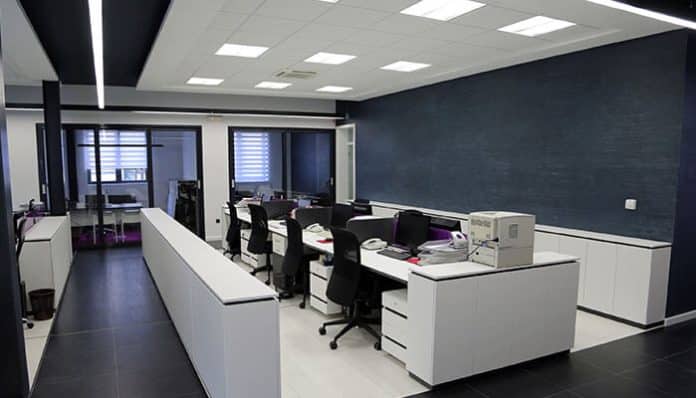

The right kind of lighting helps improve focus, reduce eye strain, and lift the overall mood in the office. On the other hand, poor lighting can have the exact opposite effect; it makes you feel tired and lowers productivity. Since lighting affects how people perform, it makes sense to put real thought into choosing the right setup. To make it easier, here are tips for choosing commercial lighting for workspaces.
These are the 7 Tips for Selecting Commercial Lighting for Workspaces
1. Look at the Needs of Each Workspace
Brighter, adjustable lights are best in a meeting room where presentations are given or group discussions are conducted. An open-plan office requires more directed lighting for tasks, while a reception area can benefit from a friendly glow. So when considering what each room is used for and the way the lighting can support those activities, start with one simple question: What does the light need to do?
2. Pick the Right Colour Temperature
Just bear in mind that cooler tones, which fall in the range of 4000K to 5000K, are better for focus and alertness, so they are a fitting choice for desks, offices and task-oriented areas. Warm fixtures, typically around 2700K to 3000K, will provide a softer and more soothing environment that is great for lounges. Getting the balance right within your workplace between comfort and productivity takes a mix of both.
3. Make Energy Efficiency a Priority
Commercial spaces run for numerous hours a day, and energy consumption can spike. Opting for LEDs saves a lot in the long term because they use less power and last much longer than regular bulbs, which saves money on electricity bills. Other than that, they lower the demand for regular replacements and maintenance costs. In the long run, efficient lighting saves you both money and the environment.
However, realizing these long-term benefits often requires a significant initial investment in new fixtures and professional installation. Ensuring that commercial electrical systems are installed correctly and maintained to the highest standards is crucial for both safety and efficiency. Businesses seeking to implement these upgrades can greatly benefit from expert assistance, especially when considering the complexities of commercial electrical work. For those looking to manage the upfront costs of such essential improvements, finding reliable electricians near me with financing options can provide a practical solution, making energy-efficient transitions more attainable.
4. Match Brightness Levels with the Task
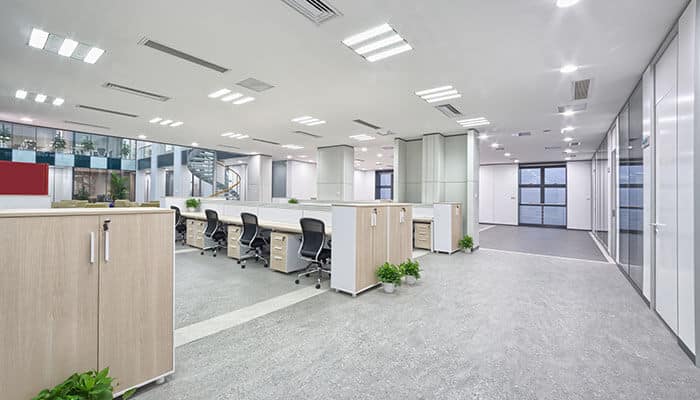
Too much light feels like you’re at an interrogation, while little light strains the eyes and makes it hard to concentrate. For instance, in areas requiring detailed work, there must be a brighter source of light. Combining common fixtures with general and accent lighting will give you flexibility. Fixtures you can dim are a bonus, because they allow you to adjust the amount of light based on what you’re trying to do.
5. Reduce Glare for Better Comfort
Glare bounces off mirrors or polished floors, and it is a source of distraction and discomfort. If you’ve ever squinted at your screen when the light from it was coming from the wrong place, you’ll know how much of an inconvenience it can be. To prevent this, use fixtures with diffusers or anti-glare fittings. And these ones can diffuse light, scattering it around a bit, to relieve eye strain and keep you focused.
6. Choose Lighting That Offers Flexibility
Sometimes you need direct, bright light for a team huddle, and occasionally all you need is softer lighting to focus. You can also dim and change the colour tone in more flexible systems like smart light ones. With a variety of options, now you can select the right level of light for every activity in your living room. And it’s that kind of fine control that can save energy by not fully illuminating when it’s not required.
7. Balance Function with Style
A contemporary office may look smart with angular panels or pared-down fittings, for example, while a creative studio might feel more inspiring with pendant lights. Lighting should complement the ambience of your business so the space feels cohesive and welcoming. When selected carefully, lighting not only functions to make daily work comfortable, but it also contributes to the character of the workplace.
Invest in Reliable Commercial Lighting Today
Good lighting influences how people work, feel and even how they view the company. By paying attention to each workspace’s needs, picking the right colour temperature, keeping energy efficiency in mind, and choosing flexible options, you create an environment that helps productivity. And when you balance functionality with design, the result is a workspace that looks good and works better.