


You sit down to plan one lesson, and somehow it turns into your whole evening, with tabs open, notes scattered, and that quiet feeling that you are still not fully ready. It is not that you do not know what to teach. It is the time it takes to shape it into something that actually works in a real classroom.
Most teachers have learned to accept this as part of the job, even when it starts to feel inefficient. Over time, though, the way planning is done has begun to shift, not in a dramatic way, but in small adjustments that add up and slowly change how much time is actually needed.
The Way Lesson Planning Quietly Eats Up Time
Planning is not just writing objectives or listing activities. It is the back-and-forth thinking, the second guessing, the rewriting of things that already looked fine ten minutes ago. A lot of time is spent trying to make the lesson fit both the curriculum and the students in front of you.
Some of that work is necessary. But some of it is repeated effort. The same structures are built again and again, just with slight changes. That repetition is where most of the hours go, even if it does not feel obvious while it is happening.
Where AI Tools Are Starting to Change the Process
There has been a gradual shift in how teachers approach this repeated work. Instead of starting from a blank page every time, some are beginning with structured support that helps shape the first draft quickly. The teacher still decides what matters, but the setup is no longer built from scratch. Working with a free AI lesson plan generator can save teachers a lot of time while still delivering exceptional, high-impact lessons.
This changes the starting point. It removes the slowest part, which is often just getting something usable down on paper. From there, the teacher adjusts, edits, and adapts. The thinking stays the same, but the time it takes to begin is reduced quite a bit. AI handles the repetitive structure that used to take up most of the planning time.
Planning Does Not Always Need to Be Perfect
There is also a shift in expectations, though it is not always talked about openly. Not every lesson needs to be fully polished before it is taught. In fact, some of the most effective lessons are adjusted in the moment, based on how students respond.
When planning takes hours, there is a tendency to over-design. Everything is mapped out in detail, leaving less room to adapt. It looks organized, but it can become rigid.Shorter planning cycles tend to allow more flexibility. A teacher enters the classroom with a clear direction, but not a fixed script. That balance is easier to maintain when less time has been spent trying to perfect every detail beforehand.
Reusing Structures Instead of Rebuilding Them
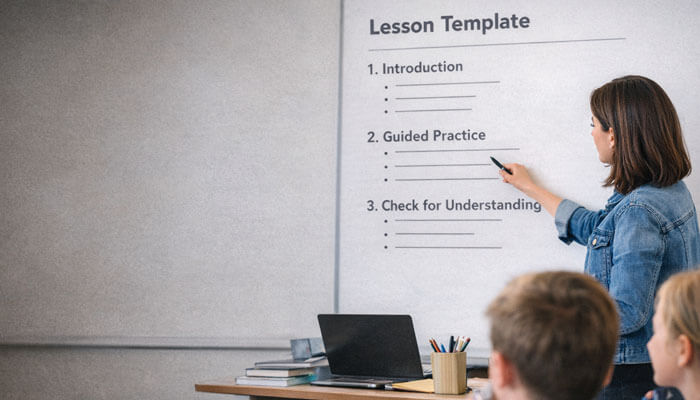
One thing that becomes clear over time is that most lessons follow familiar patterns. There is an introduction, some form of guided practice, and a way to check understanding. The content changes, but the structure often stays similar.
Still, many teachers rebuild that structure each time. It feels necessary in the moment, but it is rarely efficient. When reusable templates or frameworks are used, the process becomes faster without losing quality.This does not remove creativity. It actually supports it. When the basic structure is already in place, more attention can be given to how the content is delivered, rather than how the lesson is organized.
The Role of Small Adjustments Instead of Full Rewrites
Another quiet change is how revisions are handled. In the past, a lesson that did not go well might be rewritten completely. Now, there is more focus on adjusting small parts instead.A question is rephrased. An activity is shortened. A discussion prompt is replaced. These are small changes, but they are often enough to improve the lesson the next time it is used.This approach saves time because it avoids starting over. It also builds a collection of lessons that improve gradually, rather than being discarded and recreated.
Planning with Real Classroom Behavior in Mind
There is a difference between a lesson that looks good on paper and one that works in practice. Students lose focus. Discussions go off track. Timing rarely goes exactly as planned.When planning takes too long, it can become disconnected from these realities. The lesson is designed in isolation, without enough room for the unpredictability of the classroom.Faster planning tends to stay closer to real conditions. It is shaped by what actually happens during teaching, not just by what should happen in theory. That makes it more practical, even if it is less detailed on paper.
Letting Go of the Idea That More Time Equals Better Lessons
It is easy to assume that spending more time on planning will lead to better teaching. Sometimes it does. But often, the extra time is spent refining details that do not have a big impact in the classroom.There is a point where more effort does not improve the outcome. It just adds to the workload. Recognizing that point is not always easy, especially for teachers who take their work seriously.Still, once that balance is understood, planning becomes more focused. The goal shifts from creating a perfect lesson to creating a useful one.
None of these changes feel dramatic on their own. There is no single moment where lesson planning suddenly becomes easy. Instead, it becomes slightly more manageable, one adjustment at a time.Teachers reuse more than they used to. They rely on structured support when it makes sense. They revise instead of rebuild. And they accept that not every detail needs to be finalized before the lesson begins.Over time, these shifts reduce the hours spent planning, not by lowering standards, but by removing the parts of the process that were never as necessary as they seemed.