

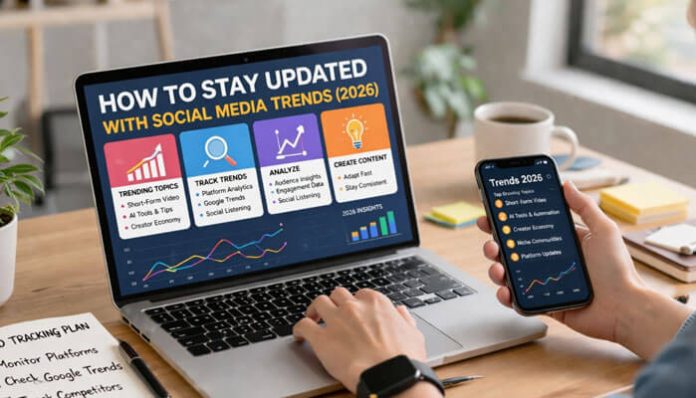

Social media trends move fast, but following every viral moment is one of the easiest ways to waste time and dilute your content strategy. The real skill is not chasing everything. It is learning how to identify the trends that actually matter for your audience, your niche, and your goals. If you want to know how to stay updated with social media trends?, the answer is not endless scrolling. It is building a system. The most effective creators, marketers, bloggers, and brands do not rely on luck.
They use a repeatable process that helps them spot trend signals early, validate them quickly, and ignore the noise that does not fit their brand.
In 2026, that matters more than ever. Trends now spread through short-form video, platform updates, creator communities, search behavior, AI-assisted discovery, and public conversation at the same time. A trend can begin as a format on one platform, turn into a discussion on another, and then become a searchable topic that supports long-form content, newsletters, or evergreen SEO pages.
This guide shows you exactly how to stay updated with social media trends? in 2026 in a practical, sustainable, and SEO-friendly way.
Who This Guide Is For
This guide is useful for:
- Creators
- Bloggers
- Social media managers
- Agencies
- Small businesses
- Personal brands
- Marketing teams
If you publish content regularly and want a smarter way to stay informed, this guide is for you. Some readers need fast content ideas for TikTok, Instagram Reels, YouTube Shorts, Threads, or X. Others want to turn social trend signals into blog content, email newsletters, YouTube videos, or long-term content assets.
No matter your platform, the challenge is usually the same: how do you stay informed without becoming reactive, distracted, or inconsistent?
That is why this article focuses on systems instead of hype.
Why Staying Updated With Social Media Trends Matters in 2026
Learning how to stay updated with social media trends? is no longer optional for serious publishers and marketers. Trends influence what gets attention, what gets engagement, what gets shared, and increasingly what gets searched.
That is important because social media does not work in isolation anymore. A topic that starts gaining attention on Threads or TikTok can quickly spread to Instagram, YouTube, X, Reddit, newsletters, and even Google search. When you catch the right trend early, you can create content that feels timely without becoming shallow.
Staying updated with trends helps you:
In other words, trend awareness helps you make better publishing decisions.
What Counts as a Social Media Trend Today?
Many people still think trends only mean memes, hashtags, or viral audio. That definition is too narrow.
In 2026, a social media trend can include:
- Content Formats
- Storytelling Styles
- Editing Patterns
- Audience Language
- New Platform Features
- Creator Behavior Shifts
- Hot Discussions
- Search Spikes
- Recurring Problems People Start Talking About
A modern trend may be a “before and after” format, a common opening hook, a new way creators structure carousels, a rising niche topic, or a feature update that changes how reach works.
Some trends are very short-lived. Others turn into multi-month or even multi-year opportunities. The key is knowing the difference.
The Best Way to Stay Updated With Social Media Trends
The best answer to how to stay updated with social media trends? is to stop relying on one source.
A better system combines:
- Platform-Native Trend Tools
- Official Creator Updates
- Search Validation
- Competitor Monitoring
- Conversation Tracking
- Social Listening
- Newsletters and Alerts
- A Simple Weekly Review Routine
This layered approach works because each source shows you something different.
- Platform tools show what is performing.
- Conversation spaces show what people are talking about.
- Search tools show whether interest is spreading beyond one app.
- Competitors show what is already being tested in your niche.
- Alerts and newsletters reduce the amount of manual checking you need to do.
When you combine all of these, trend tracking becomes much more reliable.
Best Tools to Stay Updated With Social Media Trends in 2026
If you want a practical system, start with a small set of tools you will actually use consistently. One of the best ways to understand how to stay updated with social media trends is to rely on a mix of platform data, search insights, and audience signals instead of depending on only one source.
1. Platform-Native Trend Tools
The first place to look is always the platform itself. Native trend tools and creator resources are often the fastest way to see what is rising.
These tools help you spot:
- Emerging Content Patterns
- Popular Creative Formats
- Feature Shifts
- Creator Education Updates
- Changes in What Platforms Are Rewarding
Why it matters: platforms often reveal important shifts before the wider marketing world starts talking about them.
2. Google Trends
Google Trends is one of the best free tools for validating whether social interest has broader demand.
A topic may feel huge on your feed, but if it has no wider search interest, it may not be worth building long-form content around. On the other hand, if a topic is growing across social platforms and search behavior at the same time, it may be a strong opportunity.
Use Google Trends to:
- Compare rising topics
- Check seasonality
- Validate trend longevity
- Spot growing search demand
- Decide whether a trend fits blog or video content
3. Official Creator Blogs and Update Hubs
A lot of creators miss major trend shifts because they only watch other creators. That creates a delayed view of what is happening.
Official platform blogs and creator resource hubs can help you understand:
- New features
- Ranking or discovery changes
- Monetization updates
- Policy shifts
- Content best practices
These are often early signals of where content behavior is heading next.
4. Threads, X, Reddit, and Community Spaces
If you want to catch early signals, monitor spaces where people talk before polished content appears.
These channels are useful for spotting:
- Repeated audience questions
- Emerging opinions
- Frustrations and complaints
- Niche jokes and language patterns
- Rising creator debates
- Topic clusters before they become obvious
Often, conversations reveal trends before dashboards do.
5. Social Listening Tools
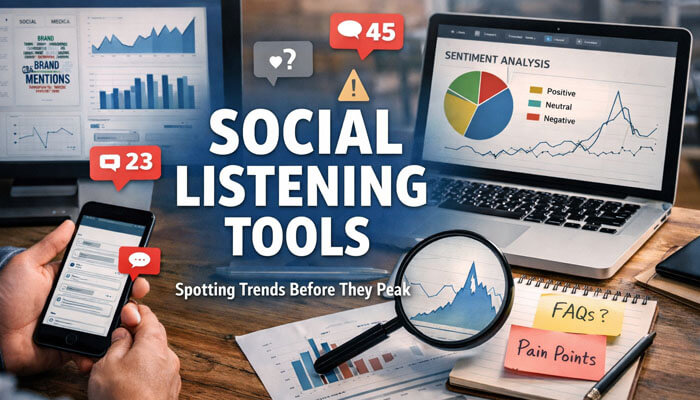
Social listening tools are especially helpful for brands, agencies, and teams that need more than casual observation.
They can help you detect:
- Repeated brand mentions
- Frequently asked questions
- Emerging pain points
- Topic repetition
- Audience sentiment
- Unusual spikes in discussion
These signals often point to trends before they peak publicly.
6. Competitor Tracking Tools
Watching competitors does not mean copying them. It means studying what they are testing, what gets repeated, and what their audience responds to.
This is useful for identifying:
- Repeated themes
- Format shifts
- Content gaps
- New hooks
- High-performing post structures
- Audience questions that keep appearing
7. Curated Newsletters and Alerts
Newsletters and Google Alerts reduce the need for constant manual browsing. Instead of checking dozens of places every day, you can let a few trusted sources bring important updates to you.
This keeps trend tracking efficient. When building a reliable system for how to stay updated with social media trends, these tools work best when combined into a simple weekly routine that helps you monitor changes without feeling overwhelmed.
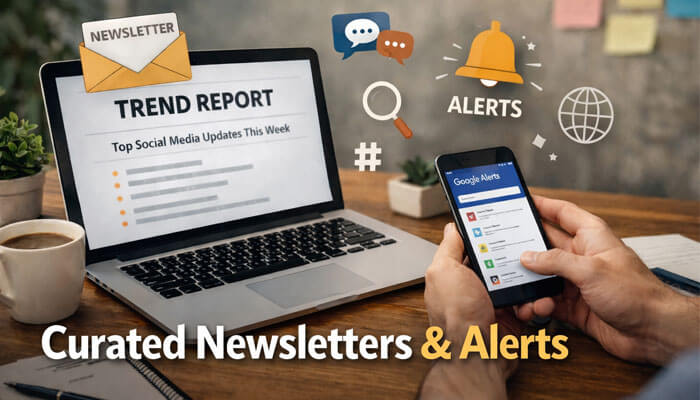
Add Newsletters and Alerts to Your System
One of the easiest ways to improve your system is to add curated updates.
Subscribe to:
- Official platform newsletters
- Trusted creator economy newsletters
- Niche media sources
- Industry trend roundups
- Marketing and search updates
You can also create alerts for:
- Niche keywords
- Competitor names
- Emerging topics
- Product categories
- Industry changes
This works well because you are no longer relying only on memory or random discovery. Useful signals come to you automatically.
How to Track Competitors Without Copying Them
Competitor research is one of the most practical ways to stay updated with trends, but it has to be done correctly.
Do not copy exact posts. Instead, study patterns.
Look for things like:
- Repeated content themes
- Hooks that show up across multiple creators
- Recurring video structures
- Common audience objections
- Posts that generate strong comment activity
- Formats that keep getting reused
When several competitors start testing similar angles, formats, or storytelling approaches, that is usually a useful signal.
The goal is not imitation. The goal is pattern recognition.
Use Social Listening to Spot Trends Before They Peak
Some of the best trends start as repeated small signals rather than huge public spikes.
Social listening helps you catch those early by paying attention to:
- Repeated Complaints
- Common Questions
- Brand Mentions
- Audience Frustrations
- Language Shifts
- Frequently Discussed Features
- Unexpected Topic Spikes
This matters because trends based on need are often more valuable than trends based on novelty alone.
A meme may fade in days. A repeated audience problem can lead to weeks or months of useful content opportunities.
How to Know if a Social Media Trend Is Worth Following
Not every trend is worth your time. A good trend for one creator may be a bad fit for another.
Before following a trend, ask:
- Does it fit my audience?
- Does it match my niche?
- Can I add something useful to it?
- Does it align with my brand voice?
- Is it a short-term spike or a deeper signal?
- Can it turn into quality content?
A trend is usually worth testing when it meets three conditions:
- It is relevant to your audience.
- It matches your content goals.
- You can adapt it naturally instead of forcing it.
If it fails those checks, skip it.
How to Adapt Social Media Trends for Different Platforms
A trend should almost never be copied word for word across every platform. The smarter move is to adapt the core idea to fit each environment.
For example:
- A Short TikTok Idea May Become an Instagram Reel
- A Threads Discussion May Become a Carousel
- A Trending Question May Become a Blog Post
- A Strong Short-Form Video Concept May Become a YouTube Video
- Repeated Audience Confusion May Become an Email Newsletter or FAQ Page
The principle stays the same, but the format changes.
That is how you turn a trend into a content system rather than a one-time post.
Metrics to Track When Testing Social Media Trends
If you want trend tracking to improve results, you have to measure outcomes.
Watch metrics such as:
- Reach
- Saves
- Shares
- Comments
- Direct Messages
- Click-Through Rate
- Watch Time
- Average View Duration
- Audience Retention
- Follower Growth From Engaged Posts
These metrics help you understand whether a trend only created visibility or whether it actually drove meaningful engagement.
For example:
- High Reach With Low Saves May Signal Weak Usefulness
- Strong Shares May Suggest the Topic Has Broader Value
- High Retention May Mean the Format Worked
- Strong Comments May Show Emotional or Topical Resonance
Do not just track vanity metrics. Track what the trend actually helped you achieve.
How to Spot Social Media Trends Before They Go Mainstream
If you want to move earlier, do not wait until everyone is already posting about the same thing.
To catch trends sooner:
- Watch Smaller Niche Creators, Not Only Large Accounts
- Monitor Community Discussions
- Pay Attention to Repeated Phrases and Hooks
- Notice When Several People Begin Framing the Same Problem Similarly
- Track Early Feature Adoption
- Look for Rising Patterns in Comments, Not Just in Posts
- Validate Unusual Ideas With Search Data
Early-stage trends often appear as weak signals repeated across different places. You may notice a topic mentioned by a few creators, then discussed in comments, then reflected in search behavior, and only later turned into widespread content.
That sequence matters.
Trend Tracking Looks Different by Niche
The way you track trends should reflect your niche.
For example:
- fashion and beauty may move faster and respond strongly to visuals, creators, and culture
- finance and legal should be much more careful and verify information before reacting
- B2B marketing may rely more on platform updates, creator analysis, and LinkedIn-style discussions
- health and wellness needs stronger credibility and extra caution
- local businesses may care more about seasonal behavior, community topics, and local events
- tech may shift around launches, tools, communities, and search interest
The core system stays similar, but the sources and response speed should change by niche.
Build a Social Media Trend Tracking Workflow
A good workflow keeps you consistent.
Here is a simple weekly process:
Step 1: Check Platform Sources
Review one or two platform-native trend tools or creator update hubs.
Step 2: Review Conversation Channels
Look at Threads, X, Reddit, or niche communities for repeated discussions.
Step 3: Validate With Search Data
Use Google Trends to test whether a topic has growing interest beyond social chatter.
Step 4: Save Only the Best Signals
Do not save everything. Keep only the trends that seem relevant, timely, and useful.
Step 5: Choose One Trend to Test
Select one strong idea to turn into content that week.
Step 6: Measure Results
Track what happened and decide whether the trend deserves expansion, adaptation, or rejection.
This process keeps you focused instead of overwhelmed.
Build a Swipe File or Trend Database
A swipe file is one of the most underrated tools in content strategy.
Your swipe file can include:
- strong hooks
- format ideas
- trend examples
- winning captions
- recurring post structures
- content angles by niche
- audience questions
- notes on what performed well
You can organize it in a spreadsheet, document, note-taking app, or project board.
The purpose is not to collect random inspiration. It is to build a searchable archive of patterns you can actually use later.
Over time, this becomes much more valuable than relying on memory.
Common Mistakes to Avoid
A lot of people struggle with trend tracking because they make a few predictable mistakes.
Avoid these:
- Chasing Every Trend
- Relying on One Platform Only
- Copying Competitors Too Closely
- Ignoring Audience Fit
- Following Trends Without Measuring Results
- Mistaking Noise for Opportunity
- Treating Trends as Only Hashtags or Audio
- Skipping Search Validation
- Posting Trends That Weaken Brand Consistency
Thin list-style content built only around a keyword is also a weak long-term strategy. The best results usually come from useful, audience-focused content built around real relevance.
Pros and Cons of Following Social Media Trends
| Pros | Cons |
|---|---|
| Helps content stay relevant | Easy to chase low-value trends |
| Can improve reach and engagement | Trends can fade quickly |
| Supports fresh content ideas | Not every trend fits your audience |
| Helps reveal audience interests | Overuse can weaken brand identity |
| Can create timely SEO opportunities | Fast reactions can reduce quality |
Quick Recap
If you want to master how to stay updated with social media trends in 2026, remember these core ideas:
- Use Platform-Native Trend Tools First
- Validate Ideas With Google Trends
- Monitor Public Conversations
- Follow Official Creator Updates
- Add Newsletters and Alerts
- Track Competitors Without Copying Them
- Watch Formats, Not Just Topics
- Separate Short-Term Spikes From Lasting Shifts
- Build a Simple Weekly Routine
- Test Trends Selectively, Not Endlessly
Final Thoughts
The real answer to how to stay updated with social media trends in 2026 is not consuming more content. It is building a better research system.
The strongest creators and marketers are not usually the ones who react to everything first. They are the ones who notice patterns early, validate what matters, adapt it to their audience, and publish with purpose. That is what turns trend awareness into real content performance.
Start small. Choose a few sources you trust. Review them weekly. Save what matters. Test one trend at a time. Measure the result. Repeat.
That simple process is how you stay informed without burning out, stay relevant without forcing content, and build a smarter publishing strategy in 2026.
How to Stay Updated With Social Media Trends? FAQs
1. How many days should you watch a social media trend before acting on it?
You should usually watch a trend for a few days rather than reacting immediately. That gives you time to see whether it keeps appearing across creators, conversations, and search behavior instead of disappearing as a one-day spike.
2. What are the warning signs that a social media trend is already overused?
A trend is often overused when many posts start looking identical, audience reactions weaken, and there is little room left for a fresh angle. If you cannot add a useful perspective, the trend may already be too crowded.
3. Should small brands follow the same social media trends as large creators?
Not always. Large creators can benefit from broad viral trends, but small brands usually get better results by choosing trends that match their niche, audience needs, and brand voice rather than copying what is popular at scale.
4. Can one social media trend create content for multiple channels?
Yes. A single trend can often be repurposed into several content formats, such as a Reel, carousel, blog post, email topic, short video, or FAQ. The key is to adapt the idea to each platform instead of reposting the same version everywhere.
5. What is the difference between a viral moment and a useful trend?
A viral moment gets short bursts of attention, while a useful trend reveals a deeper audience interest, behavior shift, or recurring content opportunity. Viral moments fade fast, but useful trends can support stronger long-term content planning.
