


Promoting an event on social media is no longer just about posting a flyer and hoping people show up. If you are wondering how to promote an event on social media?, the best results now come from platform-native content, repeated visibility, clear messaging, strong calls to action, and a simple path from discovery to registration.
Whether you are promoting a webinar, business conference, workshop, concert, fundraiser, product launch, local community event, or virtual session, the goal is the same: get the right people to notice the event, care about it, and take action before the date arrives.
If you want to learn how to promote an event on social media effectively, think like a campaign builder, not just a content poster. Strong event campaigns create awareness, build trust, increase registrations, and improve attendance through multiple touchpoints over time.
Why Social Media Matters for Event Promotion
Social media helps events in three important ways. If you want to understand how to promote an event on social media, it starts with knowing why these platforms matter so much in the first place. First, social media increases awareness by putting your event in front of people who may not have heard about it otherwise. Second, it builds trust through repeated exposure, comments, shares, speaker content, and attendee interactions. Third, it gives you multiple ways to move people from interest to registration, including short videos, Stories, live sessions, countdowns, event pages, and paid ads.
The biggest mistake many marketers make is treating event promotion like a one-time announcement. In reality, event promotion works best when it is handled like a campaign.
1. Start With a Clear Event Positioning Message
Before you create content, define your event in one strong sentence.
Ask yourself:
- Who is this event for?
- What problem does it solve?
- Why should people attend now?
- What result, experience, or value will attendees get?
If your event positioning is weak, your promotion will feel generic. A clear message performs much better than vague lines like “Join our webinar.”
A better example would be:
Join our live workshop to learn how small businesses can use short-form video to generate more leads and sales.
That kind of positioning makes every post easier to write and far more persuasive.
2. Know Exactly Who You Want to Reach
One of the most important parts of learning how to promote an event on social media is understanding your target audience.
Define your audience by:
- age
- location
- interests
- profession
- pain points
- goals
- buying intent
A student music event should not be promoted the same way as a B2B webinar, a startup networking session, or a local fundraiser. Your message, visuals, platform choice, and CTA should all match the audience you want to attract.
It also helps to create content for different audience stages:
- Cold audience: explain what the event is and why it matters
- Warm audience: show speakers, agenda, testimonials, or benefits
- Ready-to-register audience: use urgency, reminders, and direct CTAs
3. Choose the Right Social Platforms
Do not try to dominate every platform at once. In many cases, two strong channels will perform better than five weak ones. A big part of how to promote an event on social media is choosing the platforms that best match your audience, event type, and content style.
Here is a simple platform guide:
Best for:
- B2B webinars
- professional conferences
- networking events
- recruiting events
- educational panels
Best for:
- brand launches
- lifestyle events
- creator-led experiences
- visual events
- local activations
Best for:
- local events
- community events
- fundraisers
- public gatherings
- group-based promotion
TikTok
Best for:
- trend-driven events
- entertainment
- creator campaigns
- youth-focused events
- culture-led promotion
YouTube
Best for:
- workshops
- speaker previews
- educational events
- interviews
- live streams
Choose the platforms where your audience already spends time and where your event format naturally fits.
4. Build a Simple Event Promotion Funnel
A strong event campaign does not stop at awareness. It moves people through a journey, which is a key part of how to promote an event on social media effectively.
Awareness
At this stage, people are discovering your event for the first time.
Use:
- teaser videos
- announcement posts
- speaker reveals
- short educational clips
- behind-the-scenes previews
Interest
Now people want more detail and a reason to care.
Use:
- agenda breakdowns
- value-focused posts
- FAQs
- benefit-driven content
- discussion prompts
Registration
This is where your content should drive action.
Use:
- direct CTAs
- landing page links
- testimonials
- urgency posts
- ticket reminders
Attendance
After signup, your goal becomes helping people actually show up.
Use:
- reminder emails
- countdown posts
- calendar prompts
- event-day Stories
- last-call reminders
Post-Event Growth
After the event, keep the momentum going.
Use:
- recaps
- replay links
- thank-you posts
- highlight clips
- testimonials
- next-event waitlists
5. Create Platform-Native Content Instead of Digital Posters
Many event campaigns fail because they rely too heavily on static flyer-style graphics. Social platforms usually reward content that feels natural within the platform.
That means better event content often looks like:
- short speaker clips
- talking-to-camera videos
- agenda breakdown carousels
- behind-the-scenes content
- countdown Story sequences
- attendee reactions
- FAQ videos
Native content feels more human, more watchable, and more shareable than generic promotional graphics.
6. Use Short-Form Video to Build Interest Faster
Short-form video is one of the strongest formats for event promotion because it helps explain value quickly while showing personality, energy, and relevance.
Video ideas include:
- 3 reasons to attend
- what you will learn in 30 seconds
- who this event is for
- what happened last year
- meet the speakers
- behind the scenes before launch
Keep the hook strong in the first few seconds and end with a clear CTA like:
- Register now
- Save your seat
- Join the waitlist
- Save the date
7. Create a Dedicated Event Page or Registration Hub
Every social post should lead somewhere clear. That could be:
- a landing page
- a registration form
- a ticketing page
- a Facebook Event
- a LinkedIn Event page
A strong registration page should include:
- event title
- date and time
- location or virtual format
- speaker details
- agenda or outcomes
- who should attend
- CTA button
- social proof
- FAQs
Social media gets attention. Your event page turns that attention into signups.
8. Write Clear Posts With Strong Calls to Action
If people cannot quickly understand your post, they will scroll past it. A major part of how to promote an event on social media is writing captions that are clear, direct, and easy to act on.
Each post should answer:
- what the event is
- who it is for
- when it happens
- why it matters
- what to do next
A simple event caption structure works well:
- Hook: Struggling to get more leads from social media?
- Value: Join our live workshop to learn five practical tactics that help small businesses turn content into conversions.
- Details: April 30, 7 PM, live online.
- CTA: Register now before seats fill.
Good CTA examples include:
- Register now
- Save your seat
- Get your ticket today
- RSVP now
- Join the waitlist
- Invite a friend
- Watch live
- Claim your place
Clarity almost always beats cleverness.
9. Use Countdown Posts and Reminder Content
A lot of people mean to attend but forget. That is why reminder content matters.
Useful reminder posts include:
- 7 days to go
- 3 days left to register
- final speaker announcement
- tomorrow we go live
- doors open in 2 hours
- last chance to join today
Good event promotion relies on repetition with variation. You do not need to say the same thing the same way every time. You just need to stay visible.
10. Use Urgency Ethically
Urgency can improve registrations when it is real and honest.
Good urgency examples include:
- limited seats
- early-bird pricing
- registration closes tonight
- bonus for early signups
- final-day push
- countdown timer
- speaker reveal deadline
Do not create fake scarcity. Real deadlines and real reasons to act work much better for long-term trust.
11. Turn Speakers, Partners, Sponsors, and Creators Into Distribution Channels
Your event should not depend only on your brand account. One of the best ways to expand reach is to get other people involved in promotion.
Ask these people to help share the event:
- speakers
- sponsors
- partners
- creators
- hosts
- venue collaborators
- community leaders
Make it easy for them by providing:
- ready-made captions
- short clips
- speaker graphics
- story-sized visuals
- trackable links
- “why I’m speaking” prompts
This works especially well for local events, launches, community events, and creator-led campaigns.
12. Build Pre-Event Engagement
Your event should feel alive before it begins. Social media is not only for announcements. It is also for interaction.
Pre-event engagement ideas:
- polls
- Q&A boxes
- “who’s coming?” posts
- discussion threads
- attendee introductions
- speaker question collection
- Story question stickers
- mini challenges
When people engage before the event, they become more emotionally invested in attending.
13. Use Social Proof to Reduce Hesitation
People are more likely to register when they see proof that your event is credible and useful.
Examples of strong social proof:
- attendee testimonials
- clips from previous events
- recognizable speakers
- sponsor logos
- community size
- audience reactions
- honest registration milestones
Social proof works because it reduces uncertainty. It helps people believe the event will be worth their time.
14. Combine Organic Promotion With Paid Ads
Organic content builds trust and conversation, while paid promotion helps you reach more of the right people.
Paid ads work especially well for:
- retargeting landing page visitors
- reaching lookalike audiences
- boosting top-performing posts
- promoting final registration deadlines
- pushing replay or post-event lead capture
A smart strategy is to post organically first, then put budget behind the content that is already performing well.
15. Keep Promoting Before, During, and After the Event
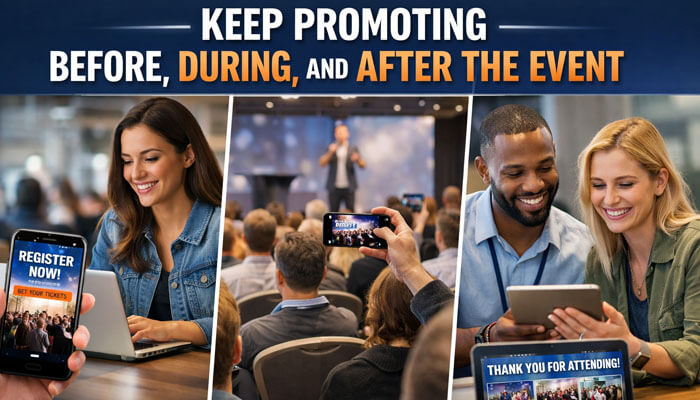
A strong event campaign does not stop when registration opens, and it does not end when the event begins. This is one of the most important parts of how to promote an event on social media because consistent visibility helps increase both registrations and attendance.
Before the event
Focus on:
- announcements
- speaker reveals
- agenda posts
- FAQs
- countdowns
- reminders
On event day
Post:
- last-call reminders
- live Stories
- attendee content
- behind-the-scenes clips
- speaker moments
- schedule updates
After the event
Share:
- recap clips
- top lessons
- thank-you posts
- replay links
- quote graphics
- testimonials
- waitlist for the next event
This is one of the most overlooked parts of how to promote an event on social media, yet it often creates some of the best long-term results.
Best Content Types for Event Promotion
Here are some of the most effective content types for event campaigns:
| Content Type | Best Use | Best Platforms |
|---|---|---|
| Short video | Awareness and interest | Instagram, TikTok, YouTube Shorts, Facebook |
| Countdown Stories | Reminders and urgency | Instagram, Facebook |
| Speaker clips | Credibility and excitement | LinkedIn, Instagram, YouTube |
| Carousel posts | Agenda breakdown and value explanation | Instagram, LinkedIn, Facebook |
| Testimonials | Social proof | All major platforms |
| Live Q&A | Objection handling | Instagram Live, YouTube Live, Facebook Live |
| Event page posts | Conversion and details | LinkedIn, Facebook |
| Paid ads | Targeted reach and retargeting | Meta, LinkedIn, TikTok |
Common Mistakes to Avoid
Even good events can underperform when promotion is weak.
Avoid these common mistakes:
- posting too late
- relying on one announcement post
- using weak or unclear CTAs
- sending traffic to a poor landing page
- promoting on the wrong platform
- ignoring comments and direct messages
- failing to use speakers and partners for reach
- not tracking conversions
- putting too much text in graphics
- forgetting the final-week push
Event Promotion Checklist
Use this checklist before launching your campaign:
- finalize your target audience
- define the event positioning
- choose your best platforms
- build the registration page
- create branded assets
- prepare short-form videos
- schedule reminder posts
- set ad budgets
- install tracking tools
- prepare partner promo kits
- plan event-day content
- plan post-event recap content
Final Takeaway
If you want to know how to promote an event on social media, focus on the essentials: audience fit, clear messaging, platform-native content, repeated visibility, strong CTAs, and a simple path to registration.
The best event campaigns do not rely on one post. They use multiple formats, multiple touchpoints, and a clear promotion system from first awareness to final attendance.
When you approach event promotion like a campaign rather than a single announcement, you do not just get more reach. You get more of the right people showing up.
Frequently Asked Questions (FAQs)
1. How to promote an event on social media?
Promote your event with clear messaging, platform-specific content, strong calls to action, and repeated reminders across the right channels. Focus on reaching the right audience, building interest early, and making registration simple.
2. How do you choose the best registration link strategy for different social media platforms?
Use the link format that fits each platform best, such as bio links, event pages, or direct landing pages. The goal is to make registration quick, clear, and easy for users.
3. What should you do if event registrations are still low one week before the event?
Focus on urgency, social proof, and extra promotion in the final week. Share testimonials, speaker clips, reminders, and ask partners to help boost reach.
4. Should you use a native platform event page or send people directly to your website?
Using both often works best. Platform event pages help with visibility, while your website gives you more control over branding and conversions.
5. How can you reduce no-shows after people register from social media?
Keep people engaged after they sign up with reminders, calendar links, and countdown posts. Clear event access details also help improve attendance.
6. How should you promote a hybrid event differently from a fully online or in-person event?
Promote the in-person and virtual experience separately so each audience sees the value clearly. Hybrid events perform better when the messaging is tailored for both groups.
