

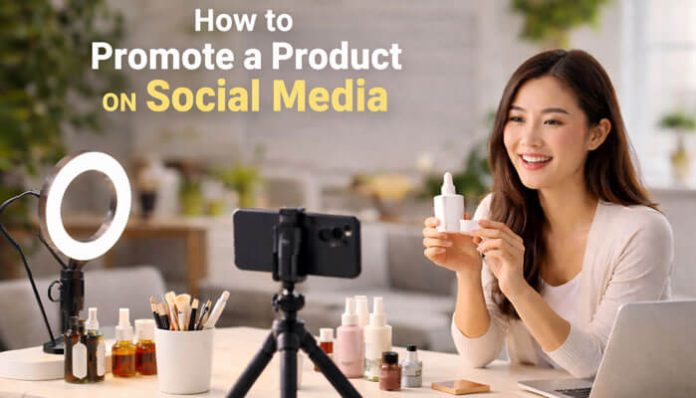

If you are wondering how to promote a product on social media? It is still one of the fastest ways to introduce, validate, and scale a product, but success in 2026 requires more than simply posting product photos and hoping for clicks. The brands getting results now are the ones that match the product to the right audience, create content that fits the platform, use social proof well, reduce friction after the click, and measure real outcomes such as leads, purchases, and repeat sales. Major platforms continue to support stronger measurement and commerce workflows through tools such as Meta Pixel, Meta Conversions API, TikTok Pixel, TikTok Events API, and YouTube Shopping.
If you want to know how to promote a product on social media successfully, the answer is straightforward: understand exactly who the product is for, choose the platform that best matches buyer intent, publish platform-native content, use a clear offer, make the path to action simple, and track conversions instead of vanity metrics. That approach also aligns with Google’s people-first content guidance, which emphasizes creating helpful, reliable content for users rather than content made mainly to manipulate rankings.
The most effective way to promote a product on social media in 2026 is to match the product to the right audience, choose the best platform for the buying journey, create native content that shows the product in action, support it with proof and a strong offer, then measure what happens after the click. In practice, that means building a system that connects audience research, creative testing, landing page quality, social proof, retargeting, and post-purchase follow-up.
Why Social Media Product Promotion Still Works in 2026
Understanding how to promote a product on social media starts with recognizing why social platforms still drive strong product discovery and buying decisions in 2026.
Social media works because it combines discovery, targeting, trust-building, and conversion opportunities in one place. People do not just browse social platforms for entertainment anymore. They also use them to research solutions, compare options, check reviews, watch demonstrations, and decide whether a product looks credible enough to try.
That does not mean every product will perform on every platform. Reach by itself is not a strategy. Promotion works best when the message, format, and platform behavior all align. A short demo may work on TikTok or Instagram Reels. A longer tutorial or review may work better on YouTube. A proof-driven offer with business outcomes may perform better on LinkedIn for B2B. When the content matches audience intent, social media becomes much more efficient.
Start With a Clear Product Promotion Goal
Before you create content, decide what success means for this campaign. Too many businesses post without a defined objective and then wonder why the results feel random.
Your goal might be:
- Product awareness
- Website traffic
- Leads
- Demo bookings
- Email signups
- Purchases
- App installs
- Waitlist registrations
- Retail store visits
A simple structure is to think in four stages:
- Awareness: get in front of the right people
- Consideration: educate them on the problem and solution
- Conversion: make it easy to buy or inquire
- Retention: encourage repeat purchase and advocacy
This matters because your goal affects everything else. It influences which platform you choose, what type of content you create, what call to action you use, and which metrics matter most. Without that structure, product promotion often turns into a mix of disconnected posts with no clear path from attention to revenue.
The R-A-T-E Framework for Product Promotion
To better understand how to promote a product on social media, use this simple framework to make your promotion process easier to apply and improve over time.
Research
Understand your audience, product-market fit, customer pain points, objections, and what content already performs well in your niche.
Align
Choose the platform, message, content format, and offer that best match buyer intent.
Test
Test hooks, content angles, audiences, creatives, landing pages, and offers.
Expand Winners
Put more time, budget, and distribution behind content and campaigns that already prove they can convert.
This framework keeps the strategy practical. It also helps avoid one of the biggest mistakes in product marketing: scaling weak messaging before you know what actually resonates.
Audience Research Before You Promote
One of the most important parts of learning how to promote a product on social media is understanding the buyer before you publish anything. If you skip this step, even strong creative can miss because it is speaking to the wrong pain point, the wrong stage of awareness, or the wrong buying trigger.
Start by identifying:
- Who the product is for
- What problem it solves
- What triggers someone to look for it
- What objections they have before buying
- What kind of proof they need
- Which platforms they use most
- What content style they trust
- Whether they buy quickly or need more education
For example, a beauty consumer on Instagram may respond best to tutorials, before-and-after visuals, and creator proof. A B2B software buyer on LinkedIn may need ROI framing, a lead magnet, and case-study style content before booking a demo. A home decor shopper on Pinterest may be in inspiration mode first and purchase later after saving ideas.
Match Content to Audience Intent
A practical way to plan content is to match the format to where the buyer is mentally:
- Pain-point content for cold audiences
- Demo content for interested audiences
- Reviews and social proof for hesitant buyers
- Offer-driven content for ready-to-buy visitors
When intent and content type match, promotion becomes more efficient because the audience is getting the message they need at the right time.
Competitor Analysis Before Launch
Before launching your campaign, study direct competitors and adjacent brands already selling to a similar audience. You are not trying to copy them. You are trying to understand what the market is already saying and where the opportunity gaps are.
Look at:
- What they post most often
- Which formats get the strongest response
- What kinds of hooks they use
- How often they publish
- Whether they rely on discounts
- Whether they use UGC or influencer content
- How they position product value
- Where they send traffic after the click
If a competitor mostly posts polished product photos but rarely shows real customer use, that may be your gap. If they depend heavily on price cuts, you may be able to win with stronger education, clearer differentiation, better reviews, or a smoother landing page.
How to Choose the Right Platform to Promote a Product on Social Media

Knowing how to promote a product on social media starts with choosing the platform that best matches your audience, content style, and buying journey. A major mistake brands make is assuming all platforms work the same way. They do not. Each platform has different audience behavior, content expectations, and conversion patterns.
Instagram works especially well for fashion, beauty, food, home, wellness, lifestyle, and local consumer brands. It is strong for visual storytelling, creator collaborations, Reels, Stories, and product-led inspiration.
TikTok
TikTok is powerful for products that benefit from quick demonstrations, reactions, transformations, problem-solution storytelling, and trend-driven discovery. TikTok also supports event tracking through Pixel and Events API for website measurement.
YouTube
YouTube is strong for products that need explanation, trust-building, tutorials, reviews, comparisons, or long-form education. YouTube Shopping lets eligible creators and merchants feature products from their own stores and tag products from other brands in content.
Pinterest is often effective for planning-driven categories such as decor, fashion, gifts, events, recipes, DIY, and seasonal inspiration. People there are usually discovering ideas before making a purchase decision.
LinkedIn tends to work best for B2B software, consulting, services, education, recruiting-related offers, and higher-value solutions that require more trust and explanation.
B2B vs B2C Promotion Strategy
Your social media promotion strategy should also change depending on what you sell.
| Aspect | B2C Products | B2B Products |
|---|---|---|
| Buying Behavior | Emotion-driven and faster decisions | Logic-driven and longer decision cycles |
| Content Style | Visual, engaging, lifestyle-focused | Educational, informative, value-focused |
| Key Appeal | Emotional appeal and transformation | Trust, credibility, and ROI |
| Content Formats | Short videos, reels, creator reviews, UGC | Case studies, webinars, expert posts, whitepapers |
| Decision Drivers | Convenience, price, social proof | Business value, efficiency, long-term impact |
| Sales Cycle | Short and often impulsive | Longer with multiple decision-makers |
| Call to Action | Buy now, limited offers, discounts | Book demo, download guide, request consultation |
| Trust Building | Reviews, testimonials, influencer content | Case studies, data, expert insights, proof of results |
| Platform Focus | Instagram, TikTok, Pinterest | LinkedIn, YouTube, webinars |
Other Business Models
- Physical products: focus on use, quality, shipping clarity, and reviews
- Digital products: focus on outcomes, previews, testimonials, and trust
- Local services: focus on local proof, reviews, before-and-after examples, and lead capture
- Ecommerce stores: focus on social commerce, retargeting, and friction-free checkout
Step-by-Step Checklist to Promote a Product on Social Media
Here is a practical checklist readers can actually follow:
- Research the audience
- Review top competitors
- Choose the best-fit platform
- Build three content angles
- Create one strong offer or CTA
- Set up tracking
- Publish organic content
- Boost winning posts with paid promotion
- Retarget visitors and engagers
- Measure ROI and improve the campaign
This is a better working model than posting random assets and hoping one goes viral.
How to Build a Content Strategy to Promote a Product on Social Media
Understanding how to promote a product on social media starts with a content strategy that does not push “buy now” in every post. Most people need context, trust, and relevance before they take action. A better approach is to create content that supports the full buying journey.
1. Problem-Aware Content
Show the frustration, inefficiency, inconvenience, or gap your product solves. This helps cold audiences recognize that the product is relevant to them.
2. Solution-Aware Content
Demonstrate the product in action. Show how it works, what changes after using it, and who it is designed for.
3. Trust-Building Content
Use reviews, testimonials, side-by-side comparisons, creator examples, FAQs, mini case studies, and customer proof.
4. Conversion Content
Use launches, bundles, limited-time offers, product tags, retargeting, and direct calls to action with a strong landing page.
This structure works because it mirrors how real people move from awareness to purchase.
Create Platform-Native Product Content
A good product can still fail on social media if the creative feels out of place. Content performs better when it feels native to the platform instead of obviously repurposed with no adaptation.
In practice, that means:
- Use vertical video for Reels, TikTok, and Shorts
- Show the product early
- Lead with the problem or result
- Use clear on-screen text
- Keep the message concise
- Adapt the same idea into multiple formats rather than reposting the same asset everywhere
Content types that often perform well include:
- Product demos
- Unboxings
- Before-and-after examples
- Problem-solution videos
- Comparison posts
- Short FAQs
- Creator-style reviews
- Customer reactions
- Founder-led stories
Posting Frequency and Consistency
Many brands underperform not because their content is terrible, but because their posting rhythm is weak. They post intensively for a few days, disappear for a week, then return with a hard sell. That inconsistency breaks momentum.
A better approach is to:
- Post consistently enough to stay visible
- Educate more than you sell
- Mix value content with product content
- Repeat winning angles in fresh formats
- Avoid making every post feel like a direct ad
Consistency improves learning too. The more regularly you publish, the faster you see which hooks, formats, and claims actually resonate.
Content Calendar and Campaign Planning
A content calendar turns product promotion into a system instead of a reaction. It helps you build content around intent and avoids random posting.
Simple Weekly Content Mix
- One pain-point post
- One product demo
- One social proof post
- One UGC or customer story
- One direct offer post
- One short-form repurposed video
- One ad creative refresh for paid campaigns
Launch Campaign Example
- Pre-launch teaser
- Problem-awareness content
- Waitlist or early access signup
- Creator seeding
- Launch-day demo
- Testimonial or reaction content
- Retargeting ad to engagers and visitors
- FAQ follow-up content
This makes the campaign feel more professional and easier to manage.
Offers and Promotions That Actually Convert
Content matters, but the offer often decides whether a visitor acts. If the product is attractive but the offer is weak, conversion usually suffers.
Common offer types include:
- Percentage discounts
- Bundles
- Free shipping
- Limited-time launch offers
- Bonus gifts
- Free trials
- Lead magnets
- First-order discounts
- Exclusive customer offers
The best offer depends on the product category and buyer behavior. A low-cost ecommerce product may convert with a bundle or free shipping. A software product may perform better with a free trial or demo. A service business may convert better with a consultation offer or downloadable resource than with a discount.
User-Generated Content and Customer Advocacy
User-generated content often performs better than polished brand content when trust is the main barrier. It feels more believable, more relatable, and more native to social feeds.
UGC can include:
- Customer photos
- Real-world use videos
- Short reviews
- Video testimonials
- Story reposts
- Comment screenshots with permission
Ways to encourage UGC:
- Ask customers to tag your brand
- Create a simple branded hashtag
- Run a feature campaign or giveaway
- Send a post-purchase request for photos or video
- Give customers prompts so participation feels easy
Always get permission before reusing customer content unless rights are already clearly granted.
Social Proof and Reviews
Many buyers hesitate because they silently ask the same questions:
- Does it really work
- Is it worth the money
- Has anyone like me used it
- Can I trust the brand’s claims
That is why social proof should be part of the strategy, not an afterthought. Reviews, case snippets, ratings, creator demonstrations, customer stories, and before-and-after examples all help reduce uncertainty and move buyers closer to action.
Use Social Commerce Features to Reduce Friction
If you are serious about learning how to promote a product on social media, do not ignore built-in shopping tools. Reducing unnecessary steps between discovery and action can improve conversion.
Useful tactics include:
- Tag products in eligible content
- Connect your catalog or store where supported
- Keep pricing and shipping clear
- Match the post’s promise to the landing page
- Use product-focused pages for paid traffic
YouTube Shopping, for example, allows eligible creators and merchants to feature products from their own stores and tag products from other brands directly in content, which can shorten the path from product discovery to shopping action.
Combine Organic Content With Paid Promotion
Organic social is still valuable, especially for trust-building and creative testing, but paid promotion is often what turns a promising campaign into a scalable one. A smart approach is to test messaging and content organically first, then amplify the winners.
A practical mix often looks like this:
- Organic posts for testing and trust
- Paid ads for scale
- Retargeting for non-buyers
- Creator amplification where relevant
This hybrid approach often works better than relying only on organic reach.
Budget Planning for Paid Social
One mistake new brands make is spending the entire budget on one polished campaign before they know which message works. A better approach is to separate testing from scaling.
A simple budget structure can include:
- Test budget for hooks and angles
- Creative testing budget for different videos and formats
- Retargeting budget for visitors and cart abandoners
- Creator budget for UGC and collaborations
- Scaling budget for profitable winners
The goal is not just to spend. The goal is to find repeatable patterns that can grow without destroying profitability.
Landing Page Optimization After the Click
Social media promotion does not stop when someone clicks. If the landing page is slow, confusing, or inconsistent with the content they just saw, the campaign loses efficiency.
A strong landing page should include:
- Fast load speed
- Mobile-first design
- Clear headline
- Strong CTA above the fold
- Price clarity
- Shipping clarity
- Reviews or trust elements
- A simple checkout or lead form
- Consistency with the ad or post message
In other words, the post gets attention, but the page closes the gap between interest and action.
Community Management Matters More Than Many Brands Think
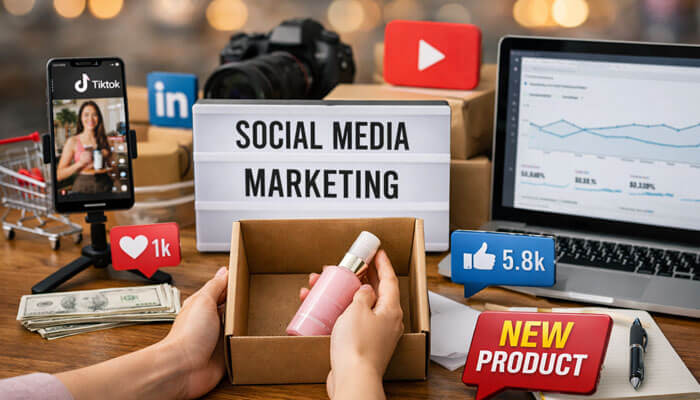
Product promotion is not just publishing. It is also what happens after people respond.
Good community management includes:
- Replying to comments quickly
- Answering DMs
- Handling objections clearly
- Pinning useful FAQs
- Engaging with tagged customers
- Turning repeated questions into new content
- Using comment feedback to improve messaging
Very often, the comment section reveals exactly why people are not buying yet. It shows confusion, objections, and proof points you can use in future posts and ads.
Work With Creators and Influencers Carefully
Creator marketing can be highly effective because it combines native storytelling with social proof. But it works best when there is a real audience fit and clear messaging.
Strong creator campaigns usually include:
- A relevant audience match
- Real product use
- Accurate and approved claims
- Creative freedom with sensible guardrails
- Clear sponsorship disclosure
- Permission to reuse top-performing assets in ads
Creators should not feel like actors reading ad copy. The content tends to work best when it feels natural but still stays compliant.
Legal and Disclosure Points You Should Not Ignore
When promoting products on social media, pay attention to:
- Paid partnership disclosures
- Affiliate link disclosures
- Truthful product claims
- Authentic reviews
- Clear sponsored content language
- Avoiding deceptive urgency
- Making sure testimonials reflect real experiences
This is not only about compliance. It is also about trust. Brands that exaggerate or create fake scarcity may get short-term clicks, but they damage credibility over time.
Conversion Tracking Setup
If you want to understand how to promote a product on social media effectively, you need proper tracking in place before you scale.
Meta Pixel
Meta describes Pixel as a tool you can add to your website to track activity and optimize advertising performance. It is central to understanding how users behave after clicking your ads or posts.
Meta Conversions API
Meta says Conversions API creates a direct connection between your marketing data and Meta’s optimization systems, and Meta recommends using it alongside Pixel to improve measurement reliability.
TikTok Pixel
TikTok says its Pixel is a piece of code placed on your website to share website visitor events with TikTok, measure traffic, measure ad campaign performance, and optimize campaigns.
TikTok Events API
TikTok says Events API can be used as a standalone integration or together with TikTok Pixel, and specifically recommends using it as a second channel with Pixel for stronger measurement.
UTMs and GA4
Use UTM parameters consistently so you can identify where traffic, leads, and purchases are coming from. This is especially important if you are posting organically, running paid ads, working with creators, and using several channels at once.
What to Track
At minimum, track:
- Page views
- Product views
- Add to carts
- Lead submissions
- Checkout starts
- Purchases
- Campaign source and medium
- Creative variation
- Landing page performance
Organic vs Paid: Which Is Better
| Strategy | Best for | Strength | Limitation |
|---|---|---|---|
| Organic social | Awareness, trust, community, creative testing | Lower cost and stronger brand connection | Slower to scale |
| Paid social | Reach, targeting, conversions | Faster scaling and clearer testing | Needs budget and clean tracking |
| Organic plus paid | Most brands | Best mix of trust, testing, and growth | Requires more planning |
For a new product, organic content often helps validate messaging first. For a proven product, paid media can accelerate growth. In many cases, the strongest system combines both.
Testing and Optimization
Testing is where campaigns usually improve. Too many brands either never test or they change too many variables at once and learn nothing useful.
Test elements such as:
- Hooks
- Headlines
- Thumbnails
- Video length
- CTA wording
- Creative style
- Audience segments
- Landing pages
- Offers
- Retargeting windows
The goal is to test one meaningful variable at a time, document the result, and scale the versions that improve performance.
Track Metrics That Actually Matter
A post getting likes does not necessarily mean the product is selling. Metrics should match the campaign goal.
Awareness Metrics
- Reach
- Video views
- Watch time
- Saves
- Shares
Consideration Metrics
- Profile visits
- Product page clicks
- Landing page engagement
- Add-to-cart rate
Conversion Metrics
- Purchases
- Cost per acquisition
- Revenue per visitor
- Return on ad spend
- Qualified leads
Retention Metrics
- Repeat purchase rate
- Review volume
- Referral activity
- UGC volume
This is how you move from feeling that a campaign worked to knowing whether it actually produced business value.
Retention After the First Sale
A strong article on how to promote a product on social media should not stop at the first purchase. Social channels can also support repeat business and customer advocacy.
Retention tactics include:
- Repeat purchase campaigns
- Post-purchase email flows
- Loyalty rewards
- Referral programs
- Remarketing to past buyers
- Requests for UGC and reviews
- Cross-sell campaigns
- Reorder reminders
The first sale is important, but profitability often improves when you build a system for keeping buyers engaged after conversion.
Real-World Example: How a Brand Could Apply This Strategy
Imagine a skincare brand launching a new serum and asking how to promote a product on social media in a way that actually drives results.
First, the brand researches the audience and learns that potential buyers care most about texture, visible results, irritation concerns, and price-value. The team chooses Instagram and TikTok as primary platforms because the product is highly visual and easy to demonstrate.
Next, the brand builds content for different intent stages. Cold audiences see short videos about common skincare frustrations. Interested audiences see demo videos showing the serum texture and how it fits into a routine. Hesitant buyers see customer reviews, before-and-after examples, and FAQ videos. Ready-to-buy visitors see launch-day offers, product tags, and retargeting ads pointing to a fast mobile landing page.
Then the team tracks product page views, add-to-cart actions, purchases, and UGC volume. Winning creatives get boosted with paid promotion, and post-purchase follow-up asks customers for honest feedback and user-generated content. This is the kind of system that makes social media promotion sustainable instead of random.
Useful Tools for Social Media Product Promotion
You do not need a huge software stack. You need a clean process.
Useful tool categories include:
- Scheduling tools
- Analytics dashboards
- UTM builders
- Landing page testing tools
- Social listening tools
- Review and UGC collection tools
- Creative asset organization tools
- Paid campaign reporting tools
The specific tool matters less than whether the workflow is clear and repeatable.
AI Tools and Workflow for Social Promotion
AI can help speed up parts of the process, especially:
- Caption drafting
- Hook generation
- Audience research summaries
- Comment clustering
- Content repurposing
- Headline variations
- Testing ideas
But AI should support strategy, not replace it. Google’s guidance remains focused on whether content is genuinely helpful and created for people, not whether it was produced with a particular method. That means original insight, accurate claims, and real audience understanding still matter most.
Common Mistakes to Avoid
A lot of product promotion fails for predictable reasons:
- Promoting on every platform instead of the right one
- Posting product photos without use cases
- Skipping audience research
- Reusing the same creative everywhere
- Posting inconsistently
- Sending traffic to a weak landing page
- Measuring only likes and impressions
- Ignoring product tags and commerce tools
- Using creators without proper disclosure
- Making claims the product cannot support
Avoiding these mistakes often improves performance faster than chasing the next trend.
FAQs: How to Promote a Product on Social Media
1. How do I promote a product on social media for free?
Start with organic content that shows the product solving a real problem. Use short-form video, educational posts, product demos, customer reactions, and proof-based content. You do not need paid ads to begin, but you do need consistency and a clear call to action.
2. Which social media platform is best to promote a product?
It depends on the product and how the buyer behaves. Instagram and TikTok often work well for visual consumer products. YouTube works well for reviews and tutorials. Pinterest works well for planning-driven discovery. LinkedIn works well for B2B offers.
3. How often should I post promotional content?
Most brands perform better when they mix education, proof, and direct promotion rather than posting only sales content. Consistency matters more than random volume.
4. Is paid promotion necessary in 2026?
Not always, but it often helps scale what already works organically. For many brands, the best system is organic plus paid rather than choosing only one.
5. How do I measure ROI from social media product promotion?
Use tracking tools such as Meta Pixel, Meta Conversions API, TikTok Pixel, TikTok Events API, UTMs, and analytics to measure what happens after the click, including leads, add-to-cart actions, and purchases.
Conclusion
How to promote a product on social media in 2026 comes down to one principle: make discovery, trust, and action easier. The brands that win are not always the loudest. They are the ones that understand the audience, choose the right platform, create native content, use proof honestly, improve the landing page, support strong content with paid distribution, and track the actions that lead to revenue.
The best way to start is simple. Choose one product, one audience segment, one platform, and one clear offer. Then publish, test, measure, and improve. That is how social media product promotion becomes a repeatable growth system instead of a guessing game.
