


E-commerce shoppers don’t just open a box anymore—they hit record and share the unboxing with the world, reshaping demand for Custom Packaging and Fulfillment Services.
A 2024 industry snapshot from Gitnux found that 40 percent of online buyers will recommend a product when it arrives in branded packaging.
Yet many brands still juggle separate box vendors and 3PLs, inviting stockouts and late deliveries.
A new class of partners now blends Custom Packaging and Fulfillment Services with order fulfillment under one roof, syncing creativity with logistics to slash waste, speed delivery, and turn every shipment into a micro-marketing campaign.
We sifted through dozens of contenders and narrowed the field to ten clear winners.
Why packaging and fulfillment belong together
Great packaging sparks a smile, and fast, flawless delivery cements loyalty. When two separate teams handle those jobs, cracks appear.
Picture the hand-off: a designer signs off on a gorgeous custom box in February, but the first pallet doesn’t reach the warehouse until March. In that gap the 3PL ships plain corrugate. Customers miss the wow moment, the brand pays twice for materials, and everyone loses.
Bring the work under one roof and timelines tighten. The same crew that specs your box also forecasts how many boxes you’ll use, prints only that run, and stores it beside your inventory. Orders drop, pickers grab the right carton immediately, and parcels roll out the door in hours, not days.
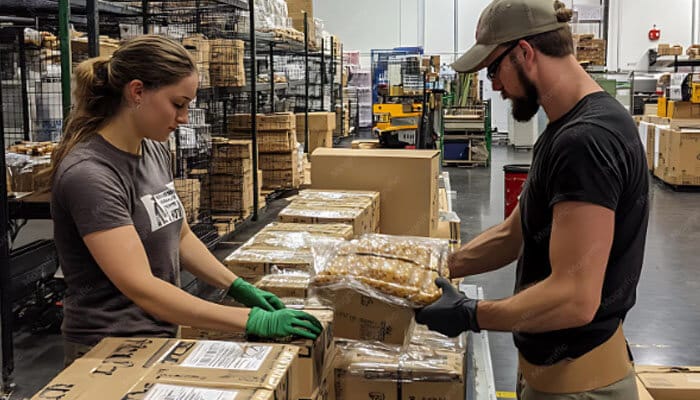
Efficiency shows up on the balance sheet, too. Integrated providers treat both product and packaging as SKUs, so they reorder before stockouts hit. Right-size algorithms shave inches off every shipment, cutting dimensional-weight charges and leftover void fill. Less cardboard, less air, lower bills.
Sustainability gains follow. Emerging extended-producer-responsibility rules push brands to account for packaging waste; having one partner track materials and emissions simplifies compliance. You also unlock greener options—recycled boards, carbon-neutral lanes—without extra coordination calls.
Most important, the customer feels the difference. A box that fits, arrives intact, and tells a story on the first purchase sets the tone for the next. In a market where repeat orders crown the winners, that alignment is no longer a luxury; it’s table stakes.
How we picked the winners
First, we cast a wide net. Our team combed trade journals, Reddit threads, and the latest 3PL rankings, flagging every company that claimed two core skills: true custom packaging and end-to-end order fulfillment. The initial list hit 30 names.
Then the scorecards came out. We judged each candidate against six factors that matter to growing brands: depth of packaging customization, speed and accuracy of the fulfillment network, quality of the tech stack, sustainability chops, pricing transparency with room to scale, and a record of happy clients.
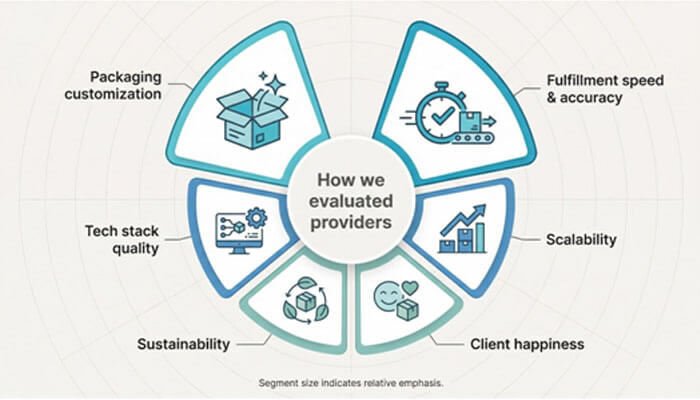
Weighting was deliberate. Packaging and fulfillment carried the most influence, because without excellence in both, an integrated solution falls apart. Technology and scalability followed, since real-time visibility and holiday-surge resilience can make or break customer trust. Sustainability and social proof rounded out the picture, reflecting what shoppers expect in 2026.
Scores told only part of the story. We also hunted for distinctive strengths. A boutique provider that lowers minimums for startups earned a spot beside a global giant that can ship to five continents. All 10 finalists cover the fundamentals and deliver something extra.
The result is a curated, no-nonsense list you can tap to shortlist partners with confidence.
1. Zenpack: design-driven, globally synced
Zenpack starts where most 3PLs stop: concept sketches. Its in-house team engineers every panel, insert, and graphic, then moves that same packaging straight into production without sending files to an outside converter. The company builds custom packaging under one roof, tying together strategy, design, manufacturing, and logistics so what leaves its plants is market-ready (see https://www.zenpack.us/custom-packaging/)
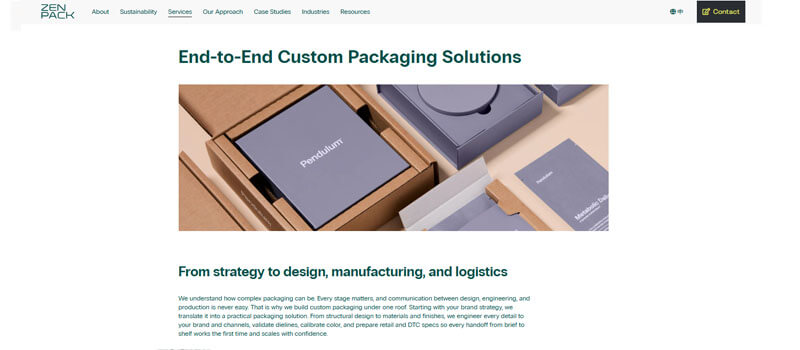
Because the company operates fulfillment hubs on both U.S. coasts and in Asia, products leave the factory already inside their final branded box. That shortcut trims several weeks of freight time and erases a full layer of repacking cost.
Sustainability shows in the details. Zenpack right-sizes cartons, favors recycled boards, and tracks material usage beside order data so you can view environmental impact and stock levels on one screen. According to Zenpack’s logistics overview, these efficiencies consistently cut packaging waste and shipping spend together.
Best for mid-market and premium DTC brands that crave hands-on design expertise plus a fulfillment backbone strong enough to absorb holiday spikes without losing the unboxing magic.
2. ShipBob: tech muscle at global scale
ShipBob built its reputation on speed. With more than 30 fulfillment centers across North America, Europe, and Asia Pacific, the network places your inventory close to buyers, unlocking two-day delivery for most U.S. ZIP codes and next-day options in key EU markets.
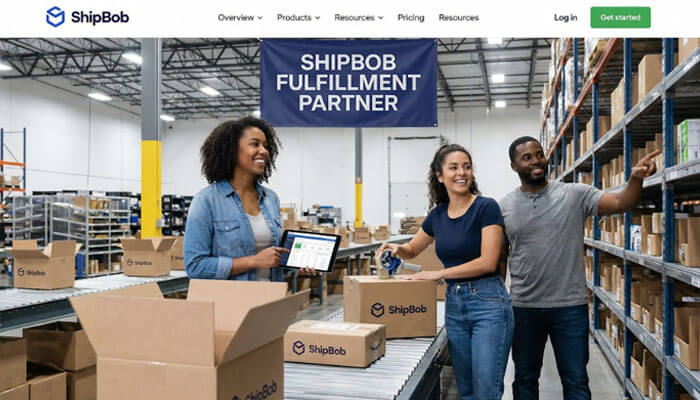
Custom packaging slides neatly into that workflow. Load branded boxes or inserts into ShipBob’s dashboard as SKUs, set clear rules such as “use the cobalt mailer for first-time shoppers,” and the system automates the rest. Pack stations never stop to guess which box fits; algorithms decide, workers pack, trucks roll.
The efficiency shows in the numbers: 99.95 percent order accuracy, transparent landed-cost breakdowns, and real-time low-stock alerts for products and packaging alike. All of it lives in a polished interface that connects to Shopify, Amazon, and dozens of other sales channels in a few clicks.
ShipBob shines for fast-growing DTC brands chasing international reach without enterprise overhead. Plug in, feed the network, and let its software keep every unboxing consistent at scale.
3. ShipMonk: PackSmart automation, subscription savvy
ShipMonk blends robotics on the floor with a white-glove mindset at the pack station. Its PackSmart program sources, stores, and restocks your branded boxes automatically, removing late-night phone calls to a box vendor when inventory thins. Quarterly reviews fine-tune carton sizes so you pay carriers for products, not air.
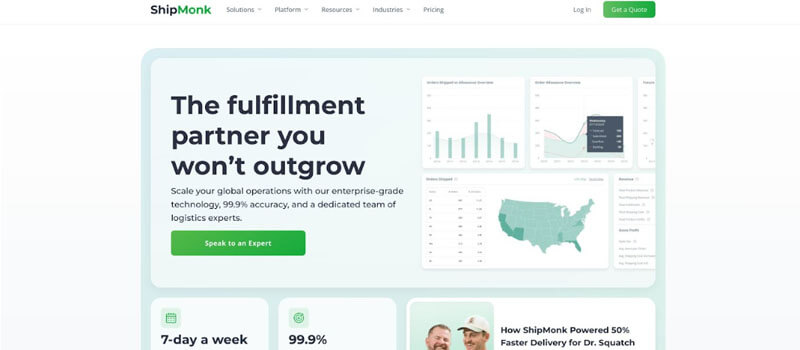
The payoff is tangible. Men’s grooming star Dr. Squatch moved fulfillment to ShipMonk and cut average delivery time from eight days to under four while keeping every shipment on-brand, according to a case study by The Conveyor.
Add a network of U.S. and European warehouses plus 100-plus shopping-cart integrations, and you have a 3PL built for brands racing from Kickstarter buzz to big-box shelves. If you run a subscription box or complex kit, ShipMonk’s assembly lines and error-proof scanning make sure each unboxing lands exactly as planned.
4. The Fulfillment Lab: where marketing meets the pack line
The Fulfillment Lab treats every outgoing box as a micro-campaign. Inside its Tampa hub, packers don’t just grab SKUs; they follow data-driven rules that tell them which insert, label, or sample will resonate with each shopper segment. A first-time buyer might see a thank-you postcard, while a VIP receives a surprise gift card.
That personalization runs on the company’s proprietary GFS portal. You set campaigns the same way you schedule an email blast, and the warehouse executes them with a 99.9 percent accuracy rate. Orders placed by noon ship the same day, preserving the “wow” factor for impatient shoppers.
For beauty, health, and subscription brands that view packaging as an extension of their voice rather than a simple container, TFL delivers boutique creativity without sacrificing speed.
5. Boxzooka: subscription-box flair, eco on tap
Boxzooka knows the choreography of a reveal. Its crews routinely assemble multi-item kits for monthly subscription drops, sliding products into branded cradles so everything nests snugly and photo-ready.
Technology backs the artistry. A live dashboard tracks each component and flags low stock before the next renewal cycle. International buyers aren’t an afterthought either; Boxzooka handles duties, taxes, and country-specific label rules so the same Instagram-worthy package clears customs without drama.
Sustainability weaves through every project. The team favors recycled boards, soy inks, and right-size designs that cut carbon as well as carrier fees. For brands that sell an experience as much as a product, Boxzooka turns cardboard into a conversation starter.
6. Zendbox: premium feel for the UK and beyond
Zendbox treats fulfillment like a concierge service. Your onboarding starts with a packaging audit that checks dimensions, materials, and even paper texture to keep every parcel on-brand while protecting margins.
Warehouses across the UK and mainland EU enable next-day delivery in core markets, a must for cosmetics and supplements where repeat purchases depend on consistency. Because Zendbox stores several branded box sizes for each client, pickers always choose the snug fit, cutting breakage and dimensional surcharges.
Dedicated account managers watch unboxing KPIs the way marketers track click-through rates. If returns rise or social posts flag dents, the team adjusts cushioning or routes before small issues snowball.
For brands built on heritage, craft, or indulgence, Zendbox delivers European speed without losing the gift-like polish customers expect.
7. Fulfyld: one partner from factory floor to front door
Some founders want to offload more than warehousing. Fulfyld steps in upstream, helping source product from vetted factories, designing packaging to match, and then shipping finished goods out of its Alabama hub.
That vertical view pays dividends. Because Fulfyld syncs manufacturing runs with box production, the first shipment arrives at the warehouse already paired with the right carton. You avoid staging delays, repalletizing fees, and surprise duties on forgotten inserts.
Pricing stays simple. A flat per-order fee drops as volumes climb, and you won’t find mysterious zone add-ons lurking in the fine print. For early-stage brands chasing rapid growth, having a single Slack channel where product sourcing, packaging tweaks, and fulfillment questions converge feels like an in-house ops team without the payroll.
8. GEODIS eLogistics: enterprise horsepower, custom touches intact
GEODIS operates on another scale. With hundreds of fulfillment centers in more than 60 countries, the network can stage inventory near virtually any customer cluster you care about. Yet despite that breadth, the company still carves out space for brand-specific details, whether you need kitted influencer launch boxes or compliance inserts in every EU parcel.
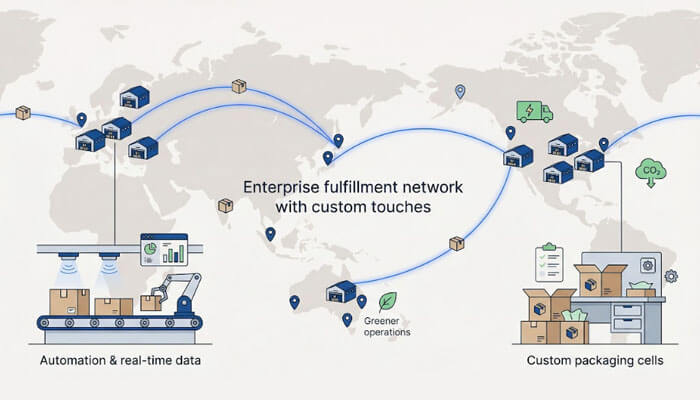
Automation fuels the promise. Conveyor belts size cartons on the fly, robotic arms pick high-velocity SKUs, and dashboards surface lead-time trends so your supply-chain team can pivot before stockouts bite. For sustainability-minded brands, GEODIS brings in packaging engineers who trim grams and millimeters off each design, lowering emissions and freight bills at the same time.
Contracts and onboarding feel more rigorous than with scrappy 3PLs, but once you clear that gate you inherit a global network built for peak-season spikes and multi-language rollouts. If your roadmap includes continental expansion, omnichannel distribution, or retail prep in several regions, GEODIS supplies the infrastructure without muting your packaging voice.
9. DHL Supply Chain: global reach with a greener pulse
DHL’s yellow trucks feel omnipresent for a reason. The logistics giant operates more than 270 e-commerce fulfillment sites worldwide, letting you mirror inventory across continents while still promising two-day delivery in core markets.
Custom packaging slides into that grid through value-added service cells inside each warehouse. Teams build retail-ready kits, attach region-specific labels, or load premium gift boxes without sending freight to a secondary co-packer. Automated cutters trim cartons to order volume, so one SKU can ship in five right-sized boxes instead of a single overbuilt cube.
Sustainability sits at the center. Electric yard tractors, biofuel lanes, and a public pledge to reach net-zero emissions by 2050 give eco-driven brands a supply-chain story that matches their product ethos. If you ship globally at scale and want carbon math, carrier discounts, and custom packaging managed in one dashboard, DHL Supply Chain covers all three.
10. Shipfusion: data-first fulfillment for North America
Shipfusion stakes its claim on software. Every pick path, carton choice, and carrier handoff flows through a proprietary WMS that makes real-time decisions faster than a human can refresh a spreadsheet.
For custom packaging, that precision prevents mishaps. Rules in the dashboard link each product to a branded box or tissue wrap, and scanners flag any mismatch before the tape goes on. You can even store packaging inventory in multiple U.S. and Canadian warehouses, letting the algorithm ship from the closest node while keeping the unboxing identical on both sides of the border.
Mid-sized brands value the balance. You gain enterprise-grade visibility—API hooks, live SLA widgets, automated low-stock alerts—without signing a Fortune 500 contract. If shoppers buy from Toronto today and Los Angeles tomorrow, Shipfusion pivots, making geography a non-issue while your packaging stays perfectly on message.
Quick comparison at a glance
| Provider | Package design in house | Warehouse footprint | Two-day U.S. coverage | Sustainability program |
| Zenpack | Yes | US + Asia | Coastal zones | Strong |
| ShipBob | Assisted | 30+ global sites | Nationwide | Carbon-offset option |
| ShipMonk | Yes | US + EU | Nationwide | Good |
| The Fulfillment Lab | Yes | 1 US site | East-heavy | Basic |
| Boxzooka | Consultative | East + West US | 2–3 days | Strong |
| Zendbox | Yes | UK + EU | UK next-day | Good |
| Fulfyld | Yes | US South | 2–3 days | Optional |
| GEODIS | Yes | 300+ global sites | Nationwide | Enterprise |
| DHL Supply Chain | Yes | 270+ global sites | Nationwide | Net-zero roadmap |
| Shipfusion | Managed | US + Canada | Nationwide | Standard |
Frequently asked questions
When does custom packaging pay off?
Brands usually reach the tipping point at about 500 monthly orders. Below that level, printed stickers or tissue paper add personality without hurting margins. Once you pass 500, purpose-built cartons cut damage claims and dimensional-weight fees, so the math swings in your favor.
Can a fancy box slow shipping times?
Not when design and fulfillment live in the same system. Providers on this list stock your cartons like any other SKU, so a branded box travels down the line as quickly as plain corrugate. Delays appear only when packaging comes from a separate plant.
Does custom packaging raise costs?
Plan on a few extra cents per order for storage and handling. Offset that with higher repeat-purchase rates and fewer returns when products arrive pristine and on-brand. Many sellers net out ahead once carriers charge less for right-sized boxes.
May I keep using Amazon FBA for marketplace sales?
Yes. Most brands run a hybrid setup: FBA for Prime speed and a 3PL from this guide for web-store orders that require an immersive unboxing. The split gives you Amazon reach without giving up brand experience.
How do returns work?
Integrated providers scan each item, grade its condition, and, if it still looks retail-fresh, place it back into inventory with a new branded carton. Your next shopper never sees a scarred box, and you avoid needless write-offs.
Conclusion
Integrated providers that unite packaging design with fulfillment operations help brands cut costs, reduce waste, and deliver a consistent unboxing experience at scale.