
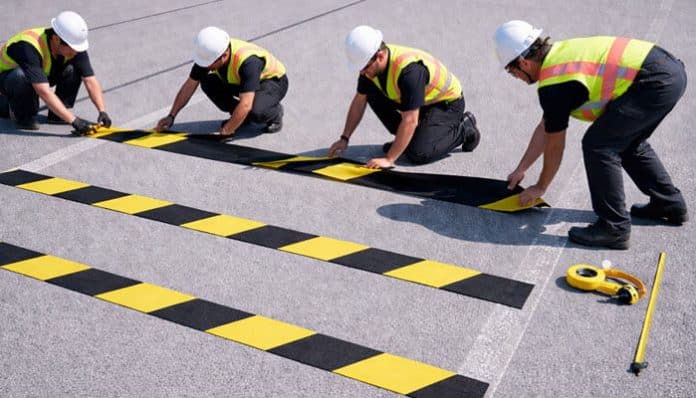

When it comes to improving road safety, traffic engineers and road crews often rely on a range of tools designed to slow vehicles and alert drivers to changes in roadway conditions. Among the most effective of these tools are temporary rumble strips—a simple yet powerful method for increasing driver awareness in high-risk areas. This guide explores what temporary rumble strips are, how they work, and why they matter for both drivers and road managers.
What Are Temporary Rumble Strips?
Temporary rumble strips are raised or grooved patterns added to the road surface that create noise and vibration when a vehicle’s tyres pass over them. Unlike permanent rumble strips, which are installed into the pavement during road construction, temporary versions can be quickly deployed and removed as needed.
Why Use Temporary Rumble Strips?
Temporary rumble strips are especially useful in situations where changing conditions require flexible safety measures. They are often used in:
1. Work Zones
Roadworks frequently alter traffic patterns or narrow lanes. Installing temporary rumble strips before and within work zones helps:
- Alert drivers to upcoming lane shifts
- Encourage speed reduction
- Improve worker safety
2. Event Traffic Management
Large events may create unusual traffic flows. Temporary rumble strips can be deployed to help manage traffic near stadiums, festivals, or parades by slowing vehicles and improving overall control.
3. Incident Response Areas
Accidents or hazards that require temporary rerouting of traffic can benefit from rumble strips. These installations help drivers pay attention when navigating unfamiliar patterns.
4. School and Pedestrian Zones
During specific hours, school zones or pedestrian-heavy areas may become more dangerous. Temporary rumble strips can act as a visual and tactile cue for drivers to slow down and stay alert.
How Do Temporary Rumble Strips Work?
Temporary rumble strips work by introducing a physical stimulus—vibration and noise—that is hard for drivers to ignore. There are two main types:
Raised Rumble Strips
Raised strips sit above the road surface and make direct contact with vehicle tyres. The tactile feedback and sound are especially effective at catching a driver’s attention.
Grooved Rumble Strips
Grooved strips are cut into the road surface, creating a slight depression that also generates vibration and sound. These are often used where raised profiles might be less practical.
Both types are typically spaced to produce a rhythmic pattern that drivers perceive before an upcoming hazard or change in driving conditions.
Key Benefits of Temporary Rumble Strips
1. Increased Driver Awareness
The most immediate benefit is heightened alertness. The combination of noise and vibration signals drivers to pay attention, which can reduce distractions and reaction times.
2. Speed Moderation
By nature, rumble strips encourage slower driving. They are particularly effective in areas where speed reduction is critical but may not yet justify permanent infrastructure changes.
3. Quick Installation and Removal
Unlike permanent solutions, temporary rumble strips can be installed rapidly and relocated as needed. This flexibility makes them ideal for dynamic environments such as construction sites or temporary detours.
4. Cost-Effectiveness
Temporary rumble strips are a budget-friendly option for short-term interventions. They reduce the need for expensive or time-consuming road modifications while still delivering measurable safety improvements.
5. Low Maintenance
Once installed, temporary rumble strips require minimal upkeep. They are designed to withstand regular traffic and can be reused across multiple deployments.
Considerations When Using Temporary Rumble Strips

While the advantages are clear, effective use of temporary rumble strips requires thoughtful planning:
Placement Matters
Rumble strips should be positioned where drivers have enough distance to respond safely without causing abrupt maneuvers. Poor placement can lead to confusion or unintended side effects, such as vehicle instability in certain conditions.
Driver Expectation
Because drivers may not always anticipate rumble strips in every setting, clear signage and warnings are essential. This helps ensure that drivers interpret the cue properly and adjust their behaviour.
Road Surface Compatibility
The condition and material of the existing road surface can influence the effectiveness of temporary rumble strips. Some surfaces may require specific types of strips for optimal performance.
Temporary Rumble Strips in Practice: Common Use Cases
Temporary rumble strips shine in a range of real-world scenarios, including:
- Highway maintenance projects
- Bridge or tunnel access points
- Short-term speed zones near temporary hazards
- Seasonal pedestrian traffic increases
Each of these applications benefits from a safety solution that is both visible and tactile, encouraging drivers to slow down and focus.
Conclusion: A Flexible Tool for Safer Roads
Temporary rumble strips may seem like a small element in the vast toolkit of road safety solutions, but their impact is significant. By combining sensory feedback with strategic placement, they help reduce speed, increase awareness, and ultimately save lives. Whether used in work zones, event areas, or temporary traffic patterns, these strips play an important role in creating safer driving environments.
As traffic conditions and road use continue to evolve, solutions that are adaptable, effective, and driver-friendly—like temporary rumble strips—will remain essential components of modern traffic management.