


Last Updated: September 2026
Cek Bansos Kemensos gives households in Indonesia an official way to check whether their information appears in government social assistance records. The service is operated by the Ministry of Social Affairs, or Kemensos, and uses a 16-digit National Identification Number (NIK) for the search.
The current Cek Bansos portal identifies Data Tunggal Sosial dan Ekonomi Positional (DTSEN) as its data source. It also uses a welfare-ranking system known as desil, which places households into 10 groups based on socioeconomic information.
A result from Cek Bansos Kemensos should not be treated as an automatic guarantee of assistance. Welfare ranking, program rules, government verification, beneficiary allocation, and distribution processes can all affect whether a household actually receives support.
This guide explains how Cek Bansos Kemensos works, how to check your NIK, what DTSEN and desil mean, how to correct inaccurate information, and how to avoid common scams.
Quick Answer
Cek Bansos Kemensos is the official Kemensos service for checking available social assistance beneficiary information.
To perform a basic search, you generally need to:
- Open the official Kemensos portal
- Enter your 16-digit NIK
- Complete the verification code
- Select Cari Data
- Review the result carefully
The system uses DTSEN information and welfare rankings to support social assistance targeting. Appearing in the system or having a low desil does not automatically guarantee a benefit or payment.
What Is Cek Bansos Kemensos?
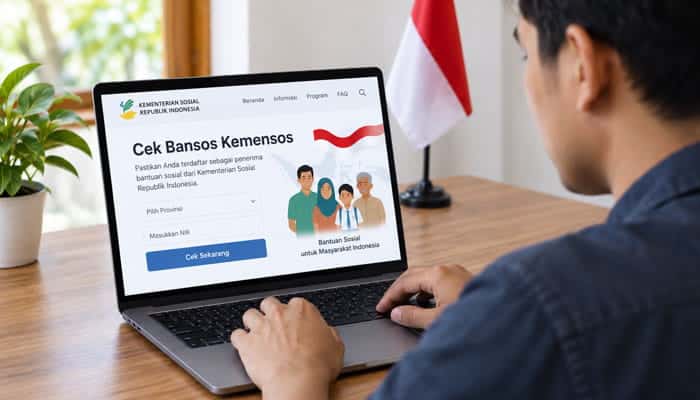
Cek Bansos Kemensos is the Ministry of Social Affairs’ online service for checking information related to social assistance beneficiaries.
The service gives people a direct way to check government information instead of relying on unofficial websites, social media messages, or third parties claiming to know a person’s beneficiary status.
The basic Cek Bansos Kemensos process involves:
- Entering a 16-digit NIK
- Completing the displayed verification code
- Selecting Cari Data
- Reviewing the information returned by the portal
The official website is:
https://cekbansos.kemensos.go.id/
Before entering personal information, make sure the website uses the official kemensos.go.id domain.
What Is DTSEN?
DTSEN stands for Data Tunggal Sosial dan Ekonomi Positional.
The current Cek Bansos Kemensos portal identifies DTSEN as the data source used for its beneficiary search. This is important because some older online guides still focus mainly on older terminology such as DTKS.
DTSEN contains socioeconomic information used to understand household welfare. Relevant information can include:
- Employment
- Education
- Housing conditions
- Electricity capacity
- Asset ownership
- Household circumstances
- Other socioeconomic indicators
Within Cek Bansos Kemensos, this information supports welfare classification and social assistance targeting.
What Does Desil Mean?
A desil is a welfare-ranking category used to group households according to socioeconomic conditions.
The Cek Bansos Kemensos system divides households into 10 deciles. Each group represents about 10% of households nationally.
| Desil | General Welfare Position |
|---|---|
| Desil 1 | Lowest 10% |
| Desil 2 | Next 10% |
| Desil 3 | Next 10% |
| Desil 4 | Next 10% |
| Desil 5 | Next 10% |
| Desil 6 | Next 10% |
| Desil 7 | Next 10% |
| Desil 8 | Next 10% |
| Desil 9 | Next 10% |
| Desil 10 | Highest 10% |
Under the Cek Bansos welfare measurement, Desil 1 represents the lowest 10%, while Desil 10 represents the highest 10%.
Does a Lower Desil Guarantee Assistance?
No. A lower ranking in Cek Bansos Kemensos does not automatically mean a household will receive assistance.
The portal states that:
- Desil 1–4 can be proposed for programs such as PKH and Sembako
- Desil 5 can be proposed for PBI-JK
The key word is proposed.
A household can fall within a relevant desil in Cek Bansos Kemensos and still need to satisfy program rules, government verification, beneficiary allocation, and other applicable requirements.
Desil, Beneficiary Status, and Payment Explained
The information shown through Cek Bansos Kemensos forms only one part of the wider social assistance process.
A simplified process looks like this:
DTSEN data → welfare ranking → program targeting → beneficiary status → assistance distribution
| Term | What It Means |
|---|---|
| DTSEN data | Socioeconomic information used for social and economic targeting |
| Desil | Welfare-ranking category from 1 to 10 |
| Bansos beneficiary | Person or household selected under a specific assistance program |
| Payment or distribution | Actual delivery of assistance after applicable processes |
A household may therefore appear in Cek Bansos without automatically receiving every available assistance program.
Likewise, a welfare ranking should not be interpreted as a confirmed payment.
How to Check Cek Bansos Kemensos Online
Checking Cek Bansos Kemensos online is straightforward when you use the official portal.
Step 1: Open the Official Website
Visit:
https://cekbansos.kemensos.go.id/
Always confirm that the page belongs to the official Kemensos domain before continuing.
Step 2: Enter Your 16-Digit NIK
Type the NIK exactly as it appears on your KTP.
An incorrect digit may prevent Cek Bansos Kemensos from finding the expected information.
Step 3: Enter the Verification Code
Type the verification letters shown on the page.
If the characters are difficult to read, refresh the code and enter the new one.
Step 4: Select “Cari Data”
Click Cari Data to submit your information.
The Cek Bansos Kemensos system will search available beneficiary information associated with the NIK entered.
Step 5: Read the Result Carefully
Do not treat every result as simply “approved” or “rejected.”
A result may provide information related to:
- Welfare classification
- Beneficiary status
- Assistance programs
- Available social assistance records
Always read what the portal actually displays.
What Do You Need to Check Your Status?
A normal Cek Bansos search does not require a complicated set of documents.
Before starting, prepare:
- Your KTP
- Your 16-digit NIK
- Internet access
- Access to the official portal
- The verification code displayed on the website
You should not need to pay someone simply to perform a basic Cek Bansos Kemensos search.
If someone asks for a registration fee before checking your status, verify that request through an official government channel.
What If Your NIK Is Not Found?
If Cek Bansos Kemensos cannot find your NIK, it does not automatically mean you will never qualify for government assistance.
Start with the simplest checks:
- Confirm all 16 NIK digits
- Compare the NIK with your KTP
- Re-enter the verification code
- Refresh the verification image if necessary
- Try the official website again later
If the information is correct but Cek Bansos still shows no matching record, your information may need updating or may not currently appear in the relevant beneficiary data.
Changes involving the following may also affect matching:
- Address
- Household composition
- Identity information
- Employment
- Socioeconomic circumstances
Where necessary, contact your desa/kelurahan or Dinas Sosial about the applicable update process.
Why Might a Household Not Receive Bansos?
Financial difficulty alone does not automatically make a household a beneficiary of every assistance program.
A household may not appear as a recipient in Cek Bansos Kemensos for several reasons, including:
- Socioeconomic information is outdated
- Population data does not match
- Welfare classification has changed
- Program-specific requirements are not met
- Beneficiary allocations have changed
- Government verification is still taking place
- Household information has been corrected or revalidated
For this reason, Cek Bansos Kemensos is better understood as an information-checking service than an automatic approval system.
Why Might a Previous Recipient Stop Appearing?
A household that previously received assistance may later see a different result in Cek Bansos Kemensos.
Possible reasons include:
- Income changes
- Employment changes
- Changes in household members
- Address changes
- Housing changes
- Changes in assets
- Updated program requirements
- Changes in beneficiary allocations
- Data corrections
- Government revalidation
The desil shown through Cek Bansos is dynamic rather than permanently fixed.
If you believe the information is incorrect, use an official correction process instead of relying on claims that a previous benefit will automatically return.
What If Your Household Circumstances Changed?
Recent changes may not immediately appear in Cek Bansos records.
Examples include:
- A household member losing a job
- A new household member being added
- Someone moving away
- Changes in housing conditions
- Changes in assets
- Changes in education
- Other socioeconomic changes
If information used by Cek Bansos Kemensos no longer represents your actual household circumstances, request an update through an appropriate official mechanism.
What If Your Desil Is Incorrect?
The desil shown in Cek Bansos Kemensos is not necessarily permanent.
If your classification does not accurately represent your current circumstances, the portal indicates that information may be updated through:
- Desa or kelurahan
- Dinas Sosial
- The applicable Cek Bansos application mechanism
The Cek Bansos portal also states that welfare rankings may be recalculated periodically by BPS.
This means that a household’s desil can change when the underlying data changes.
Why Can Your Desil Change?
A household’s position in Cek Bansos can change when socioeconomic information changes.
Factors that may affect welfare classification include:
- Employment
- Household membership
- Education
- Housing
- Electricity information
- Asset ownership
- Other socioeconomic indicators
- Corrections to existing records
A different result in Cek Bansos Kemensos does not automatically mean an error has occurred. It may reflect newly processed or updated government information.
How to Correct Incorrect Bansos Data
If information connected to Cek Bansos Kemensos is incorrect, repeatedly running the same online search will not repair the underlying record.
A better approach is to follow the applicable update process.
1. Identify the Incorrect Information
Check whether the problem concerns:
- NIK
- Household members
- Address
- Employment
- Housing
- Welfare ranking
- Socioeconomic information
2. Prepare Supporting Documents
Depending on the issue, you may need:
- KTP
- Kartu Keluarga (KK)
- Population-administration documents
- Other evidence requested by the relevant authority
3. Contact the Relevant Authority
Speak with your desa/kelurahan or Dinas Sosial and explain what appears incorrect.
Ask about the current process for updating the information connected to Cek Bansos Kemensos.
4. Use an Official Update Mechanism
Where applicable, use the official Cek Bansos application or another mechanism provided by the relevant government authority.
5. Allow Time for Verification
After submitting a correction, the record may still need:
- Local verification
- Data synchronization
- Government processing
- Welfare recalculation
- Program-specific review
The public Cek Bansos result may therefore not change immediately.
How Long Does a Data Update Take?
There is no single guaranteed processing time for every update connected to Cek Bansos Kemensos.
Processing can depend on:
- The type of correction
- Supporting documents
- Local verification procedures
- Data synchronization
- Government processing schedules
- The assistance program involved
Because the welfare ranking used by Cek Bansos can be recalculated periodically, submitting a correction should not be interpreted as an immediate change to the online result.
Which Social Assistance Programs Are Relevant?
The Cek Bansos Kemensos system can contain information relevant to several government assistance programs.
Two commonly discussed programs are:
- Program Keluarga Harapan (PKH)
- Program Sembako
- Program rules, beneficiary allocations, and benefit amounts can change over time.
Information shown in Cek Bansos should therefore be interpreted together with current rules for the specific program.
What Is PKH?
Program Keluarga Harapan (PKH) is a conditional social assistance program administered by Kemensos.
It is intended for eligible poor and vulnerable households and is associated with areas such as:
- Health
- Education
- Family welfare
- Social protection
A household’s information in Cek Bansos Kemensos may be relevant to PKH targeting, but a search result does not replace PKH-specific eligibility requirements.
For 2026, Kemensos’ legal database includes regulations and decisions relating to PKH implementation, beneficiary allocation, and benefit amounts.
What Is Program Sembako?
Program Sembako focuses on helping eligible households meet food-related needs.
A household may see information through Cek Bansos Kemensos that is relevant to Program Sembako, but the program has its own rules and beneficiary processes.
PKH and Program Sembako are separate programs.
However, depending on applicable requirements, a household may potentially qualify for more than one form of assistance.
Can a Household Receive More Than One Program?
Potentially, yes.
Different programs associated with Cek Bansos can have different purposes and eligibility rules.
A household should remember three points:
- Receiving one program does not automatically guarantee another
- Receiving one program does not necessarily disqualify the household from every other program
- Each assistance program should be checked separately
This is why Cek Bansos Kemensos should be used together with current information about the specific program.
Checking Status vs Applying for Assistance
Using Cek Bansos Kemensos to search your NIK is primarily a status-checking process.
It does not automatically submit an application for every government social assistance program.
In simple terms:
Checking your status ≠ registering for every program.
If information needs to be added, corrected, or updated, follow the applicable official process rather than assuming that a Cek Bansos search creates a new application.
Does Having a KTP Guarantee Eligibility?
No.
A valid KTP establishes identity, but it does not automatically guarantee a positive result in Cek Bansos Kemensos or eligibility for social assistance.
The system uses NIK for identification while also considering factors such as:
- Socioeconomic information
- Welfare ranking
- Household circumstances
- Program-specific eligibility requirements
KTP ownership alone is therefore not enough to guarantee assistance.
Does Low Income Automatically Guarantee Assistance?
No.
Economic hardship can be important, but Cek Bansos relies on wider welfare information rather than one income figure alone.
Relevant factors can include:
- Employment
- Education
- Housing
- Electricity
- Assets
- Household composition
- Other socioeconomic indicators
This is why two households that appear financially similar may not receive identical results in Cek Bansos Kemensos.
Common Cek Bansos Problems and Solutions
Many common problems can be resolved by checking basic information before requesting further assistance.
| Problem | What to Do |
|---|---|
| NIK not found | Recheck all 16 digits against your KTP |
| Verification code unclear | Refresh the code |
| Website unavailable | Try again later |
| Information outdated | Ask about the official update process |
| Desil appears incorrect | Contact desa/kelurahan or Dinas Sosial |
| Household details changed | Request a data correction |
| No payment despite appearing in records | Check the specific program status |
| Someone requests a registration fee | Verify the request through official channels |
| Someone asks for an OTP | Do not provide it |
| Suspicious link requests personal data | Confirm the official domain first |
These steps can resolve many Cek Bansos Kemensos issues without exposing personal information to unofficial parties.
Cek Bansos Kemensos Scam Warning
Scammers frequently use social assistance programs to create urgency and persuade people to reveal personal information.
Be cautious of messages claiming:
- “You have been selected for bansos”
- “Click here to claim your payment”
- “Your benefit expires today”
- “Pay a registration fee”
- “Send your OTP”
- “Verify your bank account now”
- “Register through WhatsApp”
- “Install this APK to receive assistance”
A normal Cek Bansos Kemensos search should not require your banking password, PIN, or OTP.
Do not assume a website is genuine simply because it displays the Kemensos name, logo, or government-style graphics.
Always verify the official domain.
Should You Give Your NIK to Someone Else?
Your NIK is personal information and should be protected.
If you can use Cek Bansos Kemensos yourself, there is generally no reason to send your KTP photo or NIK to an unknown person offering to perform the search.
Avoid publicly sharing:
- NIK
- KTP photo
- KK photo
- Bank account information
- PIN
- Password
- OTP
Protecting this information is especially important when someone promises that they can guarantee a favorable Cek Bansos result.
What If a Scammer Already Has Your Information?
If you have already sent information to a suspicious person or website, do not provide anything further.
Take these steps:
- Stop communicating with the suspicious account.
- Do not send additional documents.
- Never provide an OTP or password.
- Contact your bank if banking credentials were exposed.
- Keep screenshots and other evidence.
- Report suspicious activity through appropriate official channels.
Do not send additional money because someone threatens to cancel a benefit supposedly connected to Cek Bansos Kemensos.
Important 2026 Update
Older guides may contain outdated terminology, processes, payment figures, or eligibility information.
The current Cek Bansos Kemensos portal identifies DTSEN as its data source and uses a NIK-based search.
Kemensos’ 2026 legal database also includes updated provisions relating to:
- Welfare-ranking determinations
- Changes to welfare classifications
- PKH beneficiary allocations
- PKH benefit amounts
- Program Sembako allocations
- Program Sembako benefits
- The current PKH regulatory framework
For this reason, current official information should take priority over older articles when interpreting a Cek Bansos result.
What Can You Determine From the Search?
A Cek Bansos Kemensos search can help you determine whether information associated with your NIK appears in the available beneficiary-search system.
However, the result alone should not be treated as proof of:
- Guaranteed future payments
- Eligibility for every program
- A permanent welfare ranking
- A specific payment date
- Guaranteed approval after a data correction
- Automatic enrollment in another assistance program
Some questions require program-specific information or confirmation from the relevant government authority.
Example of How to Interpret a Result
Suppose Cek Bansos Kemensos shows that your household belongs to a low welfare decile.
That does not automatically mean:
“My household is guaranteed every government benefit.”
A more accurate interpretation is:
“My household has a welfare classification that may be relevant to social assistance targeting, but eligibility still depends on the requirements of the individual program.”
This distinction helps separate the welfare information shown in Cek Bansos from actual benefit entitlement.
How Often Should You Check Your Status?
There is generally no benefit in checking Cek Bansos Kemensos every few minutes.
If your information has not changed and you have not submitted a correction, repeated searches are unlikely to produce an immediate change.
A better approach is to:
- Check your current status.
- Confirm whether the information is accurate.
- Identify any errors.
- Request a correction when necessary.
- Follow up through the appropriate authority.
- Recheck after a relevant processing period.
This approach is more useful than continuously refreshing the Cek Bansos website.
Cek Bansos Kemensos Checklist
Before using the service, make sure you are prepared.
Before Checking
- Have your KTP ready
- Confirm your 16-digit NIK
- Use the official Kemensos domain
- Avoid unofficial registration links
During the Search
- Enter your NIK carefully
- Complete the verification code
- Select Cari Data
- Review the result closely
If the Information Is Wrong
- Identify the incorrect information
- Prepare supporting documents
- Contact desa/kelurahan or Dinas Sosial
- Use an official update mechanism
- Allow time for verification and recalculation
Protect Your Information
- Never share an OTP
- Never provide your banking PIN
- Keep passwords private
- Do not publish your NIK
- Avoid sending KTP photos to strangers
- Verify links before entering personal information
These precautions make Cek Bansos Kemensos safer and easier to use.
Cek Bansos Kemensos FAQs
1. What Is the Official Cek Bansos Website?
The official Cek Bansos Kemensos website is cekbansos.kemensos.go.id. It allows users to check available social assistance information using their NIK.
2. How Do I Check Cek Bansos Kemensos Using My NIK?
Open the official Cek Bansos portal, enter your 16-digit NIK and verification code, then select Cari Data.
3. What Is DTSEN in Cek Bansos Kemensos?
DTSEN stands for Data Tunggal Sosial dan Ekonomi Positional. The current Cek Bansos portal identifies it as the socioeconomic data source used for beneficiary searches.
4. What Does Desil Mean in Cek Bansos Kemensos?
In Cek Bansos Kemensos, desil refers to a welfare-ranking category. Households are divided into 10 groups ranging from Desil 1 to Desil 10.
5. Which Desil Can Be Proposed for PKH and Sembako?
The Cek Bansos Kemensos portal states that households in Desil 1–4 can be proposed for PKH and Sembako. Placement in these groups does not automatically guarantee assistance.
6. Why Is My NIK Not Found in Cek Bansos Kemensos?
Your NIK may have been entered incorrectly, relevant information may require updating, or your information may not currently appear in the available beneficiary records.
7. Can My Desil Change in Cek Bansos Kemensos?
Yes. The welfare classification shown in Cek Bansos Kemensos is dynamic and may change when socioeconomic information is updated or recalculated.
8. Does Cek Bansos Kemensos Guarantee a Payment Date?
No. A Cek Bansos Kemensos result does not guarantee a specific payment date unless an official source confirms the relevant distribution schedule.
Final thoughts
Cek Bansos Kemensos provides an official way for Indonesian households to check available social assistance information using a 16-digit NIK.
The current system identifies DTSEN as its data source and uses a 10-level welfare classification known as desil. Desil 1–4 may be relevant to programs such as PKH and Sembako, while Desil 5 may be relevant to PBI-JK, subject to applicable requirements.
The most important distinction is that information shown in Cek Bansos Kemensos, welfare classification, beneficiary status, and actual payment are different parts of the social assistance process.
If your information is inaccurate:
- Recheck your NIK
- Identify the incorrect data
- Prepare supporting documents
- Contact the appropriate official authority
- Allow time for verification and recalculation
For 2026 information, rely on current Kemensos rules and official announcements rather than outdated online guides.
Finally, protect your personal information. Use the official website, avoid suspicious registration links, and never share OTPs, banking passwords, or PINs with anyone claiming they can guarantee assistance through Cek Bansos Kemensos.