


Last Updated: September 2026
If you have ever felt like your ears were blocked, underwater, or unable to pop, you know how frustrating eustachian tube dysfunction can be. Pressure, muffled hearing, clicking, popping, and uncertainty can become surprisingly disruptive. When people search for how I cured my eustachian tube dysfunction, they are often looking for one simple remedy that will make the problem disappear. The reality is more complicated.
Eustachian tube dysfunction, or ETD, is not one single condition. It can occur after a cold, with allergies or nasal inflammation, during airplane travel or diving, or because the eustachian tube is not functioning normally for another reason. ETD is commonly described in several clinical patterns, including obstructive or dilatory ETD, baro-challenge-induced ETD, and patulous ETD.
That means there is no universal cure that works for everyone.
The most useful approach is to understand why the symptoms are happening, identify the type of ETD involved, avoid techniques that can make symptoms worse, and know when professional evaluation is necessary.
This guide explains what people commonly mean when searching for how I cured my eustachian tube dysfunction, what may help, what may not, how ETD is diagnosed, how long recovery can take, which conditions can mimic it, and when an ENT specialist should become part of the process.
Quick Answer: How I Cured My Eustachian Tube Dysfunction
The most important lesson is that there is no magical treatment that universally cures ETD. Recovery depends largely on the underlying cause and the type of dysfunction involved.
A sensible approach can include:
- Identifying what triggered the symptoms
- Distinguishing temporary ETD from persistent or recurrent ETD
- Treating relevant nasal or allergy problems
- Using normal swallowing, yawning, and chewing to encourage natural tube opening
- Using pressure-equalization techniques gently rather than forcefully
- Avoiding unnecessary or prolonged medication use
- Monitoring hearing and other symptoms
- Seeking an ENT evaluation when symptoms persist or recur
- Ruling out other conditions that can feel like ETD
The right approach depends on the individual diagnosis.
For someone researching how I cured my eustachian tube dysfunction, the key lesson is therefore not to copy another person’s treatment blindly. Instead, identify the cause, understand the type of ETD involved, and choose an appropriate response.
What Is Eustachian Tube Dysfunction?
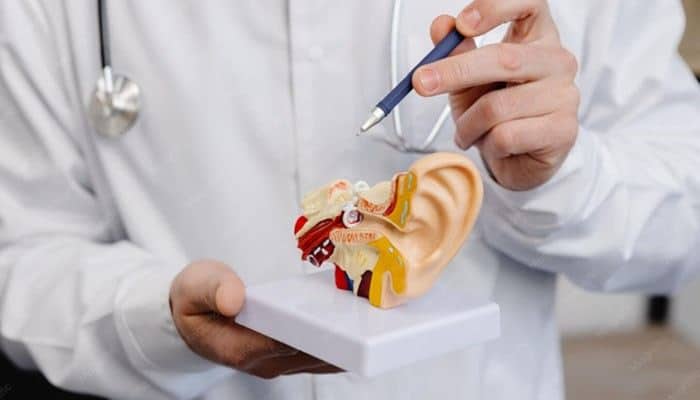
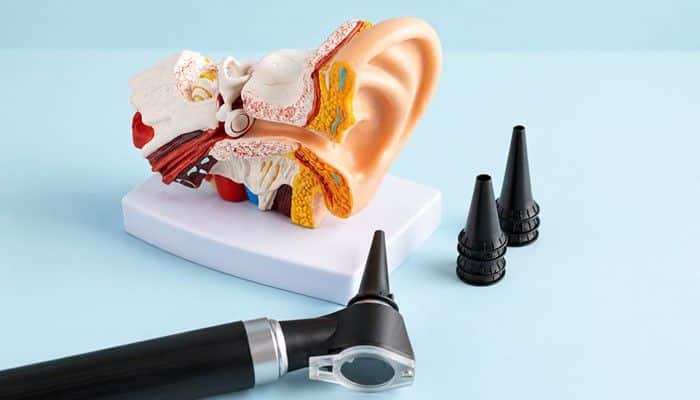
The eustachian tubes are narrow passages connecting the middle ears with the upper throat and back of the nose.
They help:
- Equalize pressure on both sides of the eardrum
- Ventilate the middle ear
- Drain fluid from the middle ear
- Protect the middle ear from pressure and sound changes
The tubes normally remain closed much of the time and briefly open during activities such as swallowing, yawning, and chewing.
When they do not open or close normally, pressure regulation can become abnormal. This can lead to:
- Ear fullness
- A blocked-ear sensation
- Pressure or discomfort
- Muffled hearing
- Popping
- Clicking
- Difficulty equalizing pressure
- Tinnitus
- Mild dizziness or imbalance in some people
Understanding this basic anatomy makes the search for how I cured my eustachian tube dysfunction easier to interpret because the symptoms are connected to how the middle ear regulates pressure.
What Does Eustachian Tube Dysfunction Feel Like?
ETD can feel different from one person to another.
Common symptoms include:
- Ear fullness
- A plugged or blocked feeling
- Pressure in one or both ears
- Muffled hearing
- A sensation that sounds are underwater
- Clicking or popping
- Difficulty clearing pressure
- Tinnitus
- Mild dizziness or imbalance
Symptoms may affect one ear or both.
They may also fluctuate. For example, symptoms can become more noticeable after nasal congestion, during a flight, or when allergies become worse.
Importantly, these symptoms do not prove that ETD is the cause. Several other ear, jaw, and inner-ear conditions can produce similar sensations.
That is an important consideration when reading stories about how I cured my eustachian tube dysfunction, because a person’s symptoms may have had a different underlying cause.
The Main Types of Eustachian Tube Dysfunction
ETD is not one single disorder. It is commonly described in several clinical patterns.
1. Obstructive or Dilatory ETD
Obstructive ETD occurs when the eustachian tube does not open normally.
It may be associated with:
- Colds
- Respiratory infections
- Allergies
- Nasal inflammation
- Sinus problems
- Other upper-airway conditions
People may experience pressure, fullness, muffled hearing, or difficulty equalizing pressure.
For people investigating how I cured my eustachian tube dysfunction, this is one of the most important types to understand because treating the underlying nasal or inflammatory problem may be relevant in some cases.
2. Baro-Challenge-Induced ETD
Baro-challenge-induced ETD mainly causes symptoms when surrounding air pressure changes.
Common triggers include:
- Airplane travel
- Scuba diving
- Rapid altitude changes
- Mountain travel
A person may feel completely normal under ordinary conditions but develop significant pressure or pain during a flight or dive.
This distinction matters because managing pressure-related ETD can be different from managing persistent obstructive ETD.
3. Patulous ETD
Patulous ETD is different from the blocked-ear form.
Instead of failing to open, the eustachian tube remains unusually open.
One characteristic symptom is autophony, in which a person’s own voice or breathing sounds unusually loud or prominent.
This is important because someone with patulous ETD may require a very different approach from someone with obstructive ETD.
The Most Important Lesson About ETD Recovery
The better question is not simply:
“What cures ETD?”
Instead, ask:
- What type of ETD could this be?
- What triggered the symptoms?
- Is there nasal or allergic inflammation?
- Is there middle-ear pressure or fluid?
- Is hearing affected?
- Do symptoms happen mainly during pressure changes?
- Could another condition be causing the ear fullness?
This approach is more useful than repeatedly trying unrelated remedies.
It is also why there is no single formula for how I cured my eustachian tube dysfunction that can safely be applied to everyone.
What Can Cause Eustachian Tube Dysfunction?
ETD can have several possible triggers.
Colds and Respiratory Infections
A cold or respiratory infection can cause swelling and congestion around the nose and eustachian tube opening.
This can make it temporarily more difficult to equalize middle-ear pressure.
Symptoms may improve as the infection and associated inflammation resolve.
Allergies
Allergic rhinitis can cause:
- Nasal congestion
- Swelling
- Increased mucus
- Inflammation around the eustachian tube opening
When allergies contribute to the problem, treating the underlying allergy may be more useful than repeatedly trying to pop the ears.
Sinus and Nasal Inflammation
Persistent nasal inflammation can interfere with normal eustachian tube function.
That is one reason an ENT evaluation may involve examining the nose and throat as well as the ears.
For readers researching how I cured my eustachian tube dysfunction, this reinforces why treating the likely trigger matters more than relying on a generic ear-pressure remedy.
Air Travel and Diving
Rapid changes in atmospheric pressure can challenge the eustachian tubes.
If the tubes cannot equalize pressure quickly enough, ear pressure, fullness, or pain may occur.
Other Medical or Anatomical Factors
Not every case is caused by a simple cold or allergy.
People comparing advice on how I cured my eustachian tube dysfunction should remember that anatomy and other medical factors can change which treatment approach is appropriate.
An ENT may consider other factors involving:
- The nose
- The throat
- The middle ear
- The eustachian tube
- Surrounding anatomy
Temporary ETD vs. Persistent ETD
One of the most useful distinctions is whether the problem is temporary or persistent.
Temporary ETD
Temporary ETD can occur after:
- A cold
- Flu or another respiratory infection
- Allergies
- Nasal congestion
- Air travel
- Diving
It may improve as the underlying trigger resolves.
This is important for anyone searching for how I cured my eustachian tube dysfunction, because some short-term cases may resolve as the underlying illness or inflammation improves rather than because of one specific cure.
Persistent or Recurrent ETD
Persistent symptoms deserve more attention.
If ear pressure, muffled hearing, or other symptoms continue for weeks, repeatedly return, or interfere with daily activities, medical evaluation may be appropriate.
Symptoms that remain troublesome for around three months or longer are especially appropriate for specialist assessment.
The important point is not to assume that every blocked ear will eventually fix itself.
How Is Eustachian Tube Dysfunction Diagnosed?
Symptoms alone do not always prove that you have ETD.
A healthcare professional may examine:
- The ear canal
- The eardrum
- The nose
- The back of the throat
- Hearing function
- Middle-ear pressure
Possible tests include:
| Test or Examination | What It Helps Evaluate |
|---|---|
| Otoscopy | Ear canal and eardrum abnormalities |
| Tympanometry | Middle-ear pressure and eardrum mobility |
| Audiometry | Hearing level and type of hearing loss |
| Nasal examination | Congestion and inflammation |
| Nasal endoscopy | Eustachian tube opening and surrounding anatomy |
| Symptom questionnaires | Patient-reported severity and functional impact |
There is no single perfect test that diagnoses every form of ETD.
Doctors generally combine the symptom pattern, physical examination, and objective test results.
Anyone researching how I cured my eustachian tube dysfunction should keep this diagnostic limitation in mind. Feeling pressure in the ear is not enough to establish the diagnosis.
What Is Tympanometry?
Tympanometry measures how the eardrum and middle ear respond to changes in air pressure.
It can provide information about:
- Abnormal middle-ear pressure
- Reduced eardrum mobility
- Middle-ear fluid
- Other middle-ear problems
It can be particularly useful when symptoms suggest obstructive ETD.
However, a normal tympanogram does not automatically rule out every type of ETD.
For example, someone whose symptoms occur only during flying may have normal testing when they are back at normal atmospheric pressure.
Can You Diagnose ETD at Home?
Not reliably.
You may notice symptoms that are consistent with ETD, but you cannot confirm the diagnosis simply because:
- Your ears feel blocked
- Your ears pop
- Swallowing changes the pressure
- A Valsalva maneuver works
- A nasal spray makes you feel better
Other conditions can produce similar symptoms.
Persistent or unusual symptoms should therefore be evaluated instead of being self-diagnosed indefinitely.
This distinction is especially important when following online advice about how I cured my eustachian tube dysfunction.
Does Being Able to Pop Your Ears Mean Your Eustachian Tubes Are Normal?
No.
Being able to pop your ears does not by itself prove that the eustachian tubes are functioning normally.
Likewise, being unable to pop your ears does not automatically establish that you have ETD.
Pressure-equalization maneuvers may provide clues, but they are not definitive home diagnostic tests.
What Can Help With Ear Pressure?
For mild pressure-related symptoms, simple actions that encourage normal tube opening may help.
Swallowing
Swallowing activates muscles involved in eustachian tube opening.
Drinking water can encourage frequent swallowing.
Yawning
Yawning naturally activates muscles around the eustachian tube.
Chewing Gum
Chewing increases jaw movement and swallowing.
This can be particularly useful during pressure changes associated with flying.
Gentle Pressure Equalization
Some people use techniques such as the Valsalva maneuver to equalize pressure.
The important word is gentle.
The objective is to equalize pressure, not to force the ear to pop.
Do not repeatedly perform forceful Valsalva maneuvers in an attempt to make the ear pop. If the maneuver causes pain, dizziness, or worsening symptoms, stop. If symptoms persist, seek medical advice.
For people searching for how I cured my eustachian tube dysfunction, this is one of the most important safety lessons: more force does not necessarily produce better results.
Valsalva vs. Toynbee: What’s the Difference?
Both techniques can be used to help equalize middle-ear pressure, but they work differently.
| Technique | Basic Action | Potential Use |
|---|---|---|
| Valsalva | Gently attempts to exhale against closed nostrils and mouth | Pressure equalization |
| Toynbee | Swallows while the nostrils are closed | Pressure equalization |
| Swallowing | Normal swallowing without closing the nose | Gentle natural tube opening |
| Yawning | Natural jaw and throat movement | Pressure equalization |
Neither technique should be considered a guaranteed cure.
More force is not better.
How Can You Prevent ETD During a Flight?
Flight-related ear pressure is often associated with changes in cabin pressure, particularly during descent.
Helpful strategies may include:
- Swallowing frequently
- Yawning
- Chewing gum
- Drinking water to encourage swallowing
- Using gentle pressure-equalization techniques when appropriate
- Avoiding forceful attempts to make the ears pop
- Discussing recurrent or severe flight-related symptoms with an ENT
If flying repeatedly causes severe ear pain, prolonged hearing changes, or difficulty equalizing pressure, an evaluation can help determine whether baro-challenge-induced ETD is involved.
This can be particularly useful for someone whose experience of how I cured my eustachian tube dysfunction is mainly related to airplane travel rather than persistent daily symptoms.
What About Nasal Steroid Sprays?
This is an area where online advice can become confusing.
Nasal corticosteroids may be appropriate when someone has allergic rhinitis or another nasal inflammatory condition.
However, that is different from saying that nasal steroids directly cure ETD.
Research has not established nasal corticosteroids as a reliable universal treatment for adult ETD.
The practical takeaway is:
Treat the underlying nasal condition when one exists rather than assuming that every case of ETD requires a steroid spray.
Medication decisions should be discussed with a healthcare professional.
What About Decongestants?
Decongestants may temporarily reduce nasal congestion in some circumstances.
However, they are not a universal treatment for ETD.
They can cause side effects and may be inappropriate for people with certain medical conditions or medication combinations.
Some nasal decongestant sprays can also cause rebound congestion when they are used too frequently or for too long.
For that reason, a decongestant should not be used repeatedly simply because the ears feel blocked.
In a guide centered on how I cured my eustachian tube dysfunction, decongestants are best presented as a possible short-term option in selected situations rather than a cure.
What About Antihistamines?
Antihistamines can be useful when allergies are contributing to nasal symptoms.
However, taking an antihistamine does not automatically mean that the underlying ear problem will disappear.
The important question is whether allergy is actually contributing to the symptoms.
This is another reason why how I cured my eustachian tube dysfunction should not be treated as a one-size-fits-all medication guide.
What About Saline Nasal Spray?
Saline spray or irrigation may help with nasal congestion and mucus.
It can be a supportive measure when nasal symptoms are present.
However, saline is not a proven cure for chronic ETD.
It should be viewed as a way to manage nasal symptoms rather than a guaranteed method of restoring eustachian tube function.
That distinction helps keep how I cured my eustachian tube dysfunction focused on cause-based management rather than on promising that one spray will solve every case.
What About Ear Massage?
Ear and neck massage techniques are widely promoted online.
Some people report temporary relief, but there is not strong evidence that massage permanently cures ETD.
If a technique is painful or makes symptoms worse, stop using it.
A simple approach is preferable to repeatedly experimenting with increasingly aggressive techniques.
What About Supplements or Essential Oils?
Be cautious about claims that supplements, essential oils, or herbal products can cure ETD.
There is no established supplement that universally cures eustachian tube dysfunction.
Putting oils or other substances inside the ear can also create problems, particularly if the eardrum is damaged or perforated.
For an ear condition, “natural” does not automatically mean “safe.”
Why Miracle-Cure Claims Can Be Misleading
Search results are full of claims such as:
- “One exercise cured my ETD.”
- “This oil opened my ears.”
- “This supplement fixed my eustachian tubes.”
- “Do this every day and your ETD will disappear.”
The problem is that ETD has multiple causes and forms.
A treatment that appears helpful to one person may have nothing to do with another person’s diagnosis.
Research into nonsurgical adult ETD treatments has also been limited and inconsistent.
That is why guaranteed-cure claims should be approached cautiously.
A personal recovery story can be useful for understanding one person’s experience, but it should not be treated as proof that the same treatment will work for everyone.
For that reason, how I cured my eustachian tube dysfunction should be read as an educational recovery framework, not as a universal treatment claim.
What Conditions Can Feel Like ETD?
Ear fullness does not automatically mean eustachian tube dysfunction.
Other possible causes include:
| Condition | Possible Overlapping Symptoms |
|---|---|
| Earwax blockage | Fullness and muffled hearing |
| Middle-ear fluid | Pressure and reduced hearing |
| Middle-ear infection | Pain, pressure, and hearing changes |
| TMJ dysfunction | Ear-area pain, clicking, and fullness |
| Inner-ear disorders | Fullness, tinnitus, or dizziness |
| Sudden sensorineural hearing loss | Sudden blocked-ear sensation and hearing reduction |
| Patulous ETD | Autophony and unusually loud breathing or voice |
| Baro-challenge ETD | Symptoms mainly during pressure changes |
This is why persistent symptoms should not automatically be labeled ETD.
Understanding these alternatives is essential for anyone reading how I cured my eustachian tube dysfunction, because a similar sensation can have a completely different cause.
Could TMJ Problems Be Causing Ear Fullness?
Yes.
Temporomandibular joint disorders can cause symptoms around the ear, including:
- Ear-area pain
- Clicking
- Jaw discomfort
- Tinnitus
- Fullness
- Pressure sensations
A useful clue can be whether symptoms change when chewing, clenching, or moving the jaw.
If the ear examination is normal but significant jaw symptoms are present, TMJ dysfunction may deserve consideration.
Can ETD Cause Tinnitus?
ETD can occur alongside tinnitus, but tinnitus has many possible causes.
Persistent tinnitus, particularly when it is one-sided or associated with hearing loss, should not automatically be blamed on ETD.
A hearing evaluation may be appropriate.
Can ETD Cause Dizziness?
Some people report dizziness or imbalance with ETD.
However, significant or persistent vertigo has many possible causes.
Severe dizziness should therefore not simply be attributed to a blocked eustachian tube.
How Long Does Eustachian Tube Dysfunction Take to Heal?
There is no single recovery timeline.
Temporary ETD related to a cold or congestion may improve as the underlying inflammation resolves, sometimes over days or weeks.
Recovery varies considerably depending on:
- The underlying cause
- The type of ETD
- Severity of inflammation
- Presence of middle-ear fluid
- Allergy activity
- Repeated pressure exposure
- Whether another condition is present
- Whether specialist treatment is needed
Other cases can last much longer.
A useful rule is:
Improvement matters more than an arbitrary number of days.
If symptoms are gradually improving, that can be reassuring.
If they remain unchanged, worsen, or repeatedly return, evaluation becomes more important.
This is one of the biggest practical lessons behind how I cured my eustachian tube dysfunction: recovery time should be judged in context rather than against a rigid online timeline.
What Does Chronic ETD Mean?
Chronic ETD generally refers to persistent or recurrent dysfunction rather than a brief episode associated with a cold or pressure change.
The exact definition can vary across studies and clinical settings.
When someone searches how I cured my eustachian tube dysfunction after months of symptoms, the priority should shift from repeated self-treatment toward confirming the diagnosis and underlying cause.
For patients, the practical issue is whether symptoms are:
- Persistent
- Recurrent
- Troublesome
- Affecting hearing
- Affecting quality of life
- Resistant to appropriate conservative measures
When Should You See an ENT?
An ENT specialist may be appropriate when:
- Symptoms persist
- Symptoms repeatedly return
- Hearing remains muffled
- One ear remains consistently blocked
- Ear pressure affects daily activities
- You have recurrent problems when flying
- You have persistent tinnitus
- You experience recurrent middle-ear fluid
- Home measures are not helping
- The diagnosis is uncertain
If symptoms are chronic and troublesome, an ENT can determine whether objective testing is needed.
For anyone trying to understand how I cured my eustachian tube dysfunction, an ENT evaluation can be more valuable than continuing to test random home remedies when symptoms are not improving.
When Is Ear Pressure an Emergency?
Most ETD is not an emergency.
However, certain symptoms should not simply be assumed to be ETD.
Seek prompt medical evaluation for:
- Sudden significant hearing loss
- Severe or rapidly worsening ear pain
- New severe vertigo
- Facial weakness
- Significant neurological symptoms
- Blood or pus draining from the ear
- Severe symptoms after head trauma
What Happens During an ENT Appointment?
An ENT appointment may involve several stages.
1. Medical History
The doctor may ask:
- When did symptoms start?
- Did they follow a cold?
- Do you have allergies?
- Does flying trigger them?
- Is one ear worse?
- Has your hearing changed?
- Do you have tinnitus?
- Do you experience dizziness?
- Can you hear your own breathing?
- Does chewing or jaw movement affect the symptoms?
2. Ear Examination
The doctor examines the ear canal and eardrum.
3. Tympanometry
This checks middle-ear pressure and eardrum movement.
4. Hearing Test
Audiometry determines whether hearing loss is present and helps identify its type.
5. Nasal Examination
The doctor may look for congestion, inflammation, or other nasal conditions.
6. Nasal Endoscopy
In selected cases, an ENT may use a small flexible or rigid endoscope to examine the area around the eustachian tube opening.
7. Additional Testing
Specialized testing may be considered when the diagnosis remains uncertain or when a procedure is being considered.
Does Everyone With ETD Need a CT Scan?
No.
Imaging is not automatically necessary for ordinary ETD.
A CT or other imaging study may be considered when a clinician suspects another structural problem or needs additional information before a particular intervention.
The decision should be based on the individual’s symptoms and clinical findings.
What If ETD Does Not Go Away?
Persistent ETD does not automatically mean that surgery is required.
Treatment depends on the type and cause.
Possible management can include:
- Observation
- Treating allergies
- Managing nasal inflammation
- Treating associated middle-ear disease
- Pressure-equalization strategies
- Hearing monitoring
- Tympanostomy tubes in selected situations
- Balloon dilation for appropriately selected chronic obstructive ETD
The important word is selected.
A procedure designed for obstructive ETD is not automatically appropriate for someone with patulous ETD or another cause of ear fullness.
What Is Balloon Eustachian Tube Dilation?
Balloon eustachian tube dilation, also called balloon eustachian tuboplasty, is a procedure used for selected patients with chronic obstructive ETD.
A small balloon catheter is guided into the eustachian tube and inflated under controlled conditions.
The goal is to improve the function of the obstructed tube.
Research suggests that balloon dilation can improve symptoms in some appropriately selected adults, but the certainty of evidence is not uniformly high and questions remain about long-term outcomes.
It should therefore not be described as a guaranteed cure.
Who May Be Considered for Balloon Dilation?
Patient selection matters.
Balloon dilation is generally considered for people with persistent obstructive ETD after appropriate assessment and, when appropriate, conservative or medical management.
A specialist may consider:
- Duration of symptoms
- Severity
- Quality-of-life impact
- Hearing results
- Tympanometry
- Eardrum findings
- Nasal and nasopharyngeal findings
- ETD subtype
- Response to previous treatment
Someone with patulous ETD should not simply be treated as though they have obstructive ETD.
What Are the Risks of Balloon Dilation?
Balloon dilation is a medical procedure, not a home remedy.
Like other procedures, it has potential risks and is not appropriate for every patient.
The decision should be based on:
- The diagnosis
- Symptoms
- Objective findings
- Anatomy
- Other possible causes
- Expected benefits
- Potential risks
A specialist should determine whether the procedure is appropriate.
Can Balloon Dilation Cure ETD Permanently?
It should not be described as a guaranteed permanent cure.
Evidence supports benefit for some appropriately selected patients with chronic obstructive ETD, but studies vary in design and the certainty of evidence is not the same as proof that every patient will improve permanently.
The most accurate way to describe the procedure is:
Balloon dilation is a treatment option for selected patients with persistent obstructive ETD—not a universal cure for ear pressure.
What About Ear Tubes?
Tympanostomy tubes can provide middle-ear ventilation by creating an alternative pathway through the eardrum.
They may be considered in selected patients, particularly when middle-ear fluid or pressure problems are significant.
However, ear tubes do not necessarily correct the underlying eustachian tube itself.
The decision depends on the diagnosis and clinical situation.
This is another example of why how I cured my eustachian tube dysfunction cannot be reduced to a single procedure that works for every patient.
A Practical ETD Recovery Strategy
If you are dealing with possible ETD, a sensible approach is to work through these steps.
Step 1: Identify the Trigger
Consider whether symptoms followed:
- A cold or allergies
- Sinus congestion
- Air travel or diving
- Another illness
Step 2: Track Your Symptoms
Note:
- Which ear is affected
- Changes in hearing
- Whether swallowing helps
- Pressure-related symptoms
- Tinnitus or dizziness
Step 3: Use Gentle Measures
Try normal swallowing, yawning, chewing, or gentle pressure equalization when appropriate. Avoid aggressively forcing the ears open.
Step 4: Address the Underlying Problem
If allergies or nasal inflammation are contributing, discuss appropriate treatment with a healthcare professional.
Step 5: Allow Temporary Symptoms to Improve
Mild symptoms related to a cold or congestion may improve as the underlying problem resolves.
Step 6: Get Evaluated if Symptoms Persist
If symptoms continue, repeatedly return, or affect hearing, consider seeing a doctor or ENT.
Step 7: Confirm the Diagnosis Before Procedures
Persistent symptoms do not automatically mean balloon dilation or another procedure is needed. The diagnosis and ETD subtype should be established first.
This makes how I cured my eustachian tube dysfunction more useful as a practical framework: identify the trigger, use safe conservative measures, monitor progress, and seek professional evaluation when needed.
Eustachian Tube Dysfunction: What Can Help?
| Approach | When It May Be Useful | Important Limitation |
|---|---|---|
| Swallowing | Mild pressure changes | Not a universal cure |
| Yawning | Pressure equalization | Usually temporary |
| Chewing gum | Flying and pressure changes | Does not treat every cause |
| Gentle Valsalva | Some pressure-related symptoms | Avoid forceful attempts |
| Toynbee maneuver | Pressure equalization | Not a diagnostic test |
| Saline spray | Nasal congestion | Does not directly cure chronic ETD |
| Allergy treatment | Allergy-related symptoms | Depends on the underlying cause |
| Nasal corticosteroids | Certain nasal inflammatory conditions | Not a proven universal ETD cure |
| Decongestants | Selected cases of congestion | Not suitable for everyone |
| Observation | Mild temporary ETD | Persistent symptoms require reassessment |
| Ear tubes | Selected middle-ear ventilation problems | Do not necessarily correct the tube itself |
| Balloon dilation | Selected chronic obstructive ETD | Requires specialist evaluation |
ETD Recovery: What Matters Most?
The most useful question is not simply “What is the best ETD remedy?”
Instead, ask:
“What is causing the symptoms, and is the diagnosis correct?”
| Question | Why It Matters |
|---|---|
| What caused the symptoms? | Determines the treatment direction |
| Is it one ear or both? | Can provide diagnostic clues |
| Is hearing affected? | May require audiometry |
| Does flying trigger symptoms? | May suggest baro-challenge ETD |
| Can you hear your own breathing? | May suggest patulous ETD |
| Are allergies present? | Nasal inflammation may contribute |
| How long has it lasted? | Helps distinguish temporary from persistent disease |
| Is it getting better? | Improvement can be reassuring |
| Is it getting worse? | May require earlier evaluation |
| Could something else be causing it? | Helps prevent incorrect self-diagnosis |
A Simple Eustachian Tube Dysfunction Recovery Checklist
If you have possible ETD, use this checklist to organize your next steps:
- Record when symptoms started.
- Identify any preceding cold or allergy flare.
- Note whether one or both ears are affected.
- Monitor hearing changes, tinnitus, or dizziness.
- Notice whether flying or altitude changes trigger symptoms.
- Try normal swallowing and yawning.
- Use pressure-equalization techniques gently.
- Avoid repeatedly forcing your ears to pop.
- Manage diagnosed allergies or nasal conditions appropriately.
- Seek medical evaluation if symptoms persist.
- Get prompt care for sudden hearing loss or severe symptoms.
Questions to Ask Your ENT
If you see an ENT, consider asking:
- Do my symptoms fit ETD?
- Which type of ETD do I have?
- Is my hearing affected?
- Do I need tympanometry or a hearing test?
- Could allergies or nasal inflammation be contributing?
- Could TMJ dysfunction or another condition explain my symptoms?
- How long should I wait for improvement?
- What treatment is appropriate for my cause?
- Would balloon dilation or another procedure be appropriate?
These questions can make how I cured my eustachian tube dysfunction more actionable by helping you focus on diagnosis, triggers, and appropriate treatment.
Frequently Asked Questions About How I Cured My Eustachian Tube Dysfunction
1. What is the fastest way to get rid of eustachian tube dysfunction?
There is no single fastest treatment for everyone. Temporary ETD may improve as a cold, congestion, or inflammation resolves, while persistent cases may require medical evaluation.
2. Can eustachian tube dysfunction go away on its own?
Yes. Many temporary cases improve without invasive treatment, especially when caused by short-term congestion or illness. Persistent symptoms should be evaluated.
3. Does nasal spray cure eustachian tube dysfunction?
Not necessarily. Nasal sprays may help certain allergies or nasal conditions but should not automatically be considered a direct cure for ETD.
4. Can allergies cause eustachian tube dysfunction?
Yes. Allergic inflammation and nasal congestion can interfere with normal eustachian tube function.
5. Can ETD cause hearing loss?
ETD can cause muffled or reduced hearing when pressure or fluid affects normal eardrum movement. Persistent hearing changes should be evaluated.
6. What is the difference between obstructive and patulous ETD?
Obstructive ETD involves difficulty opening the eustachian tube, while patulous ETD occurs when the tube remains unusually open and may cause autophony.
7. Does everyone with ETD need balloon dilation?
No. Balloon dilation is considered for selected patients with persistent obstructive ETD after appropriate evaluation. It is not necessary for every case.
8. When should I see an ENT for ETD?
Consider seeing an ENT if symptoms persist, repeatedly return, affect hearing, or do not improve as expected. Sudden hearing loss or severe symptoms require prompt medical attention.
Final Thoughts: What I Learned About Eustachian Tube Dysfunction
When people search for how I cured my eustachian tube dysfunction, they often want one simple solution. However, there is no universal cure because ETD can have different causes and forms.
Temporary ETD after a cold may improve as inflammation settles, while allergy-related symptoms may improve when nasal inflammation is managed. Pressure-related ETD may require strategies for flying or diving, whereas persistent obstructive ETD may need an ENT evaluation and, in selected cases, procedural treatment.
The most important lesson is that recovery is not about finding the most aggressive remedy. It is about understanding what is causing the symptoms and choosing an appropriate approach.
For mild, temporary symptoms, simple measures such as swallowing, yawning, and chewing may help while the underlying trigger resolves. If symptoms persist, affect hearing, repeatedly return, or interfere with daily life, professional evaluation is more important.
Sudden hearing loss, severe vertigo, facial weakness, or other serious symptoms should not simply be assumed to be ETD and require prompt medical attention.
The goal is not just to make your ears pop. It is to identify the cause, manage it safely, and know when professional care is needed.