


How often should a business post on Facebook? For most small businesses in 2026, 3–5 high-quality posts per week is a practical starting point. Businesses with larger audiences, stronger content teams, frequent updates, or more original content can test daily posting or even 1–2 posts per day.
That recommendation is deliberately a range rather than a rigid rule.
Current industry guidance varies considerably. Sprout Social suggests many small businesses can perform well with approximately 3–4 valuable posts per week, while Buffer and Hootsuite use around 1–2 Facebook posts per day as broader starting benchmarks when a brand has enough worthwhile content.
The important lesson is that Facebook posting frequency should depend on content quality, audience response, business objectives, Page size, available resources, and measurable results.
Simply publishing more does not automatically mean reaching more customers.
This guide explains how often a business should post on Facebook in 2026, how frequency changes by company type and Page size, how Reels and Stories fit into the schedule, what current benchmark data suggests, and how to find the posting cadence that produces the best business results.
Key Takeaways
- Most small businesses can start with 3–5 Facebook posts per week.
- Daily posting is not necessary for every business.
- Brands with enough quality content can test 1–2 posts per day.
- Frequency should match your audience, industry, resources, and goals.
- Feed posts, Reels, Stories, and Groups may need different schedules.
- Original, useful content matters more than posting volume.
- Use Meta Business Suite data to adjust your schedule.
- Keep paid advertising separate from organic posting frequency.
What Does 2026 Research Say About Facebook Posting Frequency?
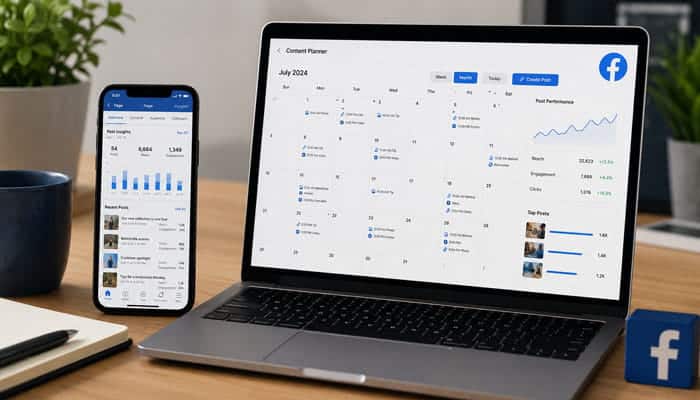
Different studies give different answers because they analyze different Page sizes, industries, audiences, and datasets.
Current Facebook Posting Benchmarks
| Source | Reported Guidance or Benchmark |
|---|---|
| Sprout Social | About 3–4 valuable posts per week for many small businesses |
| Buffer | Around 1–2 Facebook posts per day |
| Hootsuite | Around 1–2 posts per day as a starting benchmark |
| Buffer live benchmark | About 33 Facebook posts per month |
| Socialinsider | About 39 Facebook posts per month |
Sprout Social emphasizes useful content over forced daily publishing, while Buffer and Hootsuite treat 1–2 posts per day as a flexible starting point.
Buffer’s live benchmark reports about 33 posts per month, while Socialinsider reports around 39 monthly posts in its dataset.
These figures show what active brands are doing. They do not mean every business should publish 33–39 times per month.
Average Posting Frequency Is Not the Same as Ideal Frequency
Industry averages show how often businesses publish, not necessarily what produces the best results.
Benchmarks cannot tell you:
- Whether your content is useful
- Whether followers are becoming fatigued
- Whether posts generate leads or sales
- Whether production costs are justified
- Whether fewer, stronger posts would perform better
Use benchmarks as reference points, not mandatory targets.
How Often Should a Business Post on Facebook by Page Size?
Posting frequency can change as an audience grows.
A local Page with 700 followers should not copy the schedule of a major publisher with a full content team.
| Facebook Page Size | Practical Starting Approach |
|---|---|
| Under 1,000 followers | 2–4 posts per week |
| 1,000–5,000 followers | 3–5 posts per week |
| 5,000–10,000 followers | 4–7 posts per week |
| 10,000–50,000 followers | Test 5–7 posts per week |
| 50,000–100,000 followers | Test daily posting |
| 100,000+ followers | Test daily or higher frequency when justified |
These are planning ranges, not Meta requirements.
Larger businesses often publish more because they have more products, locations, campaigns, events, employees, customer stories, and content resources.
Increase frequency when content supply and audience demand increase, not simply because follower count grows.
How Often Should Different Types of Businesses Post on Facebook?
Business type matters just as much as Page size.
Small Businesses
Most small businesses can start with 3–5 posts per week.
| Day | Content |
|---|---|
| Monday | Helpful tip |
| Tuesday | No scheduled Feed post |
| Wednesday | Reel or short video |
| Thursday | Customer story |
| Friday | Product, service, or offer |
| Saturday | Optional community post |
| Sunday | Story or no post |
If you can only produce one or two strong posts each week, focus on quality rather than publishing weak content to fill the calendar.
Local Businesses
Local businesses can generally test 3–5 weekly Feed posts.
Useful topics include:
- Local events
- New products or services
- Staff introductions
- Customer stories
- Opening-hour updates
- Community partnerships
- Behind-the-scenes content
- Limited-time offers
Local businesses benefit from timely, geographically relevant content.
B2B Businesses
Many B2B companies can begin with 2–4 posts per week.
Strong topics include:
- Case studies
- Industry expertise
- Company news
- Recruiting
- Events
- Customer success stories
- Educational videos
Track website visits, leads, registrations, and Messenger inquiries rather than focusing only on likes.
Ecommerce Businesses
Ecommerce brands can test 4–7 Feed posts per week, supported by Stories and Reels.
Content can include:
- Products
- Reviews
- Demonstrations
- Tutorials
- User-generated content
- Comparisons
- New releases
- Offers
Avoid making every post promotional. Mix sales content with education, inspiration, and social proof.
Restaurants and Cafés
Restaurants can often support 3–7 posts per week because they regularly generate fresh visual content.
| Day | Post Idea |
|---|---|
| Monday | Weekly special |
| Tuesday | Staff or kitchen story |
| Wednesday | Popular dish |
| Thursday | Food preparation Reel |
| Friday | Weekend promotion |
| Saturday | Atmosphere or event content |
| Sunday | Upcoming-week teaser |
Daily publishing can work when each post offers something different.
Professional Service Businesses
Law firms, consultants, accountants, insurance companies, and similar businesses can usually begin with 2–4 posts per week.
Useful topics include:
- Common client questions
- Process explanations
- Industry updates
- Case studies
- Staff expertise
- Educational videos
For professional services, authority and trust matter more than posting volume.
Should a Business Post Every Day, Twice a Day, or Less?
Daily posting can work, but it is not mandatory.
The important question is not whether Facebook allows frequent posting.
The question is whether additional posts continue producing useful results.
When Daily Posting Makes Sense
Consider daily posting when:
- Your audience remains engaged
- You have enough original content
- Each post has a clear purpose
- You use different content categories
- Quality remains high
- Total reach increases
- Clicks or conversions increase
- Your team can sustain the workload
Is Posting Twice a Day Too Much?
Not necessarily.
Buffer and Hootsuite both use 1–2 Facebook posts per day as broad benchmarks.
However, a small company currently publishing three posts per week should not automatically jump to 14.
A safer testing sequence is:
- 3 posts per week
- 4 posts per week
- 5 posts per week
- Daily posting
- A second post on selected high-value days
Gradual increases make it easier to identify where additional frequency stops creating meaningful returns.
How Do You Know You Are Posting Too Much?
There is no universal number where a Page suddenly becomes “too active.”
Instead, look for warning signs:
- Declining average reach per post
- Falling engagement
- Repetitive topics
- Reduced click-through rates
- Negative feedback
- More hidden posts
- Audience fatigue
- Lower creative quality
- Flat conversions
- Higher production costs without better results
Posting more can increase total visibility while reducing the performance of each individual post.
That trade-off should be measured rather than assumed.
Does Facebook Posting Frequency Depend on Content Format?
Yes. Posting five times per week should not mean publishing five similar promotional graphics.
Socialinsider’s Q2 2026 benchmark reported these engagement rates:
| Facebook Format | Q2 2026 Engagement Rate |
|---|---|
| Reels | 0.13% |
| Albums | 0.11% |
| Images | 0.10% |
| Status posts | 0.08% |
| Links | 0.05% |
Reels led engagement in that dataset, but results can vary by Page size, audience, content quality, and measurement method.
A balanced weekly mix could look like this:
| Day | Format | Goal |
|---|---|---|
| Monday | Status or question | Conversation |
| Tuesday | Reel | Discovery |
| Wednesday | Album | Product or event storytelling |
| Thursday | Image | Education |
| Friday | Reel or offer | Reach or conversion |
Do not optimize posting frequency without also testing content format.
Are Facebook Reels Important in 2026?
Yes. Meta continues to invest in video recommendations.
In January 2026, Meta reported showing more than 25% more same-day Reels than in Q3 2025. It also said Feed and video ranking improvements contributed to a 7% increase in organic Feed and video views during Q4 2025.
Useful Reel ideas include:
- Quick tutorials
- Product demonstrations
- Before-and-after videos
- FAQs
- Behind-the-scenes clips
- Customer stories
- Event footage
- Product previews
High production value is not always necessary. Clear, useful, and authentic videos can perform well.
Originality Matters More Than Posting Volume
Meta placed stronger emphasis on original content in 2026 while reducing distribution for duplicative or minimally modified material.
Meta also reported that views and watch time for original Facebook Reels roughly doubled in the second half of 2025 compared with the same period in 2024.
For businesses, the principle is simple:
Four original posts can be more valuable than seven copied or low-value posts.
Do not increase frequency at the expense of originality.
Why Spammy Posting Can Hurt Performance
Posting more becomes a problem when businesses try to manipulate reach instead of helping their audience.
Meta has identified tactics such as:
- Excessive hashtags
- Unrelated captions
- Repetitive spam content
- Distracting text
- Coordinated fake engagement
These tactics may reduce reach or affect monetization.
Keep captions natural, relevant, and useful.
Feed Posts, Reels, Stories, Groups, and Ads Need Different Schedules
Facebook surfaces serve different purposes, so they should not all follow one posting schedule.
| Facebook Surface | Suggested Approach |
|---|---|
| Page Feed | Start with 3–5 quality posts weekly |
| Reels | Test 1–3 original videos weekly |
| Stories | Use more often for timely updates |
| Facebook Group | Follow community activity |
| Paid or boosted content | Manage separately from organic posting |
These are planning guidelines, not official Facebook limits.
Facebook Stories
Stories can be posted more frequently because they disappear after 24 hours.
Useful Story content includes:
- Polls
- Quick updates
- New arrivals
- Behind-the-scenes moments
- Event reminders
- Limited-time offers
- Questions
A business might publish four Feed posts per week while using Stories on most days.
Facebook Groups
Group frequency should reflect community activity rather than a fixed Page schedule.
Facebook Group Insights can show:
- Active members
- Comments
- Reactions
- Popular days and times
- Top posts
Active Groups may support daily discussions, while smaller communities may need only a few business-led posts each week.
Avoid filling Groups with promotions.
Paid Facebook Advertising
Paid advertising should be managed separately from organic posting frequency.
Organic posts can support education, trust, community, and customer relationships, while paid campaigns can focus on:
- Leads
- Sales
- Retargeting
- Product launches
- Events
- Conversions
If you publish four organic posts and boost one, you still created four unique Feed posts. The boost changes distribution, not posting frequency.
What Should Businesses Post on Facebook in 2026?
A strong Facebook strategy should mix content with different purposes.
| Content Type | Primary Purpose |
|---|---|
| Educational content | Build authority |
| Reels | Increase discovery |
| Customer stories | Build trust |
| Questions | Start conversations |
| Behind-the-scenes content | Humanize the business |
| Product demonstrations | Explain value |
| Offers | Generate sales |
| FAQs | Remove objections |
| Community content | Strengthen relationships |
| Testimonials | Provide social proof |
| Company updates | Keep customers informed |
| Original analysis | Demonstrate expertise |
| Albums | Tell visual stories |
| Events | Encourage participation |
You do not need every format each week. Choose a few repeatable content pillars.
Example Five-Post Content Mix
- Monday — Education: Answer a customer question.
- Tuesday — Reel: Share a useful demonstration or tip.
- Wednesday — Trust: Publish a testimonial or customer story.
- Thursday — Community: Ask a question or feature your team.
- Friday — Commercial: Promote a product, service, event, or booking.
This keeps the Page useful without making every post feel promotional.
Does Posting More Often Increase Facebook Reach?
Posting more can increase total exposure, but it does not guarantee higher reach per post.
| Metric | 3 Posts/Week | 5 Posts/Week | 7 Posts/Week |
|---|---|---|---|
| Average reach per post | 3,000 | 2,500 | 1,900 |
| Total post impressions* | 9,000 | 12,500 | 13,300 |
| Leads | 9 | 13 | 14 |
| Content production hours | 4 | 7 | 11 |
Seven posts generate the most exposure, but five may offer a better balance between leads and production effort.
That is why businesses should measure marginal returns, not just total post volume.
Incremental Efficiency
A simple calculation is:
Incremental efficiency = Additional business results ÷ Additional posts
| Schedule | Weekly Posts | Leads | Leads per Post |
|---|---|---|---|
| A | 3 | 9 | 3.0 |
| B | 5 | 13 | 2.6 |
| C | 7 | 14 | 2.0 |
Schedule C produces the most leads overall, but moving from five to seven posts adds only one extra lead.
The better question is whether those additional posts are worth the extra time and resources.
That gives a more useful answer to how often should a business post on Facebook than relying on one fixed industry number.
What Is the Best Time to Post on Facebook in 2026?
There is no universal posting time that works for every Page.
Different studies identify different high-performing windows.
Sprout Social’s 2026 analysis found particularly strong Facebook engagement on Tuesdays and Wednesdays during broad afternoon and evening windows.
Buffer’s broader research found different high-performing times within its own dataset.
The disagreement reinforces an important point:
Industry timing benchmarks are starting hypotheses, not guarantees.
Use your own Page performance data whenever possible.
How to Test Your Facebook Posting Frequency
Rather than permanently choosing one posting number, treat frequency as something you can test.
A one-week experiment is usually too short.
One viral Reel, sale, holiday, event, or news story can distort results.
Step 1: Establish a Baseline
Record at least several weeks of current performance.
A 28-day comparison can be useful.
Track your current:
- Posting frequency
- Total reach
- Average reach per post
- Engagement
- Website clicks
- Leads
- Sales
- Production time
Step 2: Change Frequency Gradually
If you currently publish three times per week, test four.
Do not immediately jump from three weekly posts to three daily posts.
Small changes make performance easier to interpret.
Step 3: Keep Other Variables Reasonably Stable
Avoid changing everything simultaneously.
If you change posting frequency, posting time, content type, caption style, and creative design together, you will not know which change produced the result.
A better sequence might be:
- Month 1: Test posting time
- Month 2: Test frequency
- Month 3: Test format mix
Step 4: Track More Than Likes
| Metric | What It Tells You |
|---|---|
| Reach per post | Distribution efficiency |
| Total reach | Overall visibility |
| Reactions | Lightweight engagement |
| Comments | Conversation |
| Shares | Content value and distribution |
| Link clicks | Traffic performance |
| Video views | Video discovery |
| Watch time | Content retention |
| Followers gained | Audience growth |
| Leads | Commercial impact |
| Sales | Revenue impact |
| Cost per post | Production efficiency |
| Leads per post | Conversion efficiency |
Your marketing objective determines which metrics matter most.
Step 5: Know When to Increase Frequency
Consider posting more often when:
- Reach continues growing
- Engagement remains healthy
- Followers are increasing
- You have more original content
- Additional posts produce clicks
- Leads increase
- Sales increase
- Customers actively interact
- Your team has sufficient resources
- Timely information gives you a legitimate reason to post
Increase gradually.
Step 6: Know When to Reduce Frequency
Consider publishing less when:
- Content becomes repetitive
- Average reach consistently declines
- Engagement falls
- Click-through rates decrease
- Production quality suffers
- Your team cannot sustain the schedule
- Promotions dominate the Page
- Additional posts produce no additional conversions
- You are posting simply because the calendar contains an empty slot
Publishing less can improve performance if the saved time helps you create stronger material.
Step 7: Give the Test Enough Time
Avoid judging a new strategy after only a few posts.
Run the new cadence for several weeks and account for:
- Weekdays versus weekends
- Holidays
- Seasonal behavior
- Sales periods
- Viral posts
- Paid campaigns
- Local events
- Product launches
If the period was unusually volatile, extend the comparison.
Engagement Rate Is Useful, but It Is Not Everything
Consider two schedules.
Schedule A
- 3 posts
- 10% engagement rate
- 1 sale
Schedule B
- 6 posts
- 7% engagement rate
- 8 sales
- Schedule A has the higher engagement percentage.
- Schedule B generates more revenue.
- Neither metric is automatically better without knowing the objective.
- A brand-awareness campaign may prioritize reach.
- An ecommerce store may prioritize sales.
- A community organization may value comments and shares.
- A B2B business may care more about qualified leads.
When Should Businesses Temporarily Post More Often?
Posting frequency can increase during periods when your business genuinely has more useful information to share.
Examples include:
- Product launches
- Store openings
- Major sales
- Holiday campaigns
- Events or trade shows
- Fundraisers
- Important announcements
- Seasonal demand
- Limited-time offers
For example, a retailer that normally posts four times per week may increase to five or six during a major launch.
The key is relevance, not simply filling the calendar.
Black Friday and Major Sales
A normal week might include:
- Educational post
- Reel
- Customer story
- Product post
A promotional week could add:
- Sale announcement
- Product guide
- FAQ
- Deadline reminder
- Final-hours reminder
After the campaign, return to your normal schedule and compare the results.
Should You Post the Same Content on Facebook and Instagram?
You can repurpose the same idea without copying the exact post.
For example:
- Facebook Feed: Longer explanation
- Facebook Reel: Short customer video
- Facebook Story: Customer quote
- Instagram Carousel: Visual case study
- Instagram Reel: Short vertical video
Repurposing saves time while allowing each platform to use the format that works best.
Should You Delete Poor-Performing Facebook Posts?
Usually, no.
A weak post can still teach you what did not work.
Check:
- Topic relevance
- Opening
- Visual quality
- Call to action
- Timing
- Promotional tone
- Content format
Delete posts only when there is a real reason, such as incorrect information, legal concerns, privacy issues, or outdated content that could mislead customers.
How Far Ahead Can Facebook Posts Be Scheduled?
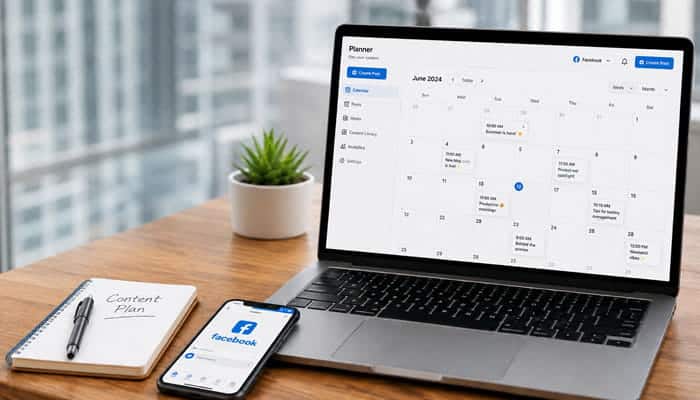
Meta Business Suite allows Page posts to be scheduled up to about 29 days in advance.
A practical workflow is:
- Plan monthly themes.
- Create content weekly.
- Schedule evergreen posts.
- Leave room for timely updates.
- Respond to comments.
- Review performance regularly.
Scheduling improves consistency but should not replace real interaction.
Four-Week Facebook Posting Schedule for Small Businesses
| Week | Monday | Wednesday | Thursday | Friday |
|---|---|---|---|---|
| 1 | Helpful tip | Reel | Testimonial | Offer |
| 2 | FAQ | Behind the scenes | Customer story | Product |
| 3 | Industry insight | Reel | Community post | Promotion |
| 4 | How-to | Team story | Case study | Product demo |
This creates about 16 Feed posts per month.
Stories, Reels, and timely updates can be added when useful.
Seven-Post Weekly Schedule for Larger Teams
| Day | Content |
|---|---|
| Monday | Educational post |
| Tuesday | Reel |
| Wednesday | Customer story |
| Thursday | Product demonstration |
| Friday | Offer |
| Saturday | Behind-the-scenes |
| Sunday | Community or lifestyle post |
Seven posts are not automatically better than four. Compare actual reach, engagement, leads, and conversions.
Common Facebook Posting Frequency Mistakes
- Posting just to stay active without offering useful content
- Publishing too many promotional or sales-focused posts
- Copying a competitor’s posting schedule without considering your own audience
- Increasing posting frequency too quickly
- Ignoring comments and customer conversations
- Reposting low-value or unoriginal content
- Using unrelated captions or too many hashtags
- Focusing only on likes instead of leads, sales, and other business results
- Following the same posting schedule forever without reviewing performance
Facebook Posting Frequency Decision Table
| What You Observe | What to Test Next |
|---|---|
| Strong reach and engagement | Add one weekly post |
| Strong conversions | Maintain or cautiously increase |
| Weak engagement | Improve content before increasing |
| Repetitive posts | Reduce frequency |
| Strong Reel performance | Add more original video |
| Strong weekend response | Test additional weekend content |
| Weak weekend results | Concentrate more on weekdays |
| More posts but flat sales | Review efficiency |
| Customers ask repeated questions | Add FAQ content |
| Promotional posts underperform | Add trust and educational content |
| Team cannot maintain quality | Reduce frequency |
| Stories perform well | Increase Story activity separately |
How Often Should a Business Review Its Facebook Strategy?
A useful review rhythm is:
- Weekly: Review individual post performance.
- Monthly: Review frequency, formats, and content categories.
- Quarterly: Review business impact, conversions, and resource use.
- Annually: Reassess goals, audience, channel role, and overall strategy.
Do not rewrite your strategy after every weak post.
Look for repeated patterns.
Final Thoughts
So, how often should a business post on Facebook?
For most small businesses in 2026, 3–5 high-quality posts per week is a practical starting point. Larger brands with more resources and a steady supply of original content may be able to post once or twice per day.
There is no perfect posting frequency for every business. The right schedule depends on your audience, Page size, industry, content quality, and marketing goals.
The most important rule is simple: do not sacrifice quality just to post more often. Original, useful, and relevant content is more valuable than frequent posts that add little value.
Use Meta Business Suite and your own performance data to track reach, engagement, clicks, leads, and conversions. If additional posts improve results, increase your frequency gradually. If performance drops, focus on stronger content instead of more content.
Ultimately, the best answer to how often should a business post on Facebook is the frequency your business can maintain consistently while continuing to deliver valuable content and measurable results.
Frequently Asked Questions
1. How Often Should a Business Post on Facebook When Starting a New Page?
A new Facebook business Page can start with 2–3 quality posts per week. Focus on introducing the business, answering customer questions, and building a consistent content routine before increasing frequency.
2. Should a Business Post More Often When Facebook Reach Drops?
Not immediately. If reach declines, first review content quality, format, timing, and audience engagement. Posting more weak content may make the problem worse instead of improving visibility.
3. Does the Number of Facebook Followers Affect Posting Frequency?
Yes, it can. Smaller Pages often need fewer posts, while larger brands may have enough audience demand and content resources to publish daily. Increase frequency only when engagement and business results support it.
4. Should Businesses Post on Facebook During Weekends?
Weekend posting can work if your audience is active then. Restaurants, local businesses, entertainment brands, and ecommerce companies may benefit more from weekend content than some B2B companies. Test weekday and weekend performance separately.
5. Do Facebook Stories Count Toward Regular Posting Frequency?
Stories should generally be treated separately from Feed posts. Because Stories disappear after 24 hours, businesses can use them more frequently for quick updates, promotions, polls, events, and behind-the-scenes content.
6. Can Scheduling Facebook Posts Hurt Engagement?
Scheduling itself does not mean a post will perform poorly. What matters more is content relevance, quality, timing, and audience response. Scheduled posts should still be monitored so the business can reply to comments and questions.
7. How Often Should a Business Change Its Facebook Posting Schedule?
Do not change the schedule after one weak post. Review performance regularly and test a new frequency for several weeks before making major adjustments. Look for consistent patterns in reach, engagement, leads, and conversions.
8. How Do You Know the Best Answer to How Often Should a Business Post on Facebook?
Start with a realistic posting range, measure performance, and adjust gradually. The best frequency is the schedule your business can maintain while continuing to publish original, useful content that produces measurable results.