


The maximum dose of ibuprofen in 24 hours is generally 1,200 milligrams for adults and children aged 12 or older using over-the-counter ibuprofen. That equals six standard 200 mg tablets.
A healthcare professional may prescribe up to 3,200 mg per day for certain conditions, but that is a prescription ceiling not a safe self-treatment limit. Higher doses can increase the risks of stomach bleeding, kidney injury, heart attack and stroke without always providing better pain relief.
Current U.S. OTC directions instruct adults and children aged 12 or older to take one 200 mg tablet every four to six hours. Two tablets may be used when one tablet does not relieve the symptoms, but users should not exceed six tablets in 24 hours unless directed by a doctor.
Quick Answer
For most adults and children aged 12 or older using standard OTC ibuprofen:
- Usual single dose: 200–400 mg
- Time between doses: Four to six hours
- Maximum OTC amount: 1,200 mg in 24 hours
- Maximum number of 200 mg tablets: Six
- Prescription ceiling: Up to 3,200 mg per day under medical supervision
- OTC duration limit: No longer than 10 days for pain or three days for fever unless a doctor advises otherwise
The smallest effective dose should be used for the shortest necessary period.
Key Takeaways
- The standard nonprescription limit is 1,200 mg in 24 hours, not 3,200 mg.
- Six 200 mg tablets equal the OTC daily maximum.
- The 3,200 mg figure applies only to prescription treatment selected and monitored by a healthcare professional.
- Both the time between doses and the total number of milligrams matter.
- Taking more than 400 mg at once may not provide better relief for ordinary pain.
- Ibuprofen can be hidden in nighttime, cold, flu and combination pain medicines.
- Children need product-specific, weight-based dosing rather than the adult limit.
- Pregnancy, kidney disease, ulcers, cardiovascular disease and medication interactions can make even a standard dose unsuitable.
- A suspected overdose should be discussed promptly with Poison Control or another healthcare professional.
Maximum Dose of Ibuprofen in 24 Hours at a Glance
| User or product type | Typical dose | Maximum in 24 hours | Important condition |
|---|---|---|---|
| Adults and children 12+ using OTC 200 mg tablets | 200–400 mg every 4–6 hours | 1,200 mg | Follow the product label |
| Adult prescription treatment | Varies by condition | Up to 3,200 mg | Only when specifically prescribed |
| Children under 12 | Based on weight, age and formulation | Product-specific | Follow a children’s label or clinician’s directions |
| Pregnancy at 20 weeks or later | Do not self-treat | Not applicable | Use only when specifically directed |
| People with kidney disease, ulcers or major interactions | May need to avoid ibuprofen | Individualized | Ask a clinician or pharmacist |
The adult OTC and prescription limits should not be treated as interchangeable.
Why Do 1,200 mg and 3,200 mg Both Appear Online?
Search results frequently mention two different maximum amounts:
- 1,200 mg: Maximum labeled amount for ordinary OTC self-treatment
- 3,200 mg: Maximum prescription amount for selected adults under medical supervision
The difference is not simply the strength of the tablet. It reflects different levels of medical assessment, risk management and monitoring.
OTC Maximum: 1,200 mg
Nonprescription ibuprofen is intended for short-term treatment of minor pain and fever.
Common labeled uses include:
- Headache
- Toothache
- Backache
- Muscle pain
- Menstrual cramps
- Minor arthritis pain
- Fever
- Aches associated with the common cold
The OTC label allows one 200 mg tablet every four to six hours. Two tablets may be used when one is insufficient, but the total should not exceed six tablets in 24 hours unless directed by a doctor.
Prescription Maximum: Up to 3,200 mg
Prescription ibuprofen is available in strengths such as 400 mg, 600 mg and 800 mg. A clinician may prescribe larger daily amounts for conditions such as rheumatoid arthritis or osteoarthritis.
Current prescribing information states that the total daily amount should not exceed 3,200 mg. It also emphasizes using the lowest effective dose for the shortest duration and adjusting the dose to the individual patient.
The prescription ceiling does not mean that 3,200 mg is appropriate for every patient. A clinician must consider:
- The condition being treated
- Age
- Kidney and liver function
- Ulcer or bleeding history
- Cardiovascular health
- Other medications
- Treatment duration
- Whether the higher dose provides enough additional benefit
How Many Ibuprofen Tablets Can You Take in 24 Hours?
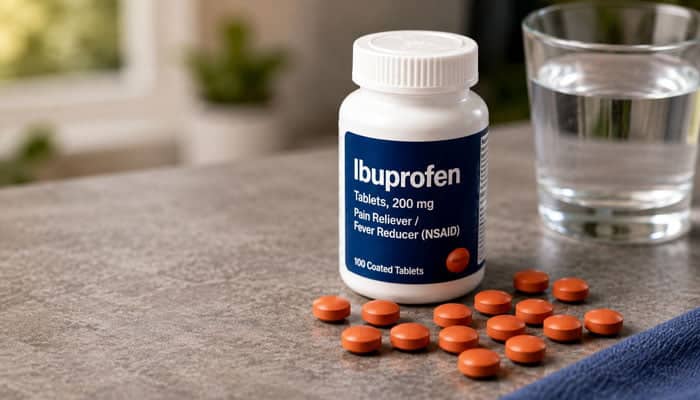
The answer depends on the strength printed on the package.
| Tablet strength | Amount represented | Important note |
|---|---|---|
| 200 mg | Six tablets equal 1,200 mg | Follow the OTC label |
| 400 mg | Three tablets equal 1,200 mg | Usually prescription strength in the U.S. |
| 600 mg | Two tablets equal 1,200 mg | Prescription use only |
| 800 mg | One tablet contains 800 mg | Use only according to the prescription |
This table is a mathematical comparison. It is not a recommendation to split prescription tablets or substitute one strength for another.
Ibuprofen Tablet Calculator
| Number of 200 mg tablets | Total ibuprofen |
|---|---|
| 1 | 200 mg |
| 2 | 400 mg |
| 3 | 600 mg |
| 4 | 800 mg |
| 5 | 1,000 mg |
| 6 | 1,200 mg—OTC maximum |
| 7 | 1,400 mg—above OTC directions |
| 8 | 1,600 mg—above OTC directions |
Counting milligrams is safer than counting only tablets because prescription and combination products can contain different strengths.
How Long Should You Wait Between Ibuprofen Doses?
Adults and children aged 12 or older should generally wait four to six hours between OTC ibuprofen doses.
To stay within the maximum dose of ibuprofen in 24 hours:
- Record the time and amount of each dose.
- Do not take the next dose early.
- Do not double a missed dose.
- Count ibuprofen in combination medicines.
- Follow prescription directions for higher-strength tablets.
Current OTC labeling allows no more than six 200 mg tablets, or 1,200 mg total, within 24 hours unless a doctor advises otherwise.
Safe and Unsafe Ibuprofen Schedule Examples
These examples show how timing and total dosage affect the maximum dose of ibuprofen in 24 hours.
Example 1: 800 mg in 24 Hours
| Time | Dose |
|---|---|
| 8 a.m. | 200 mg |
| 12 p.m. | 200 mg |
| 4 p.m. | 200 mg |
| 8 p.m. | 200 mg |
| Total | 800 mg |
This schedule remains below the 1,200 mg OTC daily limit.
Example 2: Maximum OTC Amount
| Time | Dose |
|---|---|
| 8 a.m. | 400 mg |
| 2 p.m. | 400 mg |
| 8 p.m. | 400 mg |
| Total | 1,200 mg |
This schedule reaches the standard OTC maximum dose of ibuprofen in 24 hours. Do not take additional OTC ibuprofen during that period unless a doctor advises otherwise.
Example 3: 400 mg Every Six Hours
Four 400 mg doses equal:
400 mg × 4 doses = 1,600 mg
Although each dose is separated by six hours, the total exceeds the OTC maximum by 400 mg.
Example 4: Hidden Ibuprofen
A person takes:
- 400 mg in the morning
- 400 mg in the afternoon
- A nighttime medicine containing 400 mg of ibuprofen
The total is 1,200 mg, even though the final dose comes from a differently named product. Always check the active ingredients in combination medicines.
Does the Daily Maximum Reset at Midnight?
No. The maximum dose of ibuprofen in 24 hours should be tracked across the previous 24 hours, not by the calendar day.
For example:
- 400 mg at 6 p.m.
- 400 mg at midnight
- 400 mg at 6 a.m.
That equals 1,200 mg within 12 hours. Taking another OTC dose that morning could exceed the recommended 24-hour limit.
To avoid accidental extra doses, record:
- Product name
- Tablet or liquid strength
- Amount taken
- Time taken
- Other active ingredients
More Ibuprofen Does Not Always Mean Better Pain Relief
Taking more ibuprofen does not always provide better pain relief. In controlled studies, doses above 400 mg were no more effective on average than 400 mg for mild to moderate pain.
Increasing the dose to 600 mg or 800 mg may instead raise the risk of:
- Stomach ulcers
- Gastrointestinal bleeding
- Kidney injury
- Fluid retention
- High blood pressure
- Heart failure
- Heart attack
- Stroke
Staying within the maximum dose of ibuprofen in 24 hours does not eliminate these risks, especially for people with certain health conditions or medication interactions.
Higher prescription doses may be appropriate for some inflammatory conditions, but only under medical supervision. Persistent or severe pain may need diagnosis and different treatment rather than a larger dose.
Common Ibuprofen Dosing Mistakes
Avoid these common errors when following the maximum dose of ibuprofen in 24 hours:
- Treating 3,200 mg as the OTC limit
- Taking 400 mg too frequently
- Using 800 mg without medical advice
- Ignoring tablet strength
- Combining ibuprofen with other NSAIDs
- Missing ibuprofen in combination medicines
- Assuming food prevents serious side effects
- Using OTC ibuprofen longer than directed
Who Should Ask a Doctor Before Taking Ibuprofen?
The standard maximum dose of ibuprofen in 24 hours does not mean that 1,200 mg is appropriate for every person.
Ask a doctor or pharmacist before using ibuprofen if you:
- Are 60 or older
- Have had a stomach ulcer or gastrointestinal bleeding
- Have kidney disease
- Have liver cirrhosis or another serious liver condition
- Have heart disease or heart failure
- Have high blood pressure
- Have previously had a heart attack or stroke
- Have a bleeding disorder
- Have asthma, particularly asthma triggered by aspirin or another NSAID
- Take a diuretic or water pill
- Take anticoagulants or antiplatelet medicines
- Take corticosteroids
- Take certain antidepressants
- Take an ACE inhibitor or angiotensin receptor blocker
- Drink three or more alcoholic beverages daily
- Are pregnant, trying to become pregnant or breastfeeding
- Are planning surgery or a dental procedure
- Are receiving care for another serious condition
Current labeling also states that ibuprofen is contraindicated in the setting of coronary artery bypass graft surgery.
Why Older Adults Need Extra Caution
Adults aged 60 or older have an increased risk of serious stomach or intestinal bleeding from NSAIDs. Age-related changes in kidney function, cardiovascular disease and the use of several medications may add to that risk.
Prescription labeling warns that serious gastrointestinal bleeding, ulceration or perforation can occur at any time, sometimes without warning symptoms. Older patients face a greater risk of serious gastrointestinal events.
A medicine being available without a prescription does not mean that it is equally suitable for every person.
Major Risks of Ibuprofen
Even when you stay within the maximum dose of ibuprofen in 24 hours, serious side effects can occur, especially with higher doses, long-term use or certain health conditions.
Stomach Bleeding and Ulcers
Risk is higher if you:
- Are 60 or older
- Have a history of ulcers or bleeding
- Take blood thinners, steroids or another NSAID
- Drink alcohol regularly
- Take more than directed
Seek urgent care for vomiting blood, black stools, severe stomach pain, weakness or fainting.
Heart Attack, Heart Failure and Stroke
Ibuprofen may increase cardiovascular risk, particularly with larger doses or prolonged use.
Seek emergency help for:
- Chest pain
- Sudden shortness of breath
- One-sided weakness
- Slurred speech
- Sudden swelling or rapid weight gain
Kidney Injury
Risk is higher with dehydration, kidney disease, heart failure or medicines such as ACE inhibitors, ARBs and diuretics.
Stop taking ibuprofen and seek advice for reduced urination, swelling, dark urine, sudden weight gain or unusual tiredness.
Severe Allergic Reaction
Stop taking ibuprofen and seek emergency help for hives, facial or throat swelling, wheezing, breathing difficulty, rash or blisters.
Ibuprofen Drug Interactions
A person can stay below the maximum dose of ibuprofen in 24 hours and still experience a serious drug interaction.
Other NSAIDs
Do not routinely combine ibuprofen with:
- Naproxen
- Diclofenac
- Celecoxib
- Meloxicam
- Ketoprofen
- High-dose aspirin
- Another medicine containing ibuprofen
Combining NSAIDs may increase the likelihood of ulcers, gastrointestinal bleeding, kidney injury and cardiovascular complications.
Blood Thinners and Antiplatelet Medicines
Ibuprofen may increase bleeding risk when combined with anticoagulants or antiplatelet medicines.
Ask a healthcare professional before adding ibuprofen if you take medication because of:
- A previous blood clot
- Atrial fibrillation or another heart-rhythm condition
- A heart attack
- A stroke
- A heart-valve condition
- A coronary stent
- Another cardiovascular procedure
Corticosteroids
Medicines such as prednisone, dexamethasone and methylprednisolone may further increase gastrointestinal risk when combined with an NSAID.
SSRIs and SNRIs
Certain antidepressants may increase bleeding risk when taken with ibuprofen. MedlinePlus advises patients to discuss NSAID use with a healthcare professional when taking selective serotonin reuptake inhibitors or serotonin-norepinephrine reuptake inhibitors.
Blood-Pressure Medicines and Diuretics
Ibuprofen may affect kidney function or blood-pressure control in people taking:
- ACE inhibitors
- Angiotensin receptor blockers
- Diuretics
- Certain heart-failure medicines
The combination is especially concerning during vomiting, diarrhea, fever or poor fluid intake.
Can You Take Ibuprofen With Low-Dose Aspirin?
Ibuprofen may reduce the antiplatelet effect of low-dose aspirin, potentially weakening its protection against heart attack or clot-related stroke.
Even when staying within the maximum dose of ibuprofen in 24 hours, do not combine these medicines without medical advice. Do not stop prescribed aspirin or create your own dosing schedule.
Ask a doctor or pharmacist whether ibuprofen is appropriate based on your:
- Bleeding risk
- Kidney or liver health
- Other medications
- Alcohol use
- Reason for taking aspirin
Hidden Ibuprofen in Combination Medicines
Accidental overdosing can occur when several products contain ibuprofen.
It may appear in medicines for:
- Nighttime pain
- Menstrual symptoms
- Headaches or migraine
- Cold, flu or sinus symptoms
- Prescription pain relief
To stay within the maximum dose of ibuprofen in 24 hours, check the Active ingredient panel instead of relying on the brand name.
Hidden-Ibuprofen Example
| Product taken | Ibuprofen contained |
|---|---|
| Two standard ibuprofen tablets | 400 mg |
| Two more tablets later | 400 mg |
| Nighttime combination medicine | 400 mg |
| Total | 1,200 mg |
This person has reached the OTC daily maximum, even though the final dose came from a different product.
Can You Drink Alcohol While Taking Ibuprofen?
Alcohol can irritate the stomach and increase the risk of gastrointestinal bleeding while taking ibuprofen.
Even when staying within the maximum dose of ibuprofen in 24 hours, risk may be higher if you:
- Drink three or more alcoholic beverages daily
- Have a history of ulcers or bleeding
- Are an older adult
- Take blood thinners, steroids or another NSAID
- Use ibuprofen longer than directed
People who drink regularly, have liver disease or have experienced stomach bleeding should ask a healthcare professional before taking ibuprofen.
Does Taking Ibuprofen With Food Make It Safer?
Taking ibuprofen with food or milk may reduce stomach upset, but it does not prevent:
- Ulcers or gastrointestinal bleeding
- Kidney injury
- Heart attack or stroke
- Harm from excessive dosing
Even when following the maximum dose of ibuprofen in 24 hours, use the smallest effective dose for the shortest necessary time.
Food may improve comfort, but it cannot make an excessive dose safe.
Maximum Dose of Ibuprofen in 24 Hours for Children
The adult 1,200 mg OTC limit does not apply to children under 12. A child’s dose depends mainly on:
- Weight and age
- Product concentration
- Label directions
- Medical conditions and other medicines
Children’s liquid ibuprofen commonly contains 100 mg per 5 mL. Use weight when possible, wait six to eight hours between doses and give no more than four doses in 24 hours unless a clinician advises otherwise.
Children’s Ibuprofen 100 mg per 5 mL Dosing Chart
| Child’s weight | Approximate age | Label dose |
|---|---|---|
| Under 24 lb | Under 2 years | Ask a doctor |
| 24–35 lb | 2–3 years | 5 mL |
| 36–47 lb | 4–5 years | 7.5 mL |
| 48–59 lb | 6–8 years | 10 mL |
| 60–71 lb | 9–10 years | 12.5 mL |
| 72–95 lb | 11 years | 15 mL |
This chart applies only to products containing 100 mg per 5 mL. Follow the label on the exact product being used.
Pediatric Dosing Safety Rules
- Use weight rather than age when possible.
- Check the liquid concentration carefully.
- Use the supplied syringe or dosing cup.
- Never use a kitchen spoon or estimate with adult tablets.
- Do not exceed four doses in 24 hours without medical advice.
- Ask a pharmacist before switching products or formulations.
Infant Drops and Children’s Liquid May Have Different Strengths
Infant drops may contain 50 mg per 1.25 mL, while children’s liquid commonly contains 100 mg per 5 mL. Using the same volume from different products could therefore give the wrong dose.
To avoid exceeding the appropriate maximum dose of ibuprofen in 24 hours for a child:
- Check the concentration on the label.
- Use the measuring device supplied with the bottle.
- Do not transfer dosing instructions between products.
- Ask a pharmacist about an unfamiliar dose or formulation.
Ibuprofen for Babies Under Six Months
Do not give ibuprofen to a baby younger than six months unless a pediatric professional specifically recommends it. The adult maximum dose of ibuprofen in 24 hours never applies to infants.
Contact a pediatric professional if the baby:
- Has a fever
- Is drinking less or producing fewer wet diapers
- Has repeated vomiting or diarrhea
- Appears unusually sleepy
- Has breathing difficulty
- Develops a seizure or concerning rash
Ibuprofen During Pregnancy
Pregnant people should avoid ibuprofen at 20 weeks of pregnancy or later unless a healthcare professional specifically recommends it.
NSAID use from around 20 weeks may affect fetal kidney function and reduce amniotic fluid. After approximately 30 weeks, it may also affect the baby’s heart circulation.
When treatment is medically necessary between 20 and 30 weeks, clinicians generally recommend:
- The lowest effective dose
- The shortest possible treatment period
- Monitoring when treatment continues beyond 48 hours
- Avoiding ibuprofen after approximately 30 weeks
The normal adult maximum dose of ibuprofen in 24 hours should not be used to judge pregnancy safety. The key question is whether ibuprofen is appropriate at all.
Prescribed low-dose aspirin is treated differently and should be used only as directed by a healthcare professional.
Can You Take Ibuprofen While Breastfeeding?
Ibuprofen is generally considered a preferred pain reliever during breastfeeding because only very small amounts enter breast milk.
However, professional guidance may still be needed when:
- The baby was born prematurely
- The baby has kidney or another medical condition
- High or repeated doses are required
- Other medicines are being taken
- Treatment will continue for several days
Follow the label or prescription and do not exceed the maximum dose of ibuprofen in 24 hours simply because it is generally compatible with breastfeeding.
What Happens If You Take Too Much Ibuprofen?

Exceeding the maximum dose of ibuprofen in 24 hours may not cause immediate symptoms. Do not wait for symptoms to become severe before seeking advice.
Possible overdose symptoms include:
- Nausea, vomiting or stomach pain
- Severe tiredness or drowsiness
- Dizziness
- Slow or difficult breathing
- Reduced responsiveness
- Unusual eye movements
- Blue lips or skin
In the United States, contact Poison Control at 1-800-222-1222. People elsewhere should contact their local poison-information service.
What to Do After an Accidental Extra Dose
- Do not take more ibuprofen.
- Check the product name and strength.
- Calculate how much was taken and when.
- Check for ibuprofen or another NSAID in other medicines.
- Keep the packaging available.
- Contact Poison Control when the amount is unknown, a child took it, the label limit was exceeded or symptoms appear.
- Do not make the person vomit unless instructed by a medical professional.
Call Emergency Services Immediately If the Person:
- Collapses or cannot be awakened
- Has a seizure
- Has serious breathing difficulty
- Develops blue lips or skin
- Vomits blood
- Has black or bloody stools
- Shows signs of a heart attack or stroke
Side Effect, Allergic Reaction or Overdose?
| Situation | Possible warning signs | Recommended action |
|---|---|---|
| Ordinary stomach irritation | Mild nausea, heartburn or stomach discomfort | Follow label guidance; ask a pharmacist if symptoms persist |
| Gastrointestinal bleeding | Bloody or coffee-ground vomit, black stool, bloody stool, faintness | Seek urgent medical care |
| Severe allergic reaction | Facial swelling, hives, wheezing, throat swelling, breathing trouble | Seek emergency care |
| Heart attack or stroke warning | Chest pain, shortness of breath, one-sided weakness, slurred speech | Seek emergency care |
| Possible kidney injury | Reduced urination, swelling, sudden weight gain, bloody urine | Stop taking ibuprofen and obtain prompt medical advice |
| Possible overdose | Severe drowsiness, vomiting, breathing changes, seizure or reduced responsiveness | Contact Poison Control or emergency services |
When Should You Stop Taking Ibuprofen?
Stop taking ibuprofen and contact a healthcare professional if:
- Pain worsens or lasts longer than 10 days
- Fever worsens or lasts longer than three days
- Redness, swelling or new symptoms appear
- Stomach pain persists
- You feel faint
- You vomit blood or have black or bloody stools
- You develop chest pain or breathing difficulty
- You experience one-sided weakness or slurred speech
- You notice swelling or reduced urination
- You develop hives, blisters, facial swelling or a severe rash
These warning signs can occur even when staying within the maximum dose of ibuprofen in 24 hours. Persistent pain may signal an injury, infection or another condition that needs medical evaluation.
What Should You Do When the Maximum OTC Dose Is Not Enough?
Do not increase the 1,200 mg OTC limit toward the 3,200 mg prescription maximum without medical advice.
Instead:
- Review the amount and timing of previous doses.
- Check all medicines for hidden ibuprofen.
- Do not add naproxen or another NSAID.
- Ask a pharmacist about drug interactions.
- Use rest, heat or cold when appropriate.
- Seek dental care for severe tooth pain.
- Get medical evaluation after a significant injury.
- Seek urgent care for chest pain, severe abdominal pain, breathing problems or neurological symptoms.
- Ask a clinician whether another treatment would be safer.
Exceeding the maximum dose of ibuprofen in 24 hours may mask the pain without treating its underlying cause.
Maximum Dose of Ibuprofen in 24 Hours FAQs
1. What is the maximum dose of ibuprofen in 24 hours?
For most adults using OTC ibuprofen, the limit is 1,200 mg in 24 hours, equal to six 200 mg tablets. Higher amounts should only be taken when prescribed by a healthcare professional.
2. Is 1,600 mg of ibuprofen in 24 hours too much?
Yes. A 1,600 mg daily total exceeds the OTC limit. Do not take another dose, and contact a pharmacist, clinician or Poison Control if the excess was accidental or symptoms develop.
3. Can I take 800 mg of ibuprofen at once?
An 800 mg dose is prescription strength in the United States. Do not take it without medical direction, especially because doses above 400 mg may not provide better relief for ordinary pain.
4. Can I take four 200 mg ibuprofen tablets together?
Four 200 mg tablets equal 800 mg, which exceeds the usual OTC single dose of 200–400 mg. Take this amount only when specifically instructed by a healthcare professional.
5. Can I take 400 mg of ibuprofen every six hours?
Four 400 mg doses total 1,600 mg, which exceeds the standard OTC maximum dose of ibuprofen in 24 hours. Follow a higher-dose schedule only when prescribed.
6. Is it safe to take ibuprofen every day?
Daily use may increase the risks of stomach bleeding, kidney injury and cardiovascular problems. Seek medical advice if pain lasts more than 10 days or fever lasts more than three days.
7. Does taking ibuprofen with food prevent stomach bleeding?
No. Food or milk may reduce stomach discomfort, but it cannot prevent ulcers or serious gastrointestinal bleeding.
8. Is ibuprofen safe when you are dehydrated?
Dehydration may increase the risk of kidney injury, especially in people with kidney disease or those taking diuretics, ACE inhibitors or ARBs. Ask a healthcare professional before using ibuprofen during vomiting, diarrhea or poor fluid intake.
Conclusion
The standard OTC maximum dose of ibuprofen in 24 hours is 1,200 mg for adults and children aged 12 or older using 200 mg tablets. That equals six tablets. The prescription ceiling of 3,200 mg applies only when a healthcare professional determines that a higher amount is appropriate.
Safe use requires more than counting tablets. Check the strength, leave the required time between doses, review all medicines for hidden ibuprofen and avoid combining NSAIDs. Do not assume that food, midnight or the absence of immediate symptoms makes an excessive amount safe.
Children need product-specific, weight-based dosing. Pregnant people should avoid ibuprofen at 20 weeks or later unless specifically advised by a healthcare professional. People with kidney disease, ulcers, cardiovascular disease, dehydration or interacting medications should obtain professional advice before use.
After a suspected overdose, an unknown exposure or an accidental dose above the product directions, contact Poison Control or another healthcare professional rather than waiting for symptoms.