


Last updated: July 30, 2026
Ahrefs Unlinked Mentions are online references to your company, product, founder, research, tool, or branded asset that do not include a clickable link to your website. Because the publisher already knows your brand well enough to mention it, requesting a relevant source link can be more natural than beginning with a completely cold link-building pitch.
However, the process is not as simple as exporting every mention and sending the same email to hundreds of publishers. Some results refer to another business, appear on weak websites, already contain an indirect link, or provide no useful reason to send readers to your site.
A strong campaign combines discovery, manual verification, quality assessment, destination selection, personalized outreach, technical link checks, and ongoing monitoring. The proposed link should improve the article and help its readers—not merely create an SEO signal.
This guide explains how to find unlinked mentions through Ahrefs Web Explorer and Content Explorer, monitor new references with Alerts, reclaim lost or broken backlinks through Site Explorer, identify image-attribution and competitor opportunities, and connect brand monitoring with AI visibility in 2026.
Quick Answer
To find unlinked brand mentions in Ahrefs Web Explorer, use this search format:
"Your Brand" -outlinkdomain:yourdomain.com -site:yourdomain.com
This query searches for pages containing your brand name while excluding:
- Pages hosted on your own website
- Pages that already link to your domain
For example:
"ExampleCo" -outlinkdomain:example.com -site:example.com
After running the search, apply filters such as language, first-seen date, publication date, Domain Rating, page traffic, and page status. Then open every promising result to confirm that the mention is correct, genuinely unlinked, editorially relevant, and connected to a useful destination on your website.
Ahrefs documents this Web Explorer query as a method for identifying pages that mention a brand without linking to its domain.
Key Takeaways
- An unlinked mention is a brand reference without a clickable link.
- It is different from a lost or broken backlink.
- Search for products, founders, studies, statistics, tools, images, and brand variations—not only the company name.
- Web Explorer can exclude pages already linking to your domain.
- Content Explorer adds content, backlink, author, language, traffic, and date filters.
- Mentions Alerts support ongoing monitoring.
- Relevance, reader value, destination fit, and editorial quality matter more than Domain Rating alone.
- Do not demand exact-match anchors or removal of legitimate
nofollow,ugc, orsponsoredattributes. - Verify every added link for accuracy, crawlability, placement, and long-term availability.
- Brand Radar can complement backlink monitoring by measuring AI mentions, citations, impressions, and AI Share of Voice.
What Is an Unlinked Brand Mention?
An unlinked brand mention occurs when a webpage names a company or branded asset without providing a clickable link to the relevant website.
For example:
ExampleCo helps distributed teams manage projects and deadlines.
When “ExampleCo” appears only as plain text, the page contains an unlinked mention. The same principle applies to products, founders, research reports, statistics, frameworks, tools, events, podcasts, charts, photographs, templates, and product screenshots.
The opportunity exists because the publisher has already created an editorial connection between the brand and the article’s subject.
Types of Unlinked Mentions
| Mention type | Fictional example | Suitable destination |
|---|---|---|
| Company | ExampleCo | Homepage or About page |
| Product | ExampleCo Workspace | Product page |
| Founder | Founder of ExampleCo | Leadership profile |
| Research | ExampleCo Remote Work Report | Original report |
| Statistic | An illustrative ExampleCo survey finding | Methodology or research page |
| Tool | ExampleCo Meeting Calculator | Tool landing page |
| Framework | ExampleCo Workflow Matrix | Framework explanation |
| Event | ExampleCo Productivity Summit | Event page |
| Image | ExampleCo research chart | Original source page |
| Template | ExampleCo planning worksheet | Download page |
Why Ahrefs Unlinked Mentions Are Valuable
Traditional link building often begins with a cold prospect who may have no previous connection to your company. Ahrefs Unlinked Mentions reveal a warmer opportunity because the publisher has already discovered your brand, considered it relevant, and included it in published content.
This does not mean the publisher is obligated to add a backlink. Instead, it gives you a credible reason to contact them and explain how a relevant link could improve the article for readers.
Referral Traffic and Brand Discovery
A direct link allows readers to visit the company, product, report, or tool being discussed without leaving the article to perform a separate search.
Without a clickable link, readers may:
- Abandon the search
- Visit an outdated profile
- Reach an unauthorized reseller
- Open a social media account instead of the official website
- Confuse your brand with a similarly named company
By converting Ahrefs Unlinked Mentions into relevant links, businesses can make brand discovery easier and create a clearer path for qualified referral traffic.
Source Verification
Links are especially useful when an article references:
- Original research
- Survey findings
- Pricing information
- Technical documentation
- Product specifications
- Methodology
- Charts
- Datasets
A source link allows readers to review the original evidence instead of relying entirely on the publisher’s summary. This can improve transparency, accuracy, and trust.
Contextually Relevant Backlinks
The strongest unlinked-mention opportunities already contain a natural editorial reason to link.
For example:
- A report title can link to the full research report.
- A product name can link to the relevant product page.
- A statistic can link to the original methodology.
- An expert quote can link to a professional profile or interview.
- A tool mention can link directly to the tool’s landing page.
This makes Ahrefs Unlinked Mentions valuable because the backlink can fit naturally within the existing content instead of being forced into an unrelated paragraph.
Publisher Relationships
Thoughtful outreach can also help build long-term relationships with:
- Journalists
- Editors
- Reviewers
- Industry analysts
- Researchers
- Bloggers
- Newsletter writers
- Podcast hosts
Even when a publisher does not add the requested link, they may remember your company for future articles, product comparisons, interviews, research citations, or expert commentary.
For this reason, an Ahrefs Unlinked Mentions campaign should be treated as both a link-building strategy and a digital PR opportunity.
Ahrefs Unlinked Mentions vs. Link Reclamation
An unlinked mention is not technically the same as a lost or broken backlink. You cannot reclaim a link that never existed.
| Opportunity | What happened | Recommended action |
|---|---|---|
| Unlinked brand mention | A publisher named your brand but never linked to it | Request a relevant editorial link |
| Lost backlink | A page previously linked to your site but the link disappeared | Investigate the loss and request restoration when appropriate |
| Broken backlink | An incoming link points to an unavailable URL | Restore the page or use a relevant redirect |
| Incorrect destination | A link points to an old page, social profile, or raw image file | Suggest a more useful destination |
| Improper image attribution | A publisher uses your visual without linking to its source | Request appropriate source attribution |
| Competitor mention gap | A page discusses competitors but excludes your brand | Pitch your brand only when it genuinely fits |
Each opportunity requires different outreach. An unlinked-mention request should explain why a source link helps readers. A broken-link message should identify the unavailable destination and provide an accurate replacement. A competitor-gap pitch must demonstrate why the product deserves independent consideration.
How to Find Lost Backlinks
- Enter your domain in Ahrefs Site Explorer.
- Open the Backlinks report and select the lost-link view.
- Filter by the relevant loss reason.
- Open the referring page manually.
- Check whether the page redirected, became unavailable, changed its canonical, received a
noindexdirective, or removed the link. - Contact the publisher only when restoring the link remains accurate and useful.
How to Find Broken Backlinks
Use the Broken Backlinks report in Site Explorer or open Best by Links and filter for 404 pages. For a valuable broken target, restore or update the original content, redirect it to a closely relevant replacement, or contact the referring publisher with the correct URL.
Do not redirect every deleted page to the homepage. The replacement should satisfy the intent of the original link.
Which Ahrefs Tools Should You Use?
Different Ahrefs tools support each stage of an Ahrefs Unlinked Mentions campaign.
| Ahrefs tool | Best use | Main advantage |
|---|---|---|
| Web Explorer | Finding unlinked mentions | Excludes pages already linking to your domain |
| Content Explorer | Filtering prospects | Offers detailed SEO and content filters |
| Mentions Alerts | Monitoring new mentions | Sends automatic mention reports |
| Site Explorer | Validating and reclaiming links | Shows existing, lost, and broken backlinks |
| Brand Radar | Tracking AI visibility | Measures mentions, citations, and Share of Voice |
| Batch Analysis | Reviewing multiple prospects | Compares URL and domain metrics quickly |
For the best results, discover Ahrefs Unlinked Mentions with Web Explorer or Content Explorer, monitor them with Alerts, validate backlinks in Site Explorer, and review broader visibility with Brand Radar.
Before Searching: Build a Brand-Entity Inventory
Before searching for Ahrefs Unlinked Mentions, create a list of all distinctive entities connected to your business. Searching only for the official company name may miss valuable opportunities.
Include Core Brand Terms
Add:
- Official company name
- Domain name
- Former names
- Abbreviations
- Common misspellings
- Regional versions
- Subsidiaries
- Previous domains
Example:
- ExampleCo
- Example Co
- ExampleCo.com
- ExamplCo
- ExampleCo Software
Add Products, People, and Original Assets
Include product names, tools, reports, templates, founders, executives, statistics, charts, branded frameworks, calculators, and original research.
For common names, combine the person with the brand:
"ExampleCo founder" +"ExampleCo"
Exclude Owned Domains
Exclude your main website, subdomains, support center, documentation site, careers page, community forum, regional domains, and company-owned publications.
This keeps your Ahrefs Unlinked Mentions results focused on genuine third-party opportunities.
How to Find Ahrefs Unlinked Mentions
Method 1: Use Web Explorer
Web Explorer is the fastest way to find pages that mention a brand without linking to its domain.
Use:
"Your Brand" -outlinkdomain:yourdomain.com -site:yourdomain.com
Example:
"ExampleCo" -outlinkdomain:example.com -site:example.com
| Query part | Purpose |
|---|---|
"ExampleCo" |
Finds the exact brand phrase |
-outlinkdomain:example.com |
Excludes pages already linking to the domain |
-site:example.com |
Excludes the company’s own website |
Apply filters such as language, publication date, first-seen date, page traffic, DR, and page status. Review one page per domain initially, remove duplicate or scraped results, and save the search for regular monitoring.
Method 2: Use Content Explorer
Content Explorer is useful for filtering and exporting Ahrefs Unlinked Mentions prospects.
Search:
"Your Brand" -site:yourdomain.com
Example:
"ExampleCo" -site:example.com
Use filters such as:
- Target language
- Recent publication date
- Live pages
- Estimated traffic
- Modest DR threshold
- One page per domain
Enable Highlight unlinked domains to identify websites that Ahrefs has not found linking to your target.
Remember:
- An unlinked domain has no detected backlink to your target.
- An unlinked page mention refers to your brand without linking from that specific page.
Always open and verify each result before exporting or contacting the publisher.
Method 3: Set Up Mentions Alerts
Mentions Alerts help you find new Ahrefs Unlinked Mentions automatically.
To create an alert:
- Open Ahrefs Alerts.
- Select Mentions.
- Enter the brand or entity query.
- Choose title, content, or both.
- Select the language.
- Exclude owned domains.
- Add traffic or DR filters if needed.
- Choose the reporting frequency.
- Save the alert.
Create separate alerts for your company name, products, founders, reports, statistics, misspellings, and competitors. Focused alerts are easier to review than one large query.
Advanced Ahrefs Unlinked Mentions Search Queries
A single brand-name search may miss valuable Ahrefs Unlinked Mentions. Use these query templates to find products, founders, research, statistics, and competitor opportunities.
| Objective | Example query |
|---|---|
| Exact brand mentions | "Your Brand" -site:yourdomain.com |
| Web Explorer search | "Your Brand" -outlinkdomain:yourdomain.com -site:yourdomain.com |
| Brand variations | ("Your Brand" OR "YourBrand" OR "Misspelling") -site:yourdomain.com |
| Product mentions | "Product Name" -site:yourdomain.com |
| Founder mentions | "Founder Name" +"Your Brand" -site:yourdomain.com |
| Report citations | "Exact Report Title" -site:yourdomain.com |
| Statistic citations | "Distinctive statistic or sentence" -site:yourdomain.com |
| Branded framework | "Framework Name" -site:yourdomain.com |
| Exclude unrelated results | "Your Brand" -music -fitness -location |
| Title mentions | title:"Your Brand" -site:yourdomain.com |
| Competitor gaps | +"Competitor A" +"Competitor B" -"Your Brand" |
| Reviews and comparisons | "Your Brand" +(review OR comparison OR alternatives) |
Search for Distinctive Statistics
Publishers may quote your data without naming the original report. Search the exact sentence or combine the statistic with its topic:
"Sixty-three percent of surveyed teams reduced meeting time"
+"63%" +"meeting time" +"remote teams"
When your organization created the data, recommend the original research or methodology page rather than the homepage.
Begin Broad, Then Apply Filters
Start with the company name, products, founders, misspellings, statistics, and branded assets. Next, exclude owned domains and unrelated meanings before applying language, date, traffic, or DR filters.
This approach helps uncover more relevant Ahrefs Unlinked Mentions without excluding valuable specialist or newer publications too early.
Manually Verify Every Mention
Ahrefs can accelerate discovery, but it cannot determine whether every result deserves outreach.
Open the page and search for:
- Company name
- Product name
- Domain
- Founder
- Report title
- Linked images
- Footnotes
- Reference sections
- Shortened URLs
- Redirects
- Social profiles
- Application-store pages
A page may already link to:
- Your LinkedIn profile
- A social account
- An application marketplace
- An affiliate URL
- A tracking link
- An old domain
- A subdomain
- A distributor
- A raw image file
Determine whether replacing or supplementing that destination would genuinely improve the reader’s experience.
How to Identify a High-Quality Backlink Opportunity
Not every result found through Ahrefs Unlinked Mentions is worth pursuing. Evaluate each page using relevance, reader value, page quality, placement, destination fit, and reputation.
1. Confirm the Correct Entity
Read the surrounding text to ensure the mention refers to your company, product, founder, or research—not another business, person, location, or similarly named product.
2. Check Topical Relevance
The page should have a natural reason to mention your brand. A project-management tool in an article about remote work is relevant; the same name on a random auto-generated page is not.
3. Focus on Reader Value
Ask whether the link would help readers:
- Verify research or statistics
- Check product details
- Access a tool or template
- Visit the referenced product
- Learn more about a quoted expert
Reader usefulness should be the main reason for outreach.
4. Use DR and UR Carefully
Domain Rating measures a domain’s backlink strength, while URL Rating evaluates an individual page. Neither metric alone proves quality.
Also review:
- Estimated traffic
- Referring domains
- Ranking keywords
- Publication date
- Update frequency
- Internal links
- Page visibility
5. Review Link Placement
A contextual link within the main article is generally more useful than one in a footer, sidebar, comment, tag archive, biography, or unrelated directory.
6. Inspect Website Quality
Avoid websites with copied content, fake authors, unrelated topics, obvious link selling, deceptive redirects, malware, excessive commercial anchors, or automatically generated pages.
7. Choose the Best Destination
| Mention context | Recommended destination |
|---|---|
| General company reference | Homepage or About page |
| Product or feature | Product or feature page |
| Research finding | Original study |
| Statistic | Methodology or data page |
| Founder or expert | Profile or original interview |
| Tool | Tool landing page |
| Template | Download page |
| Event | Event page |
| Chart | Original report |
The destination should answer the reader’s most likely next question.
8. Consider Recency and Reputation
Recent articles may be easier to update, but older pages can still be valuable when they rank, receive traffic, attract links, or are regularly maintained.
For a successful Ahrefs Unlinked Mentions campaign, avoid pages connected to spam, fraud, malware, misinformation, fake reviews, link networks, or other serious reputation risks.
An Ahrefs Unlinked Mentions Priority Score
Use this scoring framework to prioritize the best Ahrefs Unlinked Mentions prospects before beginning outreach.
| Factor | Maximum score |
|---|---|
| Strong topical relevance | 3 |
| Link clearly benefits readers | 3 |
| Page has traffic or rankings | 2 |
| Credible publisher or author | 2 |
| Mention is prominent | 2 |
| Content is recent or maintained | 2 |
| Website has not linked before | 1 |
| Strong page-level authority | 1 |
| Reputation or spam risk | 0 to -4 |
| Total score | Recommended action |
|---|---|
| 13–16 | Contact promptly |
| 9–12 | Strong prospect |
| 6–8 | Review selectively |
| 3–5 | Low priority |
| Below 3 | Skip |
This Ahrefs Unlinked Mentions scoring system gives greater weight to topical relevance and reader value than to authority metrics alone.
Recommended Prospect-Review Process
Before outreach:
- Open and inspect the live page.
- Confirm that the mention refers to the correct entity.
- Check whether the page already links to an owned property.
- Evaluate the publisher, context, and proposed destination.
- Remove syndicated, duplicated, spammy, or low-quality pages.
- Record how the proposed link would help readers.
When no clear editorial benefit exists, do not treat the page as a qualified Ahrefs Unlinked Mentions opportunity.
Find Unlinked Images, Charts, and Original Data
Ahrefs Unlinked Mentions can also include reused charts, infographics, screenshots, maps, photographs, templates, or diagrams that do not link to the original source.
How to Find Unlinked Image Uses
- List your original visual assets.
- Prioritize charts and images likely to be reused.
- Run reverse-image searches.
- Open the matching pages.
- Confirm ownership and check the attribution.
- Verify whether the credit is clickable.
- Request a source link only when it helps readers understand the asset or supporting data.
| Visual type | Recommended destination |
|---|---|
| Research chart or survey graph | Full report or methodology |
| Product photograph | Product page |
| Infographic | Complete infographic page |
| Template preview | Template download page |
| Screenshot | Product feature page |
| Map | Original dataset or interactive map |
| Framework diagram | Framework explanation |
Image-Attribution Outreach Template
Subject: Source for the chart in your article
Hi [Name],
I noticed that your article about [topic] includes our chart showing [brief description].
The original chart, data, and methodology are available here:
[URL]
Would you consider adding that page as the source? It would help readers review the complete findings.
Thank you,
[Name]
Keep routine Ahrefs Unlinked Mentions attribution requests professional. Serious copyright or unauthorized commercial-use issues may require legal review instead of standard SEO outreach.
Find Competitor Mention Gaps With Ahrefs
Competitor mention gaps are related to Ahrefs Unlinked Mentions, but the page names competing brands without mentioning your company.
Use:
+"Competitor A" +"Competitor B" -"Your Brand"
This can uncover:
- Product comparisons
- “Best” lists
- Alternative pages
- Buying guides
- Industry reports
- Vendor directories
- Resource collections
Before outreach, confirm that your product matches the article’s criteria, serves the intended audience, is available in the relevant market, and would genuinely improve the reader’s options.
Competitor-Gap Outreach Template
Subject: Possible addition to your [category] comparison
Hi [Name],
I read your comparison of [Competitor A] and [Competitor B], especially the section about [specific feature].
You may also want to evaluate [Your Brand], which offers [relevant capability].
The most useful information is available here:
[URL]
I can provide verified specifications, screenshots, or product access for an independent review.
Best,
[Name]
Treat competitor gaps as a separate opportunity from Ahrefs Unlinked Mentions. The publisher should always retain full editorial control.
Find the Right Outreach Contact
Contact the person most likely to edit the article:
- Author
- Section or managing editor
- Content manager
- Website owner
- Editorial inbox or contact form
Find details on the author bio, editorial page, About page, LinkedIn, company directory, or newsletter reply address.
Avoid contacting several people at the same publication at once.
How to Write an Effective Outreach Email
A successful Ahrefs Unlinked Mentions outreach email should be brief, specific, useful, and respectful of the publisher’s editorial independence.
Include:
- The article title
- The exact brand mention
- Where the mention appears
- The recommended destination URL
- A clear reader benefit
- A polite request
Avoid long introductions, Domain Rating claims, demands for “dofollow” links, keyword-heavy anchor text, artificial urgency, payment offers, and generic praise.
Template 1: General Brand Mention
Subject: Small source suggestion for your [topic] article
Hi [Name],
I was reading your article about [topic] and noticed that you mentioned [Brand] in the section covering [specific subject].
Would you consider linking the mention to [URL]? It would give readers a direct way to find the company or product you referenced.
Either way, thank you for including us.
Best,
[Name]
Template 2: Original Research or Statistic
Subject: Original source for the statistic
Hi [Name],
Thank you for referencing our [report name] in “[Article Title].”
The complete data and methodology are available here:
[URL]
Would you consider linking the statistic to the original source? It may help readers review the findings and understand how the result was calculated.
Thank you,
[Name]
Template 3: Outdated Information
Subject: Small update for your [topic] article
Hi [Name],
Thank you for mentioning [Brand] in your article about [topic].
The section currently states [outdated detail]. That information changed on [date], and the current details are available here:
[URL]
Would you consider updating the statement and linking to the current source?
Best,
[Name]
Use correction outreach only when the information is genuinely outdated or inaccurate. A strong Ahrefs Unlinked Mentions email should focus on improving the article for readers rather than simply requesting SEO value.
Should You Request Specific Anchor Text?
In most cases, allow the publisher to choose the wording.
Natural anchor text may include:
- Brand name
- Product name
- Report title
- Founder name
- Original research
- Full report
- Source data
- Existing descriptive text
Avoid requesting keyword-heavy wording that does not fit the sentence.
For example, do not ask an editor to replace “ExampleCo” with:
best project management software for remote small businesses
The anchor should remain useful, accurate, and natural.
Follow-Up Strategy
Send one polite follow-up for most Ahrefs Unlinked Mentions opportunities. A second is suitable only for a high-priority prospect when you can add useful information.
Follow-Up Template
Hi [Name],
I’m following up on the source-link suggestion below. I understand updates may not be possible, so no problem if you cannot make the change.
Thank you again for mentioning [Brand].
Best,
[Name]
Stop following up if the editor declines, asks not to be contacted, the article is no longer maintained, or two respectful messages receive no reply.
Verify That an Added Link Is Technically Useful
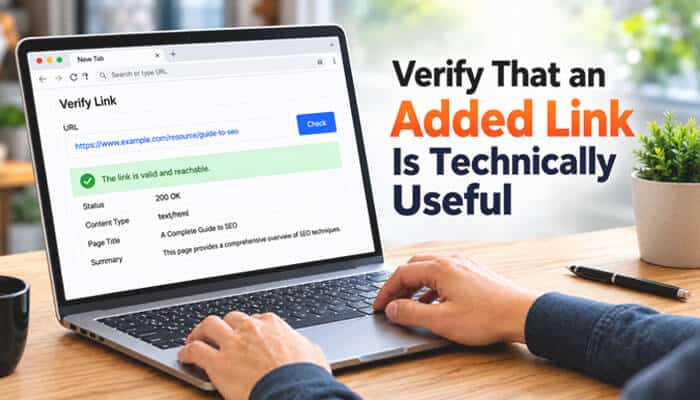
A publisher may agree to the request but add a broken, redirected, incorrect, or nonstandard link.
After publication, confirm that:
- The mention is clickable through a valid HTML
<a href>link. - The destination is correct and loads successfully.
- There is no unnecessary redirect chain.
- The page works on desktop and mobile.
- The anchor accurately describes the destination.
- The link is not hidden behind a login.
- Tracking parameters do not break the URL.
- The referring article remains publicly accessible.
A normal editorial link does not require a special rel attribute. rel="sponsored" is appropriate for advertisements or paid placements, rel="ugc" for user-generated content, and rel="nofollow" when the publisher does not want to associate its site with the destination.
Do not pressure an editor to remove a legitimate attribute. A qualified link may still provide referral traffic, brand discovery, source verification, customer trust, and reader convenience.
Follow Google’s Link-Spam Policies
Requesting a useful source link for an existing reference can be a legitimate editorial practice. The risk begins when the process is designed primarily to manufacture ranking signals.
Google identifies practices such as the following as link spam:
- Buying or selling links for ranking purposes
- Exchanging products or services for ranking links
- Excessive reciprocal-link arrangements
- Automated link creation
- Paid advertorial links without proper qualification
- Keyword-rich links created through compensation
- Low-quality directory or bookmark links
- Low-value content created mainly to manipulate linking signals
Google allows paid or sponsored links when they are appropriately qualified with nofollow or sponsored.
Use these safeguards:
- Request links only when they help readers.
- Do not pay for ordinary editorial backlinks.
- Do not demand exact-match anchors.
- Do not insist that valid link attributes be removed.
- Do not automate outreach without reviewing the pages.
- Do not exchange products for ranking links.
- Respect the publisher’s editorial decision.
Track, Verify, and Measure Earned Links
An Ahrefs Unlinked Mentions campaign does not end when a publisher adds the link. Open the live page, test the backlink, confirm the destination, record the anchor and link attribute, and thank the editor.
What to Track
Use a spreadsheet or CRM with these fields:
| Field | Purpose |
|---|---|
| Mention URL and article | Identifies the referring page |
| Mention context | Records what was referenced |
| Status | Tracks outreach and results |
| Proposed and final URL | Confirms destination relevance |
| DR, UR, and traffic | Adds comparative metrics |
| Priority score | Supports qualification |
| Contact and dates | Prevents duplicate outreach |
| Anchor and attribute | Records link implementation |
| Referral traffic and conversions | Measures business value |
| Notes | Preserves relationship details |
Post-Acquisition Checks
Confirm that the link:
- Points to the most relevant live page
- Loads successfully
- Uses a crawlable
<a href>format - Has natural anchor text
- Appears in relevant editorial content
- Uses
nofollow,ugc, orsponsoredwhen required - Is recorded in your campaign tracker
Recheck important links after 30 days, 90 days, six months, and one year. A link that disappears becomes a reclamation opportunity.
Metrics That Matter
Track:
- Qualification rate
- Email delivery rate
- Response rate
- Mention-to-link conversion rate
- New referring domains
- Referral traffic
- Assisted conversions
- Publisher relationships
Measure Ahrefs Unlinked Mentions conversions against qualified prospects rather than every raw result, since duplicates and false matches can distort performance.
Ahrefs Unlinked Mentions and AI Visibility in 2026
Ahrefs Unlinked Mentions are useful beyond backlink building. They can also reveal how publishers, search engines, communities, and AI assistants associate your brand with products, topics, and customer needs.
Ahrefs Brand Radar tracks:
- Mentions
- Citations
- Impressions
- AI Share of Voice
| Term | Meaning |
|---|---|
| Brand mention | A webpage or AI response names the company |
| Citation | An AI answer references a supporting webpage |
| Backlink | A webpage links to another page |
| Unlinked mention | A webpage names the brand without linking |
| AI Share of Voice | Comparative visibility across tracked AI answers |
These signals are related but not interchangeable. Converting an unlinked mention into a backlink does not guarantee an AI citation.
Combine Brand Radar With Outreach
Use Brand Radar to:
- Compare visibility with competitors
- Find prompts where rival brands appear
- Review domains frequently cited by AI tools
- Identify inaccurate brand information
- Discover topics associated with your company
To strengthen long-term visibility, keep company and product information current, publish original research, earn credible independent coverage, correct misinformation, use consistent brand names, and create source pages that are easy to understand and cite.
How to Handle Negative or Inaccurate Mentions
Not every result found through Ahrefs Unlinked Mentions should lead to a backlink request.
If information is incorrect, contact the author with:
- The exact inaccurate statement
- Corrected information
- Supporting evidence
- The date the information changed
Prioritize errors involving pricing, leadership, ownership, availability, specifications, security, safety, eligibility, or legal status.
For negative mentions, first determine whether the claim is outdated, incorrect, opinion-based, or connected to a genuine customer complaint. Address the underlying issue before requesting a link.
Escalate serious cases involving defamation, impersonation, fraud, confidential information, trademark misuse, copyright infringement, safety claims, or regulatory allegations to the appropriate legal or communications team.
Limitations of Ahrefs Unlinked Mentions Reports
Ahrefs Unlinked Mentions reports cannot capture every brand reference online. Results may miss recently published or undiscovered pages, paywalled content, private communities, videos, podcasts, image text, newsletters, JavaScript-rendered pages, and brand misspellings.
Content Explorer and Site Explorer may also show different results because they use separate indexes and update schedules.
For broader coverage, combine:
- Web Explorer
- Content Explorer
- Mentions Alerts
- Site Explorer
- Brand Radar
- Reverse-image search
- Search-engine queries
- Social and community monitoring
- Manual publication checks
The goal is not to find every mention. Focus on opportunities that provide reader value, accurate attribution, referral traffic, relevant backlinks, or useful publisher relationships.
Common Mistakes to Avoid
Avoid these errors when managing unlinked mentions:
- Searching only for the company name
- Contacting false matches, scraped pages, or irrelevant sites
- Judging prospects only by Domain Rating
- Linking to the homepage when a deeper page is more useful
- Demanding “dofollow” links or keyword-heavy anchors
- Sending generic outreach or repeated follow-ups
- Ignoring existing links to social profiles, app stores, or old domains
- Paying for editorial links or exchanging products for ranking credit
- Failing to track outreach, traffic, lost links, and results
- Pursuing low-quality backlinks that may harm brand reputation
Ahrefs Unlinked Mentions FAQs
1. How Often Should I Review New Brand Mentions?
Review Ahrefs Unlinked Mentions weekly if your brand receives regular media coverage. Smaller businesses can check every two weeks or monthly, depending on how often new references appear.
2. Can I Track Product Names Separately From My Company Name?
Yes. Create separate searches for products, services, reports, tools, executives, and common spelling variations. This makes Ahrefs Unlinked Mentions reports easier to review and helps uncover opportunities that a company-name query may miss.
3. Should I Contact a Website That Already Links to My Domain?
Possibly. A website may link to your homepage from one article while another page contains an unlinked product, statistic, or research reference. Evaluate Ahrefs Unlinked Mentions at the page level rather than rejecting the entire domain.
4. Are Older Unlinked Mentions Still Worth Pursuing?
Older Ahrefs Unlinked Mentions can remain valuable when the article still ranks, receives traffic, attracts backlinks, or is regularly updated. Skip abandoned pages that have little visibility or editorial activity.
5. Can I Use Ahrefs Unlinked Mentions for Local SEO?
Yes. Ahrefs Unlinked Mentions can reveal local news articles, business directories, event pages, community resources, and regional publications that reference a company without linking to its official website.
6. What Should I Do If the Mention Links to the Wrong Page?
Check whether the existing destination is outdated, broken, or less useful than another page. When appropriate, use Ahrefs Unlinked Mentions outreach to recommend a more relevant product, research, location, or company page.
7. Can Agencies Manage Unlinked-Mention Campaigns for Clients?
Yes. Agencies can create separate Ahrefs Unlinked Mentions searches, alerts, prospect lists, and outreach trackers for each client. Every request should still be manually reviewed and written in the client’s brand voice.
8. How Long Does It Take to Convert an Unlinked Mention?
There is no fixed timeline. Some editors update links within days, while others may take several weeks or never respond. The success of Ahrefs Unlinked Mentions outreach depends on relevance, reader value, publisher policies, and message quality.
Conclusion
Ahrefs Unlinked Mentions can turn existing brand awareness into relevant backlinks, source citations, referral traffic, and stronger publisher relationships.
Build a complete inventory of company names, products, founders, studies, tools, statistics, and visual assets. Use Web Explorer and Content Explorer to discover and qualify references, Mentions Alerts to monitor new coverage, and Site Explorer to separate unlinked mentions from lost or broken backlinks.
Prioritize relevance and reader value over Domain Rating alone. Match each mention with the most useful destination, personalize the outreach, respect editorial decisions, and verify every acquired link for accuracy, crawlability, placement, and long-term availability.
Used responsibly, Ahrefs Unlinked Mentions can improve attribution, correct outdated information, support digital PR, and reveal how search systems, publishers, and AI platforms understand your brand.